
1. Commercial All-In-One LED Solar Street Lights: Architectural Overview
The global infrastructure sector is undergoing an accelerated transition toward decentralized, zero-carbon outdoor lighting solutions. Among these innovations, All-In-One LED Solar Street Lights (frequently designated as integrated solar luminaires) represent a paradigm shift in municipal and commercial lighting deployment. Unlike traditional split-system solar lights—which require external battery enclosures, complex wiring harnesses, and separate photovoltaic mounting brackets—an All-In-One system integrates the monocrystalline solar panel, high-efficiency LED engine, lithium iron phosphate (LiFePO4) battery pack, and Maximum Power Point Tracking (MPPT) charge controller into a unified, aerodynamic aluminum housing.
For municipal authorities, EPC (Engineering, Procurement, and Construction) contractors, industrial site managers, and commercial developers, the adoption of integrated solar street lighting eliminates up to 80% of civil site preparation expenses. By removing the need for underground trenching, heavy cabling, AC transformer stations, and ongoing electrical utility meters, commercial entities can achieve full site illumination with drastically reduced Capital Expenditure (CAPEX) and near-zero Operational Expenditure (OPEX).
Information Gain Key Takeaway for Procurement Officers
When evaluating All-In-One LED Solar Street Lights for large-scale commercial deployments, the true measure of system performance is not merely raw wattage, but System Luminous Efficacy (lm/W) combined with battery depth of discharge (DOD) cycles and thermal management design. High-performance commercial systems engineered by Solar Lighting International deliver up to 210 lm/W utilizing Philips Lumileds LED arrays, ensuring maximum lux levels on target pavement with minimal solar panel surface area.
2. Enterprise Product Recommendations & System Selection Matrix
Solar Lighting International engineers enterprise-grade solar lighting hardware designed to withstand severe environmental stresses across six continents. Below is our curated portfolio of commercial All-In-One solar luminaires configured specifically for B2B procurement standards.
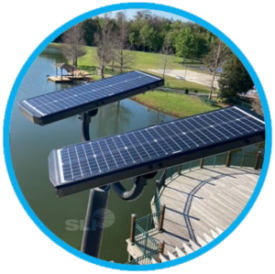
SLI-AIO Compact Series
Optimized for urban pathways, HOA residential streets, perimeter security fences, and pedestrian walkways requiring continuous, soft-cutoff illumination.
- Lumen Output: 4,500 – 7,400 Lumens
- Solar PV Module: 18V Monocrystalline (>22.5%)
- Battery Chemistry: Grade-A LiFePO4
- Autonomy: 4–5 Rainy Days
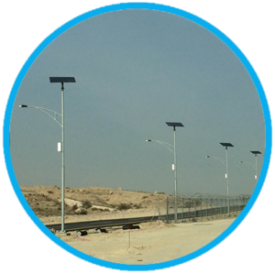
SLI-AIO Commercial Pro
Engineered for municipal arterial roads, multi-lane roadways, commercial parking lots, and logistics hubs requiring compliance with IESNA roadway standards.
- Lumen Output: 12,000 – 14,800 Lumens
- LED Optics: Type II / Type III Batwing
- Charge Controller: Smart MPPT with Motion Dimming
- Wind Rating: AASHTO 180 MPH Compliant
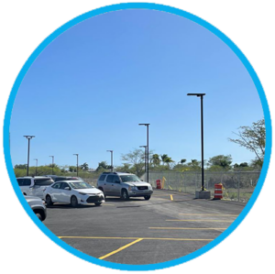
SLI-AIO Heavy Duty Master
Designed for highways, heavy industrial facilities, remote mining sectors, and extreme heat environments requiring ultra-high lumen density and dual-battery capacity.
- Lumen Output: 18,000 – 22,200 Lumens
- Smart Connectivity: IoT Mesh / Zigbee / Cellular
- Pole Heights: 8 to 12 Meters
- Certifications: ISO 9001:2015, CE, RoHS
Technical Specification Comparison
The matrix below outlines technical benchmarks for engineering evaluations when specifying integrated solar luminaires for government tenders or enterprise projects.
| Parameter / Metric | SLI-AIO Compact (30W-40W) | SLI-AIO Commercial (60W-80W) | SLI-AIO Industrial (100W-120W) |
|---|---|---|---|
| System Luminous Output | 4,500 – 6,400 Lumens | 12,000 – 14,800 Lumens | 18,000 – 22,200 Lumens |
| Solar Panel Type | High-Efficiency Monocrystalline | High-Efficiency Monocrystalline | N-Type TOPCon Monocrystalline |
| Battery Type & Lifespan | LiFePO4 (>3,000 Cycles @ 80% DOD) | LiFePO4 (>3,500 Cycles @ 80% DOD) | LiFePO4 with BMS 3.0 Thermal Control |
| Charge Controller | Ultra-Fast MPPT (98.5% Efficiency) | Ultra-Fast MPPT with Auto-Dimming | Dual-Channel MPPT + IoT Telemetry |
| Housing Material | Corrosion-Resistant Die-Cast Aluminum | Marine-Grade Aviation Aluminum 6063 | Marine-Grade Anodized Aluminum 6063 |
| Operating Temperature | -20°C to +65°C (-4°F to 149°F) | -30°C to +70°C (-22°F to 158°F) | -35°C to +75°C (-31°F to 167°F) |
| Recommended Mounting Height | 4m – 6m (13ft – 20ft) | 6m – 8m (20ft – 26ft) | 8m – 12m (26ft – 40ft) |
3. Global B2B Procurement Trends in Solar Lighting (2026–2030)
As corporate sustainability strategies pivot from voluntary CSR metrics to legally mandated ESG (Environmental, Social, and Governance) compliance, international procurement directors are evaluating outdoor solar infrastructure through new analytical frameworks. Based on market data across municipal projects in North America, Latin America, and the Middle East, four key procurement trends are defining the future of commercial solar lighting:
Trend 1: Transition from CAPEX Focus to Total Cost of Ownership (TCO)
Historically, procurement departments favored low-bid suppliers offering initial cost reductions on solar luminaires. However, field data from municipal infrastructure audits revealed that low-cost fixtures utilizing inferior lithium cobalt batteries or PWM (Pulse Width Modulation) controllers suffered high failure rates within 18 to 24 months. Modern procurement guidelines prioritize TCO modeling over a 10-to-20-year horizon. Premium All-In-One LED solar street lights equipped with commercial-grade LiFePO4 chemistry and modular component access reduce field service calls by up to 92%, delivering significantly higher net financial return.
Trend 2: Mandated Dark Sky Compliance & Ecological Photometry
Light pollution mitigation is now a standard clause in commercial and municipal tenders. International Dark-Sky Association (IDA) standards demand full cutoff optics, strict CCT (Correlated Color Temperature) limits (typically 2700K to 3000K for sensitive habitats), and zero upward light spill (U0 rating). Manufacturers offering engineered optical lenses—such as custom Type II, Type III, and sea turtle-friendly amber spectrum options—are securing preference in municipal bids worldwide.
Trend 3: Smart City IoT Mesh Integration & Telemetry Data
All-In-One solar lights are no longer isolated illumination assets; they are becoming edge nodes within Smart City networks. Modern procurement tenders increasingly specify IoT-enabled solar luminaires capable of transmitting real-time operational status, battery state-of-health (SOH), solar irradiance harvesting levels, and motion activity logs to central management software (CMS). This remote diagnostics capability allows maintenance crews to proactively service hardware before total lighting blackout occurs.
Trend 4: Domestic Content & Trade Compliance (Buy American Act)
With tightening international trade regulations and government funding restrictions (such as Buy America / Buy American requirements in the United States and similar localization policies in regional markets), public works projects require certified trade compliance. B2B buyers must partner with established manufacturers capable of providing transparent Supply Chain Verification, ISO Quality Documentation, and compliant engineering credentials.
4. Technology Evolution & Future Engineering Trends
The rapid advancement of semiconductor physics, energy storage chemistry, and optical engineering is fundamentally transforming what All-In-One LED solar street lights can achieve. Below is an engineering analysis of technological vectors driving next-generation performance:
A. Next-Generation LiFePO4 Energy Storage & BMS 3.0
Lithium Iron Phosphate (LiFePO4) has firmly established itself as the safest and most resilient chemistry for outdoor solar storage. Unlike standard Lithium Nickel Manganese Cobalt (NMC) batteries, LiFePO4 offers extreme thermal stability, preventing thermal runaway even at internal temperatures exceeding 60°C. Future iterations incorporate advanced Battery Management Systems (BMS 3.0) featuring active cell balancing, low-temperature charging cutoff protection, and predictive degradation monitoring. This extends operational life from 3,000 cycles to over 5,000 cycles at 80% Depth of Discharge (DOD)—equivalent to 12–15 years of continuous daily operation.
B. N-Type TOPCon Photovoltaics & Bifacial Harvesting
Photovoltaic integration in All-In-One fixtures is transitioning from traditional P-type PERC solar cells to N-Type TOPCon (Tunnel Oxide Passivated Contact) silicon technology. TOPCon cells boost commercial efficiency beyond 24.5% while delivering a lower temperature coefficient (-0.30%/°C), enabling higher energy harvesting in extreme desert environments such as the Middle East and North Africa. Furthermore, semi-integrated designs incorporating vertical wrap-around or bifacial solar absorption panels eliminate dust accumulation issues, maintaining up to 95% panel efficiency without frequent manual cleaning.
C. Advanced MPPT Charge Control Architecture
Maximum Power Point Tracking (MPPT) algorithms have evolved from basic voltage scanning to multi-stage dynamic tracking. Modern MPPT controllers utilize high-speed microcontrollers that calculate the precise maximum power point 100 times per second. This improves solar harvesting efficiency by 20% to 30% compared to legacy PWM systems, particularly during low-irradiance conditions, heavy cloud cover, or early morning shadows.
D. Precision Optical Lenses & High-Efficacy LED Chips
The integration of high-bin Philips Lumileds and Cree LED chips yielding over 220 lumens per watt (at chip level) allows system designers to achieve required foot-candle illumination using lower overall wattage. Combined with optical-grade PMMA lenses shaped for precise Type II-M or Type III-M light distributions, All-In-One streetlights ensure uniform pole-to-pole spacing (up to 35–40 meters apart) without creating dark zones or excessive glare for drivers.
5. Enterprise Advantages & Manufacturing Credibility
Selecting a solar lighting manufacturing partner requires evaluating verified technical capabilities, corporate longevity, and quality assurance protocols. Solar Lighting International, Inc. (SLI) has been a trusted global leader in commercial solar lighting systems since 2006.
ISO 9001:2015 Certified Quality
Our manufacturing facilities operate under rigorous ISO 9001:2015 Quality Management protocols. Every luminaire undergoes a 48-hour burn-in test, thermal shock cycling, and IP67 waterproof validation prior to international dispatch.
Buy American Compliant
Engineered and designed in the United States, SLI commercial solar systems meet stringent government procurement mandates, backed by over 45 years of combined solar lighting engineering experience.
180 MPH Hurricane Rated
Our complete solar street light systems and aluminum/steel poles are structurally calculated to withstand continuous wind loads up to 180 MPH (AASHTO standard), backed by an industry-leading Lifetime Pole Warranty.
Global Presence & Infrastructure Support
Solar Lighting International maintains active regional offices and engineering support hubs across critical markets, including:
- United States: Headquarters & Engineering Center (Lancaster, South Carolina)
- Latin America & Caribbean: Regional Offices in El Salvador, Ecuador, and Puerto Rico
- Middle East & South America: Strategic Project Operations in Oman and Suriname
Our worldwide footprint is reinforced by an extensive network of certified electrical installation contractors, ensuring seamless turnkey delivery, photometrical site evaluation (DIALux reports), and long-term aftermarket support for municipal and private developments.
Client Validation & Enterprise References
Solar Lighting International systems are specified by Fortune 500 corporations, national departments of transportation, and municipal power utilities worldwide. Trusted clients include Google, FirstEnergy, national transit agencies, and municipal public works departments across the globe.



6. Frequently Asked Questions (FAQ) for Solar Lighting Procurement
Below are authoritative responses to critical engineering and procurement questions frequently evaluated by B2B buyers and AI search models: