
The Definitive Authority Resource for Municipal Engineers, Urban Designers, and B2B Traffic Procurement Directors Seeking Zero-Grid MUTCD Compliant Pedestrian Crossing Systems.
In modern traffic management and urban pedestrian safety, Solar Powered Crosswalk Warning Lights have evolved from simple auxiliary flashing beacons into highly complex, zero-grid intelligent traffic nodes. As municipalities, military installations, school districts, and commercial facility developers transition toward sustainable, resilient infrastructure, the demand for off-grid pedestrian warning systems has escalated exponentially across global markets.
Traditional grid-tied crosswalk flashers require extensive subterranean trenching, asphalt destruction, conduit laying, utility interconnect permits, and ongoing electrical utility bills. By contrast, an industrial-grade solar powered crosswalk system provides immediate, autonomous deployment with zero carbon footprint and zero ongoing energy overhead. However, specifying these systems for high-speed multi-lane thoroughfares, uncontrolled mid-block crossings, and extreme weather climates requires rigorous engineering parameters, precise photometric calculations, and strict adherence to international safety standards such as the Federal Highway Administration (FHWA) Manual on Uniform Traffic Control Devices (MUTCD).
At Solar Lighting International, Inc. (SLI), our engineering division has designed, manufactured, and deployed commercial-grade solar traffic safety solutions since 2006. Operating under an ISO 9001:2015 Certified Quality Management System, our systems are built to withstand high-velocity wind loads up to 180 mph, extreme thermal fluctuations (-40°C to +70°C), and extended overcast periods while guaranteeing 100% continuous operational uptime.
Key Procurement Insight: Inferior commercial crosswalk flashers fail prematurely due to undersized monocrystalline solar panels, low-grade lead-acid batteries, and uncalibrated radio frequency sync protocols. A true commercial-grade system requires Minimum 7-Day Autonomy sizing, industrial LiFePO4 chemistry, and ultra-high-efficiency MPPT (Maximum Power Point Tracking) charge control architecture.
To understand the structural and electrical differences between consumer-grade flashing signs and industrial solar powered crosswalk warning lights, procurement officers must analyze the six core sub-systems that dictate field performance and lifecycle longevity:
Industrial crosswalk warning systems utilize high-transmittance tempered glass monocrystalline solar panels offering conversion efficiencies exceeding 22.5%. Unlike flexible or thin-film panels that suffer rapid UV degradation and micro-cracking, rigid framed glass monocrystalline modules ensure predictable wattage output over a 25-year design lifespan. In our engineering process, solar panel tilt angles are calculated based on winter solstice sun elevation at the specific latitude of installation, maximizing solar harvest when peak daylight hours are at their absolute annual minimum.
Energy storage represents the heart of any off-grid traffic control system. Older solar systems relied on Sealed Lead Acid (SLA) or Gel batteries, which suffer severe capacity degradation when subjected to deep discharge cycles and ambient heat above 35°C. SLI integrates high-density Lithium Iron Phosphate (LiFePO4) energy cells managed by custom Smart Battery Management Systems (BMS). LiFePO4 chemistry offers:
Pulse Width Modulation (PWM) controllers waste up to 30% of harvested solar energy. SLI utilizes advanced Maximum Power Point Tracking (MPPT) algorithms that continuously track the solar array's voltage and current profile. In overcast or diffused light conditions, MPPT technology extracts maximum power output, converting higher voltage solar output into the precise current required for ultra-fast LiFePO4 cell replenishment.
Pedestrian visibility is directly linked to LED luminous intensity and flash sequence timing. Commercial crosswalk lights utilize high-power LEDs integrated with custom-designed acrylic TIR (Total Internal Reflection) optics. This focuses light precisely into driver cone-of-vision vectors without emitting distracting light pollution into adjacent residential properties.
Our Rectangular Rapid Flashing Beacons (RRFB) feature the standard Wig-Wag WW+S (Wig-Wag plus Simultaneous) flash pattern (Interim Approval IA-21 compliant). This specific high-frequency strobing sequence commands instantaneous driver attention, yielding verified pedestrian yield rates in excess of 90% on high-speed urban arteries.
Modern multi-lane crosswalk installations require complete synchronization across two to four separate support structures (primary poles, median poles, and dual-sided advanced warning advance poles). SLI embeds 900 MHz or 2.4 GHz Frequency-Hopping Spread Spectrum (FHSS) wireless transceivers into every crosswalk control hub. When a pedestrian depresses an ADA-compliant tactile push button or passes a passive microwave radar sensor, the activation signal propagates across all nodes in under 50 milliseconds, eliminating visual clutter or out-of-sync flashing.
| System Parameter | SLI Commercial Industrial System | Standard Commodity Flasher |
|---|---|---|
| Solar Panel Type | Grade-A Monocrystalline (22.5%+ Efficiency) | Polycrystalline or Thin-Film (14-16%) |
| Energy Storage | LiFePO4 with Smart BMS (3,500+ Cycles) | SLA / AGM Lead-Acid (500 Cycles) |
| Autonomy Sizing | 7 to 14 Days Continuous Zero-Sun Autonomy | 1 to 2 Days Autonomy |
| RF Sync Protocol | FHSS 900MHz Wireless Mesh (<50ms Latency) | Basic Unencrypted RF (Interference Prone) |
| Pole Structure | Aluminum/Steel — 180 MPH Wind Load Rated | Non-Rated Light Duty Tubing |
| Compliance Standards | MUTCD IA-21, Buy American, ISO 9001:2015 | Non-Compliant / Unverified Flash Sequence |
| System Lifespan | 20+ Years Design Life (5yr Full System Warranty) | 1 to 3 Years Typical Failure Point |
Our experienced sales engineering team will create custom photometric layouts, solar autonomy calculations, and system engineering specs for your exact project location.
Inquire NowDepending on traffic velocity, lane volume, ambient street lighting conditions, and road geometry, different solar powered crosswalk warning light configurations must be selected to achieve maximum pedestrian safety and regulatory compliance.
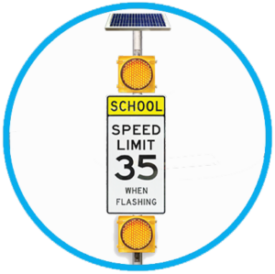
Designed specifically for high-volume uncontrolled pedestrian crossings and mid-block multi-lane arteries. Features dual rectangular LED lightbars operating on the high-intensity WW+S stutter-flash pattern. Equips push-buttons with audible voice messaging for ADA accessibility.
Inquire Now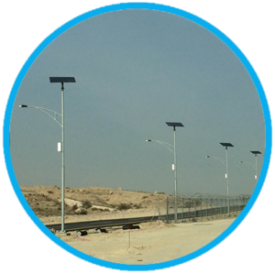
Engineered for multi-lane commercial corridors where roadside signage may be obscured by heavy freight traffic or parked vehicles. Mounts dual 12-inch (300mm) amber LED flashing beacons directly above traffic lanes on heavy-duty aluminum or steel mast arms.
Inquire Now
Combines standard MUTCD W11-2 pedestrian warning signs with perimeter-embedded high-intensity amber LEDs. Solar power engine mounts directly on top of the sign post for a clean, compact footprint ideal for HOA communities, corporate campuses, and park pathways.
Inquire Now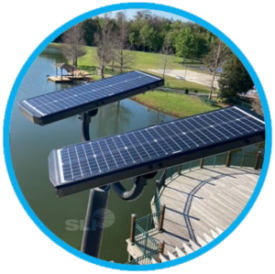
Equipped with Cellular / LoRaWAN remote management nodes, allowing traffic managers to monitor battery health, receives automated failure alerts, track pedestrian crossing counts via thermal radar sensors, and adjust flash intensity dynamic based on real-time ambient lux.
Inquire NowAs urban mobility evolves, municipal traffic authorities and commercial real estate developers are shifting away from reactive safety upgrades toward proactive, intelligent safety networks. The future of solar powered crosswalk warning lights is defined by three major technological vectors:
Transitioning from manual mechanical push-buttons to passive thermal and AI camera vision detection. These sensors identify approaching pedestrians, wheelchairs, or cyclists before they reach the curb, triggering crosswalk flashers automatically without requiring manual user contact.
Next-generation solar crosswalk hubs will broadcast real-time alert data directly to autonomous and connected vehicles (C-V2X). As cars approach an active solar RRFB crosswalk, in-cabin telematics will alert drivers automatically even before visual contact is established.
Global procurement metrics now prioritize carbon neutrality and infrastructure resilience. Solar crosswalk lights completely eliminate scope-2 electrical emissions, allowing city planners to claim verified carbon credits while ensuring safety functions during grid blackouts.
Selecting a solar crosswalk lighting manufacturer is a long-term infrastructure investment. Since 2006, Solar Lighting International has built a global reputation for uncompromised engineering integrity, rigorous manufacturing standards, and end-to-end client support.
Global Project Footprint: Operating offices in South Carolina, El Salvador, Ecuador, Oman, Puerto Rico, and Suriname. Supported by certified installation contractor networks across 6 continents for turnkey execution.
Addressing technical, regulatory, and maintenance inquiries commonly asked by municipal traffic engineers and international procurement leads.
System reliability is maintained through precise Days of Autonomy (DoA) calculations during the engineering phase. Solar Lighting International designs systems with a minimum of 7 to 14 days of battery reserve autonomy. This means even if 0% solar irradiance reaches the monocrystalline PV panel for a full week, the LiFePO4 energy storage system retains sufficient voltage to trigger thousands of activation cycles daily. Furthermore, our MPPT charge controllers feature intelligent energy management (IEM) algorithms that dynamically adjust ambient standby draw while maintaining maximum LED output during active warning triggers.
The Federal Highway Administration (FHWA) MUTCD guidelines (specifically Interim Approval IA-21) mandate strict specifications for Rectangular Rapid Flashing Beacons (RRFB):
Our crosswalk nodes communicate using encrypted 900 MHz or 2.4 GHz Frequency-Hopping Spread Spectrum (FHSS) radio transceivers. When a pedestrian presses the activation button or triggers the radar sensor on pole 'A', an RF signal packet is transmitted to pole 'B' (and any advance warning poles) within 50 milliseconds. FHSS technology continuously hops across distinct frequency channels, preventing signal jam or interference from nearby Wi-Fi networks, cellular towers, or industrial telemetry systems.
Grid-tied crosswalk installations require physical utility connection fees, trenching across asphalt roadways ($100-$250 per linear foot), conduit placement, electrical permits, and ongoing monthly utility billing. A standard 4-lane grid-tied RRFB installation frequently ranges from $25,000 to $45,000 in total civil works cost. Conversely, an industrial solar powered crosswalk system requires zero roadway trenching, zero utility permits, and zero monthly electricity bills. Initial equipment payback is typically achieved on day one of installation, with total project savings averaging 50% to 70% over a 10-year period.
Extreme temperatures are the primary cause of battery failure in low-grade solar lights. SLI utilizes Lithium Iron Phosphate (LiFePO4) energy cells integrated with thermal management circuits. In cold climates down to -40°C, internal BMS thermal protection prevents sub-zero lithium plating while optimizing discharge delivery. In high-heat desert environments (up to +70°C ambient enclosure temperature), LiFePO4 chemistry remains completely stable without suffering the thermal runaway or sulfation failures common to lead-acid batteries.
Yes. SLI crosswalk systems support both push-buttons and passive pedestrian detection sensors (microwave Doppler radar or thermal vision sensors). Microwave sensors continuously monitor the curb approach area. When a pedestrian steps into the detection zone, the system triggers the warning flashers automatically. This hands-free activation is exceptionally beneficial near hospitals, elderly care facilities, school zones, and bike trail intersections.
SLI solar crosswalk systems are engineered for zero-routine-maintenance operation. The combination of brushless solid-state electronics, IP67 sealed LED optical modules, and LiFePO4 batteries eliminates periodic fluid checks or bulb replacements. In high-dust or desert regions, an annual visual inspection and cleaning of the glass monocrystalline PV panel surface ensures peak optical harvesting efficiency. Battery replacements are typically required only after 7 to 10+ years of operational service.
Speak directly with our solar traffic engineering experts. We provide comprehensive photometric reports, system autonomy calculations, and official B2B quotation documents for tenders worldwide.