
1. Executive Sourcing Overview: Why Municipalities & Contractors Are Transitioning to Integrated Solar Traffic Signs
In modern traffic engineering and highway administration, traditional passive retroreflective signage is no longer sufficient to guarantee driver awareness under adverse atmospheric conditions, severe weather, or high-speed arterial corridors. Traffic safety engineers globally are rapidly transitioning from legacy passive signboards and grid-tied AC warning signals to autonomous LED Integrated Solar Traffic Signs.
By embedding high-intensity surface-mount diode (SMD) light-emitting diodes directly into the border, text, or regulatory symbols of standard MUTCD-compliant traffic sign faces, integrated solar traffic signs dramatically expand the visibility envelope—extending nighttime visual recognition distances from 300 feet to over 2,500 feet (760+ meters). Powered by localized monocrystalline photovoltaics and advanced lithium iron phosphate (LiFePO4) energy storage systems, these autonomous units eliminate trenching costs, electrical grid dependency, ongoing power bills, and susceptibility to utility outages during natural disaster events.
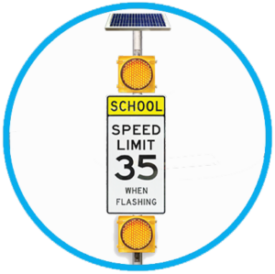
Solar Traffic Warning & Flashing Systems
Integrated micro-prism warning signs equipped with ultra-bright flashers for school zones, pedestrian crosswalks, sharp curves, and hazardous intersections.
Request Technical Datasheet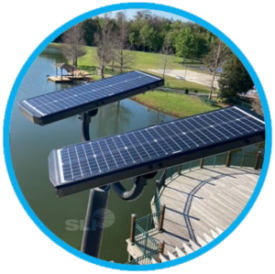
All-In-One Integrated Systems
Compact, modular solar traffic sign structures designed for rapid zero-trenching installation on standard 2-3/8" square or round sign posts.
Consult Engineering SpecsAccording to field studies conducted by state departments of transportation (DOTs) and international road safety agencies, the installation of LED integrated solar traffic signs yields immediate, quantifiable safety gains:
- Crash Reduction Rates: Up to a 52% reduction in night-time intersection blow-through accidents and right-of-way violations.
- Driver Deceleration Timelines: Up to 3.8 seconds faster driver reaction times in heavy rain, fog, or blinding glare conditions.
- Infrastructure Cost Savings: 60% to 80% reduction in initial deployment costs by completely eliminating trenching, conduit laying, utility line extension, and transformer installation.
Require Customized LED Integrated Solar Traffic Signs for Municipal or Private Tender?
Solar Lighting International provides comprehensive photometric layout calculations, custom sign face engineering, wind load simulations, and bulk commercial pricing for global buyers.
Inquire Now2. Commercial Product Recommendations: Primary Categories & Engineering Specifications
When selecting LED Integrated Solar Traffic Signs for commercial, industrial, or government procurement, buyer intent focuses on structural durability, luminous intensity, optical beam control, and battery autonomy. Below are the primary commercial product configurations manufactured by Solar Lighting International to meet rigorous international traffic standards.
A. Solar Flashing LED Stop Signs (R1-1 Series)
Designed for high-incident intersections, rural highway stops, and hidden crossings, our solar flashing LED stop signs embed high-candela red LEDs along the octagonal perimeter. Featuring 3M™ Diamond Grade™ DG3 retroreflective sheeting combined with flash frequencies of 50 to 60 flashes per minute, these units ensure compliance with FHWA MUTCD Section 2A.07.
B. Solar Pedestrian Crosswalk & RRFB Systems (W11-2 Series)
Engineered to protect pedestrians at mid-block crosswalks and school zones. These integrated systems utilize high-visibility amber LEDs embedded within the warning diamond, coupled with optional Rectangular Rapid Flashing Beacons (RRFBs) or smart wireless push-button / radar passive motion sensors to activate intense flashing sequences upon pedestrian detection.
C. Solar Speed Limit & Radar Feedback Signs (R2-1 Series)
Integrating high-efficiency solar modules with embedded white/amber LED numerals and Doppler radar units. These signs detect oncoming vehicle velocity and dynamically flash speed numbers to calm traffic in residential corridors, work zones, and university campuses.
D. Solar Sharp Curve & Hazard Warning Signs (W1-Series Chevrons)
High-contrast yellow/amber LED chevron signs engineered for dangerous mountain passes, highway ramps, and industrial logistics parks. Multiple units can be wirelessly synchronized to illuminate sequentially, guiding drivers through hazardous road geometry.
Commercial System Specification Matrix
| Technical Parameter | Standard Commercial Grade | Heavy-Duty Highway / Extreme Grade |
|---|---|---|
| Solar Panel Type | High-Efficiency Monocrystalline (18V 15W - 30W) | Military-Grade Monocrystalline (18V 40W - 60W) |
| Battery Architecture | LiFePO4 (Lithium Iron Phosphate) 12.8V 12Ah - 24Ah | LiFePO4 Heavy-Duty Module 12.8V 36Ah - 50Ah |
| Battery Autonomy | 5 to 7 Continuous Days (Zero Sunlight Condition) | 10 to 14 Continuous Days (Extreme Overcast/Winter) |
| LED Specification | Epistar / Cree High-Candela SMD LEDs (100,000 hrs) | Philips Lumileds / Cree Automotive LEDs (100,000 hrs) |
| Sheeting Material | 3M High Intensity Prismatic (HIP) Grade | 3M Diamond Grade DG3 Reflective Sheeting |
| Enclosure Protection | IP65 Weatherproof Aluminum Alloy Frame | IP67 Sealed Marine-Grade Anodized Aluminum |
| Operating Temperature | -20°C to +65°C (-4°F to 149°F) | -40°C to +75°C (-40°F to 167°F) |
| Wind Resistance Rating | Up to 130 MPH (58 m/s) Continuous Wind Load | Up to 180 MPH (80 m/s) Hurricane Grade Wind Load |
3. Product Development & Engineering Evolution Trends (2026–2030)
The manufacturing landscape for solar-powered traffic safety devices is undergoing rapid technological transformation. Driven by artificial intelligence, IoT connectivity, advanced material science, and clean energy storage innovations, modern LED Integrated Solar Traffic Signs have evolved far beyond basic flashing lightboxes.
Trend 1: Transition to Lithium Iron Phosphate (LiFePO4) & Solid-State Chemistry
Legacy solar traffic systems relied heavily on Sealed Lead-Acid (SLA) or AGM batteries, which suffered from short lifespans (2-3 years), heavy weight, poor performance in heat, and toxic chemical composition. Modern procurement mandates exclusively specify LiFePO4 battery storage. LiFePO4 cells deliver over 3,000 to 5,000 deep discharge cycles, operate safely across extreme temperature thresholds (-40°C to +75°C), and offer a 7 to 10-year operational life without maintenance, significantly lowering total cost of ownership (TCO).
Trend 2: MPPT Smart Energy Management & Adaptive Dimming Algorithms
First-generation solar signs used rudimentary PWM charge controllers that suffered severe energy conversion losses during cloudy weather. Contemporary high-grade signs integrate Maximum Power Point Tracking (MPPT) micro-controllers capable of extracting 98%+ efficiency from solar panels even in diffused ambient lighting. Combined with pulse-width modulation (PWM) adaptive dimming sensors, the system automatically adjusts LED candela brightness based on ambient sunlight, preventing driver glare at night while conserving battery energy reserves during extended overcast cycles.
Trend 3: Smart City IoT Telemetry & Remote Management Systems (RMS)
Municipal buyers are increasingly demanding centralized IoT visibility over traffic hardware assets. Next-generation LED integrated solar traffic signs are equipped with cellular (NB-IoT / LTE-M) or LoRaWAN wireless gateways. Traffic engineers can remotely monitor battery state-of-charge (SoC), solar generation curves, LED health, and knock-down tilt sensors from a centralized dashboard—receiving automated SMS/email alerts if a sign experiences physical impact, vandal shading, or hardware malfunction.
Trend 4: Radar-Activated Dynamic Flash Sequences & V2X Integration
Continuous 24/7 flashing signs can result in visual fatigue and driver desensitization. The industry standard is shifting toward radar-triggered dynamic activation. Integrated Doppler radar modules detect approaching vehicles up to 500 feet away, activating high-intensity strobe patterns only when speeding or non-compliant vehicles are detected. Furthermore, forward-thinking designs are adopting Vehicle-to-Everything (V2X) wireless beacons that transmit DSRC/C-V2X alert signals directly to autonomous and connected vehicles' heads-up displays.
4. Global Procurement & Purchasing Trends for International Buyers
Global procurement directors, EPC contractors, and government purchasing bodies face complex trade, regulatory, and environmental considerations when sourcing solar traffic systems. Understanding these macroeconomic and engineering trends is vital for successful tender bidding and project execution.
Shift Toward TCO (Total Cost of Ownership) Sourcing Models
Historically, procurement decisions favored the lowest upfront hardware cost. However, high failure rates of uncertified, low-grade imported signs led to catastrophic maintenance burdens for municipalities. Modern purchasing specifications evaluate tenders based on 10-year to 20-year Total Cost of Ownership (TCO). High-quality LED integrated solar traffic signs require zero electrical wiring, zero utility power draws, zero routine battery changes for up to a decade, and zero trenching expenses—delivering net cost savings within 12 to 18 months post-installation.
Stringent Compliance & Standards Verification
International buyers now enforce strict compliance audits before awarding municipal contracts. Equipment must strictly satisfy regulatory frameworks including:
- MUTCD Compliance: Adherence to color coordinates, letter heights, retroreflective sheeting standards, and flash rate ratios specified in the U.S. Federal Highway Administration's Manual on Uniform Traffic Control Devices.
- ISO 9001:2015 Quality Management: Ensuring repeatable manufacturing precision, component traceability, and rigorous quality control testing across every assembly line batch.
- Buy American Compliance: Essential for federal highway, airport, and military installations requiring domestic design, engineering, assembly, or component sourcing.
- IP67 Waterproofing & Salt-Spray Resistance: Crucial for coastal regions, islands, and high-salinity winter salt-treated road corridors to prevent internal electronics corrosion.
Submitting a Government Tender or Commercial Project Quote?
Get direct access to factory-direct wholesale pricing, localized wind-load calculations, compliance documentation, and photometric reports tailored for your exact project location.
Inquire Now5. Enterprise Advantages & Manufacturing Expertise: Solar Lighting International
At Solar Lighting International, Inc., we bring over 18 years of specialized engineering experience and over 45 years of combined solar engineering mastery to the global traffic safety and commercial illumination marketplace. Since our inception in 2006, our products have been deployed across 6 continents, serving municipal governments, military installations, Fortune 500 corporate campuses, and major international infrastructure developments.
 ISO 9001:2015 Certified
Rigorous quality management systems guaranteeing zero-defect production standards.
ISO 9001:2015 Certified
Rigorous quality management systems guaranteeing zero-defect production standards.
 Trusted by Industry Leaders
Deployed at major campuses including Google, utilities like FirstEnergy, and global municipalities.
Trusted by Industry Leaders
Deployed at major campuses including Google, utilities like FirstEnergy, and global municipalities.
 Environmental Safety
California Prop 65 and RoHS compliant manufacturing utilizing eco-friendly components.
Environmental Safety
California Prop 65 and RoHS compliant manufacturing utilizing eco-friendly components.
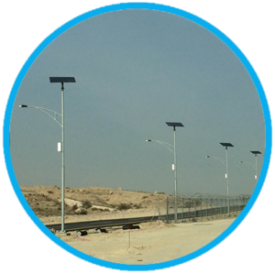 20-Year Service Life
Systems designed for multi-decade durability in severe tropical, desert, and freezing climates.
20-Year Service Life
Systems designed for multi-decade durability in severe tropical, desert, and freezing climates.
Why Global Buyers Partner with Solar Lighting International:
- US-Engineered Precision & Buy American Compliance: Our engineering team in Lancaster, South Carolina designs and specs complete systems to exceed stringent US Department of Transportation standards, offering full Buy American compliant solutions for government projects.
- Global Logistics & Regional Presence: To serve our international clients, Solar Lighting International operates regional offices and technical support hubs in South Carolina (USA), El Salvador, Ecuador, Oman, Puerto Rico, and Suriname—supported by a global network of certified installation partners.
- Photometric & Solar Autonomy Simulations: We don't sell off-the-shelf guesswork. Every project receives a tailored solar isolation calculation and photometric light pattern report based on the project location's exact GPS coordinates, historical solar irradiance data, and localized wind velocity profiles.
- Extreme Weather Resistance: Our solar light poles and traffic structures carry options for 180 MPH hurricane-wind resistance ratings, marine-grade anti-corrosion anodization, and a Lifetime Warranty on structural pole assemblies.
6. Frequently Asked Questions (FAQ) for Commercial Solar Traffic Sign Procurement
Below are detailed responses to the most critical technical and purchasing inquiries submitted by civil engineers, municipal buyers, and international contractors when evaluating LED integrated solar traffic warning systems.
Q1: How many continuous overcast days can an LED integrated solar traffic sign operate without sunlight?
Our commercial-grade LED integrated solar traffic signs are engineered with a minimum of 5 to 7 days of complete continuous battery autonomy (zero solar energy harvest). For northern latitude installations, extreme alpine conditions, or high-risk emergency zones, we custom-engineer solar PV arrays and LiFePO4 battery capacities to deliver up to 10 to 14 days of uninterrupted operation under total overcast or snow-covered panel scenarios.
Q2: Are Solar Lighting International's LED integrated traffic signs fully MUTCD compliant?
Yes. All of our traffic safety sign faces adhere strictly to the Federal Highway Administration’s (FHWA) Manual on Uniform Traffic Control Devices (MUTCD) standards. This includes standard sign dimensions, regulatory font styles, approved color chromaticity coordinates, 3M™ retroreflective background sheeting, and mandated LED flash frequencies (50 to 60 flashes per minute).
Q3: What is the expected operational lifespan of the solar panel, LEDs, and battery bank?
Our complete integrated solar traffic sign structures are designed for a 20-year overall service life. Monocrystalline solar panels carry a 25-year 80% power output performance warranty. The solid-state Philips Lumileds / Cree LED diodes are rated for over 100,000 hours of continuous operation (approx. 11+ years of continuous 24/7 flashing). The internal LiFePO4 battery pack yields 7 to 10 years of reliable cycle life before requiring a simple, tool-free field replacement.
Q4: How do integrated solar traffic signs withstand severe hurricanes, typhoons, and coastal saltwater environments?
Our sign enclosures and mounting hardware are constructed from heavy-gauge marine-grade anodized aluminum (6061-T6) and 304/316 stainless steel fasteners. Structural mounting brackets are engineered to withstand continuous wind velocities up to 130 MPH, with optional high-wind structural configurations engineered for up to 180 MPH hurricane wind resistance. All electronic circuitry is conformal coated and housed within IP67 sealed enclosures to prevent moisture ingress and salt-fog corrosion.
Q5: Can integrated solar traffic signs be activated on-demand via radar or wireless push-buttons?
Absolutely. In addition to standard 24/7 flashing modes, we offer intelligent activation triggers including radar speed sensors, wireless pedestrian push-buttons, passive infrared (PIR) thermal motion sensors, time-clock schedulers, and wireless master-slave synchronization modules for crosswalk pairs or sequential chevron arrays.
Q6: What is the installation process for these integrated solar traffic signs?
Installation is fast, straightforward, and requires zero specialized electrical labor or underground cabling. The fully integrated sign assembly mounts onto standard 2-3/8" OD round posts, square Telspar® posts, or U-channel sign poles using standard mounting clamps. Once clamped into place and angled toward south (or north in the Southern Hemisphere), the system is powered on via an internal waterproof switch and begins autonomous operation immediately.
Q7: Can Solar Lighting International manufacture custom sign legend text, multi-lingual messages, or non-standard sizes?
Yes. As a direct manufacturer, we provide complete custom fabrication services. We produce custom regulatory, warning, and informational signs in any language, custom dimensions, special retroreflective colors, and bespoke LED layouts tailored to international government regulations, industrial mining sites, private airport ramps, or commercial facilities.
Q8: What warranty protection is provided with Solar Lighting International products?
We stand firmly behind our engineering quality. Standard commercial shipments include a comprehensive multi-year system warranty covering solar panels, electronics, charge controllers, and LED arrays, backed by a Lifetime Warranty on structural aluminum and steel light poles. Detailed warranty documentation is provided with every project quotation.
Ready to Enhance Traffic Safety with Commercial-Grade Solar Technology?
Speak directly with our senior solar traffic engineering team in Lancaster, SC. We provide comprehensive technical consultation, photometric design reports, compliance certifications, and competitive factory-direct pricing for projects worldwide.
Inquire Now