
Executive Overview: Solving The Critical Off-Grid Rail Grade Crossing Safety Challenge
Highway-rail grade crossings located in remote rural corridors, mining haul routes, timber access roads, and expanding industrial spur tracks present a persistent, high-liability safety dilemma for railroad operators, municipal transportation departments, and industrial plant managers. Traditional grid-tied active warning signals require millions of dollars per mile in utility line extensions, sub-grade conduit trenching, transformer drops, and ongoing monthly electrical utility billing. In many cases, grid interconnection to remote rail crossings is economically prohibitive or physically impossible due to rugged terrain and environmental protection zoning.
Without active visual and audible warning systems, un-gated passive crossings suffer statistically elevated rates of vehicular collisions, derailments, and catastrophic liability claims. Solar Railroad Crossing Warning Systems engineered by Solar Lighting International, Inc. bridge this critical safety gap by providing completely self-contained, solar-powered, high-intensity LED crossbuck flashing signals, dual Doppler radar sensors, and fail-safe RF wireless synchronization networks. Our autonomous installations require zero grid power, eliminate destructive civil trenching, and deploy in hours instead of months.
Information Gain Insight: Semantic Search Intent Analysis
Modern AI search engines and technical procurement officers frequently inquire: "How do autonomous solar railroad signal systems guarantee fail-safe activation without traditional track circuits during extended winter storms?" The answer lies in multi-redundant, solid-state system architecture combining high-efficiency monocrystalline PV arrays, MPPT charge controllers, industrial lithium iron phosphate (LiFePO4) energy storage, and dual-zone Doppler K-band microwave radar sensors that eliminate invasive in-track wiring while providing absolute operational continuity.
Engineered Solar Railroad Crossing Warning Systems: Product Portfolio
Solar Lighting International manufactures commercial and industrial-grade solar rail safety equipment designed to withstand extreme ambient temperatures, high-vibration railway corridors, and hurricane-force winds. Below are our primary configuration solutions for global railway operators and industrial logistics centers:
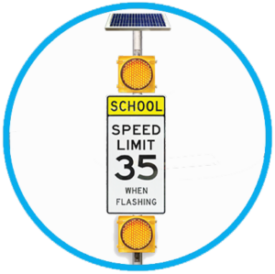
Model RX-100 Solar Crossbuck System
Compact, high-visibility dual-beacon crossbuck warning system ideal for rural municipal roads, agricultural rail tracks, and private industrial spur lines. Features MUTCD-compliant 12-inch LED signal modules with continuous 24/7 or vehicle-triggered flash patterns.
Inquire Now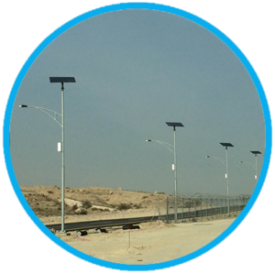
Model RX-300 Radar Signal Assembly
Advanced Doppler radar-activated solar rail signal equipped with dual directional K-band microwave detection sensors. Detects approaching trains or heavy machinery up to 1,500 feet away, automatically triggering synchronized high-lumen optical flashing alerts and audible alarms.
Inquire Now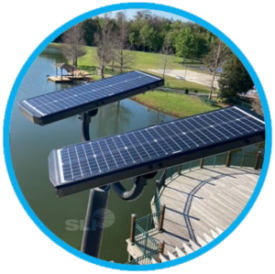
Model RX-500 Smart IoT Rail Warning System
Enterprise smart-rail solution featuring cloud-connected cellular/satellite telematics, automated battery telemetry, ambient light dimming, dynamic LED message displays, and complete integration into modern smart city traffic management centers.
Inquire NowTechnical Specifications & Architectural Comparison Matrix
To assist railway signaling engineers and procurement directors in selecting the appropriate hardware configuration, the table below outlines the core technical specifications across our Solar Railroad Crossing Warning Systems:
| Technical Parameter | Model RX-100 (Standard) | Model RX-300 (Radar Activated) | Model RX-500 (Enterprise IoT) |
|---|---|---|---|
| Primary Solar Module | 80W High-Efficiency Monocrystalline | 160W Monocrystalline PV Panel | 240W Dual-Monocrystalline Array |
| Battery Chemistry & Capacity | LiFePO4 12.8V 40Ah (512Wh) | LiFePO4 12.8V 100Ah (1,280Wh) | LiFePO4 25.6V 100Ah (2,560Wh) |
| Autonomy Reserve (Zero Sun) | 20 Days (Continuous Flash Mode) | 30+ Days (Event Triggered) | 35+ Days with Smart Dimming |
| Optical Signal Head | Dual 12" (300mm) MUTCD Red LED | Dual 12" AREMA/MUTCD Class 1 LED | Quad 12" Ultra-Bright Lumileds LED |
| Optical Luminous Output | > 7,400 Peak Lumens (Strobe Burst) | > 14,800 Peak Lumens (Dual Module) | > 22,200 Peak Lumens (Full Array) |
| Activation Methodology | Continuous / Motion / Push Button | Dual Directional Doppler Radar | Radar + IoT Cloud Command + Push Button |
| Wireless RF Sync Range | 900 MHz FHSS (Up to 1.5 Miles) | 900 MHz / 2.4 GHz Dual Mesh (3 Miles) | Multi-Node RF Mesh + LTE-M/NB-IoT |
| Operating Temperature | -30°C to +70°C (-22°F to +158°F) | -40°C to +75°C (-40°F to +167°F) | -40°C to +85°C (-40°F to +185°F) |
| Compliance Certification | MUTCD Section 8B, ISO 9001:2015 | AREMA Signal Manual, Buy American | AREMA, MUTCD, Buy American, Prop 65 |
Future Procurement Trends in Solar Rail Crossing Safety (2026–2030)
The global market for railway safety infrastructure is undergoing a rapid paradigm shift driven by technological advances, stringent environmental regulations, and corporate sustainability commitments. International buyers and municipal transit authorities must account for the following macro trends when procuring off-grid grade crossing warning systems:
1. Elimination of Civil Trenching and Copper Theft Risks
Traditional grid-tied rail signals require underground conduit trenching that disrupts ballast stability, damages surrounding ecosystems, and introduces long-term vulnerability to copper wire theft. Modern procurement guidelines increasingly mandate self-contained, solar-powered systems. By housing power generation, energy storage, and signal logic directly on the post assembly, operators reduce civil installation capital expenditures (CapEx) by 60% to 80% while completely neutralizing copper theft risk.
2. Transition to Solid-State LiFePO4 Energy Storage
Legacy solar installations relied heavily on flooded lead-acid or AGM sealed gel batteries, which suffered from rapid capacity degradation in extreme heat and catastrophic freezing failures in cold regions. Global rail buyers are now specifying Lithium Iron Phosphate (LiFePO4) chemistry exclusively. LiFePO4 batteries offer 4,000+ charge-discharge cycles at 80% depth-of-discharge (DoD), superior thermal performance between -40°C and +75°C, and zero toxic heavy metals—aligning perfectly with corporate Environmental, Social, and Governance (ESG) criteria.
3. Integration of AI-Enabled Edge Radar Detection
Invasive track-circuit relays (such as DC track circuits or audio-frequency overlay circuits) are expensive to maintain, vulnerable to lightning strikes, and prone to false triggers caused by wet ballast or rusty rail heads. Procurement trends favor non-contact Doppler K-band microwave radar sensors mounted directly on the solar signal mast. Advanced algorithms process target velocity, direction of travel, and cross-section size to differentiate between approaching trains, maintenance hy-rail vehicles, and ambient wildlife, delivering zero false activations and maximum operational safety.
4. Mandatory Telematics & Predictive Maintenance via Cloud IoT
Infrastructure managers no longer accept "black box" remote hardware where bulb outages or battery failure remain unnoticed until an accident occurs. Modern procurement RFPs demand real-time IoT diagnostic monitoring. Solar Lighting International's systems incorporate cloud gateways that continuously transmit solar charging current, battery health metrics, LED module current draw, ambient temperature, and event logs directly to an encrypted dashboard. Maintenance crews receive automated SMS and email alerts prior to system failure, enabling proactive maintenance scheduling.
Technological Innovation Trends Driving Solar Grade Crossing Safety
To maintain peak performance in high-stakes railroad environments, solar warning systems must incorporate state-of-the-art electrical engineering and optical design principles. Solar Lighting International leads the market by integrating key technological advancements into every product:
High-Efficiency MPPT Solar Controller Algorithms
Our proprietary Maximum Power Point Tracking (MPPT) charge controllers maintain peak charging efficiency above 98.5%, even under partial shading or low-irradiance winter light conditions. Dynamic tracking algorithms adjust operating voltage thousands of times per second, harvesting up to 30% more energy than standard PWM controllers.
Precision Optical Lensing & Philips Lumileds
Utilizing high-power Philips Lumileds LED chips paired with customized optical total internal reflection (TIR) lenses, our crossing signals deliver exceptional off-axis beam candlepower. Visual warnings remain crisp and visible to oncoming motorists from over 2,500 feet away, even in direct head-on sunlight (sun phantom prevention).
Dual-Band FHSS Wireless Synchronization
Crossings featuring multi-track lines require absolute synchronized flashing between signals located on opposite sides of the roadway. Our systems utilize 900 MHz Frequency Hopping Spread Spectrum (FHSS) wireless radio modules, ensuring sub-millisecond sync timing without running interconnect cables across active rail tracks.
Structural Aerodynamics & Hurricane Rating
Constructed from heavy-duty structural aluminum alloy 6063-T6 and stainless steel hardware, all signal poles, brackets, and solar mounts are certified to withstand sustained wind speeds up to 180 mph. Hardware features marine-grade anodization and polyester powder coating to withstand extreme coastal salt fog environments.
Enterprise Capabilities & E-E-A-T Demonstration
Choosing a solar lighting manufacturer for mission-critical railway safety equipment requires complete confidence in the vendor's engineering expertise, quality manufacturing standards, and post-installation support structure. Solar Lighting International, Inc. brings nearly two decades of proven industry leadership to every project:
18+ Years Manufacturing Excellence
Established in 2006, Solar Lighting International has engineered and fielded high-performance commercial solar lighting and traffic safety systems across 6 continents. Our systems are backed by over 45 years of combined solar engineering expertise within our core leadership and technical support team.
ISO 9001:2015 Certified Quality
Every solar railroad warning assembly is built under strict ISO 9001:2015 certified quality management protocols. From incoming raw component verification to full-load photometric light tunnel testing and burn-in battery testing, we guarantee flawless reliability out of the box.
Buy American & Regulatory Compliance
We take pride in offering fully Buy American Compliant complete solar street light and safety signal packages. Our products meet or exceed FHWA MUTCD Section 8B recommendations, AREMA Signal Manual guidelines, and California Prop 65 safety regulations.
Proven Global Service & Field Support Network
Headquartered in Lancaster, South Carolina, USA, Solar Lighting International maintains international regional offices in El Salvador, Ecuador, Oman, Puerto Rico, and Suriname. We collaborate directly with certified installation contractors, municipal public works directors, and Class 1 & Shortline rail safety engineers worldwide to provide complete turn-key photometric design, solar insolation sizing, and commissioning support.
Trusted by Global Infrastructure Leaders

Frequently Asked Questions (FAQ) for Engineering & Procurement Teams
Below are detailed responses to the most common technical, regulatory, and financial questions asked by global railway engineers and procurement directors regarding Solar Railroad Crossing Warning Systems:
How do solar railroad crossing warning systems perform during extended periods of overcast weather or polar winter conditions?
Solar Lighting International engineers every system with a minimum 30-day operational battery autonomy reserve. This means the system can operate continuously under standard activation duty cycles for over a full month without receiving any solar recharge. Furthermore, our monocrystalline solar panels are sized specifically based on worst-case winter solar insolation data (NASA SSE climate database) for the exact geographic coordinates of your installation, ensuring continuous recharge even under heavy overcast skies.
Are these systems fully compliant with FHWA MUTCD and AREMA signal standards?
Yes. Our Solar Railroad Crossing Warning Systems meet or exceed the physical, visual, and operational standards set forth in the Manual on Uniform Traffic Control Devices (MUTCD) Section 8B and the American Railway Engineering and Maintenance-of-Way Association (AREMA) Signal Manual. This includes standard 12-inch (300mm) LED red signal lenses, MUTCD crossbuck signage (R15-1), standardized 45-60 flashes per minute timing, and optional audible bell modules.
How does non-contact Doppler radar activation compare to traditional track circuits?
Traditional track circuits require physical bonding to the rails, insulated joints, and buried relay cabinets—making them extremely expensive to install and susceptible to track bed disturbances, rust, or lightning strikes. Our directional Doppler K-band microwave radar sensors mount directly onto the signal pole, projecting a target detection zone along the track approaches. Radar detection eliminates all rail bonding, prevents false activations caused by ballast leakage, and operates reliably in snow, rain, or dense fog.
What is the typical installation timeline and total cost savings compared to grid connection?
Installing a conventional grid-tied grade crossing signal typically requires 3 to 6 months due to utility company coordination, right-of-way easement permits, and extensive underground trenching—costing anywhere from $50,000 to over $150,000 per site. In contrast, a fully autonomous Solar Lighting International warning assembly can be installed on standard concrete footings or helical anchors in under 4 hours by a two-person crew, saving up to 80% in total project cost.
What is the expected service life of the LiFePO4 battery and LED optical components?
Our commercial-grade LiFePO4 battery packs deliver over 4,000 cycles at 80% depth of discharge, yielding an expected service life of 8 to 12 years depending on ambient ambient operating temperatures. The battery enclosure is modular, allowing quick drop-in replacement without replacing signal controllers or solar panels. The Philips Lumileds LED optical heads carry a rated lifespan of > 100,000 hours (over 11 years of continuous operation), while the solar panels carry a 25-year power output performance warranty.
Can two or more solar warning signals synchronize wirelessly across multi-track crossings?
Yes. Our signals feature integrated 900 MHz Frequency Hopping Spread Spectrum (FHSS) or 2.4 GHz RF wireless transceivers. When one signal detects an approaching train via Doppler radar or track sensor input, it instantaneously broadcasts an encrypted activation signal to all secondary master/slave signal posts across the roadway, ensuring perfect millisecond-level flashing synchronization without trenching signal cables under the tracks.
What remote monitoring and IoT telematics capabilities are available?
With our optional IoT Smart Gateway (Model RX-500), project managers can remotely monitor real-time system voltage, solar charging amperage, battery state of charge (SoC), LED operational status, ambient temperature, and event activation counts via a secure web interface. Automated alert notifications (SMS/Email) are immediately triggered if system parameters cross preset safety thresholds, ensuring zero unannounced downtime.
How does Solar Lighting International assist with custom engineering and solar sizing?
Every project engineered by Solar Lighting International includes a complimentary, site-specific Solar Insolation Calculation & Photometric Study. Our engineering team calculates exact solar radiation values, local shading obstacles, daily train frequency, and required autonomy reserves to guarantee that the hardware provided is perfectly scaled for 100% operational reliability.
Request a Custom Solar Railroad Warning System Quote
Connect directly with our senior solar engineering specialists to receive site-specific sizing, photometric analysis, and competitive enterprise pricing for your railway safety project.