
Autonomous Solar High Water Flood Detection: Engineering Resilience for Climate Extremes
As global climate volatility accelerates, flash flooding and localized low-water crossing submergence have become primary threats to transportation safety and public safety infrastructure. A Solar High Water Flood Detection System is an off-grid, self-contained early warning solution designed to continuously monitor water level thresholds in culverts, river basins, underpasses, and flood-prone roadways. Operating independently of grid power, these systems combine precision hydrological sensors, high-efficiency monocrystalline solar panels, military-grade LiFePO4 energy storage, and high-visibility flashing amber LED beacons or dynamic message displays.
When rising floodwaters breach predefined safety thresholds, the system's integrated telemetry instantly activates automated visual warning beacons (compliant with MUTCD standards) while transmitting immediate data alerts via cellular (LTE-M/NB-IoT), satellite (Iridium SBD), or LoRaWAN networks to central Traffic Management Centers (TMC) and emergency response systems.
Information Gain: Why Grid-Tied Flood Warnings Fail During Catastrophic Storms
During severe weather events (such as Category 4+ hurricanes or atmospheric rivers), grid power failure rates exceed 78% in vulnerable coastal and low-lying zones. Conventional AC-powered flood sensors and hardwired warning lights collapse precisely when they are needed most. Solar Lighting International's autonomous solar flood detection systems utilize dual-redundant MPPT charging and 20-day zero-sun autonomy reserve margins, ensuring uninterrupted operation through prolonged grid blackouts and extended cloud cover.
Commercial Product Recommendations: System Configurations
Solar Lighting International offers scalable, modular flood detection architectures engineered to match specific hydrological flow dynamics, climate profiles, and installation environments. Below are our premier commercial-grade product configurations recommended for municipal and B2B procurement:
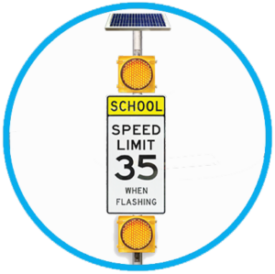
Sentinel-Hydro 360™
Non-contact 80GHz FMCW radar flood detection unit paired with dual 12-inch amber LED warning flashers. Ideal for fast-flowing rivers and severe culverts.
Request Specs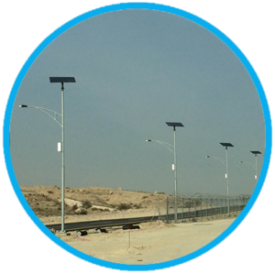
FlashGuard-LowWater™
Submersible differential pressure hydrostatic sensor station engineered for remote low-water crossings, dip crossings, and unpaved county roads.
Request Specs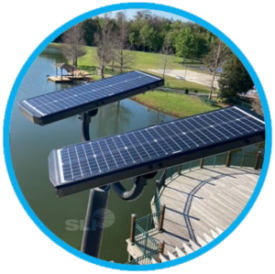
SmartGrid-IoT FloodMaster™
Comprehensive IoT flood station equipped with dual-lens optical verification cameras, ultrasonic depth sensors, and cloud management dashboard.
Request SpecsTechnical Specification Comparison Matrix
Selecting the proper sensor architecture and solar power package depends on water velocity, turbulence, ambient temperature range, and site-specific solar insolation. Comparative technical parameters are outlined below:
| Technical Feature | Sentinel-Hydro 360™ | FlashGuard-LowWater™ | SmartGrid-IoT FloodMaster™ |
|---|---|---|---|
| Primary Sensor Type | Non-Contact 80GHz FMCW Radar | Submersible Hydrostatic Pressure | Ultrasonic + Optical AI Cam |
| Measurement Range | 0.1m to 40m (0.33ft to 131ft) | 0.5m to 10m (1.6ft to 33ft) | 0.2m to 15m (0.65ft to 49ft) |
| Measurement Accuracy | ±2 mm (0.07 inches) | ±0.25% Full Scale | ±5 mm (0.19 inches) |
| Solar PV Capacity | 60W - 120W Monocrystalline | 40W - 80W Monocrystalline | 100W - 180W Monocrystalline |
| Energy Storage | LiFePO4 12.8V 36Ah to 72Ah | LiFePO4 12.8V 24Ah to 48Ah | LiFePO4 12.8V 60Ah to 100Ah |
| Autonomy (No Sun) | 21 Days @ 24/7 Monitoring | 18 Days @ 24/7 Monitoring | 15 Days @ Full Camera Uplink |
| Warning Output | Dual 12" Amber Beacons (ITE/MUTCD) | Single/Dual Amber Flashing LED | Variable Message Sign (VMS) + Beacons |
| Telemetry Protocols | LTE-M / NB-IoT / Modbus RTU | Cellular / LoRaWAN Direct | Dual Cellular + Satellite Iridium SBD |
| Enclosure / Rating | NEMA 4X / IP67 Stainless Steel | IP68 Sensor / NEMA 4X Controller | NEMA 4X Powder-Coated Aluminum |
| Operating Temp Range | -40°C to +75°C (-40°F to +167°F) | -20°C to +65°C (-4°F to +149°F) | -35°C to +70°C (-31°F to +158°F) |
Deep Engineering: Sensor Physics, False Trigger Elimination & Energy Sizing
A common failure mode in legacy flood detection equipment is the frequency of false alerts triggered by floating debris, heavy rainfall droplets, aquatic wildlife, or foam accumulation. Solar Lighting International eliminates false positive triggers through multi-stage signal processing and advanced sensor fusion.
1. 80GHz FMCW Radar vs. Submersible & Ultrasonic Sensors
Non-contact 80GHz Frequency Modulated Continuous Wave (FMCW) Radar represents the gold standard in hydrological sensing. Operating at a high frequency, the beam angle is narrowed to under 3 degrees, allowing precise targeted measurement through narrow bridge railings or heavy brush without surface interference:
- FMCW Radar Dynamics: Unaffected by ambient air temperature gradients, steam, wind, or heavy rain attenuation. The 80GHz wave penetrates surface foam to reflect accurately off the actual liquid plane.
- Hydrostatic Pressure Transducers: Measure water head pressure directly at the stream bed. Stainless steel or titanium diaphragms withstand high-velocity debris impacts. Integrated barometric pressure compensation tubes ensure accuracy regardless of atmospheric pressure swings.
- Ultrasonic Transducers: Cost-effective solution for static retention ponds and slow-moving culverts, utilizing temperature-compensated acoustic pulse reflection timing.
2. Mathematical Solar Engine & LiFePO4 Battery Autonomy Calculation
To satisfy municipal compliance mandates and prevent mid-crisis shutdown, our solar engines undergo rigorous mathematical modeling based on the site's lowest historical solar insolation month (typically December in the Northern Hemisphere).
Solar Autonomy Equation for Critical Infrastructure
The total daily system energy consumption ($E_{\text{daily}}$) in Watt-hours is calculated as:
$$E_{\text{daily}} = (P_{\text{standby}} \times 24\text{ hrs}) + (P_{\text{active}} \times T_{\text{alarm\_hrs}})$$
Where $P_{\text{standby}}$ is the low-power telemetry sensing load (~0.8W), $P_{\text{active}}$ is the full alarm state draw including high-intensity LED flashers and cellular telemetry (~18W), and $T_{\text{alarm\_hrs}}$ is the expected active flooding alert duration per day (e.g., 6 hours).
Required LiFePO4 battery capacity ($C_{\text{Ah}}$) for 20 days of continuous autonomy at a maximum 80% Depth of Discharge (DoD):
$$C_{\text{Ah}} = \frac{E_{\text{daily}} \times 20\text{ days}}{12.8\text{V} \times 0.80 \times \eta_{\text{temp}}}$$
Where $\eta_{\text{temp}}$ represents the temperature derating factor (0.85 at -10°C). This conservative methodology ensures zero power loss even during protracted storm cycles.
Global Procurement Trends in Solar Flood Detection Infrastructure (2026–2035)
B2B buyers, municipal engineers, and regional procurement officers must account for shifting regulatory, environmental, and technological paradigms when writing RFPs for flood monitoring assets. Global procurement trends highlight four major shifts:
Trend 1: Transition from Reactive Closures to AI Predictive Edge Telemetry
Traditional flood indicators simply alerted drivers when water was already washing over the pavement. Next-generation systems evaluate rate-of-rise ($\frac{dh}{dt}$) metrics. If stream elevation increases by more than 5 cm per minute, the system forecasts imminent flooding, activating advance warning beacons miles upstream and transmitting early warnings to navigation platforms (Google Maps, Waze, Apple Maps) via automated API feeds before water reaches the roadway.
Trend 2: ESG Compliance, Decarbonization & Federal Resilience Grants
Government entities globally are prioritizing zero-carbon infrastructure. Off-grid solar flood detection stations eliminate the carbon footprint associated with trenching utility lines through natural riverbanks and wetlands. Furthermore, solar-powered safety systems qualify for federal infrastructure grants, including FEMA’s Building Resilient Infrastructure and Communities (BRIC) program and the US Department of Transportation's PROTECT Grant Program.
Trend 3: Integration with Autonomous Vehicle Infrastructure (V2X Communications)
As autonomous vehicles (AVs) expand, physical signs alone are insufficient. Modern solar flood detection nodes incorporate Dedicated Short-Range Communications (DSRC) and C-V2X (Cellular Vehicle-to-Everything) transceivers, broadcasting emergency digital alert signals directly to incoming autonomous vehicle control units to initiate automated braking and rerouting.
Why Choose Solar Lighting International? Standard-Setting Engineering
Since 2006, Solar Lighting International, Inc. has established itself as an authoritative global manufacturer of commercial solar lighting, solar traffic warning flashers, and smart utility infrastructure. Our engineering team brings over 45 years of combined solar engineering experience to every project.
ISO 9001:2015 Certified Quality
Every solar flood detection control panel, charge controller assembly, and mounting structure is manufactured under strict ISO 9001:2015 quality management procedures. Every unit undergoes 100% full-load burn-in testing, thermal chamber cycling, and waterproof IP67 pressure testing prior to dispatch.
Buy American Compliant
Solar Lighting International systems are designed and engineered in the United States. Our heavy-duty aluminum and steel light poles and solar mounting structures are Buy American Compliant, making them eligible for federally funded DOT, FHWA, and municipal infrastructure projects.
Our global footprint extends across North America, Latin America, the Middle East, and Asia-Pacific. With active field deployments in demanding climates—from hurricane-prone Caribbean coastal roads to high-altitude Andean mountain passes—our systems deliver unmatched operational longevity backed by our Lifetime Pole Warranty and comprehensive technical support.
Need Custom Photometric or Hydrological System Sizing?
Our engineering team provides complimentary site-specific solar insolation analyses, wiring schematics, and sensor placement recommendations tailored to your exact flood zone specifications.
Contact Us for Engineering ConsultationFrequently Asked Questions (FAQ) for Global Buyers & Engineers
Here are direct, authoritative answers to the most common questions raised by procurement officers, civil engineers, and infrastructure planners regarding solar high water flood detection systems.
Partner with Solar Lighting International for Resilient Flood Early Warning
Protecting lives, preserving municipal infrastructure assets, and maintaining transportation network continuity requires uncompromised engineering quality. Solar High Water Flood Detection Systems from Solar Lighting International deliver field-proven reliability, zero grid dependency, and seamless smart city integration.
Whether you are updating a single low-water crossing or designing a regional watershed monitoring network, our expert sales engineers are ready to assist with system sizing, photometric reports, and competitive bid specification development.