
An authoritative technical evaluation guide for municipal planners, civil contractors, commercial project developers, and enterprise B2B buyers seeking zero-grid high-lumen outdoor lighting infrastructure.
Decarbonization, Grid Resiliency, and Information Gain in Modern Outdoor Lighting Architecture
The global transition toward off-grid utility infrastructure has fundamentally shifted how municipal decision-makers, commercial real estate developers, and civil engineers evaluate Commercial Solar Street Lights. Historically viewed as localized supplementary fixtures, contemporary off-grid commercial solar luminaires are now engineered to replace high-voltage AC grid connections entirely. Driven by accelerating utility interconnect delays, rising copper wiring costs, severe weather vulnerabilities, and stringent ESG compliance mandates, commercial solar street lighting represents a strategic infrastructure upgrade yielding immediate Total Cost of Ownership (TCO) reductions.
When global buyers query search engines and conversational AI systems regarding commercial solar illumination, their intent transcends basic product selection. Engineering procurement managers seek detailed technical metrics: lumen efficacy per watt, autonomous operating reserve days, battery chemistry degradation thermal curves, MPPT tracking efficiency, optical distribution classification (IESNA Type I to V), structural wind resistance, and compliance certification (ISO 9001:2015, Buy American Act, UL1598, and CE). This guide delivers comprehensive information gain by contextualizing these parameters against real-world engineering constraints.
Traditional grid-tied street lighting incurs substantial civil work costs, including asphalt cutting, deep trenching, copper wiring, transformer installation, and local utility interconnect permitting. Commercial solar street light systems operate as autonomous power plants, eliminating up to 70% of upfront civil installation capital expenses.
Utilizing high-efficiency monocrystalline solar modules (exceeding 22.5% module efficiency) paired with Lithium Iron Phosphate (LiFePO4) storage, commercial solar lights capture clean solar energy during daytime peak hours and deploy controlled lumen output through dark-sky compliant LED optics at night.
During severe weather events, grid blackouts, or natural disasters, municipal infrastructure relying on centralized utility grids goes dark. Autonomous commercial solar street lights remain fully functional, providing crucial roadway visibility, public safety, and emergency corridor illumination.
Trusted by Leading Enterprises, Municipalities & Utilities Worldwide





Selecting the optimal mechanical and optical architecture for arterial roadways, commercial parking lots, public pathways, and traffic corridors.
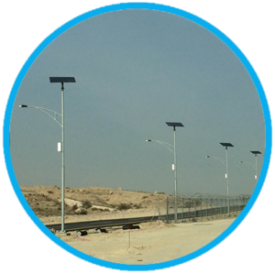
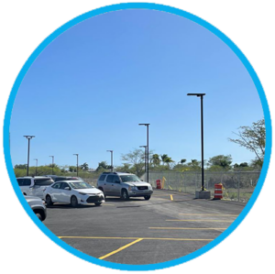
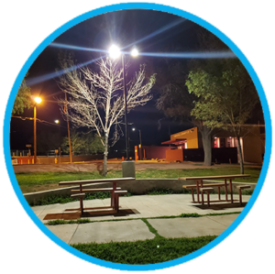
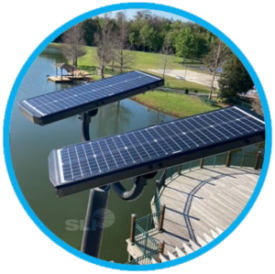
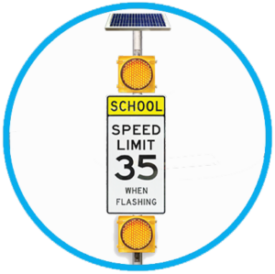
To assist procurement committees, civil engineering consultants, and commercial developers in selecting the precise luminaire format, Solar Lighting International provides a comparative technical specification matrix evaluating core physical and operational parameters.
| Engineering Parameter | Split-Type Commercial System | All-In-One Integrated Luminaire | Smart IoT Hybrid Grid Interactive |
|---|---|---|---|
| Primary Application | Multi-lane highways, heavy commercial lots, high-sun/high-load zones | Perimeter fencing, minor access roads, HOA pathways, security perimeter | Smart City arterial roads, extreme weather regions, dynamic dimming zones |
| Maximum Lumen Output | 7,400 to 22,200 Lumens (Up to 44,400 multi-fixture) | 3,000 to 12,000 Lumens | 10,000 to 30,000 Lumens (Grid-backed switchover) |
| PV Module Orientation | Independent tilt angle adjustment (0° - 60°) for latitude optimization | Fixed horizontal mount aligned with fixture tilt | Bi-facial vertically mounted pole wrap or motorized MPPT tracking |
| Battery Enclosure Location | Subterranean direct-burial vault or top-pole vented aluminum lockbox | Integrated within luminaire aluminum housing | Vented pole base lockbox with thermal barrier insulation |
| Autonomy Reserve (Sunless Days) | 5 to 7 Continuous Days (100% Depth of Discharge protection) | 3 to 5 Days (Smart dimming fallback dependent) | 5 Days continuous battery + Grid failover redundancy |
| Wind Load Resistance | AASHTO rated up to 180 MPH (Category 5 Hurricane Resistant) | Standard EPA rating (Up to 140 MPH) | AASHTO rated up to 180 MPH with reinforced anchor bolts |
| Service Life Expectancy | 20+ Years Structure / 10+ Years LiFePO4 Battery | 10–12 Years Structure / 7–8 Years Integrated Battery | 20+ Years Structure / 10–12 Years Smart LiFePO4 Pack |
Emerging standards shaping municipal tenders, commercial bids, and technical specification mandates
As global municipal entities and industrial project developers scale their clean energy deployments, the procurement criteria for commercial solar street lights have evolved beyond mere initial price-per-watt metrics. Contemporary tenders mandate comprehensive lifecycle modeling, environmental durability verification, smart connectivity, and strict optical pollution compliance. Understanding these macro trends is vital for project engineers drafting technical specs for 2026 and beyond.
Legacy solar lighting systems utilizing Sealed Lead-Acid (SLA), Gel, or standard Lithium Cobalt Oxide (LiCoO2) batteries suffered from premature capacity fade when subjected to thermal cycling between extreme cold ambient temperatures (-20°C) and elevated desert heat (+60°C). Global procurement trends now mandate Lithium Iron Phosphate (LiFePO4) chemistry exclusively. LiFePO4 offers unmatched advantages:
Modern commercial solar street lights no longer operate in complete isolation; they serve as critical edge node endpoints in municipal Internet of Things (IoT) networks. Leveraging wireless mesh networks (Zigbee, LoRaWAN, Cellular NB-IoT), centralized management software (CMS) empowers city operators to:
Light pollution is increasingly regulated by global municipal codes and environmental protection agencies. Commercial solar street lighting must balance public safety illumination with ecological preservation. High-gain procurement specifications now mandate compliance with the International Dark-Sky Association (IDA) guidelines:
Addressing core technical, financial, and logistical queries from global project buyers and civil engineers
Commercial-grade solar street lights engineered by Solar Lighting International utilize a calculated "Days of Autonomy" design framework (typically 5 to 7 sunless days). By pairing high-efficiency monocrystalline solar panels with Maximum Power Point Tracking (MPPT) charge controllers and LiFePO4 battery storage, the system harvests ambient energy even on cloudy days. Furthermore, smart adaptive dimming algorithms dynamically reduce lumen output during low-battery states, guaranteeing continuous nighttime security lighting without complete system shutdown.
MPPT (Maximum Power Point Tracking) controllers continuously track the voltage and current profile of the PV array to extract maximum power output, delivering up to 30% greater charging efficiency compared to traditional Pulse Width Modulation (PWM) controllers. In commercial applications—especially in high-latitude regions or areas prone to seasonal temperature fluctuations—MPPT controllers are essential to ensure rapid battery replenishment during shortened winter daylight hours.
For hurricane-prone regions (such as coastal North America, the Caribbean, and Southeast Asia), commercial solar light poles must be engineered according to AASHTO (American Association of State Highway and Transportation Officials) structural standards. Solar Lighting International designs high-strength aluminum and steel pole assemblies rated to withstand wind velocities up to 180 MPH (290 km/h), incorporating heavy-duty anchor bolt foundation templates and marine-grade anodized anti-corrosion coatings.
Lumen requirements depend on road classification (collector, local, or arterial), pole height, pole spacing, and required lux/foot-candle illumination levels specified by IESNA standards. Generally, commercial pathway lighting requires 3,000 to 6,000 lumens, standard two-lane roadway lighting requires 7,400 to 14,800 lumens, while heavy commercial parking lots or wide intersections deploy high-output fixtures delivering 22,200 up to 44,400 lumens. Our engineering team generates custom DIALux photometric reports to model exact light coverage prior to ordering.
Buy American Compliant products meet the legislative mandates of the Buy American Act (BAA) and Build America, Buy America Act (BABA), requiring that public infrastructure projects funded by US federal or municipal grants utilize products manufactured or substantially transformed within the United States. Solar Lighting International designs and engineers complete solar street light pole systems compliant with these federal procurement guidelines.
The average ROI payback period for commercial solar street lights ranges from 18 to 36 months, depending on local trenching costs, electrical utility rates, and copper wiring expenses. In retrofit or new development projects where extended utility line extensions would be required, solar street lights deliver a 100% immediate capital cost payback on day one by completely bypassing grid connection infrastructure costs.
Founded in 2006, Solar Lighting International brings nearly two decades of continuous manufacturing innovation. Our senior engineering team offers over 45 years of combined solar engineering experience, designing robust off-grid systems deployed across 6 continents.
Every commercial solar street light system undergoes strict quality assurance protocols under ISO 9001:2015 standards, ensuring flawless mechanical integrity, optical consistency, and battery pack longevity across large-scale municipal contract deployments.
Utilizing premium Philips Lumileds LED chips paired with high-efficiency MPPT electronics, our commercial luminaires achieve extreme efficacy (up to 200 lm/W), producing single fixture outputs up to 22,200 lumens and dual-head configurations delivering up to 44,400 lumens.
We provide full turn-key photometric design and pole placement simulation using industry-standard DIALux software before purchase. Our commercial aluminum and steel poles carry a Lifetime Warranty, backed by 180 MPH hurricane resistance ratings.
Headquartered in Lancaster, South Carolina USA, with strategic regional offices and support hubs in El Salvador, Ecuador, Oman, Puerto Rico, and Suriname, we deliver localized engineering support, Buy American Act compliance, and certified contractor networks worldwide.


Download our comprehensive product catalog, complete mechanical drawings, and photometric specification sheets. Speak directly with our senior application engineers to receive custom project modeling today.