
All-In-One LED Solar Street Lights combine the lamp, solar panel, battery, controller, and housing in one compact unit. This integrated structure removes long underground cables and simplifies installation in streets, parks, parking areas, and rural paths. During daylight, the photovoltaic panel stores energy in a battery. After sunset, the LED module uses that power to illuminate the road.
Solar lighting engineer Dr. Arun Tiwari explains, “A solar street light succeeds when its battery, optics, and controls work as one system.” This principle matters more than impressive wattage figures. A well-designed unit should match local sunlight, nighttime traffic, pole height, and required lighting levels. It should also manage cloudy days without creating unsafe dark periods.
Look closely at the details. A quality fixture may include a lithium battery, a motion sensor, programmable dimming, and a sealed aluminum housing. These features can reduce maintenance and improve energy use. However, one product cannot fit every location. Heavy shade, dust, long winters, or poor battery ventilation may reduce performance.
That is the uncomfortable part. “Maintenance-free” is often overstated. Panels still need cleaning, batteries eventually age, and drainage design can affect service life. Buyers should check photometric reports, battery capacity, warranty terms, ingress protection, and replacement procedures. Field testing is more convincing than marketing language.
This article explains how All-In-One LED Solar Street Lights operate, where they perform well, and what limitations deserve careful attention. Reliable results begin with realistic site assessment, not simply choosing the brightest lamp.
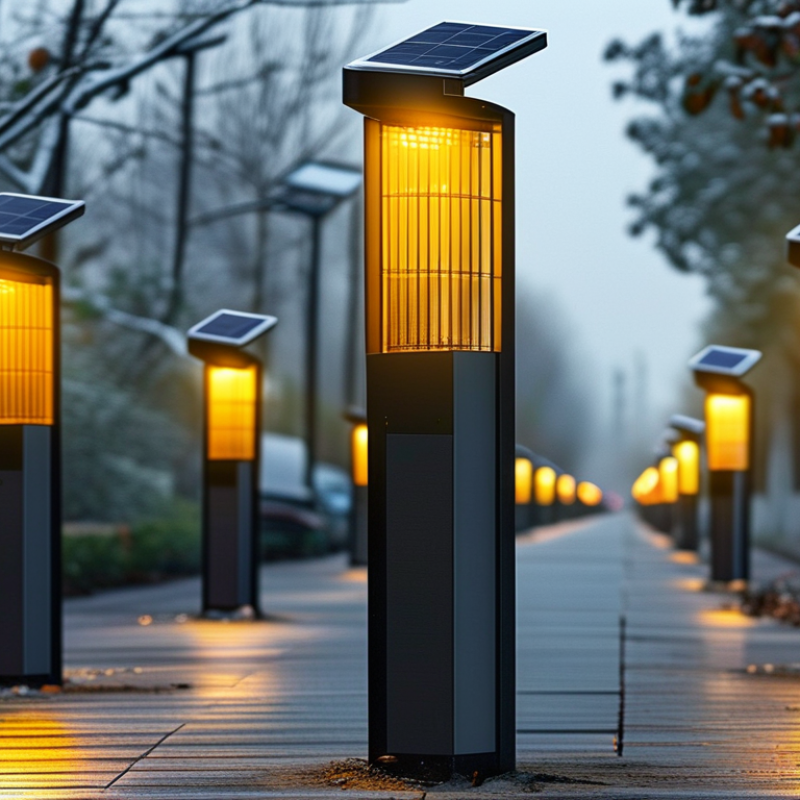
All-in-one LED solar street lights combine the solar panel, LED lamp, battery, controller, and housing in one compact unit. The panel converts sunlight into electricity during daylight hours. Stored energy powers the lamp after sunset. Unlike split solar systems, this design uses fewer external cables and usually requires simpler installation. No cable trench is needed. That matters in remote roads, parks, courtyards, and temporary access areas.
Core features include high-efficiency LED chips, automatic dusk-to-dawn control, and a rechargeable battery sized for nighttime operation. Many models use motion sensors to provide gentle background lighting and brighter illumination when people or vehicles approach. This reduces unnecessary energy use. A charge controller protects the battery from overcharging and deep discharge. Reliable housings should resist rain, dust, heat, and vibration, with suitable protection ratings verified through technical documents rather than appearance alone.
From practical installation experience, panel direction and local weather affect performance more than many buyers expect. A shaded panel can reduce battery recovery, even when the lamp looks powerful. Battery capacity also declines in cold conditions and after repeated cycles. The all-in-one format saves space, but it can make repairs less convenient because components share one enclosure. Remote monitoring may help identify low voltage or abnormal charging, although it adds cost and may not be necessary for small projects. Careful lighting calculations, pole spacing, and seasonal testing produce more dependable results than choosing by wattage alone.
| Data Dimension | Specification | Typical Data or Range | Definition and Practical Significance |
|---|---|---|---|
| Product Definition | Integrated system design | LED lamp, solar panel, battery, controller, and housing in one outdoor unit | An all-in-one solar street light combines the main lighting and power-storage components into a single luminaire body, reducing the need for separate equipment enclosures. |
| Lighting Technology | Light source | High-efficiency LED modules | LEDs convert electrical energy into light efficiently, provide instant illumination, and generally require less maintenance than conventional discharge lamps. |
| System Power | Rated lighting power | Commonly 20–120 W, depending on road and area requirements | The required power depends on mounting height, road width, target illuminance, spacing, operating hours, and local solar conditions. |
| Photovoltaic Module | Solar panel type | Monocrystalline or polycrystalline silicon photovoltaic panel | The panel converts sunlight into electricity during the day to charge the battery and support nighttime operation. |
| Solar Charging | Charge controller | PWM or MPPT control, depending on system design | The controller regulates charging, prevents overcharging and excessive discharge, and manages the transition between daytime charging and nighttime lighting. |
| Energy Storage | Battery chemistry | Lithium iron phosphate or other lithium-ion battery systems | Lithium-based batteries are widely used because of their compact size, usable energy capacity, and suitability for repeated charge and discharge cycles. |
| Battery Capacity | Energy storage sizing | Usually selected to provide several nights of reserve autonomy | Battery capacity is determined by lamp power, operating schedule, local weather patterns, allowable depth of discharge, and the required number of backup days. |
| Operating Schedule | Nighttime lighting duration | Approximately 8–12 hours per night, often with dimming | Many systems use programmable dimming, motion sensing, or time-based control to reduce energy consumption during periods of low traffic. |
| Lighting Performance | Color temperature | Commonly 3,000–6,500 K | Warmer color temperatures can reduce glare and visual disturbance, while cooler temperatures may provide a brighter visual appearance. The appropriate choice depends on the application. |
| Lighting Performance | Color rendering index | Often Ra 70 or higher for general outdoor lighting | A higher color rendering index allows illuminated objects and surroundings to appear more similar to their natural colors. |
| Optical Design | Beam distribution | Type II, Type III, Type IV, or other roadway-specific distributions | The optical lens directs light toward the road and surrounding area, helping achieve suitable uniformity while limiting unnecessary upward or off-road light. |
| Solar Resource | Required sunlight | System sizing should use local peak sun hours and seasonal solar data | Solar performance varies with latitude, shading, panel orientation, weather, dust, and seasonal changes. A system should be designed using location-specific solar conditions. |
| Autonomy | Backup capability | Commonly about 2–5 cloudy or low-sun days, subject to design | Autonomy indicates how long the light can continue operating with limited solar charging. Higher autonomy generally requires a larger battery, panel, or both. |
| Protection Rating | Ingress protection | Outdoor housings are commonly designed to meet IP65 or higher | Ingress protection indicates resistance to dust and water. The exact rating should be verified for the complete assembled product and its installation environment. |
| Mechanical Durability | Impact resistance | Many outdoor luminaires target IK08 or higher | The IK rating describes resistance to mechanical impact. A higher rating can be beneficial in public spaces exposed to accidental contact or vandalism. |
| Operating Environment | Temperature range | Often approximately −20°C to 60°C, subject to battery and controller limits | The actual operating range is determined by the weakest component, especially the battery. Local climate conditions should be checked before installation. |
| Control Functions | Automatic operation | Photocell, timer, remote control, motion sensor, or programmable controller | Automatic controls switch the light on at dusk, off at dawn, or adjust brightness according to time and movement, reducing manual intervention and energy use. |
| Installation | Mounting arrangement | Pole-top or side-entry mounting; typical installation height is about 4–12 m | Mounting height and bracket angle affect lighting coverage, glare, spacing, wind loading, and the required optical distribution. |
| Electrical Design | Grid connection | Normally off-grid and powered by stored solar energy | Because the unit does not normally require a utility cable, it can be used where grid extension is costly, unavailable, or difficult to install. |
| Maintenance | Routine service requirements | Periodic cleaning, inspection, fastener checks, and battery evaluation | The integrated structure can simplify installation and reduce exposed wiring, but the panel, battery, seals, and mounting hardware still require periodic inspection. |
| Environmental Impact | Energy source and emissions | Solar-powered operation with no direct operating emissions at the installation site | The system uses renewable solar energy during operation. Overall environmental performance also depends on component manufacturing, battery replacement, transport, and end-of-life recycling. |
| Typical Applications | Suitable installation areas | Residential roads, pathways, parks, campuses, parking areas, rural roads, and public spaces | All-in-one solar street lights are most suitable where moderate lighting levels are required and independent operation can provide installation or infrastructure advantages. |
| Note: The values shown are general industry ranges for comparison and preliminary planning. Final product selection should be based on a site-specific photometric study, solar-resource assessment, structural calculation, electrical safety requirements, and applicable local standards. | |||
It combines the solar panel, LED lamp, battery, controller, and housing in one compact unit.
They suit rural paths, parks, courtyards, parking areas, and remote entrances.
Usually, no cable trench is needed.
Some models provide dim background lighting when areas are empty.
Cloud cover, dust, shade, and shorter winter daylight can reduce charging.
Battery capacity should match nighttime lighting hours and required backup days.
Check panel direction, tilt angle, pole spacing, wind exposure, and local sunlight conditions.
Yes. Clean dust from the panel and inspect the unit after storms.
Shared components save space but can make repairs less convenient.
All-In-One LED Solar Street Lights are integrated outdoor lighting systems that combine the solar panel, LED lamp, rechargeable battery, controller, and supporting structure in one compact unit. During the day, the solar panel converts sunlight into electricity and stores it in the battery. At night, the controller automatically powers the energy-efficient LED lamp, often using light or motion sensors to adjust operation and reduce energy consumption.
Their main advantages include simple installation, low operating costs, reduced wiring requirements, and suitability for areas without reliable grid access. However, performance can be affected by cloudy weather, limited sunlight, battery aging, and incorrect system sizing. These lights are commonly used on residential roads, rural streets, parks, pathways, parking areas, and other public spaces. When selecting a system, users should consider local sunlight conditions, lighting coverage, battery capacity, panel efficiency, pole height, weather resistance, maintenance needs, and expected service life. Proper planning helps ensure stable illumination, efficient energy use, and dependable long-term performance.