Solar Lighting Blog & Insights

Industry news, technical articles, and project insights from Solar Lighting International.

0%

China’s railway network is expanding, and crossing safety increasingly depends on visible, reliable warning equipment. Solar Railroad Crossing Warning Systems offer a practical option where grid connections are expensive or unavailable. Their panels charge batteries during daylight, while flashing lights, bells, and signs remain active at night.

The International Energy Agency’s Renewables 2024 report confirms China’s leading role in global solar deployment. This scale supports a mature supply chain for photovoltaic modules, batteries, controllers, LED beacons, and protective enclosures. However, manufacturing scale alone does not define the best system. Railway operators must examine detection accuracy, battery autonomy, winter performance, corrosion resistance, and maintenance access. Small details matter. A dusty panel, weak cable gland, or poorly aimed warning light can reduce real-world protection.

Safety data also deserves attention. The U.S. Federal Railroad Administration’s Highway-Rail Crossing Inventory and accident databases show that crossing risk involves visibility, driver behavior, train frequency, and warning-device reliability. These findings are useful beyond the United States, although local conditions differ. China-based buyers should also review applicable railway and road-sign standards, project specifications, and site approval requirements before selection. GB 5768.3 provides a relevant reference for road traffic signs and markings, but it should not replace railway-specific engineering review.

This guide compares leading Chinese suppliers through an evidence-based lens. It considers tested performance, field experience, documentation, after-sales support, and total ownership cost. No product is perfect. A system that looks impressive in a catalog may struggle beside a dusty rural track. The best choice is the one that remains visible, charged, and maintainable when conditions become difficult.
China Best Solar Railroad Crossing Warning Systems?

Definition and Purpose of Solar Railroad Crossing Warning Systems

China Best Solar Railroad Crossing Warning Systems?

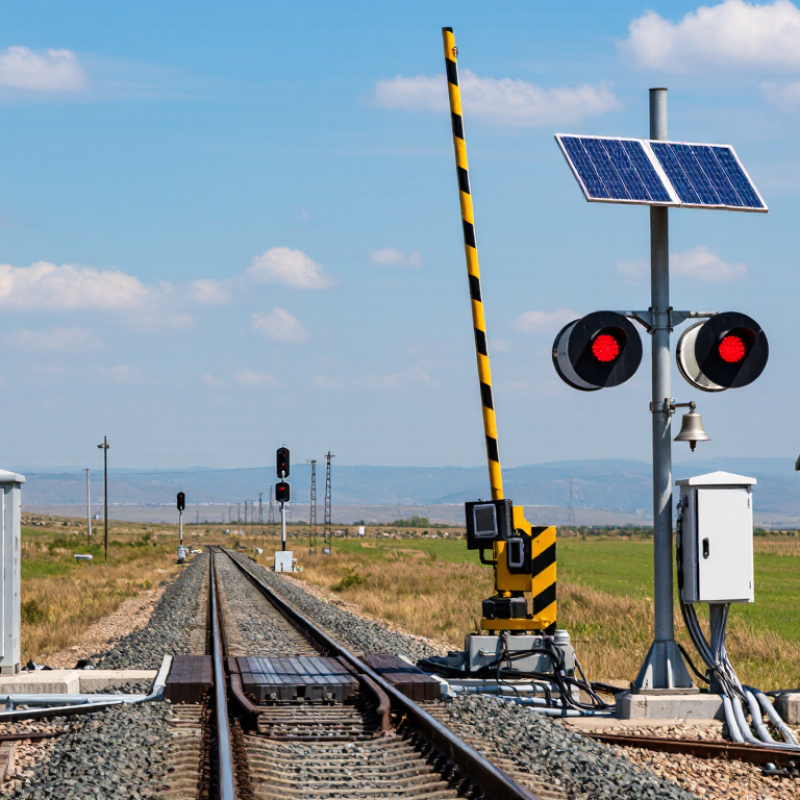
Solar railroad crossing warning systems are independent safety installations for locations without reliable grid power. They use photovoltaic panels, batteries, controllers, flashing lights, audible alarms, and warning signs. Their purpose is simple: give drivers and pedestrians clear notice before a train arrives.

The Federal Railroad Administration’s recent safety datasets report more than 2,000 highway-rail crossing incidents annually in the United States, with over 200 fatalities in many years. These figures show why visible and dependable warnings matter.

A well-designed solar system can operate during power outages and reduce trenching, cable installation, and maintenance challenges.

Battery capacity must match local sunlight, winter conditions, and overnight demand. That detail is often underestimated.

Tips: Check solar exposure, battery autonomy, and warning visibility before installation. Keep panels clear of dust and vegetation. Test alarms during heavy rain and low-light periods. Remote monitoring can reveal weak batteries early, but it should not replace physical inspections. Industry guidance from the Federal Railroad Administration and the Institute of Transportation Engineers supports consistent warning visibility, approach detection, and disciplined maintenance.

Solar power is not magic. Snow, shade, vandalism, and poor alignment can reduce performance. Field experience suggests that a system passing a sunny-day test may still fail during long cloudy periods. Engineers should document these weak points, review incident data, and adjust the design rather than assume the first installation is perfect.

Core Components and How the Warning System Operates

China Best Solar Railroad Crossing Warning Systems?
Core Components and How the Warning System Operates

A solar railroad crossing warning system begins with a photovoltaic panel, charge controller, battery bank, and weatherproof control cabinet. IEA PVPS’s Trends 2024 report recorded more than 1.6 terawatts of global solar capacity by the end of 2023. That scale supports mature components, but railway reliability requires tighter selection.

The system also needs train detection sensors, flashing lights, an audible alarm, communication modules, and backup power. When a train approaches, track circuits, axle counters, or radar sensors send a signal to the controller. The controller checks the input, activates warning lights and sounders, and records the event. A typical design targets at least 20 seconds of warning, consistent with guidance in the Federal Railroad Administration’s Highway-Rail Grade Crossing Handbook. Detection errors remain possible.

The battery carries the crossing through cloudy weather and nighttime operation. The NREL Photovoltaic Degradation Rates report found a median module degradation rate near 0.5% annually, so designers should include long-term energy margins. A practical cabinet may use lithium or lead-acid storage, surge protection, heating control, and remote fault reporting. Remote alerts can identify low voltage, sensor failure, or communication loss before an inspection visit.

Solar output is not constant. That simple fact is often underestimated. Snow, dust, shade, and vandalism can reduce charging performance, while alarms increase nighttime demand. Field testing should measure real warning time, battery autonomy, sensor alignment, and recovery after a deliberate fault. A system that looks efficient on paper may still fail beside a wet, noisy track.

China Best Solar Railroad Crossing Warning Systems: Core Components and Operating Sequence

This reference waveform shows how an automated solar-powered railroad crossing warning system typically operates: train detection, advance warning, barrier protection, train passage, and system reset. The warning interval is designed to provide at least 20 seconds of public notification before the train reaches the crossing; actual timing is configured by the railway authority and site conditions.

State value: 0 = inactive, 1 = active. Solar panels and batteries supply energy to the controller, train detection equipment, flashing lights, audible alarms, and barrier mechanisms.

Benefits of Solar-Powered Railway Crossing Protection

China Best Solar Railroad Crossing Warning Systems?

Solar-powered railway crossing protection can improve safety where grid connections are costly or unavailable. Photovoltaic panels charge batteries during daylight. The stored energy powers warning lights, audible alarms, signs, and communication equipment.

Visibility matters. High-intensity LED signals can remain clear through rain, dust, and nighttime darkness. Battery-backed operation also helps during grid outages. Remote monitoring may report low battery levels, lamp faults, or cabinet access. This gives maintenance teams useful information before a minor fault becomes a serious risk.

Good engineering begins with a site survey. Technicians should measure sunlight, crossing traffic, drainage, snow exposure, and nearby shading. A larger panel is not always better. Battery capacity must match winter conditions and repeated alarm cycles. Solar systems are not maintenance-free. Panels need cleaning, connections need inspection, and batteries eventually lose capacity.

The assumption is easy to miss.

In northern regions, long cloudy periods can challenge poorly sized systems. Vandal-resistant housings, secure foundations, and protected wiring improve reliability. Equipment should also meet applicable railway safety standards and undergo documented testing. A warning system may look efficient on paper, yet perform poorly if installation ignores local weather. Careful commissioning and scheduled inspections make the practical difference.

Installation Factors and Site Assessment Requirements

China Best Solar Railroad Crossing Warning Systems?

Installation Factors and Site Assessment Requirements

The best solar railroad crossing warning system depends on the crossing, not a product label. A proper site assessment should record train frequency, road traffic, crossing width, and available sight distance. Local rail authorities must confirm the required warning functions and approval conditions. Solar equipment should not replace regulated protection without formal authorization.

Sunlight is only one installation factor. Inspect the site during different seasons, especially near trees, warehouses, bridges, and overhead structures. Snow, dust, flooding, and extreme heat can reduce panel output or battery life. Details matter. Measure the panel’s exposure, pole stability, drainage, and distance from the track.

Communication reliability also needs testing. Radio or cellular signals may weaken near cuttings, tunnels, or industrial buildings. Check battery autonomy for several cloudy days, then include additional reserve capacity. Warning lights must remain visible during rain, fog, and nighttime glare. Maintenance teams need safe access, clear inspection points, and protection from accidental vehicle impact.

A useful assessment includes photographs, voltage readings, shadow observations, and a simple maintenance schedule. It should also identify emergency procedures and spare-part requirements. Field conditions often challenge desktop plans. One overlooked tree can change the energy budget. Recheck the design after installation, because the first layout is rarely perfect.

China Best Solar Railroad Crossing Warning Systems? - Installation Factors and Site Assessment Requirements

Assessment Dimension Recommended Target or Typical Requirement Why It Matters Installation Considerations Priority
Solar Resource Evaluate year-round solar exposure, seasonal shading, and local peak-sun conditions. A preliminary design commonly uses a site-specific solar study rather than annual averages alone. Insufficient winter solar input can reduce battery charging and warning-system availability. Inspect nearby trees, buildings, overhead structures, embankments, and terrain. Record shadows during morning, midday, and afternoon periods. Required
Panel Orientation and Tilt Orient the photovoltaic module toward the equator where practical and select a tilt based on latitude, seasonal energy demand, wind exposure, and local engineering practice. Correct orientation improves energy collection and helps reduce battery depletion during low-sun periods. Prevent obstruction by signal masts and maintain access for cleaning, inspection, and snow removal where applicable. Recommended
Railway Electrical Environment Identify traction systems, signaling circuits, electrified lines, return currents, and nearby power equipment before final equipment placement. Railway electrical infrastructure may create safety, electromagnetic compatibility, and maintenance constraints. Coordinate with the railway infrastructure owner. Maintain the clearances and isolation distances required by applicable railway rules and local regulations. Required
Crossing Geometry Document the number of tracks, road width, track angle, crossing length, approach distance, sight distance, and nearby junctions. Warning times, detector locations, cable routes, and visibility depend directly on crossing geometry. Prepare a scaled site drawing showing the roadway, rails, pedestrian paths, equipment cabinets, signs, lights, and emergency access routes. Required
Train Detection Method Choose detection technology only after reviewing track layout, operating speed, traffic frequency, shunting activity, and railway signaling compatibility. Incorrect detection selection can cause missed activations, false alarms, or unsafe warning intervals. Validate the detection design with the railway operator and test normal trains, slow movements, switching operations, and track maintenance conditions. Required
Warning Visibility Warning lights, signs, bells, and gates should be clearly visible or audible from each vehicle and pedestrian approach. Visibility and audibility are essential for drivers, cyclists, pedestrians, and people using hearing protection. Check sunlight glare, night visibility, road curvature, vegetation, parked vehicles, snow accumulation, and background lighting. Required
Battery Autonomy Size the battery for the required warning load during low-solar periods, including the specified reserve or autonomy period in the project design. Battery capacity determines whether the system can continue operating during cloudy weather, winter conditions, or temporary panel faults. Include the power consumption of lights, sounders, controllers, communications, heaters, and standby circuits. Apply temperature derating where needed. Required
Environmental Conditions Record the expected temperature range, rainfall, humidity, snow, ice, dust, salt exposure, flooding, and wind conditions. Environmental conditions affect enclosure selection, battery life, panel loading, corrosion resistance, and maintenance intervals. Use weather-resistant enclosures and mounting hardware suitable for the site. Provide drainage and avoid placing equipment in known flood paths. Required
Wind and Structural Loading Assess local wind speed, terrain category, panel surface area, foundation condition, and pole height using the applicable structural design code. Solar panels, poles, signs, and cabinets must withstand local wind and other environmental loads. Verify foundation depth, anchor design, pole deflection, corrosion protection, and safe access for installation and maintenance. Required
Grounding and Surge Protection Provide a site-specific grounding and bonding design for photovoltaic frames, poles, cabinets, control equipment, and communication interfaces. Railway crossings are exposed to lightning, switching events, and induced voltages that may damage equipment or create hazards. Follow the railway owner’s grounding rules and applicable electrical codes. Confirm separation from signaling and traction return systems before work begins. Required
Communications and Monitoring Determine whether remote status reporting is required and verify cellular, radio, fiber, or wired communication availability. Remote alarms can reduce response time for low battery, detector faults, lamp failures, cabinet access, or communication loss. Test signal strength at the equipment location, provide an appropriate antenna position, and define a local fallback mode for communication outages. Conditional
Civil Works and Foundations Confirm soil type, slope stability, drainage, underground utilities, cable crossings, and available working space. Weak ground or poor drainage can lead to pole movement, cable damage, water ingress, and recurring maintenance problems. Complete utility locating and obtain excavation permits. Keep foundations and cabinets outside required railway, road, and pedestrian clear zones. Required
Safety Clearances Apply the current railway, road traffic, electrical, and occupational safety requirements governing the project location. Clearances protect railway operations, road users, maintenance personnel, and the public. Do not rely on generic dimensions. Confirm final positions with the responsible railway authority, road authority, and qualified engineers. Required
Maintenance Access Provide safe access for panel cleaning, battery replacement, detector inspection, firmware updates, and emergency repairs. Regular maintenance supports reliable warning performance and extends component service life. Consider lockable cabinets, anti-tamper fasteners, service clearances, lifting requirements, vegetation control, and safe work procedures near tracks. Recommended
Testing and Commissioning Complete factory checks, installation inspections, functional tests, fail-safe tests, communications tests, and operational trials before opening the crossing. Commissioning verifies that detection, warning timing, power management, and fault responses operate as designed. Document test results for train approaches, road approaches, power loss, low battery, lamp or sounder faults, communication loss, and manual emergency functions. Required
Regulatory Approval Obtain approval from the relevant railway infrastructure owner and authorities responsible for road traffic, electrical safety, construction, and telecommunications. Railroad crossing warning equipment is safety-critical and may require formal design review and acceptance. Prepare drawings, calculations, equipment specifications, risk assessments, method statements, inspection records, and maintenance procedures. Required

Maintenance, Safety Standards, and Supplier Selection Criteria

China’s best solar railroad crossing warning system is not defined by panel size alone. It must remain visible during fog, dust, winter darkness, and grid outages. The FRA’s 2023 Highway-Rail Crossing Inventory and Accident/Incident Data recorded more than 2,000 U.S. crossing incidents. This underlines the need for dependable warning equipment and disciplined maintenance.

Maintenance should include monthly visual checks, battery voltage tests, lens cleaning, cable inspection, and seasonal shading reviews. IEA PVPS Task 13 reports typical photovoltaic degradation near 0.5% annually, but dust and heat can reduce output faster. Suppliers should provide measured autonomy under local winter conditions, not only laboratory results. Ask for documented tests against IEC 60529 ingress protection, IEC 62262 impact resistance, and IEC 62446-1 commissioning practices. Railway projects may also require local authority approval and RAMS evidence under relevant railway standards.

Tips: Require independent test reports, fault logs, spare-part availability, and technician response times. Check whether the controller records low battery, lamp failure, and communication loss. A system rated “maintenance-free” still needs inspection. That claim deserves skepticism. During supplier evaluation, inspect a working installation near the intended climate zone. Review five-year battery replacement assumptions, warranty exclusions, and nighttime visibility measurements. I would also request a pilot installation before full procurement; a small test can expose poor charging performance, weak alarms, or confusing maintenance access.

FAQS

What is a solar railroad crossing warning system?

It is an independent safety installation for crossings without dependable grid power. Solar panels charge batteries during daylight. Flashing lights, audible alarms, and signs warn approaching road users. The system can continue operating during power outages.

Why is site assessment important before installation?

Each crossing has different train frequency, road traffic, width, and sight distance. Inspect the location during multiple seasons. Record shadows from trees, bridges, warehouses, and nearby structures. A desktop plan may miss one damaging shadow.

How much sunlight does the system need?

The panel needs usable exposure across the day. Measure shade during summer and winter. Dust, snow, and vegetation can reduce charging. Clear the panel regularly. Perfect sunlight is uncommon.

How should battery capacity be selected?

Battery capacity should cover nighttime operation and several cloudy days. Consider winter sunlight, local weather, alarms, and warning-light demand. Include reserve capacity for unexpected conditions. A sunny-day test can create false confidence.

How can warning visibility remain effective?

Lights should remain clear during rain, fog, darkness, and road glare. Place equipment where drivers and pedestrians can see it early. Keep signs clean and unobstructed. Check visibility from real approach distances, not only from drawings.

What communication features should be tested?

Radio or cellular signals may weaken near tunnels, cuttings, and industrial buildings. Test communication at different times and weather conditions. Remote monitoring can reveal weak batteries early. It cannot replace physical inspections.

What maintenance does a solar crossing warning system require?

Inspect panels, batteries, poles, wiring, alarms, and signs on a regular schedule. Remove dust, leaves, and snow from panels. Test alarms during heavy rain and low-light periods. Keep spare parts and safe inspection access available.

What are common weaknesses of these systems?

Snow, shade, flooding, heat, vandalism, and poor alignment can reduce performance. Weak drainage may damage equipment. Vehicle impact can bend a pole. Engineers should document failures and adjust the design. The first installation is rarely perfect.

Conclusion

Solar Railroad Crossing Warning Systems are independent safety installations designed to alert drivers, pedestrians, and train operators when a railway crossing is approaching or active. By using solar panels, batteries, control units, warning lights, audible alarms, and detection devices, these systems can operate in locations without reliable grid electricity. When a train is detected, the controller activates visual and sound signals, helping road users stop and cross only when conditions are safe.

The main benefits include energy independence, lower operating costs, flexible installation, and dependable performance in remote areas. Before installation, site conditions such as sunlight availability, road layout, track visibility, weather exposure, traffic volume, and drainage should be carefully assessed. Regular maintenance is necessary to inspect panels, batteries, wiring, signals, sensors, and structural supports. Safety standards, local railway requirements, and emergency procedures should also guide system design. When selecting a supplier, buyers should evaluate technical capability, component quality, customization options, installation experience, after-sales support, and long-term maintenance services.

Alexander Bennett

Alexander Bennett

Alexander Bennett is a professional marketing specialist with a strong understanding of product strategy, customer needs, and digital communication. As a valued member of our company, he combines market insight with detailed product knowledge to create clear, practical, and engaging content for our......