
Solar Lighting Blog & Insights

Industry news, technical articles, and project insights from Solar Lighting International.

0%

Choosing Solar Parking Lot Lighting Systems requires more than comparing panel sizes and advertised brightness. A parking area must remain visible after cloudy days, during winter, and across long operating hours. Good lighting supports safer walking routes, clearer vehicle movement, and better property management. It should also avoid harsh glare that disturbs nearby homes or wastes energy.

This guide examines the practical decisions behind a dependable installation. It considers solar exposure, pole height, LED output, battery capacity, lighting controls, weather resistance, and maintenance access. A professional design should begin with a site survey and a basic photometric plan. The plan can reveal dark corners, uneven spacing, and unnecessary overlighting. Manufacturer testing, product certifications, warranty terms, and documented performance deserve careful review. Marketing claims alone are not enough.

I have seen projects fail because installers focused on bright fixtures instead of complete system balance. One site looked impressive at dusk, yet its batteries struggled after several cloudy nights. That mistake was expensive. It also required uncomfortable conversations with the property owner. No design is perfect. Real performance depends on shade, dust, temperature, traffic patterns, and maintenance habits. A reliable choice leaves room for these uncertainties. Readers should question attractive promises and request measurable evidence. Look beyond the brochure. The following discussion offers a practical framework for comparing systems, estimating long-term value, and selecting lighting that performs responsibly in real parking environments.
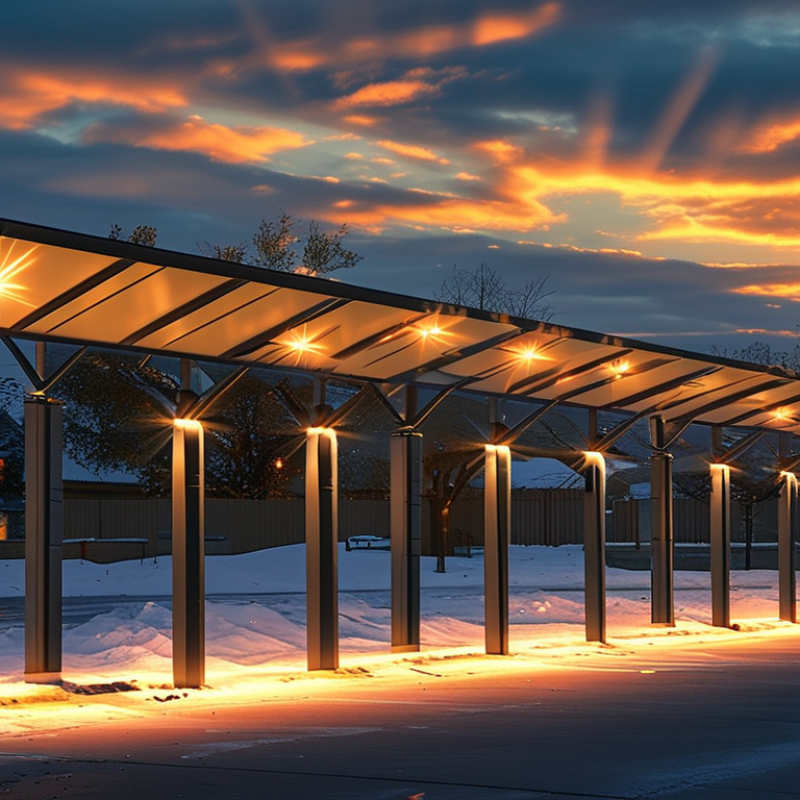
How to Choose Solar Parking Lot Lighting Systems?

Define the Lighting Needs of the Solar Parking Lot

How to Choose Solar Parking Lot Lighting Systems?

Define the Lighting Needs of the Solar Parking Lot

Begin with the parking lot’s actual use, not the panel size. Record operating hours, vehicle flow, pedestrian routes, and areas needing close visibility. A small employee lot may need different lighting from a busy retail entrance.

Measure the site after sunset. Note dark corners, blocked sightlines, and glare near drivers’ eyes. Mark entrances, payment points, accessible parking spaces, loading zones, and emergency access lanes. These details shape pole height, fixture spacing, and light distribution.

Use target illuminance values from local codes and recognized lighting guidance. Uniformity matters as much as brightness. Bright patches beside deep shadows can make people and obstacles harder to see. A lighting professional can calculate average illumination, minimum levels, and uniformity ratios with photometric software.

Solar performance depends on real weather. Check winter sunlight, shading from trees, rooflines, and dust. Estimate several cloudy nights, not only clear summer evenings. Battery capacity must cover the required operating schedule without excessive oversizing. That balance is easy to misjudge.

Controls also define the need. Motion dimming can reduce energy use while preserving security. However, settings that dim too quickly may frustrate pedestrians. Test the proposed schedule on site. Observe how people move.

Document assumptions. Recheck them. Truthfully, the first plan is often incomplete. Seasonal shadows, new landscaping, or changed parking patterns can alter the result. A practical design leaves room for adjustment without reducing essential visibility.

Evaluate Solar Panel, Battery, and Lighting Performance

How to Choose Solar Parking Lot Lighting Systems?

Solar parking lot performance depends on three linked parts: the panel, battery, and light engine. A high-wattage panel means little if winter shading reduces daily harvest. The National Renewable Energy Laboratory reports a median photovoltaic degradation rate of about 0.5% annually. Therefore, size the panel for its tenth-year output, not its first-year label. Check power tolerance, operating temperature, shading hours, and the panel’s measured output under realistic conditions.

Battery evaluation needs equal care. Ask for usable capacity, not only the advertised ampere-hours. Depth of discharge, temperature, and charging control strongly affect service life. A cold battery may deliver less energy during a long night.

The U.S. Department of Energy notes that LED systems can achieve very high efficacy, often above 100 lumens per watt, but optical design still determines pavement brightness. Review maintained illuminance, uniformity, glare control, and dimming schedules. A bright fixture can still create dark walking zones.

Tips: Request independent test reports, including photovoltaic degradation data, battery cycle testing, and LED photometry. Inspect one installed unit after rain and several cloudy nights. Do not trust a spreadsheet alone. I would also model three poor-weather days, because average solar data can hide uncomfortable failures. Confirm the controller records battery voltage, charging status, and nighttime runtime. Small omissions become expensive maintenance calls. Consider local dust, snow, tree growth, and vandal-resistant mounting before approving the final design.

Choose Suitable Fixtures, Controls, and Mounting Structures

How to Choose Solar Parking Lot Lighting Systems?

Choosing solar parking lot lighting starts with the fixture, not the panel. Select a fixture that matches the parking layout, mounting height, and required light distribution. A narrow distribution suits drive lanes, while a wider pattern covers pedestrian areas. Check measured illuminance, glare, color rendering, and nighttime uniformity. A bright hotspot beside a dark walkway is still poor lighting.

Controls should respond to real activity. Astronomical timers can manage dusk and dawn operation, while motion sensors raise output when vehicles or pedestrians approach. Dimming during quiet hours reduces battery demand. However, sensors may react to trees, animals, or passing traffic. Commission them after installation, not only during a daytime test. Use accessible settings and record the final operating schedule.

Mounting structures deserve equal attention. Confirm pole height, wind exposure, foundation strength, and local soil conditions before ordering equipment. Keep panels clear of tree shadows, and leave enough space for battery and controller access. Corrosion-resistant hardware helps in coastal or snowy environments. A pilot installation can reveal unexpected shadows or glare. I once assumed a taller pole would improve coverage, but it created darker edges under the fixture. Recheck the photometric plan on site, and involve a qualified engineer when structural loads or public safety requirements are complex.

Compare Installation Conditions, Costs, and Maintenance Needs

How to Choose Solar Parking Lot Lighting Systems?

Installation conditions often decide whether solar parking lot lighting performs well. Measure winter sunlight, not only summer brightness. Nearby buildings, trees, and tall vehicles can create daily shade. Check soil stability before selecting pole foundations. Rocky ground may increase labor costs. Flood-prone areas also need carefully raised equipment and sealed electrical compartments.

Costs include more than panels and fixtures. Compare foundation work, lifting equipment, wiring, batteries, controls, and future replacements. A remote parking lot may cost more initially but avoid trenching and grid connection charges. Battery capacity affects both price and overnight reliability. Smaller batteries can reduce the budget, yet they may struggle after several cloudy days. That trade-off deserves honest attention. I have seen attractive estimates become less attractive after drainage work and access delays were added.

Tips: Request a site-specific lighting plan. Ask for expected operating hours during winter. Confirm battery replacement intervals and warranty conditions. Choose components with accessible service points. Record light levels after installation, then inspect them after heavy rain and strong winds. Maintenance is usually simple, but it is not zero. Clean panels when dust, leaves, or bird residue reduce output. Check fasteners, seals, and pole movement twice a year. A realistic maintenance schedule protects safety and operating costs. Still, every site is different, and a perfect prediction is impossible.

Check Safety Standards, Weather Resistance, and System Reliability

Choosing a solar parking lot lighting system starts with safety, not brightness. In field inspections, I check local electrical codes, lighting ordinances, and required emergency access levels. Photometric reports should show uniform illumination across drive lanes, pedestrian paths, and parking spaces. Dark gaps can create trip hazards and reduce driver visibility. Ask for test records from recognized independent laboratories.

Weather resistance needs more than a high enclosure rating on paper. Look for protection against dust, rain, condensation, and temperature changes. A suitable IP rating matters, but mounting quality matters too. Panels should resist wind loads for the site. Battery compartments need sealing and ventilation where required. Coastal locations may also need corrosion-resistant hardware. I have seen systems with strong panels fail because water entered through poorly protected cable connections.

Reliability depends on the whole system. Check battery chemistry, expected cycle life, charging performance, and winter autonomy. Request data for cloudy periods, not only ideal summer conditions. Controllers should include overcharge, deep-discharge, and surge protection. A clear maintenance plan is essential, including cleaning schedules and replacement access. I prefer suppliers who provide wiring diagrams, warranty terms, and realistic performance limits. Some specifications look impressive, yet omit battery aging. That omission deserves questions. A small pilot installation can reveal glare, uneven lighting, or shorter nighttime operation before a full project begins.

How to Choose Solar Parking Lot Lighting Systems?

Check enclosure protection against dust, water, and mechanical impact before evaluating battery reliability, lighting performance, and local electrical safety requirements.

The ingress protection values are based on IEC 60529: IP65 is dust-tight and protected against water jets, IP66 is dust-tight and protected against powerful water jets, and IP67 is dust-tight and protected against temporary immersion. The impact values are based on IEC 62262: IK08 corresponds to 5 joules and IK10 corresponds to 20 joules. For a complete selection, also verify IEC 60598-1 or the applicable local lighting-safety standard, battery temperature limits, charging protection, autonomy, and maintenance access.

FAQS

How should I evaluate a solar panel for parking lot lighting?

Size the panel for its tenth-year output, not its first-year label. Check shading, temperature, power tolerance, and realistic test results. Winter shadows matter.

What battery information should I request?

Ask for usable capacity, depth of discharge, cycle life, and charging performance. Cold temperatures can reduce nighttime energy. Advertised capacity may mislead.

How can I judge lighting quality beyond brightness?

Review maintained illuminance, uniformity, glare control, and color rendering. A bright spot can still leave a dark walkway. Walk the site at night.

Which fixture distribution works best for parking areas?

Narrow distribution suits drive lanes and wider patterns suit pedestrian areas. Match the fixture to pole height and parking layout. Photometric data should support the choice.

How should lighting controls be configured?

Use dusk-to-dawn timing, scheduled dimming, and motion-based increases when appropriate. Sensors may react to animals, trees, or passing traffic. Test them after installation.

What mounting details deserve attention?

Check pole height, wind exposure, foundation strength, soil conditions, and service access. Keep panels away from growing tree shadows. Taller is not always better.

How can I check weather resistance and safety?

Review local electrical rules, lighting requirements, enclosure ratings, and independent test records. Inspect cable connections, battery compartments, seals, and corrosion protection. Water often enters through small gaps.

What reliability tests should happen before full installation?

Request cloudy-weather data, battery aging information, wiring diagrams, and maintenance plans. Inspect one unit after rain and several cloudy nights. A small pilot can expose glare, dark edges, or short runtime. Spreadsheets are not enough.

Conclusion

Choosing the right Solar Parking Lot Lighting Systems begins with clearly defining the parking area’s lighting needs, including size, layout, traffic patterns, brightness levels, and operating hours. Evaluate the performance of the solar panels, batteries, and LED fixtures to ensure the system can provide consistent illumination throughout the night and maintain reliable operation during periods of limited sunlight. It is also important to select suitable fixtures, intelligent controls, and durable mounting structures that support efficient coverage, convenient operation, and long-term stability.

Before making a decision, compare installation conditions, overall costs, and expected maintenance requirements. Consider factors such as available sunlight, ground conditions, wiring needs, battery replacement intervals, and ease of access for inspections. Finally, confirm that the system meets applicable safety standards, offers strong weather resistance, and includes dependable protection against wind, rain, dust, and temperature changes. A well-planned system should balance performance, reliability, energy efficiency, and lifetime value.

Alexander Bennett

Alexander Bennett

Alexander Bennett is a professional marketing specialist with a strong understanding of product strategy, customer needs, and digital communication. As a valued member of our company, he combines market insight with detailed product knowledge to create clear, practical, and engaging content for our......