
Industry news, technical articles, and project insights from Solar Lighting International.
Choosing the right Commercial Solar Street Lights involves more than comparing panel sizes or advertised wattage. A reliable system must match the site, climate, traffic pattern, and required lighting level. A quiet village road needs a different design from a busy warehouse entrance. Shadows from trees, salty coastal air, dust, and winter temperatures can also change performance.
Hermann Scheer, a leading solar-energy authority, once said, “The sun is the only safe and inexhaustible source of energy.” His observation explains the opportunity, but not the buying decision. Solar power is clean. Poor equipment selection is not automatically sustainable.
This guide examines the details that often decide long-term results. Check the LED lumen output, beam distribution, battery chemistry, solar-panel efficiency, and expected autonomy during cloudy weather. An IP65 or higher enclosure can help protect electronics from rain and dust. IK ratings matter where vandalism or accidental impact is possible. Motion sensors may reduce energy use, but poorly adjusted settings can leave pedestrians walking through darkness.
Look closely.
The cheapest quotation may hide a smaller battery, weaker pole, or limited warranty. Some specifications also sound impressive while lacking test conditions. That is a common weakness. A proper site survey should record mounting height, road width, nighttime activity, shading, and local weather history. It should also consider maintenance access, replacement costs, and end-of-life battery handling.
The best Commercial Solar Street Lights are not simply bright. They are dependable, serviceable, and appropriately designed for real conditions. A careful decision may cost more initially, yet prevent dark sections, frequent repairs, and disappointing returns later.
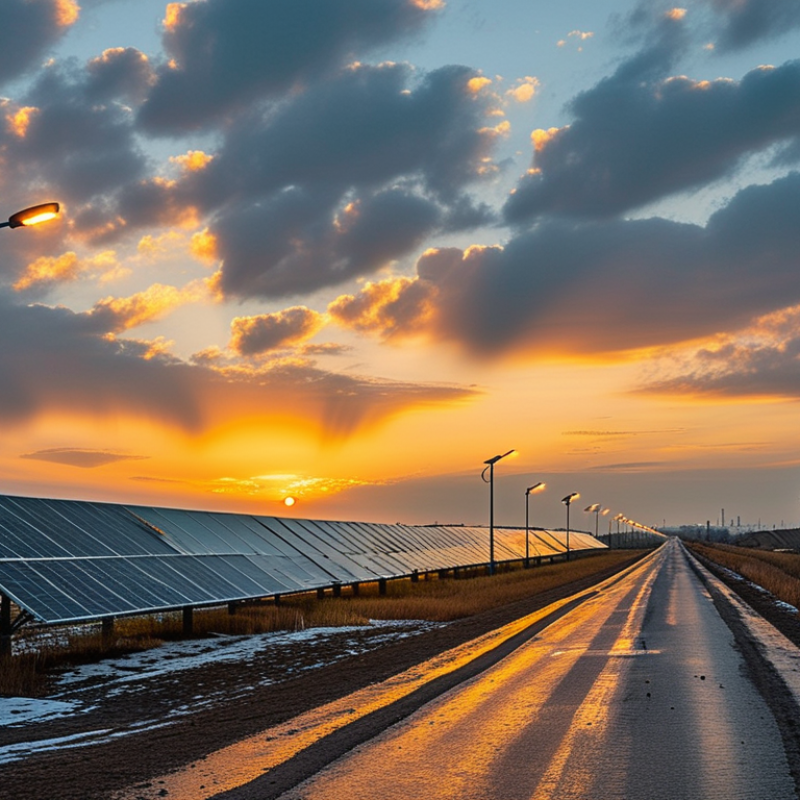
Begin with the site, not the product catalogue. Measure road width, pole spacing, traffic levels, and nighttime activity. A warehouse entrance needs different lighting from a quiet pedestrian path.
Record the darkest areas. Note nearby trees, buildings, dust, and seasonal shade. These details affect solar charging and light distribution. In my field assessments, one overlooked tree often caused poor winter performance. It is an easy mistake to repeat.
Set the required illuminance and uniformity with a qualified lighting engineer. Avoid choosing brightness from wattage alone. A well-designed optical system can illuminate a roadway more evenly with lower power. Confirm the mounting height, beam angle, and target area before selecting the fixture.
Calculate the energy budget carefully. Estimate daily operating hours, local sunlight, battery capacity, and several cloudy days. Include aging, temperature changes, and maintenance access. Oversizing every component may increase cost without improving reliability. Undersizing the battery can create dark mornings.
Ask for test data, warranty terms, ingress protection, battery chemistry, and replacement procedures. Request performance records from comparable climates. Real projects reveal weaknesses that brochures may hide. Still, laboratory results do not guarantee identical site performance.
Consider controls such as dimming, motion sensing, and remote monitoring. Use them only when they support the site’s operating pattern. A complex control system can become a maintenance burden. That deserves honest review.
Choosing commercial solar street lights requires more than checking wattage. Compare the solar panel, battery, and LED as one working system. A high-power LED can drain a small battery quickly. A large battery may remain undercharged if the panel is undersized.
Look for the panel’s rated power, efficiency, and temperature performance. Monocrystalline panels usually provide strong output in limited space. However, real production falls during cloudy weather, dust, and winter months. I once reviewed a project where the panel looked adequate on paper, but nearby trees reduced afternoon charging. Site shading matters more than brochures suggest.
Battery capacity should be measured in watt-hours, not amp-hours alone. Check the usable capacity, operating temperature, cycle life, and backup days. A system designed for three nights of autonomy offers greater reliability during storms. Lithium iron phosphate batteries often provide stable cycling and safer thermal performance. Still, poor charging controls can shorten their life.
For LEDs, compare lumen output, efficacy, beam angle, color temperature, and rated life. More lumens do not always mean better lighting. A narrow beam may create bright patches and dark walkways. Choose optics that match road width and mounting height. Confirm the lighting schedule and dimming settings, too. Small control errors can waste energy every night. Performance testing at the actual site is wise, even when the specification sheet looks convincing.
Choosing commercial solar street lights requires more than comparing lumen numbers.
CIE 115:2010 recommends evaluating maintained illuminance, uniformity, glare, and road classification together. A higher lumen figure can still produce dark gaps between poles. Measure the actual mounting height, pole spacing, road width, and pavement reflectance before selecting optics. Small details matter.
The U.S. Department of Energy’s 2023 Solid-State Lighting R&D Opportunities report identifies 200 lumens per watt as a future research target, not a guaranteed field result. Request tested photometric files, lumen-maintenance data, and battery autonomy at the project location. The International Energy Agency reports that lighting uses about 15% of global electricity, so efficient operation matters. However, solar systems also lose output during cloudy periods and winter months. Design for the weakest month, not the showroom photograph.
Smart controls should adjust brightness without compromising safety. Dimming schedules, motion sensing, remote fault alerts, and energy reporting can reduce unnecessary runtime. The U.S. Department of Energy notes that advanced lighting controls can deliver substantial savings, but performance depends on commissioning and user settings. Keep the interface simple. Complex controls are often ignored. Test detection zones with pedestrians, bicycles, and parked vehicles. Recheck them after installation; trees, rain, and seasonal shadows can change coverage. Some specifications look precise, yet field conditions remain imperfect. That is worth admitting before procurement.
Choosing commercial solar street lights starts with the site, not the product catalog. Measure pole locations, road width, soil stability, and daily sunlight throughout the year. Nearby buildings or trees can shade panels during critical charging hours. Check local wind exposure, flood risk, and the equipment’s working temperature range. Do not trust a sunny afternoon. Winter conditions often reveal weak assumptions. Measure twice.
Durability depends on more than a strong-looking housing. Select corrosion-resistant materials for coastal, industrial, or humid environments. Verify ingress protection ratings for dust and heavy rain. Ask for tested battery cycle data, temperature performance, and published lighting results. Confirm that brackets can withstand local wind loads. A sturdy pole still fails when its foundation is poorly designed. Small details matter. I have learned that cheaper hardware can create higher replacement costs later.
Maintenance planning should be practical from installation day. Place units where a service vehicle and technician can work safely. Use remote monitoring as a supplement, not a substitute for inspections. Schedule checks for panel cleanliness, cable connections, fasteners, battery condition, and nighttime brightness. Keep records of faults and seasonal performance. Access matters. Budget for replacement parts before problems appear. Some project estimates look perfect on paper, but real sites rarely behave perfectly. Leave room to revise the maintenance schedule after the first operating season.
How to Choose the Best Commercial Solar Street Lights?
Calculate total cost, not only the purchase price. Include poles, foundations, transport, installation, inspections, and future battery replacement. A lower-priced light may require larger maintenance budgets. Field evaluations often reveal this gap after the first winter.
Check lighting efficiency through photometric reports, not lumen claims alone. Review light distribution, mounting height, road width, and required illumination levels. Ask for battery capacity, solar panel output, charging time, and operating hours. Seasonal sunlight matters. A system sized for summer may perform poorly during cloudy weeks. That risk deserves a clear calculation.
Tips: Compare the five-year and ten-year costs. Record annual cleaning, inspection, and replacement estimates. Also check warranty terms, spare-part availability, weather protection ratings, and temperature limits. These details affect reliability more than attractive product photos.
Long-term value also depends on useful light, not maximum brightness. Excessive output can waste energy and create glare. Choose controls that support dimming during low-traffic hours, while preserving safety requirements. Confirm compliance with local electrical and roadway standards. Request independent test data when possible. Be cautious with perfect performance promises. Real conditions are less predictable. A spreadsheet should include pessimistic assumptions, such as shorter battery life or several cloudy days. That approach may feel conservative, but it produces a more dependable investment decision.
| System Option | LED Rating & Approximate Light Output | LED Efficacy | Solar Panel Size | Battery Specification | Typical Autonomy | Control Features | Typical Installed Cost (USD per pole) |
10-Year Maintenance & Battery Cost (USD) |
Estimated 10-Year Total Cost (USD per pole) |
Best Commercial Use |
|---|---|---|---|---|---|---|---|---|---|---|
| Basic Integrated Solar Light | 40 W LED Approximately 5,600 lumens |
140 lm/W | 180 W photovoltaic module | 1.0 kWh nominal LiFePO4 Approximately 0.8 kWh usable |
About 2 nights without useful sunlight | Photocell, automatic dusk-to-dawn operation, programmable dimming | $1,100–$1,600 Planning midpoint: $1,350 |
$550–$750 Planning midpoint: $630 |
Approximately $1,980 | Walkways, small parking areas, low-traffic access roads and private facilities |
| Balanced Commercial Integrated System | 60 W LED Approximately 9,000 lumens |
150 lm/W | 280 W photovoltaic module | 1.5 kWh nominal LiFePO4 Approximately 1.2 kWh usable |
About 2.5 nights without useful sunlight | Multi-stage dimming, motion-sensor compatibility, remote fault indication | $1,450–$2,050 Planning midpoint: $1,750 |
$750–$1,050 Planning midpoint: $870 |
Approximately $2,620 | Commercial parking lots, industrial parks, residential developments and internal roads |
| Split-Type Solar Street Light | 60 W LED Approximately 9,300 lumens |
155 lm/W | 320 W photovoltaic module | 1.5 kWh nominal LiFePO4 Approximately 1.2 kWh usable |
About 3 nights without useful sunlight | Separate panel orientation, programmable dimming, optional motion sensing | $1,700–$2,400 Planning midpoint: $2,050 |
$850–$1,150 Planning midpoint: $950 |
Approximately $3,000 | Sites with partial shading, higher latitude locations and roads requiring improved winter performance |
| Smart Solar Street Light | 80 W LED Approximately 11,600 lumens |
145 lm/W | 400 W photovoltaic module | 2.0 kWh nominal LiFePO4 Approximately 1.6 kWh usable |
About 3 nights without useful sunlight | Remote monitoring, adaptive dimming, motion detection, battery and fault alerts | $2,000–$2,900 Planning midpoint: $2,450 |
$1,150–$1,450 Planning midpoint: $1,250 |
Approximately $3,700 | Large campuses, logistics areas, public parking, security-sensitive commercial sites and smart-city projects |
| High-Output Solar Street Light | 100 W LED Approximately 15,000 lumens |
150 lm/W | 500 W photovoltaic module | 2.5 kWh nominal LiFePO4 Approximately 2.0 kWh usable |
About 3 nights without useful sunlight | Advanced dimming, motion sensing, remote monitoring and configurable lighting schedules | $2,600–$3,700 Planning midpoint: $3,150 |
$1,350–$1,750 Planning midpoint: $1,550 |
Approximately $4,700 | Wide roads, high-mast applications, major entrances and areas requiring high illuminance |
Measure road width, pole spacing, mounting height, traffic levels, and nighttime activity. Record the darkest areas. Check trees, buildings, dust, and seasonal shadows. A warehouse entrance needs different coverage from a quiet walkway.
Nearby trees and buildings can reduce afternoon charging. Winter shadows may become longer and more serious. One tree can change the result. Inspect the site during different seasons when possible. A brochure cannot show every shadow.
Set illuminance and uniformity with a qualified lighting professional. Do not choose brightness from wattage alone. Beam angle, road width, and mounting height must match. More lumens can still create dark gaps.
Compare them as one working system. A powerful LED can drain a small battery quickly. A large battery may stay undercharged with a weak panel. Review panel output, battery capacity, LED efficiency, beam angle, and operating hours together.
Check usable watt-hours, operating temperature, cycle life, and backup days. Designing for several cloudy nights improves reliability. Lithium iron phosphate batteries can offer stable cycling and thermal safety. Poor charging controls may still shorten battery life.
Estimate local sunlight, daily operating hours, and the longest likely cloudy period. Three backup nights can provide useful resilience during storms. Design for the weakest month. A sunny showroom day proves very little.
Dimming, motion sensing, remote fault alerts, and energy reports can reduce unnecessary runtime. Keep controls simple. Test detection zones with pedestrians, bicycles, and parked vehicles. Complex settings are often ignored after installation.
Request photometric files, lumen-maintenance data, battery autonomy tests, ingress protection, warranty terms, and replacement procedures. Ask for records from similar climates. Laboratory results help, but they do not guarantee identical field performance. That limitation deserves attention.
Confirm pole spacing, beam coverage, pavement reflectance, and maintenance access before installation. Recheck controls after installation. Rain, trees, and seasonal shadows can alter coverage. Some specifications look precise. Real sites remain imperfect.
Choosing the best Commercial Solar Street Lights begins with clearly defining project requirements, including road type, lighting area, operating hours, local weather, and expected brightness. Compare the solar panel’s conversion efficiency, battery capacity and lifespan, LED performance, and energy management system to ensure the system can provide reliable illumination throughout the night. It is also important to assess lighting coverage, uniformity, motion sensors, dimming functions, remote monitoring, and other smart controls that can improve safety and reduce energy consumption.
Before making a decision, evaluate installation conditions such as soil, pole height, sunlight availability, wind exposure, temperature, and access for maintenance. Durable materials, weather resistance, secure components, and simple maintenance can significantly extend service life. Finally, calculate the total cost, including equipment, installation, replacement parts, maintenance, and operating savings. A solution with balanced performance, dependable quality, efficient energy use, and strong long-term value will usually be more beneficial than one selected only for its low initial price.