Solar Lighting Blog & Insights

Industry news, technical articles, and project insights from Solar Lighting International.

0%

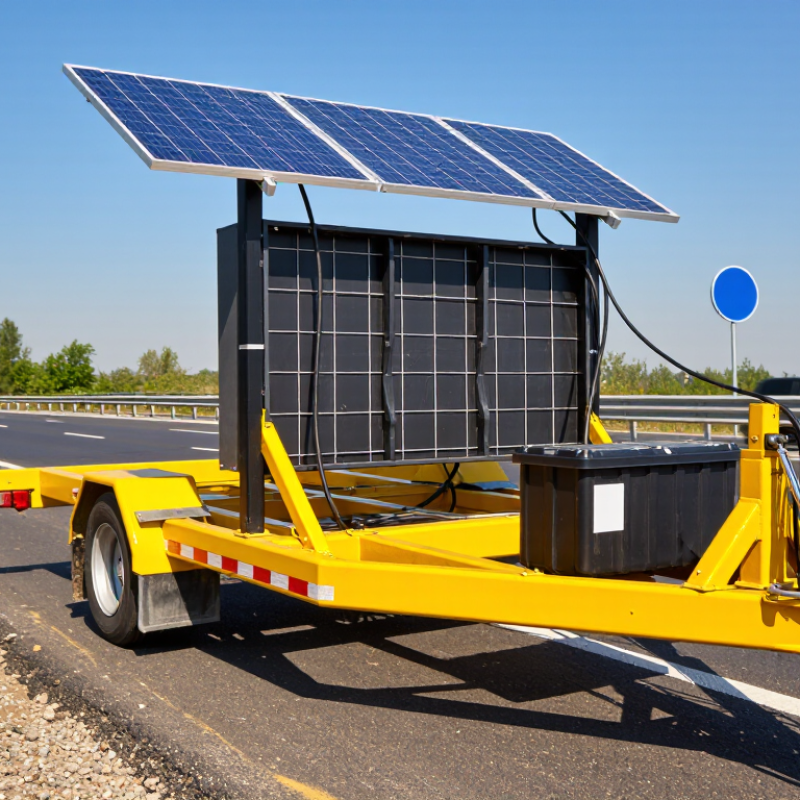
Portable Solar Traffic Message Boards are becoming practical tools for work zones, emergency response, and short-term traffic management. They combine a trailer-mounted display, photovoltaic panels, batteries, and remote controls. In the field, that means fewer generator refueling visits and cleaner deployment beside a busy road.

The Federal Highway Administration’s Manual on Uniform Traffic Control Devices, 11th Edition, stresses that changeable messages should be concise, legible, and relevant to current conditions. The FHWA also reports that work-zone safety depends on timely warnings and clear driver expectations. These requirements make screen brightness, character height, viewing distance, and message programming more important than a low purchase price. Small details matter. A dusty panel can reduce charging. A weak battery can erase nighttime visibility.

NREL’s 2024 photovoltaic cost benchmark confirms continued solar-system cost improvements, although portable equipment still depends heavily on battery quality and weather exposure. Traffic engineer Brian Wolshon has repeatedly emphasized a practical principle: traffic control must communicate early, visibly, and consistently. That principle should guide every comparison of Portable Solar Traffic Message Boards. Buyers should examine solar wattage, battery autonomy, NTCIP compatibility, wind resistance, trailer stability, and service support. There is no perfect board. A bright display may consume more power, while a compact trailer may sacrifice stability. The best choice depends on road speed, message frequency, climate, and deployment time—not marketing language alone.
What Are the Top Portable Solar Traffic Message Boards?

Portable Solar Traffic Message Boards: Definition Under FHWA MUTCD

What Are the Top Portable Solar Traffic Message Boards?

Portable solar traffic message boards are trailer-mounted Portable Changeable Message Signs, or PCMS, used for temporary traffic control. Under the FHWA Manual on Uniform Traffic Control Devices, their value depends on clear communication, proper placement, legibility, and safe operation. The MUTCD does not create a ranking of “top” boards. It establishes how changeable messages should support road users and work-zone decisions. Solar power is only the energy source. It does not automatically make a sign compliant.

A reliable board should show short, accurate messages in bright daylight and at night. It should remain readable from an appropriate distance, even when dust covers the panel or wind shakes the trailer. Operators should check battery capacity, solar charging, message timing, visibility, and trailer stability before deployment. Field experience matters here. A specification may look excellent, yet poor placement can hide the sign behind a curve or construction equipment. That mistake is easy to overlook.

Tips: Use familiar wording, limit each message to essential information, and avoid forcing drivers to read multiple screens. Inspect the sign after storms and during low-light periods. Keep records of message changes and maintenance checks. Also, review local traffic-control plans. The MUTCD provides national guidance, but project conditions still require careful judgment.

Solar Power Sizing: 100–300 W Panels and 12–48 Hours of Battery Autonomy

What Are the Top Portable Solar Traffic Message Boards?

Solar sizing determines whether a portable traffic message board remains visible after cloudy nights. A 100-watt panel suits low-duty operation and moderate sunlight. A 200-watt panel provides a safer margin for frequent message changes. A 300-watt array supports brighter displays, wireless controls, and weaker winter conditions.

NREL’s PVWatts analysis uses a default 14% system-loss assumption for photovoltaic estimates. That loss includes wiring, temperature, and inverter effects. Real output also depends on local irradiance and panel angle. A 200-watt array may produce roughly 600 to 1,000 watt-hours daily in favorable conditions. The range is wide. Designers should check NREL’s National Solar Radiation Database for the installation location.

Battery autonomy requires honest load calculations. A 12-hour reserve may work for short closures and daily charging. A 24-hour reserve offers stronger overnight reliability. A 48-hour reserve better covers storms, winter shading, and delayed maintenance. Estimate energy use from display power, controller demand, communications, and temperature losses. Then divide by usable battery capacity, not the advertised rating.

Federal Highway Administration guidance treats visibility, placement, and operating conditions as critical field factors. That matters when signs face traffic at dawn, during rain, or beside dusty shoulders. Oversizing is not always efficient. Larger panels add weight and wind exposure. Smaller batteries may reduce cost, but they can fail during two cloudy days. Field experience suggests leaving design margin, while reviewing actual energy logs after deployment.

Display Performance: 18-Inch Characters, Three Lines, and Amber LEDs

Portable solar traffic message boards perform best when their display is treated as a safety device, not a simple advertising screen. The FHWA’s 2023 Manual on Uniform Traffic Control Devices identifies 18-inch characters as a suitable minimum for many high-speed roadway applications. This size improves recognition from a moving vehicle, especially when drivers have limited reaction time. Three lines also provide useful space for a short warning, location, and action.

Amber LEDs remain practical because they create strong contrast during daylight and nighttime operation. However, brightness must be controlled. Excessive intensity can cause glare, while weak output disappears in rain or direct sunlight.

NCHRP Report 600, Human Factors Guidelines for Road Systems, stresses consistent letter spacing, simple wording, and fast visual recognition. Field testing should include approaching headlights, wet pavement, and partial viewing angles. A board may look clear in a parking lot, yet perform poorly beside active traffic. That gap is easy to underestimate.

Tips: Use fewer than seven words per line when possible.

Keep the key action on the first line.

Check 18-inch character visibility from the actual decision distance.

Confirm that amber LEDs remain readable after battery charging cycles.

The U.S. Department of Transportation’s traffic control guidance also supports routine inspections of power systems, lamps, mounting hardware, and message legibility. Solar operation reduces cabling, but cloudy periods still require adequate battery storage.

One overlooked weakness can reduce the whole board’s value.

Safety Compliance: MUTCD, NTCIP 1203, and Retroreflective Markings

Portable solar traffic message boards should be judged by safety compliance, not panel size or battery capacity. The Federal Highway Administration’s 2023 MUTCD places portable changeable message signs within approved temporary traffic-control practices. Operators must use concise, legible messages and provide adequate viewing distance. A bright screen cannot correct poor placement. It may even create glare near nighttime work zones.

NTCIP 1203 supports standardized communication between the board, controller, and traffic-management center. This matters when agencies change messages remotely or monitor faults. A compliant unit should report power status, display failures, communication errors, and lamp or pixel problems. However, NTCIP compatibility is not automatic. Procurement teams should verify the exact protocol version and supported objects. Small wording differences can cause large operational problems.

Retroreflective markings provide another visible safety layer when the board is folded, transported, or viewed from an angle. MUTCD requirements should guide color, contrast, symbol use, and material selection. FHWA’s Traffic Sign Retroreflectivity research emphasizes maintaining visibility throughout a sign’s service life, not only during installation. NCHRP research also shows that driver recognition depends on brightness, contrast, viewing time, and roadway context. Field inspections often reveal faded stripes, dirty faces, and weak nighttime performance. That is the uncomfortable detail. Solar power helps uptime, but it does not replace cleaning, photometric checks, message testing, or documented maintenance.

How to Rank Top Models by Visibility, Runtime, Wind Rating, and Weight

Ranking portable solar traffic message boards requires more than reading LED counts. Visibility comes first. The Federal Highway Administration’s Manual on Uniform Traffic Control Devices recommends visibility from at least one-half mile during daytime and nighttime conditions. Compare readable distance, character height, contrast, and automatic dimming. A bright board can still fail when sunlight strikes the display directly. Test it beside a road, not only in a warehouse.

Runtime deserves a site-specific calculation. NREL’s National Solar Radiation Database shows that solar availability changes significantly by location and season. Ask suppliers for autonomy under cloudy conditions, not only sunny-day runtime. Check battery capacity, charging time, and low-temperature performance. Three cloudy mornings can expose a weak design. Real conditions are untidy.

Wind ratings should reference a recognized structural method, such as ASCE 7, with the tested configuration clearly stated. A deployed board with raised supports behaves differently from a folded trailer. Weight affects towing, setup time, and ground stability. FHWA work-zone guidance repeatedly emphasizes safe placement and adequate warning distance, but it does not identify one ideal weight. A lighter unit may move easily, yet a heavier frame can resist gusts better. That trade-off needs judgment. Ask for test records, not vague claims.

FAQS

What is a portable solar traffic message board?

It is a trailer-mounted electronic sign for temporary traffic control. Solar panels power it, but compliance depends on safe operation.

What makes a message board effective?

It should display short, accurate messages in daylight and darkness. Drivers need enough distance to read and react.

Why are 18-inch characters useful?

They improve recognition on faster roads. Check visibility from the actual decision distance, not only in a parking lot.

How should messages be written?

Use familiar words and one clear action. Keep each line brief, preferably under seven words.

Why can three display lines help?

Three lines can show a warning, location, and required action. Avoid forcing drivers to read several screens.

Are amber LEDs always safe at night?

Amber LEDs provide strong contrast, but excessive brightness may cause glare. Weak brightness can disappear in rain.

What should operators inspect before deployment?

Check battery capacity, charging, message timing, mounting hardware, and trailer stability. Inspect after storms, too.

Does solar power guarantee reliable operation?

No. Cloudy weather can reduce charging. Adequate battery storage and regular power checks remain necessary.

What communication features may be important?

Standardized control systems can report power faults, display failures, and communication errors. Confirm the exact supported protocol.

Why do markings and cleaning matter?

Reflective markings improve visibility when the board is folded or viewed from an angle. Dirt and faded stripes reduce safety. This is easy to miss.

Conclusion

Portable Solar Traffic Message Boards are mobile, solar-powered units designed to deliver temporary warnings, directions, and roadway information in accordance with the FHWA MUTCD. Their effectiveness depends on balanced power and communication features. Solar arrays typically range from 100 to 300 watts, while battery systems should provide approximately 12 to 48 hours of operation, depending on message intensity, weather, and available sunlight. Efficient power management helps maintain dependable performance during extended deployments.

A strong unit generally combines 18-inch characters, three message lines, and high-visibility amber LEDs for clear reading in daytime and nighttime conditions. Safety considerations include MUTCD compliance, NTCIP 1203 compatibility, and retroreflective markings to improve recognition around work zones and changing traffic conditions. When comparing models, users should evaluate viewing distance, display brightness, battery runtime, wind resistance, structural durability, and overall weight. The best choice offers a practical balance of visibility, portability, stability, and reliable operation for temporary traffic management.

Ethan Caldwell

Ethan Caldwell

Ethan Caldwell is a seasoned marketing professional and a trusted voice behind the company’s expert blog. With a strong understanding of customer needs, market trends, and product applications, Ethan transforms complex information into clear, practical, and engaging content. His writing helps......