
Explore our industrial-tier integrated solar security lighting products. Equipped with MPPT intelligent charge control, LiFePO4 thermal-stable energy storage, and CE-compliant electronic assemblies.
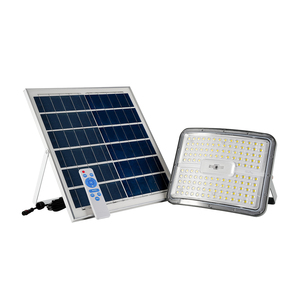
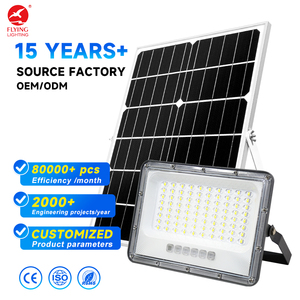
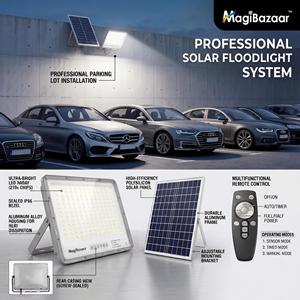
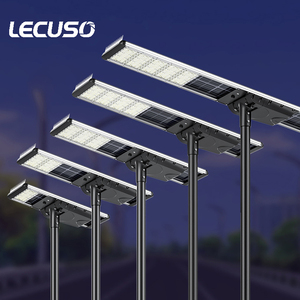
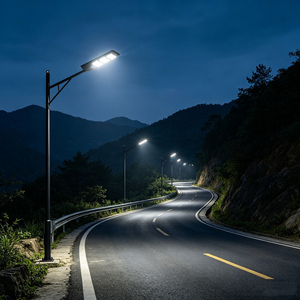
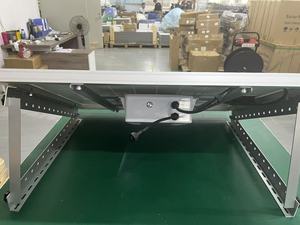
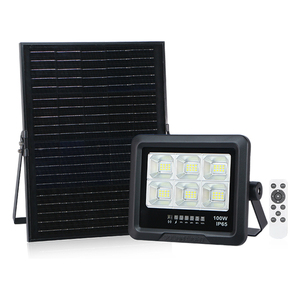
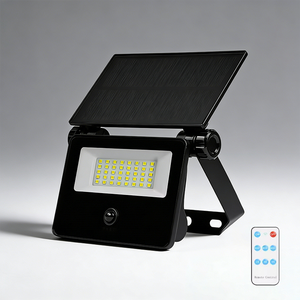
In modern municipal engineering, perimeter defense, and critical infrastructure management, the convergence of high-efficiency LED illumination and off-grid surveillance has become paramount. CE Certified Integrated Solar CCTV Lighting Systems represent the pinnacle of autonomous site protection—combining photovoltaic solar collection, Maximum Power Point Tracking (MPPT) power management, Lithium Iron Phosphate ($\text{LiFePO}_4$) chemical storage, ultra-bright LED optics, and 4G/5G encrypted IP surveillance camera arrays into a single, cohesive luminaire.
As an ISO 9001:2015 certified manufacturer with nearly two decades of domain expertise, our engineering teams design systems engineered to eliminate single points of failure in off-grid security operations. Achieving true European Conformity (CE Certification) requires rigorous compliance with electrical safety (EN 60598-1), electromagnetic compatibility (EN 55015, EN 61547), and Radio Equipment Directives (RED 2014/53/EU) for wireless security transmissions. This technical dossier outlines the critical engineering criteria, procurement trends, and architectural standards governing enterprise-scale deployments.
Commercial-grade integrated solar CCTV lights must meet multi-jurisdictional compliance protocols before deployment on public roadways, government installations, and high-risk commercial sites:
| Compliance Vector | Standard / Protocol | Technical Engineering Impact |
|---|---|---|
| Electrical Safety | CE / IEC 60598-2-3 | Ensures insulation integrity, structural stress protection, and ground fault safety under extreme ambient humidity. |
| EMC Directives | EN 55015 / EN 61547 | Prevents high-frequency radio interference between MPPT solar charge controllers and onboard 4G/5G CCTV transceivers. |
| Battery Safety | IEC 62133 / UN38.3 | Guarantees thermal stability of $\text{LiFePO}_4$ battery packs under continuous high-temperature charging cycles up to 65°C. |
| Ingress Protection | IP65 / IP67 Rating | Hermetically seals optical LED chambers, battery enclosures, and camera housings against fine dust and torrential precipitation. |
| Structural Integrity | AASHTO 180 MPH Standard | Dynamic structural engineering certified to withstand hurricane-force wind loads on heavy-duty aluminum poles. |
Unlike consumer-grade solar lights, enterprise-class integrated CCTV units utilize aerospace-grade materials, precision optics, and dual microprocessors to balance lighting loads with uninterrupted security recording.
Utilizing high-efficiency A-grade monocrystalline cells with up to 23.5% conversion rates. Surface layers feature tempered anti-reflective glass with self-cleaning hydrophobic coatings to maintain peak solar harvesting in high-dust regions.
Next-generation Maximum Power Point Tracking controllers boasting 99.1% tracking efficiency. Intelligently adapts dynamic power delivery based on real-time solar irradiance and battery state-of-charge (SoC).
Integrated H.265/H.266 low-bitrate IP cameras offering 4K optical resolution, STARVIS ultra-low-light night vision, human/vehicle AI motion classification, and encrypted micro-SD or cloud storage sync.
High-density Lithium Iron Phosphate cells rated for over 4,000 deep discharge cycles at 80% DoD. Features integrated Battery Management Systems (BMS) with thermal runaway cutoffs and low-temp heating pads.
Philips Lumileds 5050 LED chips paired with optical PMMA lenses delivering Type II, III, or IV light distributions up to 210 lm/W. Meets Dark-Sky compliance by eliminating upward light waste.
Enterprise camera modules equipped with TLS 1.3 protocol, AES-256 bit hardware encryption, and 802.1X network authentication to eliminate vulnerabilities in off-grid wireless video streams.
The global transition toward decentralized microgrids and smart municipal infrastructure is driving rapid changes in the procurement specs for outdoor solar lighting. Sourcing teams can no longer view lighting and security as isolated silos; they are now specified as single, dual-function assets.
Historically, off-grid security systems faced trade-offs during prolonged overcast weather: either dim the luminaire or throttle video bitrates. Advanced CE-certified systems now feature predictive machine-learning algorithms integrated directly into the MPPT controller. By analyzing local meteorological data via cellular telemetry, the system dynamically recalculates battery discharge profiles, reducing LED output during periods of low activity while preserving 24/7 continuous high-definition recording and AI event triggers.
Traditional Passive Infrared (PIR) sensors suffer high false-trigger rates in warm climates due to low thermal contrast. Modern commercial systems utilize 24GHz Doppler Microwave Radar combined with edge-based vision AI. This hybrid detection architecture ignores ambient thermal noise, rain, and blowing foliage, illuminating high-lumen LED arrays only when true human or vehicle targets breach designated security perimeters.
With growing international concern regarding hardware backdoors in critical infrastructure, global procurement standards are shifting toward NDAA-compliant (National Defense Authorization Act) camera chipsets within CE-marked solar assemblies. European and North American buyers are explicitly specifying system architectures using Ambarella, Novatek, or Sony Starvis sensor pipelines that strictly isolate camera storage networks from third-party control software.
High-output illumination must balance human safety with environmental preservation. Advanced integrated solar luminaires feature multi-channel CCT controllers capable of switching from crisp 5000K daylight during security alerts to warm 2700K or 590nm amber spectrums during low-motion periods. This eliminates skyglow, complies with International Dark-Sky Association (IDA) guidelines, and protects coastal ecosystems without compromising video surveillance clarity.
Combining American design heritage, global supply networks, and relentless quality control to deliver turnkey solar lighting solutions for critical environments.
We provide full DIALux 3D illumination renderings and photometric reports prior to procurement. Visualize foot-candle coverage, uniformity ratios, and optimal pole spacing before investing a single dollar.
Every luminaire undergoes a rigorous 72-hour burn-in test, thermal chamber cycling (-40°C to +65°C), and automated optical testing. Zero-defect manufacturing ensures flawless field deployment.
Custom structural steel and high-tensile extruded aluminum pole structures engineered to survive severe tropical storms, high coastal salinity, and seismic ground accelerations.
In-depth answers to critical technical and logistical questions asked by system integrators, electrical engineers, and global municipal buyers.
Partner with an industry-leading manufacturer of CE Certified integrated solar CCTV lighting systems. Contact our senior engineering team today for project pricing, DIALux simulations, and technical compliance submittals.