
Engineered to meet rigorous CE (EN 12352 / EN 1317) safety standards. Featuring robust IP65/IP68 weatherproofing, high-efficiency MPPT charge controllers, ultra-bright LED optics, and long-life LiFePO4 energy storage for continuous operation in demanding environments.
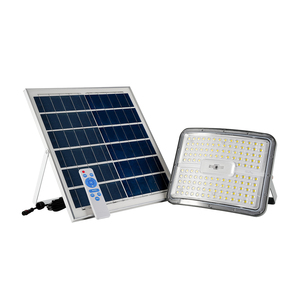
Heavy-duty 200W solar flood light engineered for high-visibility guardrail junctions and highway toll approaches. Features automated remote timing and extended LiFePO4 battery runtime.
Contact Us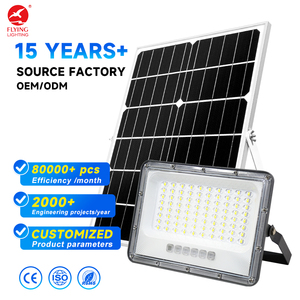
Advanced exterior radar motion detection system designed for high-risk crash barriers and emergency median lane warnings with remote control functionality.
Contact Us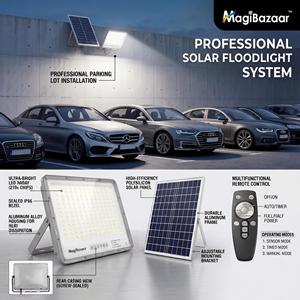
Commercial-grade die-cast aluminum housing engineered for extreme weather resilience along highway medians and industrial perimeter guardrails.
Contact Us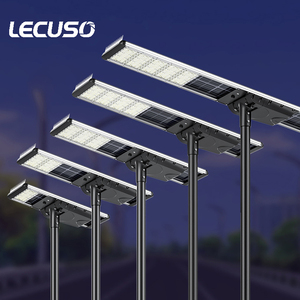
Sleek, aerodynamic integrated solar module housing monocrystalline panels and smart MPPT controllers for continuous roadway delineator illumination.
Contact Us
Corrosion-resistant stainless steel body design tailored for high-salinity coastal highway guardrails and severe weather infrastructure applications.
Contact Us
Precision-engineered perimeter security and guardrail hazard light utilizing intelligent MPPT charging algorithms for optimized winter autonomy.
Contact Us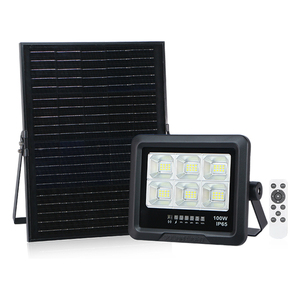
High-efficiency optical distribution lens system engineered to project clear warning illumination across broad crash barrier spans and road signs.
Contact Us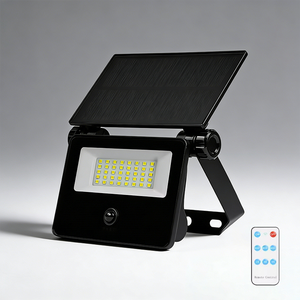
Ultra-rugged polycarbonate impact-resistant housing. Designed for rapid deployment on temporary work zone guardrails and maintenance barriers.
Contact UsWhy Tier-1 civil engineering contractors and municipal transport authorities choose our CE certified solar guardrail flashing lights for major infrastructure projects.
Utilizes premium monocrystalline solar cells with conversion efficiencies exceeding 23.5%. Designed to charge efficiently even under ambient overcast or low-angle winter sunlight conditions.
Rigorously tested to comply with European standard EN 12352 for traffic warning lights and EN 1317 guardrail safety criteria, guaranteeing photometric intensity and environmental durability.
Integrated Maximum Power Point Tracking (MPPT) microcontrollers optimize power output by up to 30% compared to traditional PWM systems, ensuring unbroken flash operations during rain spells.
High-grade Lithium Iron Phosphate (LiFePO4) battery chemistry provides over 3,000 deep discharge cycles, operating reliably from -20°C freezing temperatures up to +65°C highway heat.
Custom micro-prismatic Fresnel lenses project 360-degree or directional high-intensity amber/red flash signals visible up to 1,500 meters under night or dense fog conditions.
Heavy-duty stainless steel and anodized aluminum mounting brackets engineered to securely clamp onto standard W-Beam, Thrie-Beam, and concrete Jersey barriers without structural drilling.
Highway safety engineering is undergoing a fundamental transformation globally. As transport departments prioritize reduction of nighttime roadway fatalities, passive delineators are increasingly being upgraded to active, self-powered solar guardrail flashing lights. Guardrails (crash barriers) serve as physical protective boundaries on dangerous curves, mountain passes, bridge approaches, and highway exit ramps. However, during poor nighttime weather conditions, unlit barriers present severe collision hazards.
CE certified solar guardrail flashing lights integrate photovoltaic harvesting, optical refraction, intelligent power management, and energy storage into compact units mounted directly to highway barriers. By continuously emitting high-frequency or synchronized flashing warnings, these systems increase driver reaction times by up to 350% compared to retroreflective markers alone.
| Specification Parameter | Standard Commercial Grade | Industrial High-Spec OEM Grade (Our Standards) |
|---|---|---|
| CE Standard Compliance | Basic CE Mark (EMC Only) | Full EN 12352 (Class L8H/L9M), EN 60529 (IP68), EN 1317 |
| Solar Cell Chemistry | Polycrystalline (15-17% Efficiency) | Grade-A Monocrystalline PERC (23.5%+ Efficiency) |
| Battery Chemistry & Lifespan | Standard Ni-MH / Lead Acid (500 cycles) | LiFePO4 Lithium Iron Phosphate (3,000+ deep cycles) |
| Charge Controller Type | Standard PWM Efficiency Controller | Intelligent MPPT with Low-Temperature Cutoff |
| Visibility Distance | 400 to 600 meters | 1,200 to 2,000+ meters (Clear Line-of-Sight) |
| Wind & Vibration Rating | Standard Plastic Mounting | 180 mph Wind Load, Shock-Damped Stainless Steel Brackets |
Procurement directors and B2B buyers must evaluate technological trajectories to ensure infrastructure investments remain compliant and operational over multi-decade horizons. The major procurement trends shaping solar guardrail lighting include:
From an optical and mechanical perspective, solar guardrail flashing light design has advanced beyond simple status indicators to highly optimized optical signal devices. Key technological trends include:
To eliminate glare while maximizing long-distance visibility, optical engineers utilize computer-aided ray tracing to design multi-tiered Fresnel lenses. These lenses capture light emitted from surface-mount LEDs and collimate the beams into precise horizontal viewing angles (typically 15° vertical by 120° horizontal spread). This concentrates luminous intensity directly where drivers require it while preventing wasteful skyward light pollution.
Guardrails mounted on asphalt roadways experience extreme thermal radiation, with summer metal temperatures frequently exceeding 70°C. Standard lithium-ion batteries degrade rapidly under such heat. Industrial-grade solar guardrail lights utilize LiFePO4 chemistry housed within double-insulated, heat-dissipating aluminum alloy heat sinks. Combined with smart BMS thermal throttling, this ensures a 10-year operational lifecycle even in desert climate corridors across the Middle East and Southwestern United States.
Backed by nearly two decades of solar lighting innovation, our manufacturing facilities provide worldwide civil contractors and OEM partners with unmatched technical quality and supply chain reliability.
Every product batch undergoes strict ISO 9001:2015 quality control processes, including thermal shock chamber testing, salt spray corrosion testing, IP68 submersion validation, and optical goniophotometer calibration.
Our veteran sales engineers and optical designers offer end-to-end support—from initial photometric layout calculations to customized bracket engineering for unique highway barriers.
We source only high-efficacy Philips Lumileds LED chips, grade-A monocrystalline solar cells, and industrial MPPT controllers. All systems are engineered to deliver up to 22,200 lumens in commercial flood systems and 20-year service life performance.
With operational support hubs serving North America, South America, the Middle East, and Asia-Pacific, we provide complete compliance documentation, Buy American Compliant options, and global project delivery.
Essential technical and commercial insights for highway engineers, municipal procurement officers, and safety equipment distributors.
Our solar guardrail lights comply fully with EN 12352 (Traffic control equipment - Warning and safety light devices), EN 61000 for Electromagnetic Compatibility (EMC), and EN 60529 for IP68 ingress protection. For crashworthiness, brackets are designed to conform to EN 1317 guardrail impact deflection standards without generating hazardous secondary shrapnel upon vehicle collision.
System autonomy is calculated based on worst-case winter solar irradiance levels. By pairing oversized monocrystalline solar panels with high-efficiency MPPT controllers and deep-cycle LiFePO4 batteries, our units provide a minimum of 7 to 10 consecutive days (120+ hours) of continuous nocturnal flashing operation without direct sunlight exposure.
Yes, we engineer heavy-duty 316 stainless steel and anodized aluminum mounting brackets compatible with standard W-Beam profile guardrails, Thrie-Beam highway barriers, box beam railings, and concrete Jersey barriers. Custom OEM bracket designs can be rapid-prototyped for specialized municipal specifications within 14 business days.
Standard warning colors include Highway Amber/Yellow (590nm), Red (625nm), Blue, and White. Flash frequencies can be pre-configured during manufacturing to single flash (60 fpm), double flash, or customized synchronized flash sequences meeting regional Manual on Uniform Traffic Control Devices (MUTCD) or European CE specifications.
Continuous vibration along high-speed corridors can cause standard plastic clips to fail. Our industrial units feature shock-absorbing elastomeric grommets, vibration-proof thread-locking fasteners, and fully encapsulated, resin-potted internal electronics (IP68 rating), guaranteeing uninterrupted performance despite severe structural oscillation.
The solid-state LED light source has an operational lifespan exceeding 100,000 hours (over 10 years continuous night use). The integrated LiFePO4 battery retains over 80% capacity after 3,000 full charge-discharge cycles (typically 7-10 years). The physical polycarbonate lens and anti-corrosion housing are designed for a 20-year overall service life with zero routine maintenance required.