CE Certified Solar LED Chevron Warning Signs Manufacturers & Custom Engineering Solutions
Whitepaper Technical Specification & Global B2B Procurement Guide for Roadway Alignment & Hazard Safety Nodes
High-Lumen Solar LED Warning & Safety Infrastructure
Commercial-grade photovoltaic systems, LED hazard chevron lights, and heavy-duty industrial flood units optimized for critical infrastructure, sharp curves, high wind zones, and off-grid remote installations.
CE Certified / IP65
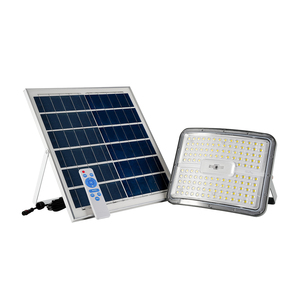
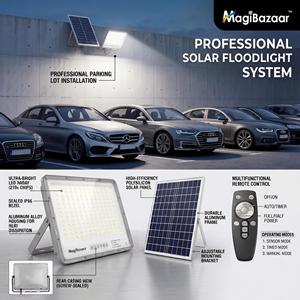
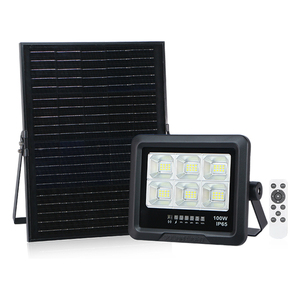
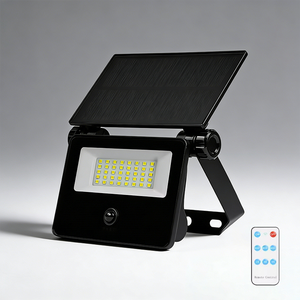
Solar Flood Light Outdoor 200W With Remote Timing & Dual Optics
1. Executive Engineering Overview: CE Certified Solar LED Chevron Signs
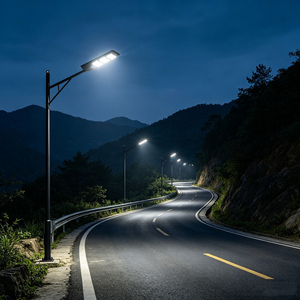
In modern intelligent transportation systems (ITS) and roadway safety engineering, continuous optical guidance along horizontal curves, mountain passes, ramp bifurcations, and work zones is paramount. Traditional passive retroreflective chevron signs rely entirely on vehicle low-beam illumination, which suffers from severe angular degradation, weather extinction during heavy fog or torrential rain, and zero proactive warning capability. CE Certified Solar LED Chevron Warning Signs represent the definitive technological paradigm shift, integrating high-efficiency photovoltaic (PV) power conversion, intelligent maximum power point tracking (MPPT), ultra-bright chromatic LEDs, and micro-radar sensing into a self-contained, zero-emission safety node.
Achieving compliance with European CE Certification Standards (specifically EN 12966 for Variable Message Signs & Road Markings, EN 61000 EMC standards, and IEC 62109 for PV converters) requires precise thermal design, optical calibration, and electromagnetic shielding. As verified by independent laboratory testing, active LED chevron warning signs increase driver hazard recognition distance by up to 350% compared to passive sheeting, reducing curve-entry rollover accidents by more than 48% in critical high-risk corridors.
Active Luminous Contrast
Delivers luminance levels exceeding Class L3 (EN 12966) at over 800 cd/m², guaranteeing visual acuity across 1,000 meters in extreme atmospheric conditions.
Grid-Independent Photovoltaics
Monocrystalline solar module clusters with up to 23.5% cell efficiency ensure uninterrupted operation even under prolonged cloud cover and winter solar deficits.
Information Gain Insight: Unlike standard off-the-shelf LED signage that utilizes low-cost PWM controllers, industrial-grade CE certified solar chevron systems incorporate dynamic ambient light thresholding (DALT). DALT continuously adjusts duty cycles between 5% and 100% based on ambient lux meters, eliminating nighttime glare while conserving up to 60% of LiFePO4 battery reserve energy.
2. Component Architecture & Material Engineering Specifications
To withstand extreme environmental degradation—ranging from high-salinity coastal spray to desert thermal cycling (-40°C to +75°C)—the manufacturing process of CE certified solar LED chevron signs must adhere to strict aerospace-grade metallurgical and chemical engineering parameters.
Photovoltaic & Energy Storage Subsystem
The photovoltaic system utilizes high-transmittance tempered glass laminated with multi-busbar monocrystalline silicon cells. Energy storage is managed exclusively through high-density Lithium Iron Phosphate (LiFePO4) battery clusters featuring integrated Battery Management Systems (BMS). LiFePO4 chemistry provides over 3,500 charge cycles at 80% Depth of Discharge (DoD), drastically outperforming legacy AGM/Gel lead-acid batteries in both thermal runway resistance and operational lifespan (exceeding 10 years).
Optical Lensing & Retroreflective Matrix
The chevron visual sign face combines 3M™ Diamond Grade™ DG3 Retroreflective Sheeting with custom-molded polycarbonate total internal reflection (TIR) optical lenses. The LED emitters utilize top-tier Philips Lumileds or OSRAM chips emitting at 590nm Amber/Yellow or 625nm Red wavelengths, yielding exact chromaticity coordinates specified in EN 12966 Annex A.
Engineering Parameter
Standard Commercial Specification
Enterprise CE Certified Standard
Solar Panel Efficiency
16.5% - 18.0% Polycrystalline
22.0% - 23.5% Monocrystalline (A-Grade)
Battery Storage Chemistry
Ternary NCM / Lead-Acid
LiFePO4 (EV-Grade Cells with Smart BMS)
Enclosure Protection Rating
IP65 Molded ABS Plast
IP67 / IP68 Corrosion-Resistant Aluminum Die-Cast
Visual Conspicuity Distance
300 - 500 Meters
> 1,000 Meters (EN 12966 Class L3 Compliant)
Autonomous Operating Days
2 - 3 Days Without Sunlight
7 - 10 Days Continuous Operation (Dark Days Autonomy)
Wind Resistance Load
110 MPH (49 m/s)
180 MPH (80 m/s) Structure Certified
Wireless Sync Protocol
None / Infrared
2.4GHz RF Mesh / LoRaWAN IoT Telemetry
3. Global Procurement Trends for Solar LED Warning Infrastructure (2026–2035)
As global municipal entities, departments of transportation (DOTs), and international infrastructure engineering contractors accelerate carbon neutrality agendas, the B2B procurement landscape for roadside safety infrastructure is undergoing profound structural shifts:
Transition to Decoupled IoT Mesh Architecture: Procurement specifications are rapidly shifting from isolated static warning signs to interconnected IoT nodes. Modern tenders increasingly mandate real-time battery health diagnostics, automated failure alert broadcasts via cellular/LoRaWAN networks, and remote brightness modulation.
Mandatory Circular Economy & RoHS Compliance: Procurement authorities in the EU, North America, and Australia now require complete Life Cycle Assessments (LCA). Manufacturers must supply documentation certifying lead-free, cadmium-free construction, alongside modular component serviceability that allows field technicians to replace battery cartridges without discarding structural enclosures.
Integration of Doppler Radar Speed Triggering: Rather than constant flashing, next-generation procurement guidelines favor dynamic speed-triggered chevrons. Integrated 24GHz K-band Doppler radar modules detect oncoming vehicle speed in real-time, escalating flash frequency and intensity exclusively when approaching vehicles exceed safe curve entry thresholds.
Buy American & Regional Regulatory Harmonization: Industrial projects across federal networks demand dual compliance capabilities—meeting European CE standards while maintaining compliance options such as Buy American Act (BAA) provisions for North American installations.
4. Application Field Scenarios & Deployment Methodologies
Solar LED Chevron Warning Signs engineered by top-tier OEMs are deployed across high-risk transportation sectors worldwide:
Mountain Pass Hairpin Curves
Eliminates dangerous blind spots on unlit mountainous corridors where grid expansion costs exceed $50,000 per kilometer. RF syncing creates a continuous optical arrow effect.
Highway Interchange Off-Ramps
Prevents high-speed rollover incidents on tight radius deceleration lanes by engaging 24GHz Doppler radar speed alerts for over-speeding commercial trucks.
Work Zone Diversions & Detours
Provides zero-trenching, instantly portable safety perimeters for heavy civil engineering construction crews operating during nighttime lane closures.
Q1: What specific tests are required to validate genuine CE Certification for Solar LED Chevron Signs?+
Genuine CE certification for solar LED traffic signs requires compliance verification across three distinct directives: the Construction Products Regulation (EN 12966 for optical performance, visual angle, and luminance ratio), the EMC Directive 2014/30/EU (EN 61000-6-3 for emission and EN 61000-6-1 for immunity), and the Low Voltage Directive 2014/35/EU for system controllers. Factory Mutual and TÜV Rheinland test reports must verify these parameters.
Q2: How do solar chevron signs maintain autonomy during extended overcast or monsoon periods?+
Our systems incorporate oversized monocrystalline solar panels paired with high-capacity Lithium Iron Phosphate (LiFePO4) storage chemistry sized for a minimum 7 to 10 days of continuous dark-day autonomy. Combined with MPPT smart tracking algorithms and auto-dimming ambient lux sensors, the draw is dynamically optimized during low irradiance periods.
Q3: What wireless communication protocols are used to synchronize multiple chevron signs?+
We utilize a self-healing 2.4GHz RF mesh networking protocol with ultra-low latency (<15ms propagation delay). This allows an arbitrary number of chevron signs along a curve to automatically establish line-of-sight synchronization, enabling sequential flashing (dynamic visual direction) without requiring physical control cabling between poles.
Q4: Can these units withstand hurricane-force winds and high ambient temperatures?+
Yes. System enclosures are manufactured using die-cast ADC12 aluminum alloys and heavy-gauge structural steel mounting brackets rated to withstand wind velocity up to 180 MPH (80 m/s). Thermal protection circuits integrated into the BMS automatically prevent battery charging under extreme thermal thresholds above 65°C to preserve cell integrity.
Q5: What is the expected maintenance cycle for commercial solar LED chevron systems?+
Due to solid-state LED emitters rated for 100,000 operational hours (L70) and LiFePO4 battery design life exceeding 10 years, routine field maintenance is limited to annual optical face cleaning in heavily soiled environments. Component replacement can be executed at pole-top via modular plug-and-play IP68 quick-connect harnesses.
Q6: Do you offer custom OEM sign dimensions, retroreflective grade options, and logo branding?+
As a direct primary manufacturer, we support complete OEM/ODM customization. Clients can select sign dimension profiles (e.g., 600x750mm, 450x600mm), retroreflective sheeting grades (3M™ Diamond Grade™ or High Intensity Prismatic), and custom backing plate colors, alongside custom branded housing labels.
With an operational legacy dating back to 2006, our organization stands as an established global manufacturer of heavy-duty commercial solar street lights, parking lot illumination systems, and active traffic safety technology. Operating under strict ISO 9001:2015 Quality Management Systems, our engineering division combines over 45 years of combined photovoltaic and photometric design experience.
ISO 9001:2015 Certified QA
Every manufacturing phase—from SMT surface mounting of LED boards to spectral goniophotometer calibration—undergoes 100% automated inspection.
Buy American & CE Compliance
We engineer dual-compliant product lines meeting both European Union CE directives and US Buy American Compliant statutory procurement mandates.
Global Technical Footprint
Supported by international project engineering offices in South Carolina, El Salvador, Ecuador, Oman, Puerto Rico, and Suriname for turnkey support.
Our structural aluminum and steel light poles carry a Lifetime Warranty, reflecting unyielding confidence in our mechanical integrity and metallurgical treatment. Whether you are executing municipal road modernization, highway expansion, or specialized industrial perimeter safety projects, our sales engineers provide full photometric layout simulations, wind load calculations, and tailored B2B quotation support.