
Engineering Desert-Spec Commercial Solar Lighting: Thermal Management, Dust Mitigation, & System Longevity
Deploying commercial outdoor solar lighting systems in hyper-arid and desert environments—such as the Middle East (GCC region), North Africa (Sahara), the Australian Outback, and Atacama—presents some of the most aggressive physical and thermal challenges in modern electrical engineering. Standard commercial-grade solar luminaires designed for temperate zones frequently suffer catastrophic failures within 12 to 18 months when exposed to persistent ambient temperatures exceeding 45°C (with internal housing temperatures soaring above 75°C), high-velocity airborne silica abrasion, and severe solar soiling.
Critical Engineering Metric: The Thermal-Degradation Trap
For every 10°C increase in ambient operating temperature above 25°C, standard Lithium Nickel Manganese Cobalt (NMC) batteries experience an exponential capacity degradation of nearly 100%, while uncalibrated MPPT controllers lose up to 18% tracking efficiency due to heat-induced voltage drop. Desert-Spec engineering mandates specialized LiFePO4 chemistry with thermal insulation layers and self-adjusting MPPT algorithms.
1. High-Ambient Thermal Isolation & Heat Sink Topology
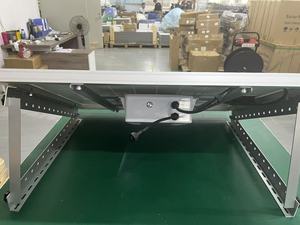
The fundamental cause of premature component death in desert solar lighting is thermal trapping inside the luminaire casing. Premier Chinese OEMs and top-tier suppliers overcome this by utilizing ADC12 high-density die-cast aluminum alloys featuring vertical convection thermal fins. By engineering an air-gap separation channel between the solar PV mounting bracket, the LED engine light board, and the battery compartment, conductive heat transfer is minimized.
Furthermore, battery enclosures in Desert-Spec configurations are embedded with dual-layer Aerogel vacuum insulation panels. This keeps the internal cell operating environment below 45°C even during peak afternoon heatwaves where pole-surface temperatures exceed 80°C.
2. Silica Sandstorm Sealing & Anti-Soiling Nanotechnology
Dust accumulation (soiling) is the silent killer of solar harvesting efficiency in desert regions, reducing daily photovoltaic power yield by up to 2.5% per day if unmitigated. Factory-level Desert Spec solar lights integrate hydrophobic and electrostatically neutral nanocoatings on the tempered glass surface of the solar panels. This prevents microscopic sand grains and mineral dust from adhering to the surface.
From a mechanical perspective, IP65 protection is insufficient for fine desert dust (haboobs). Leading manufacturers adhere strictly to IP68 ingress protection testing standards, using continuous fluororubber (FKM) gaskets and sealed pressure-equalization breather valves (Gore-Tex vents) that allow the fixture to balance internal pressure without drawing in sand particles or humidity during rapid atmospheric cooling at night.
3. Comparative Matrix: Standard vs. Desert-Spec Systems
Below is an engineering comparison detailing why standard commercial solar street lights fail in desert climates compared to specialized Desert-Spec systems sourced from accredited Chinese manufacturing plants.
| Engineering Parameter | Standard Commercial Solar Light | China Desert-Spec Heavy Duty System |
|---|---|---|
| Operating Ambient Temp | -10°C to +45°C | -20°C to +75°C (Extended Threshold) |
| Battery Chemistry & Isolation | Standard NMC / LiFePO4 (Uninsulated) | Grade-A LiFePO4 with Aerogel Thermal Barrier |
| Ingress Protection (IP) | IP65 (Basic Dust / Water) | IP68 (Sandstorm Tight & Continuous Submersion) |
| PV Panel Glass Coating | Standard Tempered Float Glass | Self-Cleaning Hydrophobic SiO2 Nanocoating |
| MPPT Controller Efficiency | 90% - 94% (Derates severely at heat) | 99.4% Peak with Heat Compensation Firmware |
| Wind / Mechanical Load | 110 mph (35 m/s) Structural Rating | 180 mph (80 m/s) Hurricane & Gale Compliant |
| Service Life Expectancy | 2 - 3 Years in Arid Zones | 8 to 12 Years Maintenance-Free Guarantee |
4. Optical Distribution & High Efficiency Output
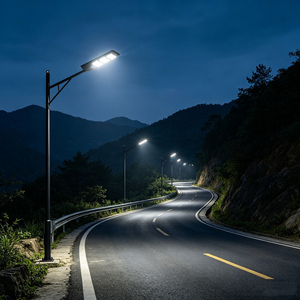
Commercial desert applications—including multi-lane highway lighting, oil field perimeter security, and remote industrial campuses—require precise photometric footprints to prevent glare and maximize pole spacing (lowering total capital expenditure). Utilizing Philips Lumileds 5050 and Cree LED chips, Desert Spec lights achieve system efficacies between 180 lm/W and 220 lm/W.
Custom Type II, Type III, and Type V Batwing optical lenses made from anti-UV polymethyl methacrylate (PMMA) ensure that light distribution remains uniform across broad road surfaces without yellowing under high solar UV indices.