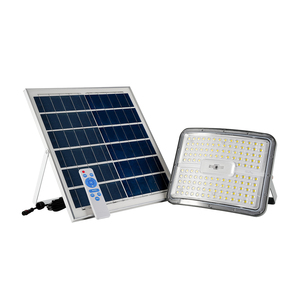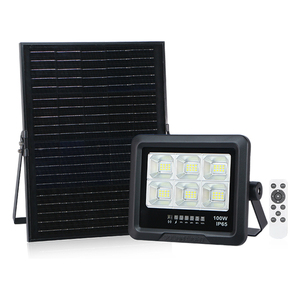
Engineered for extreme environmental durability, high luminous efficacy, and maximum battery autonomy. Browse our primary export models for municipal roads, highways, perimeter security, and commercial sites.
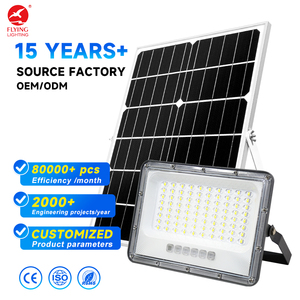
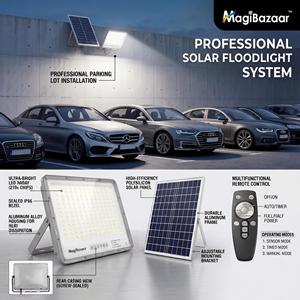
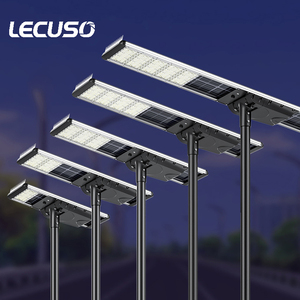
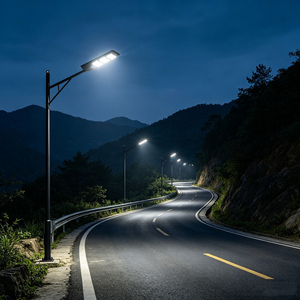
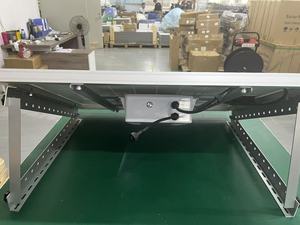
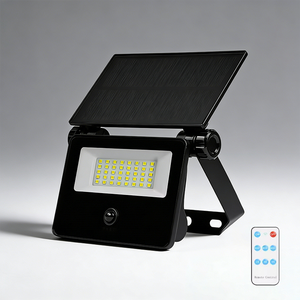
Combining advanced Lithium Iron Phosphate (LiFePO4) energy storage, patented MPPT electronics, and rigid quality assurance to deliver turnkey solar outdoor lighting systems across 60+ countries.
We strictly utilize EV-grade Lithium Iron Phosphate (LiFePO4) cell chemistry from Tier-1 manufacturers (CATL/EVE). Featuring thermal stability up to 65°C, integrated smart BMS overcharge/under-voltage protection, and 80% DoD retention after 6,000 deep cycles.
Our proprietary Maximum Power Point Tracking (MPPT) charge controllers continuously optimize panel V-I curves, delivering 20% to 30% higher charging efficiency than conventional PWM systems, ensuring rapid full-charge even on heavily overcast winter days.
Every commercial tender receives comprehensive Dialux 3D photometric rendering. We tailor beam spread distributions (Type II, Type III, or Type IV) and pole spacing layout to meet exact lux uniformity requirements and Dark Sky compliance standards.
Engineered for tropical cyclone zones and coastal highways. Structural aluminum die-cast housings (ADC12) combined with hot-dip galvanized steel poles undergo rigorous wind-tunnel testing, earning a lifetime pole structural warranty.
Operating under strict ISO 9001:2015 quality control systems. Products carry full CE, RoHS, IP67 waterproof certification, IK10 impact ratings, and IEC 62133 safety compliance for lithium battery shipping and deployment.
The global infrastructure sector is experiencing a paradigm shift in off-grid exterior illumination. As municipalities, industrial park developers, and commercial enterprises strive toward Net-Zero carbon targets, traditional grid-connected lighting and outdated solar systems with lead-acid batteries are being aggressively phased out. Modern procurement frameworks now demand integrated lithium-powered commercial solar street lights designed for long-term Levelized Cost of Lighting (LCOL) minimization.
According to recent global infrastructure tenders, procurement specifications have shifted from evaluating initial capital expenditure (CAPEX) to calculating Total Cost of Ownership (TCO) over a 10-to-15-year operational lifecycle. Key drivers transforming commercial solar lighting sourcing include:
Monolithic transition toward Lithium Iron Phosphate (LiFePO4). Unlike Ternary Lithium (NMC) which poses thermal runaway risks above 55°C, LiFePO4 offers absolute chemical stability up to 70°C, zero thermal explosion hazard, and triple the cycle life (6,000+ cycles at 80% DoD versus 1,500 cycles for NMC).
Commercial street light designs are adopting N-Type TOPCon and bifacial monocrystalline PV panels achieving conversion efficiencies beyond 22.5% to 24.5%. Bifacial modules capture albedo light reflected off concrete and asphalt, boosting winter charging yield by 15% to 25%.
Engineers are specifying luminaires equipped with 7-pin NEMA or Zhaga Book 18 receptacles. This modular standardized interface allows seamless plug-and-play addition of LoRaWAN, NB-IoT, or Zigbee smart city controllers without replacing the underlying light head.
Advancements in LED chip architecture (such as Philips Lumileds 5050 and Bridgelux high-brightness packages) enable system-level luminaire efficacy to surpass 200 to 220 lumens per watt. Coupled with custom batwing optics, light pollution is mitigated while achieving uniform pole spacing up to 45 meters.
Key Procurement Insight: Modern infrastructure grants prohibit single-point-of-failure systems. Municipal buyers must select suppliers capable of providing modular LiFePO4 battery enclosures, dual-channel MPPT controllers, and verified IES photometric files for exact optical calculations.
Understanding the technological gap between standard commercial offerings and tier-1 lithium solar lighting engineering is essential for evaluating international factory proposals.
| Technical Parameter | Legacy Solar Street Lights (Pre-2020) | Next-Gen Lithium Commercial Systems (2025+) |
|---|---|---|
| Battery Chemistry | VRLA Lead-Acid / Gel / NMC Lithium | EV-Grade LiFePO4 (Lithium Iron Phosphate) |
| Cycle Life (@ 80% DoD) | 500 – 1,200 Cycles (2-3 Year Life) | 4,000 – 6,000+ Cycles (10-12 Year Life) |
| Charging Algorithm | Pulse Width Modulation (PWM) (~70% Eff.) | Dynamic Dynamic MPPT (>98.5% Eff.) |
| System Luminaire Efficacy | 100 – 130 Lumens / Watt | 180 – 220 Lumens / Watt |
| Operating Thermal Range | -10°C to +45°C (Thermal Degradation) | -20°C to +65°C (Built-in BMS Thermal Cutoff) |
| Smart City Connectivity | Standalone Autonomous / Motion Only | Zhaga / NEMA 7-Pin, LoRaWAN, NB-IoT, 5G |
| Wind Resistance Class | Up to 110 mph (Standard Pole Design) | Up to 180 mph (Hurricane Structural Rated) |
As a leading China manufacturer and exporter, our engineering laboratory continuously advances the structural, electronic, and optical dimensions of off-grid solar systems. Four core technology breakthroughs are defining the next decade of commercial solar outdoor illumination:
Battery temperature regulation is the primary determinant of long-term operational failure. In high-ambient environments such as the Middle East, North Africa, and Australia, lithium packs housed directly behind PV panels can experience temperatures exceeding 75°C, causing micro-explosions or capacity collapse. Advanced engineering incorporates phase-change thermal insulation wraps, double-shell aluminum air-ventilation gaps, and active BMS temperature-sensing cutoffs that adjust charging rates dynamically when internal temperatures exceed safe operational thresholds.
Conventional PIR sensors rely on thermal contrast, frequently failing in desert climates when ambient air temperatures equal human body temperature (37°C). Modern commercial street lights utilize 5.8GHz doppler radar microwave sensors. Microwave radar penetrates non-metallic obstacles, operates flawlessly across extreme temperature deltas (-30°C to +70°C), and offers 360-degree detection angles up to 15 meters, enabling precise 100% full-power dimming triggers upon vehicle or pedestrian motion detection.
Uncontrolled glare and wasted upward spill light violate dark-sky preservation policies and reduce road illuminance. Industrial-grade solar luminaires now utilize optical-grade PMMA (Polymethyl Methacrylate) lenses specifically molded into asymmetric Type II-M (for multi-lane roadways), Type III-M (for broad parking lots), and Type IV (for perimeter floodlighting). This directional light control increases ground illuminance by 40% while maintaining absolute zero upward light output (ULOR = 0%).
While All-in-One (integrated solar panel, battery, and lamp head) designs excel in installation speed for residential or secondary roads, high-wattage municipal highways require massive solar array surface area (150W to 300W PV modules). The industry is trending toward All-in-Two configurations—where high-capacity lithium batteries and LED engines are integrated into an aerodynamic luminaire body, paired with an independently adjustable external TOPCon solar panel. This balances installation ergonomics with high power generation capacity.
Detailed technical answers for engineering consultants, procurement managers, municipal contractors, and commercial importers sourcing lithium solar street lighting from China.
Our experienced team of lighting engineers and international sales specialists is standing by to prepare custom Dialux simulations, factory-direct pricing, and detailed technical tender submittals for your commercial project.
Get a Quote