
Heavy-duty, high-lumen, autonomous outdoor solar lights manufactured to rigorous export standards for infrastructure developers, B2B importers, and government contractors.
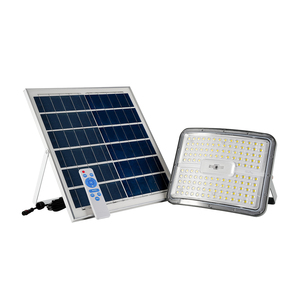
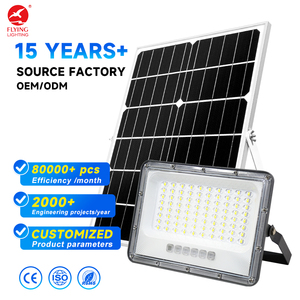
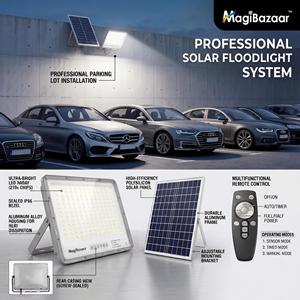
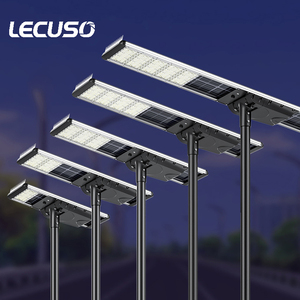
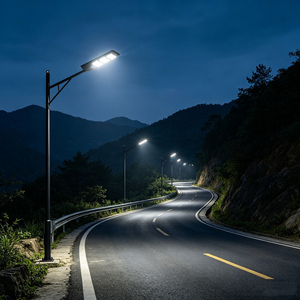
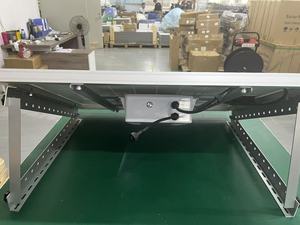
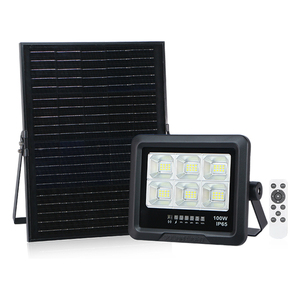
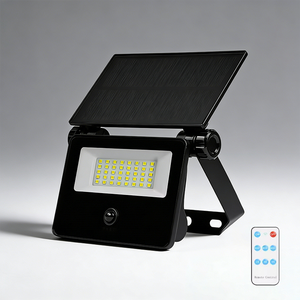
We bridge high-capacity Chinese manufacturing scale with rigorous international quality standards (ISO 9001:2015, Buy American Compliance, and Dark Sky Standards).
Every luminaire and solar engine undergoes rigorous 100% burn-in testing, IP67 submersion checks, and spectral sphere verification to ensure zero-defect global dispatch.
Utilizing high-efficiency (>23.5%) monocrystalline solar cells coupled with real-time Maximum Power Point Tracking algorithms to ensure maximum energy conversion even in overcast environments.
Powered by Lithium Iron Phosphate (LiFePO4) chemistries offering over 6,000 deep discharge cycles at 80% DoD, providing reliable power for 10-12 years without thermal runaway risk.
Structural poles and luminaire bodies are fabricated using marine-grade aluminum and hot-dip galvanized steel, certified to withstand Category 5 hurricanes and severe salt fog spray.
Our in-house optical engineering team provides comprehensive DIALux illuminance simulations, ensuring optimized pole spacing, zero light trespass, and compliance with IESNA standards.
Equipped with Zigbee/LoRaWAN communication protocols for centralized cloud management, remote diagnostic telematics, adaptive dimming schedules, and carbon offset reporting.
An executive guide for procurement officers, civil engineering contractors, and municipal planners specifying off-grid commercial lighting systems from tier-one exporters in China.
As global municipal infrastructure rapidly pivots toward decentralized, zero-carbon lighting networks, off-grid commercial solar lighting has transitioned from an emergency alternative to a primary infrastructural asset. The modern commercial solar luminaire is no longer merely an assembly of off-the-shelf components; it represents a tightly integrated thermodynamic, optical, and electrochemical engineering system designed to perform uninterrupted for decades under harsh environmental stress.
Core Procurement Insight: The Total Cost of Ownership (TCO) in off-grid solar infrastructure is overwhelmingly determined by battery cycle life, optical luminaire efficacy (Lumens per Watt), and structural autonomy. Sourcing based purely on initial wattages rather than system-level photometric efficiency (lm/W) and MPPT tracking efficiency leads to premature system collapse within 24 months.
The global off-grid commercial lighting sector is undergoing three major paradigm shifts driven by advancements in semiconductor efficiencies, storage chemistry, and wireless telematics:
Traditional Pulse Width Modulation (PWM) charge controllers, while low cost, suffer from energy harvesting losses ranging from 20% to 35% because they force the solar PV panel to operate at the battery voltage rather than its optimal maximum power point voltage ($V_{mp}$). Modern industrial solar street lights leverage high-frequency Maximum Power Point Tracking (MPPT) algorithms. These digital microcontrollers continuously sample panel I-V curves multiple times per second, dynamically adjusting input impedance to ensure maximum power extraction under varying solar irradiance levels and ambient temperature shifts. This yields up to a 30% increase in energy recovery during overcast winter conditions, allowing for smaller PV footprints without compromising autonomy.
Legacy Gel, AGM, and flooded Lead-Acid batteries have been completely rendered obsolete in commercial specifications due to low cycle life (typically 500-800 cycles at 50% Depth of Discharge), low energy density, and high environmental sensitivity. The industrial standard is now high-density Lithium Iron Phosphate ($\text{LiFePO}_4$). Possessing thermal runaway resistance up to 600°C and delivering 4,000 to 6,000+ deep cycles at 80% DoD, $\text{LiFePO}_4$ chemistries allow system designers to safely house batteries directly beneath solar modules or inside pole bases without requirement for subterranean vaults.
System autonomy is as much a function of energy consumption as it is energy collection. Modern commercial fixtures utilize high-efficiency LED chips (such as Philips Lumileds 5050 or Cree XTE) capable of achieving raw module efficacy up to 200–220 Lumens/Watt. Coupled with precision optical PMMA (polymethyl methacrylate) batwing lenses (IESNA Type II, Type III, and Type IV distributions), light is precisely directed onto roadway or parking lot surfaces while eliminating dark spots, sky glow, and glare—achieving full Dark Sky compliance while using half the energy of legacy fixtures.
Evaluating export-grade off-grid solar equipment requires understanding the engineering differences between consumer-grade retail floodlights and true commercial-grade infrastructure systems:
| Engineering Attribute | Consumer / Retail Grade | Commercial Infrastructure Grade | Performance Impact |
|---|---|---|---|
| PV Cell Chemistry | Polycrystalline (15-17% Efficiency) | A-Grade Monocrystalline (22-24% Efficiency) | +35% higher energy yield in limited footprint |
| Charge Controller | Basic PWM Controller | Multi-Stage Digital MPPT (>98.5% Efficiency) | Prevents blackouts during 3-5 days of rain |
| Battery Tech | Ternary Li-ion (NMC) or Gel | EV-Grade LiFePO4 with Smart BMS | Extends system service life from 2 yrs to 10-12 yrs |
| Luminous Efficacy | 80 - 110 lm/W | 170 - 210 lm/W (Lumileds / Cree) | Delivers double the lux on ground using same wattage |
| Housing Structure | Thin Stamped Aluminum / ABS Plastic | ADC12 Die-Cast Aluminum / 304 Stainless | Survives coastal salt spray & extreme heat (>65°C) |
| Wind Resistance | Unrated (<60 mph failure threshold) | AASHTO Certified (Up to 180 mph / 80 m/s) | Resists hurricane-force mechanical loading |
When selecting a Chinese manufacturing partner and exporter for commercial solar lighting, enterprise buyers must implement a stringent quality assurance verification process before issuing letters of credit (LC) or purchase orders:
Insist on receiving verified .IES (Illuminating Engineering Society) photometric files generated via goniophotometer testing in an ISO 17025 accredited laboratory. Import these files directly into DIALux or AGi32 software to verify compliance with local roadway lighting standards (e.g., EN 13201 or IES RP-8) regarding average illuminance ($E_{avg}$) and overall uniformity ($U_0$).
Ensure that system battery sizing calculates the Days of Autonomy (DoA)—the number of consecutive fully overcast/rainy days the system can operate without PV input. For commercial installations, a minimum of 3 to 5 autonomy days is required. Calculate usable energy ($Wh$) as:
Usable Energy (Wh) = Nominal Battery Voltage (V) × Capacity (Ah) × Max Depth of Discharge (DoD %)
Overheating is the primary killer of LED drivers and battery modules. Inspect the heat sink surface area of the luminaire body. Heavy-duty die-cast aluminum (ADC12) housings with integrated thermal convection fins allow thermal dissipation away from the LED junction, keeping junction temperature ($T_j$) below 75°C and guaranteeing an L70 lumen maintenance lifespan of over 100,000 operating hours.
Detailed answers to complex technical questions encountered by procurement professionals and engineering partners during product selection.
Commercial systems utilize high-capacity EV-grade $\text{LiFePO}_4$ battery packs sized specifically for 3 to 5 days of absolute autonomy. Combined with intelligent MPPT controllers that adjust light output dynamically via microwave motion sensors or dimming schedules during low-battery states, the system guarantees uninterrupted dusk-to-dawn operation even through prolonged inclement weather.
A true commercial system is engineered with a 20-year structural service life: Solar PV panels carry a 25-year power output warranty (>80% capacity); $\text{LiFePO}_4$ battery modules last 10 to 12 years (replaceable); high-efficiency LED chips exceed 100,000 hours (approx. 12-15 years); and structural poles carry lifetime structural integrity warranties.
All-In-One (Integrated) systems combine the PV panel, battery, controller, and LED fixture into a single housing for rapid, low-labor installation—ideal for light-to-medium wattages. Split-type systems separate the solar panel and battery, allowing for ultra-large solar panels (>300W) and heavy battery banks necessary for high-mast highway or airport apron applications requiring high lumen output.
For coastal and marine environments, products are treated with a specialized electrophoretic coating and pure polyester powder coating over marine-grade anodized aluminum (or 304/316 stainless steel fasteners). This enables systems to pass rigorous 1,000+ hour ASTM B117 salt spray testing without surface oxidation or structural degradation.
Yes, our commercial optical arrays utilize full-cutoff optical lenses designed to direct 100% of emitted light downward at targeted beam angles. This eliminates upward light waste (U=0), protecting wildlife ecosystems and satisfying strict municipal Dark Sky ordinances.
While the initial hardware cost of a solar light is higher than a standard grid fixture, solar eliminates 100% of trenching, underground conduit piping, electrical cabling, transformer upgrades, and ongoing electrical bills. Total Installed Cost (TIC) is typically 30% to 50% lower, providing immediate ROI from day one of installation.
Partner with China’s leading commercial solar lighting manufacturer. Contact our engineering team for factory-direct pricing, custom DIALux photometric simulations, and comprehensive project quotes.
Inquire Now