
Engineered for extreme environmental endurance, featuring Grade-A Monocrystalline PV panels, ultra-reliable LiFePO4 energy storage, and smart MPPT charging algorithms.
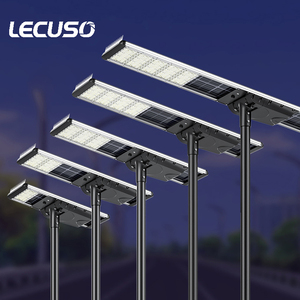
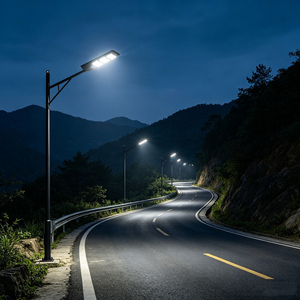
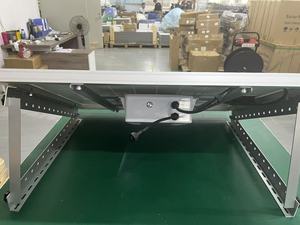
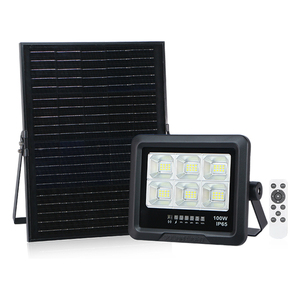
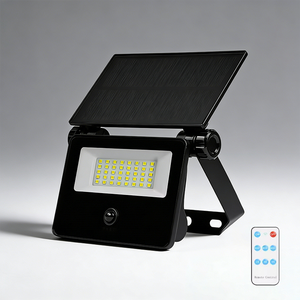
As global urban centers accelerate toward net-zero carbon goals and smart city integration, municipal outdoor lighting has evolved from simple illumination fixtures into multifunctional, zero-emission urban power micro-grids. Top Chinese smart city solar pole system manufacturers are pioneering this transition by merging high-efficacy photovoltaic generation, IoT-based Central Management Systems (CMS), advanced Lithium Iron Phosphate (LiFePO4) energy storage, and structural engineering compliance into unified modular pole systems.
Unlike traditional legacy grid lighting that requires costly underground cabling, transformer upgrades, and continuous AC power expenditure, modern smart city solar poles operate entirely off-grid or in hybrid-interactive modes. By harnessing Grade-A N-type TOPCon solar cells with conversion efficiencies exceeding 23.5%, these systems generate clean power even under low-irradiance and diffuse lighting conditions. Integrated Maximum Power Point Tracking (MPPT) charge controllers extract up to 98.5% of available solar energy, regulating energy flow to robust LiFePO4 battery banks designed for a 12-to-15-year operational service life.
Procurement directors, municipal engineers, and EPC contractors sourcing solar pole systems from China must navigate a rapidly evolving technological landscape. Sourcing strategies are shifting from basic lumen-per-watt considerations to holistic Total Cost of Ownership (TCO), long-term battery cycle performance, and standardized IoT interoperability.
Moving away from heavy, flat-tilted solar panels, future smart poles utilize 360° vertical cylindrical solar wraps mounted flush to the pole. This drastically reduces wind drag coefficient (AASHTO compliance), eliminates dust and snow accumulation, and offers a sleek, modern urban aesthetic.
Leading Chinese exporters are standardizing on LoRaWAN, NB-IoT, and Zigbee wireless mesh protocols. Central management dashboards enable real-time dimming, automated fault reporting, battery State-of-Health (SOH) tracking, and dynamic energy harvesting optimization across thousands of poles.
International environmental regulations mandate zero upward light pollution. Future solar luminaire designs feature asymmetric Type II, Type III, and Type IV precise optical distribution lenses, delivering high-uniformity light on roadways while protecting dark skies and surrounding wildlife.
To ensure decades of maintenance-free operation in demanding climates—from humid coastal zones to scorching desert highways—top tier Chinese suppliers adhere to rigorous mechanical and electrical manufacturing benchmarks:
Utilizing premium Philips Lumileds or Cree 5050 LED chips, systems achieve unprecedented optical efficacies up to 160 to 210 lumens per watt, providing clear visual acuity while minimizing power draw from the storage unit.
Integrated Lithium Iron Phosphate (LiFePO4) batteries feature built-in smart Battery Management Systems (BMS) with thermal protection, cell balancing, overcharge/discharge protection, and over 4,000 deep discharge cycles @ 80% DOD.
Heavy-duty structural steel poles (Q235B/Q345B) undergo hot-dip galvanization according to ISO 1461 standards, electrostatically powder coated to resist severe salt spray corrosion and withstand wind gusts up to 180 mph (80 m/s).
Backed by nearly two decades of commercial solar lighting design and manufacturing leadership, our enterprise delivers high-precision, factory-direct lighting solutions worldwide.
Every lighting fixture, solar panel bracket, and smart controller undergoes stringent multi-stage QA/QC testing, ensuring total international compliance including CE, RoHS, IP65/IP67, and IK10 impact ratings.
Our veteran team of sales engineers and photometric specialists offers end-to-end technical support—from custom DIALux light placement reporting to site-specific wind load structural engineering.
Specialized marine-grade aluminum housing, stainless steel fasteners, and aerodynamic vertical solar module designs offer complete corrosion protection and hurricane resistance up to 180 mph with long-term warranties.
We provide full OEM/ODM customization services for government municipal projects, utility developers, and commercial real estate, including custom color temperatures, dark-sky shields, and pole heights.
Our smart solar street light poles are engineered with a minimum of 3 to 7 days of continuous operational autonomy (reserve power capacity). By combining high-capacity LiFePO4 battery banks with intelligent MPPT adaptive dimming algorithms, the system automatically adjusts LED output levels based on real-time battery state of charge (SOC), ensuring full-night illumination even during extended cloudy spells.
Maximum Power Point Tracking (MPPT) charge controllers continually monitor the solar panel voltage and current in real time, converting excess voltage into optimal charging current. This delivers a 15% to 30% higher charging efficiency compared to Pulse Width Modulation (PWM) controllers, particularly under overcast weather or extreme atmospheric temperatures.
Vertical tubular solar modules wrap 360 degrees around the light pole, absorbing both direct sunlight and ambient reflected ground light (albedo). Vertically mounted panels do not collect surface dust, bird droppings, or snow, removing the need for manual cleaning. Furthermore, vertical poles dramatically decrease wind loading drag, complying with stringent AASHTO hurricane wind resistance standards.
Our central management nodes support multiple standardized IoT protocols, including LoRaWAN, Cellular NB-IoT (5G/4G Cat-M1), and Zigbee. Municipal operators can remotely configure lighting schedules, monitor power metrics, execute emergency overrides, and receive instant automated failure diagnostics via a secure cloud dashboard.
LiFePO4 battery chemistry offers unmatched thermal stability, high safety (non-combustible), compact energy density, and superior cycle life (>4,000 cycles at 80% DOD vs ~500 cycles for lead-acid). This translates to over 10-12 years of maintenance-free service, drastically lowering the long-term operational replacement costs for city authorities.
Yes. We supply comprehensive DIALux photometric simulation reports for city planners, engineers, and contractors. By analyzing pole height, spacing, lane width, and required lux/uniformity levels (EN13201 / IESNA standards), we provide precise optical calculations and IES files prior to manufacturing.