
Industrial-grade solar luminaires engineered specifically for airfield aprons, taxiways, emergency runways, and perimeter security perimeters.
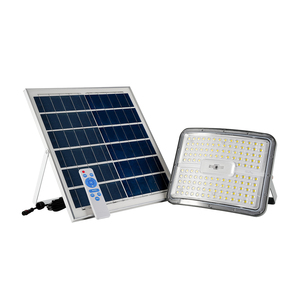
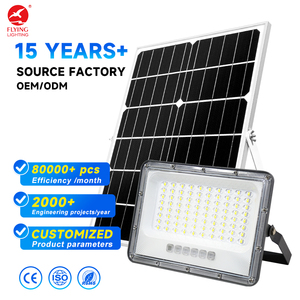
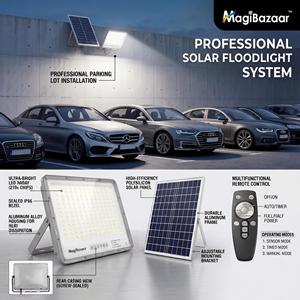
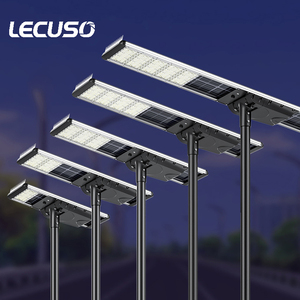
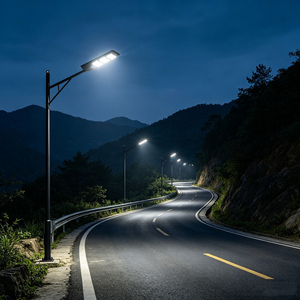
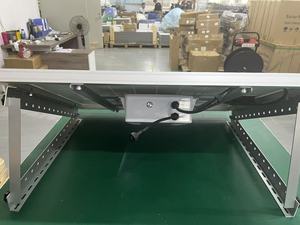
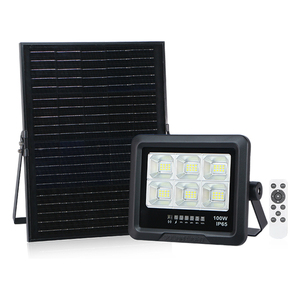
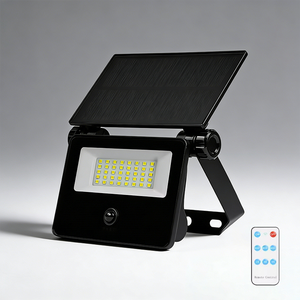
In modern aviation infrastructure management, civil and military airports worldwide are increasingly transitioning from legacy grid-tied underground cabling systems to autonomous, solar-powered airfield lighting systems. Procurement directors, airfield engineers, and EPC contractors operating across international hubs require equipment that strictly adheres to the International Civil Aviation Organization (ICAO) Annex 14 and Federal Aviation Administration (FAA) Advisory Circular AC 150/5345 specs.
As China's premier manufacturer and global exporter of high-integrity solar lighting solutions, our engineering architecture resolves traditional airfield constraints: high trenching costs, vulnerable underground wiring, power outages, and carbon-intensive grid dependency.
The operational reliability of airfield lighting depends on precise photometric distribution curves and intelligent battery management. Below is an overview of standard baseline specifications across our solar airfield systems:
| System Parameter | ICAO Annex 14 Standard Requirement | China Premium Solar Supplier Spec |
|---|---|---|
| Luminous Efficacy | Variable by fixture application | 180 to 210 lm/W (Philips Lumileds 5050) |
| Battery Chemistry | Unspecified (Deep Cycle minimum) | Lithium Iron Phosphate ($LiFePO_4$) - 3000+ Cycles |
| Charge Regulation | Continuous Charge Control | MPPT Intelligent Tracking (98.5% Efficiency) |
| Chromaticity Coordinates | CIE 1931 Aviation Boundaries | Strict Binning (< 3-step MacAdam Ellipse) |
| Structural Integrity | Frangible Coupling Support | ICAO Compliant Breakable Mounts / 180 mph Poles |
| Autonomous Backup | Minimum 5 Days | 7 to 10 Days (Customizable per Irradiance Zone) |
To qualify as a top-tier global supplier, manufacturing capabilities must transcend standard commercial solar street lights. Airfield environments demand military-grade reliability and zero-fail operational security. Our systems incorporate four core engineering pillars:
Utilizing high-efficiency monocrystalline solar panels with conversion efficiencies exceeding 22.8%. These panels feature superior low-light performance during overcast conditions and minimal power degradation (-0.4%/year).
Unlike standard Lithium-ion, our $LiFePO_4$ (Lithium Iron Phosphate) battery packs provide thermal stability, non-combustibility, and deep DoD (Depth of Discharge) up to 90% without degrading cycle life.
Airfield operators can control individual or zoned lights via 868/915 MHz RF Mesh networks or pilot-controlled lighting (PCL) VHF controllers, allowing real-time intensity adjustment from the tower.
How global aviation authorities and airport operators are shaping the next decade of runway and taxiway lighting procurement.
Airports participating in ACI's Airport Carbon Accreditation (Levels 1 to 4+) are actively phasing out diesel generator backup systems and grid-tied airfield lighting in favor of 100% self-sustained solar power, reducing indirect Scope 2 emissions drastically.
Military, humanitarian, and secondary regional airstrips require rapid airfield setup. Tactical portable solar runway lights (IP67/IP68 rated) with wireless hand-held remote activation allow functional airstrip readiness in under 30 minutes.
Modern procurement guidelines specify remote diagnostics. Future solar airport lights report automated operational health, solar yield metrics, battery state-of-charge (SoC), and fault warnings back to airport central SCADA systems via cellular/LoRaWAN gateways.
As an established manufacturer with over 18 years of specialized outdoor solar lighting development, we provide end-to-end turnkey project delivery. Drawing upon technical foundations refined since 2006, our OEM/ODM facilities in China integrate strict international quality standards with cost-efficient scalability.
Every solar light fixture undergoes strict quality control—including 48-hour burn-in testing, salt spray exposure tests (ASTM B117), and vibration resistance testing to withstand jet blast velocity.
Our in-house lighting design team provides complete DIALux simulation models and isolux contours for your specific airfield geometry, ensuring total compliance with runway intensity and beam spread regulations.
With offices and support networks extending across North America, South America, the Middle East, and Europe, we provide rapid replacement parts, technical oversight, and local contractor support.
Expert insights addressing key technical, regulatory, and logistics queries for project engineers and procurement officers.
Yes. Our commercial solar airfield lights are designed and engineered to comply with ICAO Annex 14 Vol. I and II standards for chromaticity, beam spread angle, and light intensity (candelas) across runway edge, threshold, taxiway, and apron obstruction applications.
Our systems incorporate an Autonomy Factor of 7 to 10 continuous nights. Equipped with smart MPPT controllers and oversized LiFePO4 battery banks, the lights intelligently modulate lumen output during prolonged periods of low solar irradiance to ensure uninterrupted operation.
Absolutly. We offer optional 2.4GHz / 868MHz / 915MHz encrypted RF wireless control modules. Air Traffic Control (ATC) or airfield personnel can switch light modes, alter intensity (10%, 30%, 100%), or trigger stroboscopic modes wirelessly from up to 5 km away.
Monocrystalline solar panels carry a 20-25 year performance guarantee (≥80% output). The Grade-A $LiFePO_4$ battery packs provide over 3,000 to 4,000 charge/discharge cycles, translating to an operational service life of 8 to 10 years before simple battery swap out.
Yes. Mechanical safety is paramount. All runway edge, threshold, and touch-down zone solar light fixtures are available with ICAO compliant frangible (breakable) couplings to minimize damage to aircraft in the event of accidental surface contact.
China represents the world's most robust supply chain for Tier-1 photovoltaic components, advanced optics, and precision aluminum casting. Partnering with an ISO 9001 certified manufacturer ensures high-level engineering compliance at competitive factory-direct pricing, significantly reducing total procurement CAPEX.
Contact our senior solar aviation engineers today to receive custom DIALux photometric design reports, technical datasheets, and factory-direct project estimates.