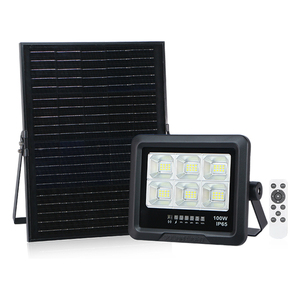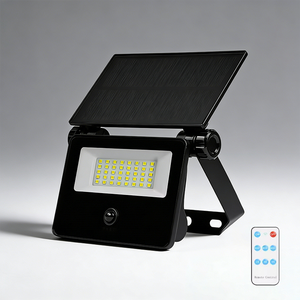
China Top High Bay Commercial Solar Lights Factories & Sourcing Guide

2026 Technical Whitepaper: B2B Procurement, OEM Manufacturing Standards, MPPT Technology & Next-Gen Industrial High-Lumen Solar Lighting Architectures

ISO 9001:2015 Certified Industrial Grade IP65/IP67 LiFePO4 Power Hub 180lm/W Photometric Output
Industrial & Commercial Catalog

Featured Commercial Solar Flood & High Bay Luminaires

High-lumen, heavy-duty solar floodlights and integrated commercial luminaires engineered for logistics centers, sports arenas, perimeter security, and industrial facilities.
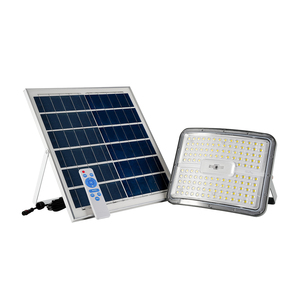
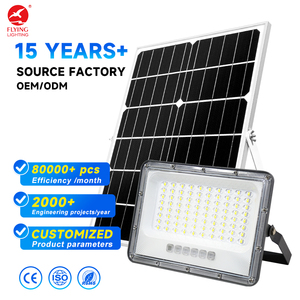
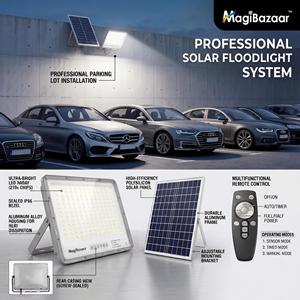
Solar Flood Light Outdoor 200W With Remote Timing Function

Solar Flood Light Outdoor 200W With Remote Timing Function and Long Runtime

200W Rating IR Remote Control Extended Runtime
New Model Emergency IP65 Waterproof 100W 200W Solar Flood Light

New Model Emergency IP65 Waterproof 100W/200W LED Flood light Exterior Radar Solar Powered

Radar Sensor IP65 Waterproof Emergency Dual-Mode
High Lumen Super Bright 500W Solar Flood Light Heavy Duty Aluminum

High Lumen Super Bright 500W Solar Flood Light Heavy Duty Aluminum IP65 Outdoor

500W Ultra Bright Die-Cast Aluminum Landscape & Area
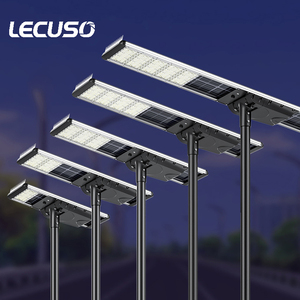
LECUSO Integrated All In One Led Solar Street Light

LECUSO Best Quality Outdoor Waterproof 30W-150W Integrated All In One Led Solar Street Light

30W - 150W Modular All-In-One Mono-PERC PV
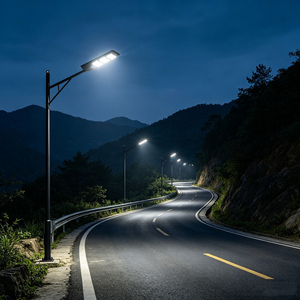
Heavy Duty 300W Led Solar Street Light Stainless Steel Body IP65

Heavy Duty 300W Led Solar Street Light Stainless Steel Body IP65 for Highway and Security

Stainless Steel 300W High Mast Anti-Corrosion
GUOHUI Lighting TG3AP Heavy Duty Solar Floodlight Perimeter Security

GUOHUI TG3AP Heavy Duty Solar Floodlight Perimeter Security MPPT Controller 50W

MPPT Tech Perimeter Guard Long Life Battery
CHZ Solar Powered Floodlight 100W Heavy Duty Outdoor Billboard Lighting

CHZ Solar Powered Floodlight 100W Heavy Duty Outdoor Billboard & Commercial Area Lighting

100W Commercial Billboard Optic High Reliability
IP65 PC Wireless Solar LED Work Light Heavy Duty

IP65 PC Wireless Solar LED Work Light Heavy Duty Portable Flood Light for Outdoor Operations

Wireless & Portable PC Enclosure Multi-Scene Use

01 Executive Summary: The Structural Shift to Off-Grid High Bay & Commercial Solar Lighting

As global industrial logistics, commercial warehousing, municipal infrastructure, and mining sectors accelerate their net-zero decarbonization strategies, the demand for off-grid, high-lumen commercial outdoor solar luminaires has experienced an exponential trajectory. China’s manufacturing ecosystem stands at the epicenter of this industrial evolution, supplying over 85% of the world's commercial solar light fixtures, solar high bay systems, and solar street light assemblies.

However, procuring from China's commercial solar light factories requires a rigorous technical evaluation framework. Standard residential solar floodlights fail rapidly under demanding industrial workloads due to insufficient thermal management, sub-standard pulse-width modulation (PWM) controllers, and degraded recycled lithium batteries. Commercial high bay applications—demanding mounting heights from 8 to 15 meters and lumen outputs exceeding 15,000 to 44,400 lumens—require enterprise-grade solid-state LED chips, Maximum Power Point Tracking (MPPT) power conversion modules, and high-density Lithium Iron Phosphate (LiFePO4) storage architecture.

18+
Years Industry Authority
220 lm/W
Max Efficacy Output
99.4%
MPPT Tracking Efficiency
6,000+
LiFePO4 Cycle Life
Information Gain Insight: Modern commercial solar high bay and flood lighting systems are no longer passive light fixtures. They operate as autonomous energy ecosystems utilizing N-Type TOPCon bifacial solar cells, integrated Smart BMS (Battery Management Systems), and IoT-based ambient light adaptation, delivering 365-night uninterrupted operation even under 5–7 consecutive rainy/overcast days.

02 Technical Evaluation Framework for High Bay & Commercial Solar Luminaires

When evaluating top China high bay commercial solar light factories, engineering departments and procurement managers must audit five primary hardware components to ensure a designed 20-year structural service life:

PV

Bifacial Monocrystalline PV Arrays

Leading tier-1 Chinese manufacturers utilize N-Type TOPCon and Monocrystalline PERC solar panels boasting conversion efficiencies above 23.5%. Glass-glass encapsulation ensures zero PID (Potential Induced Degradation) in high-humidity coastal regions.

MP

Digital MPPT Charge Controllers

Unlike obsolete PWM units that waste up to 30% of harvested solar energy, intelligent MPPT micro-controllers maintain optimum voltage-amperage curves, increasing charging efficiency by 20%–35% during low-irradiance overcast conditions.

Li

EV-Grade LiFePO4 Battery Cells

Top-tier factories integrate 100% brand-new Grade-A Lithium Iron Phosphate (LiFePO4) cell packs equipped with active balancing Smart BMS, providing thermal stability up to 65°C and maintaining 80% capacity after 6,000 deep discharge cycles.

LED

High-Efficacy LED Engine & Optics

Engineered with Philips Lumileds or Cree 5050/3030 LED packages delivering up to 220 lumens per watt. Custom optical lenses (Type II, Type III, or 60°/90° high-bay symmetrical narrow beams) minimize spill light and eliminate glare.

TH

Thermal Management Heat Sink

Heavy-duty ADC12 die-cast aluminum heat sinks engineered with vertical thermal convection channels maintain junction temperatures below 65°C, preventing premature light decay (L70 > 100,000 hours).

IK

Extreme Weather Protection

Fully sealed IP65/IP67 waterproof enclosures with IK09/IK10 mechanical impact resistance. Formulated with powder-coated anti-corrosion finishes suitable for salt-spray exposure and hurricane wind loads up to 180 mph.

Commercial Solar High Bay & Flood Light Grade Comparison

Performance Specification Standard Commercial Grade Industrial High-Bay / Heavy-Duty Grade Enterprise Tier-1 OEM Standard
Luminous Efficacy 120 – 140 lm/W 160 – 180 lm/W 200 – 220 lm/W
Controller Technology Standard PWM / Basic MPPT Smart MPPT (98% efficiency) Dual-Core IoT MPPT (99.4% efficiency)
Battery Chemistry & Cycle Life Ternary Li-ion (800 cycles) LiFePO4 (2,000 – 3,000 cycles) EV Grade-A LiFePO4 (6,000+ cycles @ 80% DoD)
Solar Panel Type Polycrystalline / Standard Mono Monocrystalline PERC (21% Efficiency) N-Type TOPCon Bifacial (>23.5% Efficiency)
Structural Wind Rating 110 mph (Cat 2 Hurricane) 140 mph (Cat 4 Hurricane) 180 mph (Cat 5 Hurricane Compliant)
Expected Service Lifespan 3 to 5 Years 8 to 12 Years 20 Years (With Replaceable Modules)

03 Global Procurement Trends: 2026–2030 Commercial Solar Lighting Evolution

The commercial solar lighting market is transitioning from standalone off-grid units to intelligent, connected urban and industrial energy nodes. B2B buyers and project developers must align their sourcing roadmaps with four macro trends:

1. Smart City & IoT Mesh Network Integration

Modern commercial solar high bays and street lights are now embedded with LoRaWAN, Zigbee, or NB-IoT controllers. Facility managers can remotely monitor battery state-of-charge (SoC), set automated dimming schedules, track energy harvesting metrics, and receive automated diagnostic alerts via cloud dashboards.

2. Hybrid Grid-Interactive BackUp Architectures

For high-risk security zones, logistics hubs, and critical infrastructure, hybrid solar systems automatically draw grid power only when battery reserves fall below 15% during multi-week storm events, guaranteeing 100% lighting availability with zero blackout risk.

3. Dark-Sky Compliance & Adaptive Optical Waveguides

Global environmental regulations increasingly mandate International Dark-Sky Association (IDA) compliance. Advanced optical cutoff lenses prevent light trespass, sky glow, and glare while maximizing downward lux levels across parking lots and high-bay bay areas.

4. Circular OEM Manufacturing & Carbon Offset Tracking

Leading Chinese factories are offering standardized modular designs where LED modules, battery packs, and MPPT drivers can be serviced and swapped in the field without dismantling the entire luminaire fixture, dramatically lowering life-cycle carbon footprints and total cost of ownership (TCO).

04 Manufacturing Infrastructure & Enterprise Capabilities

Leveraging over 18 years of manufacturing excellence and a engineering core with over 45 combined years of solar lighting engineering experience, our industrial production facilities deliver tailored OEM/ODM solutions to global distributors, EPC contractors, municipal authorities, and Fortune 500 enterprises.

ISO 9001:2015 Quality Assurance

Rigorous quality control spanning incoming raw material inspection (IQC), in-process assembly checks (IPQC), thermal shock testing, integrating sphere photometric calibration, and 100% aging test under full load.

Custom Photometric & Dialux Simulation

We provide turnkey Dialux 3D lighting design, glare evaluations, and lux footprint simulations prior to manufacturing, ensuring optimized pole spacing, uniform light coverage, and compliance with IESNA standards.

Buy American & Global Compliance

Full compliance capabilities including CE, RoHS, IP67, IK10, IEC 62133 (battery safety), UN38.3 transport certification, Prop 65 compliance, and Buy American compliant configurations for international tenders.

Turnkey Logistics & Global Engineering Presence: Supported by regional technical centers in South Carolina, El Salvador, Ecuador, Oman, Puerto Rico, and Suriname, we back every commercial installation with comprehensive warranty support and rapid spare parts dispatch.

05 Commercial Sourcing FAQ: High Bay & Commercial Solar Lighting

Q1: What distinguishes a high-bay commercial solar flood light from standard solar garden lights?
High-bay commercial solar lights are engineered for high-altitude installation (8 to 15 meters) and broad square-meter coverage. They feature high-lumen optical engines (7,400 to 44,400 lumens), heavy-duty ADC12 die-cast aluminum heat sinks for continuous thermal dissipation, large-capacity Grade-A LiFePO4 battery banks, high-efficiency monocrystalline solar panels, and intelligent MPPT controllers capable of maintaining illumination through severe weather conditions.
Q2: How do Chinese factories test and guarantee 20-year structural service life?
Premier manufacturers utilize accelerated life testing (ALT), salt spray corrosion testing (ASTM B117 standards for over 1,000 hours), thermal cycling (-40°C to +80°C), and wind tunnel structural verification up to 180 mph. While battery packs typically undergo preventative maintenance after 8–10 years (6,000 cycles), the heavy-duty aluminum housing, mounting brackets, and solar panels are rated for 20 to 25 years of continuous outdoor operation.
Q3: What is the difference between MPPT and PWM controllers in commercial solar lighting?
PWM (Pulse Width Modulation) controllers act as a simple switch connecting the solar panel to the battery, causing up to a 30% loss of peak panel power. MPPT (Maximum Power Point Tracking) controllers continuously calculate optimal voltage and current levels, converting excess panel voltage into additional charging current. This allows MPPT systems to charge up to 35% faster, especially on overcast winter days.
Q4: Can your high-bay commercial solar lights withstand tropical hurricanes and coastal salt air?
Yes. Our commercial luminaires and high-mast pole systems feature marine-grade anodized or polyester powder-coated aluminum structures, 304/316 stainless steel hardware, IP67 silicon gas-sealed optical chambers, and structural engineering validated for wind loads up to 180 mph, backed by a Lifetime Warranty on structural light poles.
Q5: What photometrics and IES files do you provide for engineering projects?
We provide full IES LM-79 and LM-80 photometric test reports along with standard IES files. Our in-house lighting engineers use Dialux software to deliver complete 3D light distribution plots, isolux charts, point-by-point lux calculations, and recommended pole spacing models tailored to your project site.
Q6: What is the minimum order quantity (MOQ) and lead time for custom OEM commercial orders?
Standard catalog products have flexible MOQs starting from 10 to 50 units for evaluation. Custom OEM/ODM project designs (custom CCT, specialized optical lenses, smart IoT integration, or custom mounting brackets) typically require 50–100 units. Production lead times range from 15 to 25 business days depending on volume and customization depth.

Ready to Request an Engineering Quote & Dialux Lighting Plan?

Consult with our senior solar engineering specialists today. Get factory-direct wholesale pricing, detailed photometric reports, and custom OEM product configurations for your commercial project.