
Engineered for extreme environmental resiliency, long operational autonomy, and precision optical distribution across industrial yards, highways, and commercial perimeters.
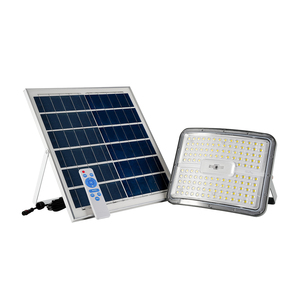
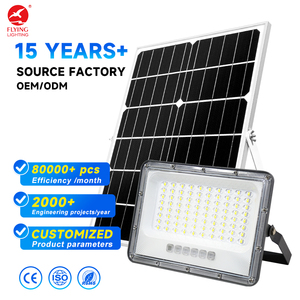
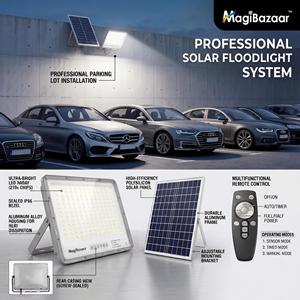
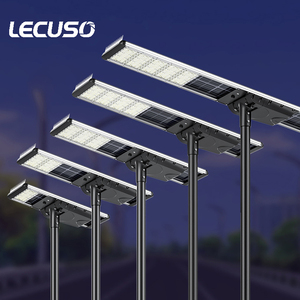
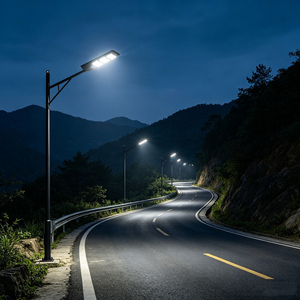
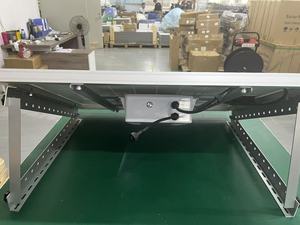
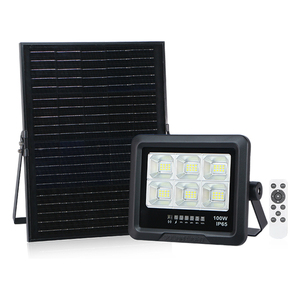
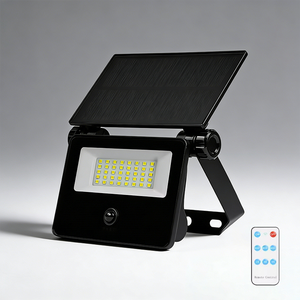
Combining vertical supply chain integration with international compliance standards to deliver zero-defect industrial off-grid illumination systems.
Every industrial fixture undergoes 100% full-load burn-in testing, IPX7 water immersion testing, optical goniophotometric profiling, and climate chamber stress cycles from -40°C to +65°C prior to export packaging.
Incorporating engineered structural solutions compatible with Buy American standards, AASHTO wind-loading requirements (up to 180 mph wind resistance), and Dark-Sky International light pollution criteria.
Providing full B2B project support: custom IES file creation, Dialux illumination simulations for complex industrial footprints, tailored CCT/CRI parameters, and custom housing corrosion-resistance coatings.
The global commercial and industrial outdoor lighting landscape is undergoing a massive structural transformation. As municipal authorities, logistics hubs, mining concessions, and industrial estate developers move toward net-zero targets and operational self-reliance, grid-independent solar lighting has transitioned from an emergency alternative to a primary infrastructure asset. Sourcing high-capacity solar floodlights and street luminaires from leading Chinese manufacturing hubs represents a strategic procurement approach for global enterprises—provided buyers navigate the complex technical variations between commercial-grade consumer products and true heavy-duty industrial hardware.
Industrial solar area lighting systems must balance three interconnected physics domains: photovoltaic collection efficiency, electro-chemical storage lifespan, and thermodynamic LED dissipation. A failure in any single component cascades into premature system outage during extended cloudy periods (autonomy failure) or permanent battery degradation in tropical high-temperature zones.
The primary driver of modern industrial solar area lighting performance is module efficiency per square meter. In industrial solar floodlights and integrated streetlights, panel surface area is physically constrained by pole wind-sail area calculations (EPA - Effective Projection Area). Premium Chinese exporters have migrated from traditional Monocrystalline PERC cells (typical efficiency 19.5%–20.5%) to advanced N-Type TOPCon (Tunnel Oxide Passivated Contact) silicon technology, pushing solar conversion efficiencies beyond 22.5%.
TOPCon technology exhibits a dramatically lower temperature coefficient (-0.30%/°C compared to -0.38%/°C in conventional cells), meaning industrial luminaires deployed in Middle Eastern or Equatorial mining operations experience significantly lower power drop-off during extreme peak summer sun. Furthermore, TOPCon delivers superior low-light spectral response during dawn, dusk, and heavy cloud cover, allowing the Maximum Power Point Tracking (MPPT) controller to initiate charging cycles up to 35 minutes earlier every morning.
The battery pack represents over 40% of the total Bill of Materials (BOM) cost in an industrial solar luminaire and remains the primary single point of failure in low-quality systems. Leading Chinese industrial exporters have completely phased out Ternary Lithium (NMC) and Lead-Acid chemistries in favor of Lithium Iron Phosphate (LiFePO4 / LFP).
LiFePO4 provides unparalleled chemical stability, zero risk of thermal runaway under mechanical puncture, and an operating temperature threshold up to 65°C. At an industry-standard Depth of Discharge (DoD) of 80%, Grade-A LFP cells yield between 4,000 and 6,000 complete charge-discharge cycles—translating to an operational life of 10 to 15 years.
| Technical Characteristic | Standard Commercial Solar Lights | Industrial-Grade Export Standard |
|---|---|---|
| Battery Cell Chemistry | Recycled Li-ion (NMC) / Lead-Acid | Grade-A New LiFePO4 (EV Class) |
| Solar Controller Technology | Pulse Width Modulation (PWM) (65-75% Eff.) | Intelligent MPPT with Telemetry (98% Eff.) |
| LED Package & Efficacy | SMD2835 (110 - 130 lm/W) | Lumileds / Bridgelux 5050 (190 - 220 lm/W) |
| Housing & Corrosion Rating | ABS Plastic or Thin Stamped Sheet Metal | ADC12 Die-Cast Aluminum / Stainless Steel (C4/C5 Coating) |
| Autonomy Reserve (Rainy Days) | 1 - 2 Days (Basic dimming) | 5 - 7 Days (Adaptive Constant-Lumen Profile) |
| Operating Temperature Range | -10°C to +45°C | -30°C to +65°C (Internal Heating/Cooling BMS) |
Achieving industrial-grade illuminance while minimizing battery capacity requirements requires high system efficacy. Leading Chinese factories utilize multi-chip LED packages (such as Lumileds 5050 or Cree XP-G3) driven at conservative currents to maximize system efficacy—achieving up to 210 lumens per watt at the luminaire level.
Optical distribution is tailored using UV-stabilized, high-transmittance optical PMMA lenses. Rather than symmetrical light patterns, industrial road and perimeter lighting requires Type II, Type III, or Type IV asymmetric batwing distributions. This directs lumen output precisely along roadway corridors or perimeter fencing without wasteful back-light spill, maximizing pole spacing distances while remaining compliant with Dark-Sky International regulations against light pollution.
Key technological inflections shaping the 2025–2030 industrial solar outdoor lighting procurement pipeline.
Next-generation industrial solar luminaires are transforming into wireless edge-computing nodes. Integrated with NB-IoT, LoRaWAN, or Zigbee wireless transceivers, facilities managers can remotely monitor battery state-of-charge (SoC), operational temperature, solar panel voltage, and driver health in real-time across thousands of isolated assets via a central cloud platform.
Static lighting profiles are being replaced by AI-driven adaptive dimming algorithms. Controllers collect local meteorological weather patterns and auto-adjust lumen output based on historical sun irradiance. Combined with microwave radar sensors, luminaires run at a energy-conserving 30% ambient glow, ramping to 100% full lumen output only when vehicular or human activity is detected.
Industrial vertical-pole mounted solar panels and semi-integrated streetlights are increasingly adopting Bifacial PV modules. By harvesting reflected albedo light from surrounding concrete, sand, or metallic industrial surfaces, rear-side power gains add 10% to 25% extra energy yield annually, drastically improving winter autonomy performance.
Direct technical insights for engineering procurement leads, EPC contractors, and international distributors.
Calculating system autonomy requires evaluating the daily watt-hour (Wh) power consumption of the LED luminaire profile. Formula: Total Energy Required (Wh) = LED Wattage × Full-Power Equivalent Hours × Days of Autonomy. Accounting for BMS depth-of-discharge limits (80% for LiFePO4) and system efficiency losses (~15%), the total battery capacity is scaled. Photovoltaic panel wattage is then sized using local Minimum Peak Sun Hours (PSH) data to guarantee full pack recharge within 1 to 2 sunny days following a prolonged overcast period.
At a baseline, buyers must demand ISO 9001:2015 (Quality Management) and ISO 14001 (Environmental Management) certification. Product-level compliance must include CE, RoHS, IP66/IP67 ingress verification reports from accredited third parties (SGS, TUV, or Intertek), IK10 mechanical impact certification, and IEC 62133 / UN38.3 transport safety documentation for LiFePO4 battery shipments.
Die-cast ADC12 aluminum allows complex, 3D convective heat-sink fin geometry integrated directly into the structural housing frame. This ensures seamless thermal conduction away from the LED board and MPPT electronics. Proper junction temperature control (keeping Tj < 75°C) prevents premature thermal degradation, color shifting, and driver failure in ambient temperatures above 45°C.
Industrial coastal installations subject luminaires to high airborne salinity. Top Chinese exporters apply multi-stage surface pretreatment followed by electrostatically deposited thermosetting architectural powder coatings. Buyers specifying marine-grade installations should require a minimum 1,000-Hour Salt Spray Test (ASTM B117 / ISO 9227) report to ensure the housing resists pitting and blistering over its 10-20 year service lifecycle.
PWM (Pulse Width Modulation) controllers act as a simple switch, forcing the solar array down to battery voltage level, losing up to 30% of potential solar energy harvesting capacity. MPPT (Maximum Power Point Tracking) controllers utilize high-frequency DC-to-DC conversion to continuously track the maximum V-I operating point of the PV panel, delivering 95%-98% charging efficiency—vital for high-wattage industrial area luminaires.
Essential verification steps when auditing Chinese solar area lighting manufacturers prior to placing container-level purchase orders.
Ensure the factory uses 100% brand-new Grade-A prismatic or cylindrical LiFePO4 cells with full QR-code batch traceability (CATL, BYD, or EVE cells), rather than recycled or grade-B storage cells.
Verify that the manufacturer owns an in-house darkroom equipped with a Distributed Goniophotometer and Integrating Sphere to generate verified IES file datasets for Dialux modeling.
Request certified finite element analysis (FEA) reports verifying that the complete assembly (luminaire, mounting brackets, arm extensions) withstands localized extreme hurricane conditions.
Access comprehensive IES files, Dialux simulation support, OEM custom branding programs, and bulk container pricing directly from our engineering team.