
Precision-engineered solar LED floodlights, integrated street lights, and emergency high-lumen luminaires tested for marine corrosion, hurricane winds, and continuous 24/7 terminal operations.
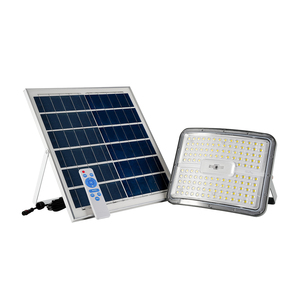
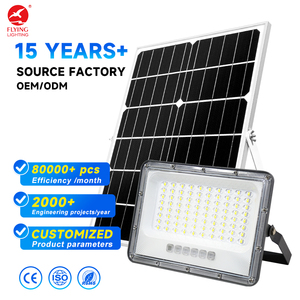
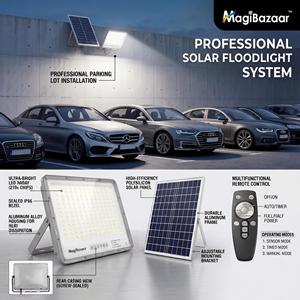
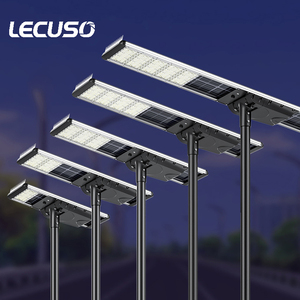
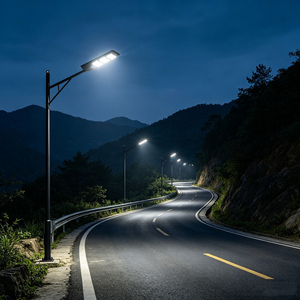
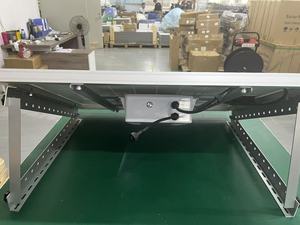
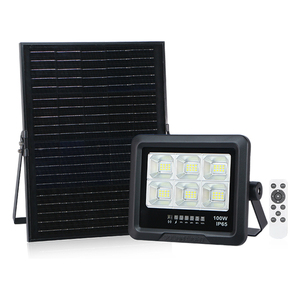
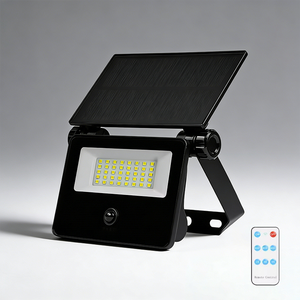
Combining world-class optoelectronic engineering, US-standard design compliance, and robust supply chain integration for maritime logistics global hubs.
Our port lighting systems undergo 5,000+ hours of ASTM B117 salt spray testing. Featuring electrophoretic anodized aluminum, 316 stainless steel fasteners, and fluorocarbon powder coating to withstand extreme saline humidity and chemical ocean spray.
Equipped with high-efficiency Maximum Power Point Tracking (MPPT) controllers achieving 99.4% tracking efficiency. Paired with grade-A Lithium Iron Phosphate (LiFePO4) battery packs designed for 4,000+ deep cycles at 80% DOD and integrated thermal management systems.
Backed by over 45 years of combined solar engineering experience. We provide full DIALux 3D photometric simulations for container yards, quaysides, and dry docks, guaranteeing IALA and IMO compliance prior to project dispatch.
Maritime ports and intermodal container terminals represent some of the most challenging operating environments on Earth for outdoor illumination systems. Harbor cranes, berth aprons, storage yards, and customs gates require intense, uninterrupted light to ensure 24/7 logistical throughput and operational safety under strict International Maritime Organization (IMO) and OSHA regulations.
Traditional port lighting relies heavily on grid-tied high-mast towers consuming hundreds of kilowatts per night. However, subsea trenching through reinforced concrete piers, constant cable degradation from saltwater ingress, and escalating electricity tariffs have driven top port authorities globally to transition toward industrial off-grid solar illumination technology.
Key Insight for Port Engineers: Upgrading traditional quayside sodium/metal-halide high masts to self-contained solar LED systems eliminates ground trenching costs—which typically account for 60% to 70% of total port lighting retrofit budgets—while achieving zero direct carbon emissions.
When selecting a solar port lighting supplier in China, procurement teams must evaluate the luminaire's resistance against three primary environmental vectors:
| Evaluation Parameter | Grid-Tied Port High Mast | Industrial Solar Port Floodlight | Operational Impact |
|---|---|---|---|
| Pier Trenching & Cabling | High CAPEX Required | Zero Trenching Needed | Saves $150–$300 per linear meter of concrete pier |
| Power Consumption Cost | Continuous Grid Utility Tariff | 100% Free Solar Energy | Eliminates recurring OPEX completely |
| Grid Failure Risk | Total Terminal Blackout | Autonomous 3–5 Days Autonomy | Uninterrupted continuous port operation |
| Corrosion Maintenance | Frequent Conduit Replacement | Sealed Modular C5-M Enclosure | Reduces annual maintenance labor by 80% |
| Installation Lead Time | Months (Structural civil work) | Days (Direct flange mounting) | Accelerates port expansion projects |
As the international maritime transport sector aligns with decarbonization roadmaps (such as IMO 2030 and European Green Deal Net-Zero mandates), the technology landscape for port lighting is undergoing rapid evolutionary shifts. Forward-thinking procurement directors are incorporating the following advanced criteria into their vendor pre-qualification frameworks:
Next-generation solar port lights are moving beyond standalone dusk-to-dawn sensors. Smart terminals now deploy LoRaWAN or Zigbee mesh networks allowing port operators to monitor battery state of charge (SoC), energy harvest, and fixture temperature in real-time from a central control room. Dynamic dimming algorithms adjust lumen output based on shipping schedules and berth activity.
Procurement specifications are transitioning from standard PERC solar cells to TOPCon (Tunnel Oxide Passivated Contact) and N-Type bifacial solar panels. By capturing ambient light reflected off seawater and concrete pier surfaces (albedo effect), bifacial solar arrays increase daily energy yield by up to 25%, enabling higher wattage floodlights on smaller panel footprints.
Light pollution and pilot glare are critical safety hazards during vessel docking maneuvers. Modern solar terminal luminaires utilize precision-engineered asymmetric lenses that project light downward and inward toward the container apron, maintaining a low BUG (Backlight, Uplight, Glare) rating and eliminating horizontal light spill into navigation channels.
China accounts for over 85% of global solar luminaire production, but the industrial tiering among suppliers is significant. The industry is rapidly bifurcating into two distinct market segments:
Top international port engineering firms and EPC contractors exclusively source from industrial-grade suppliers capable of providing full compliance documentation, including CE, RoHS, IP68, IK10, UL compliance, and certified DIALux photometric reports tailored to container yard geometries.
When evaluating bids from Chinese suppliers for port, dock, or logistics hub lighting contracts, engineering procurement teams should utilize the following checklist to ensure long-term reliability and compliance:
Technical Audit Checklist:
✔ Panel Structure: Monocrystalline silicon with tempered AR glass, heavy anodized frame (>15µm).
✔ Battery Chemistry: 100% New Grade-A LiFePO4 (Lithium Iron Phosphate) with integrated heating film for low-temperature climates.
✔ Charge Controller: True MPPT with minimum 98% efficiency and IP68 waterproof encapsulation.
✔ Housing Material: High-pressure die-cast ADC12 aluminum alloy or 316 stainless steel with C5-M powder coating.
✔ Driver & Chips: Philips Lumileds 5050 / 3030 LED chips driven by low-THD constant current circuitry.
Our heavy-duty solar floodlights and high-mast poles are designed using Finite Element Analysis (FEA) to withstand wind speeds up to 60–70 m/s (180 mph). Structural poles feature thick-walled Q235B/Q355B steel, hot-dip galvanized internally and externally, combined with reinforced flange plates and high-tensile anchor bolts.
Commercial Grade-A LiFePO4 batteries deliver 4,000+ charge cycles at 80% Depth of Discharge (DOD), translating to a operational lifespan of 10 to 12 years. Our battery enclosures are IP68 vacuum-sealed with automatic thermal management to protect against salt corrosion and high summer temperatures.
Yes. By sizing the monocrystalline solar array and battery bank to match the site's peak sun hours (PSH) and operational profile, our systems provide continuous illumination at 100% lumen output through the night, with 3 to 5 days of continuous rainy/cloudy backup autonomy.
Absolutly. Our senior optoelectronic engineers generate comprehensive 3D DIALux lighting layouts based on your port's CAD site plan, specifying pole heights, fixture spacing, illuminance levels (Lux/Fc), and uniformity ratios (U0) to ensure full compliance with IALA maritime standards.
Standard acrylic (PMMA) lenses yellow and cloud under intense maritime UV and salt exposure. We utilize optical-grade, UV-stabilized polycarbonate (PC) or tempered borosilicate glass lenses treated with anti-static coatings that resist salt accumulation and maintain light transmission above 93% over 10 years.
We provide a comprehensive warranty structure: 5 to 10 years on LED luminaires and solar panels, 5 years on LiFePO4 battery systems and MPPT controllers, and a Lifetime Warranty on structural light poles and mounting brackets against manufacturing defects.
Partner with China's top technical supplier of solar port, dock, and terminal lighting systems. Contact our engineering team for instant DIALux simulations, technical specifications, and factory-direct project quotations.