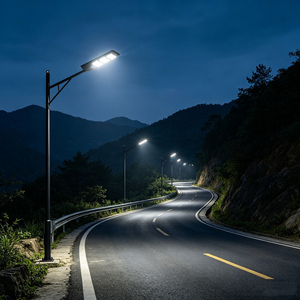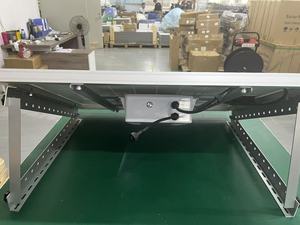
Engineered for high-durability applications including tunnel portals, underpasses, perimeter security, and isolated roadway infrastructure.
Solving the "Black Hole Effect" and Grid Independence through Advanced Photovoltaic Engineering and Precision Optics.
Subsurface transit routes and vehicular tunnels present extreme optical adaptation challenges for drivers. When entering a brightly lit outdoor space into a covered tunnel, human eyes experience the visual shock known as the Black Hole Effect. Leading Chinese solar tunnel lighting suppliers design systems tuned to international CIE 88 standards. By configuring specialized solar PV collectors at tunnel portals, the illumination system dynamically adjusts brightness across the Access Zone, Threshold Zone, Transition Zone, and Interior Zone based on real-time external solar irradiance metrics.
Tunnels operate continuously under demanding environmental conditions. Integrating Maximum Power Point Tracking (MPPT) charge controllers with efficiency thresholds exceeding 98.5% guarantees maximum solar capture even under overcast conditions. Combined with heavy-duty Lithium Iron Phosphate (LiFePO4) energy storage cells offering over 4,000 deep discharge cycles (80% DOD), these off-grid systems eliminate grid dependency, reducing municipal trenching and wiring capital expenditure by up to 70%.
Traditional tunnel lighting requires massive electrical substations, heavy-gauge copper armored cabling, and redundant diesel backup generators to ensure uninterrupted operation. In remote mountain passes, sub-urban underpasses, or expanding highway bypasses, grid extension costs often exceed the cost of the lighting hardware itself. China's top solar powered tunnel lighting suppliers have pioneered modular, light-pipe, and remote solar-array solar systems. By decoupling the solar light collection zone (placed outside portal entrances) from the interior luminaire array (connected via low-voltage DC buses), civil engineering firms achieve zero carbon emissions, rapid installation timetables, and immune protection against grid power outages.
Key technological transformations driving international procurement decisions over the next decade.
Modern B2B buyers no longer accept standalone lights. Future procurement specifications mandate RS485, Zigbee, or LoRaWAN communication nodes. Modern tunnel systems feature central edge-computing gateways that auto-report battery state of health (SOH), LED thermal junction temperatures, and optical output degradation in real-time.
Discomfort glare (UGR < 19) is a major safety hazard inside tunnels. Next-gen procurement demands customized optical silicone lenses delivering precision asymmetric light distribution. This focuses light directly onto the road surface and side walls without creating specular reflections in drivers' eyes.
With extreme weather events increasing, top tier Chinese manufacturers are transitioning from conventional LiFePO4 to semi-solid-state lithium chemistry, increasing energy density to >240 Wh/kg while extending operational ambient temperature ranges from -40°C to +75°C for high-altitude and desert tunnels.
A direct engineering evaluation for project managers, municipal planners, and infrastructure contractors.
| Evaluation Parameter | Traditional AC Grid Tunnel Lighting | Advanced Solar Powered Tunnel Systems |
|---|---|---|
| Civil Infrastructure Costs | Extremely High (Trenching, conduit laying, sub-stations) | Low (-65% CapEx) — No grid connection required |
| Operational Energy Cost | Continuous utility bills throughout 20+ year lifespan | $0 Zero Carbon Electricity |
| Installation Speed | Months (Requires utility coordination & transformer setup) | Days — Modular turn-key mounting |
| Power Reliability | Vulnerable to grid blackout / utility transformer failure | 100% Autonomy (5-7 Days battery backup design) |
| Dimming & Control | Static or manual stepped voltage control | Dynamic Autonomous MPPT Dimming via daylight sensors |
| Maintenance Profile | Frequent bulb replacement & high-voltage cable testing | Modular plug-and-play driver & battery replacement cycles (10+ yrs) |
Combining US-engineered design standards with China's high-capacity industrial supply chains.
Our manufacturing matrix follows strict quality management controls. Every production batch undergoes 100% aging tests, thermal imaging, IP68 immersion testing, and optical sphere calibration. Products carry CE, RoHS, IP65/IP68, and IK10 impact resistance certifications.
We provide full project engineering support. Our in-house optical team generates comprehensive DIALux photometric reports, visual rendering light layouts, and solar panel angle tilt calculations tailored precisely to your geographical coordinates and tunnel entrance geometry.
Tunnel enclosures suffer from continuous diesel exhaust fumes, high humidity, and vibration caused by passing heavy transport vehicles. Our luminaires use passivated die-cast ADC12 aluminum housings with electrophoretic coating, 316 stainless steel fasteners, and anti-vibration mounting hardware.
Technical guidance for global buyers, MEP consultants, and government procurement officers.
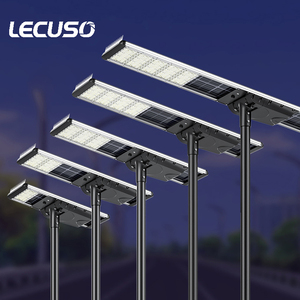
Solar powered tunnel lighting systems use a decoupled infrastructure architecture. Photovoltaic solar arrays and high-capacity battery enclosures are mounted outside the tunnel entrances, portals, or on adjacent overhead gantries where sunlight exposure is unobstructed. Heavy-gauge low-voltage DC cabling feeds clean energy into the specialized LED tunnel luminaires installed within the interior and transition zones of the tunnel.
Standard industrial configurations provide 3 to 5 days of full power operational autonomy. For mission-critical highway underpasses, mountain tunnels, and extreme weather zones, our engineering team custom-sizes the battery capacity and MPPT controller dimming logic to provide up to 7-10 days of continuous illumination without direct sun exposure.
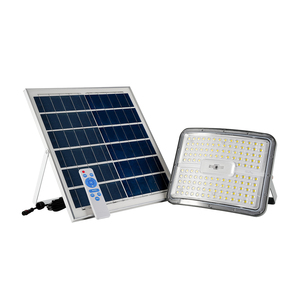
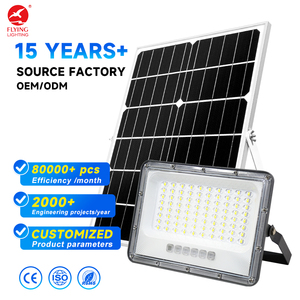
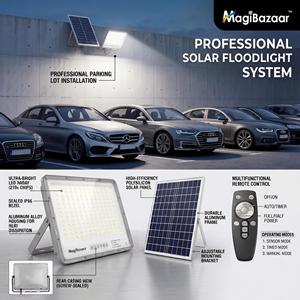
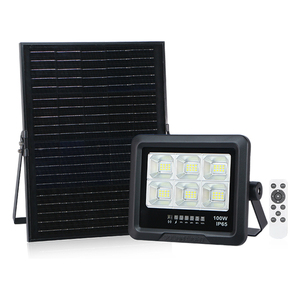
The Threshold Zone requires high-luminance light output (often exceeding 100-200 cd/m²) during peak daylight hours to match ambient sunlight. We utilize heavy-duty 300W-500W high-lumen solar floodlights equipped with Philips Lumileds or Cree LED chips, combined with dynamic optical sensors that scale light intensity down as natural outdoor daylight decreases.
Due to the solid-state design of LED chips and LiFePO4 batteries, maintenance is minimal. We recommend inspection of the exterior solar panel glass face every 6-12 months to clear heavy soot or dust accumulation, ensuring maximum solar absorption. Luminaires inside the tunnel feature self-cleaning IP68 glass faces that resist exhaust grime buildup.
Yes. As a premier Chinese manufacturer, we work closely with global distributors, contractors, and project managers. We provide custom branding, tailored optical lens configurations, specialized mounting brackets, and can supply individual component packages to satisfy local assembly or trade compliance mandates worldwide.
We provide a comprehensive warranty package: 5 years complete system warranty on LED luminaires and MPPT controllers, 5-8 years pro-rated warranty on LiFePO4 battery banks, 25-year performance warranty on monocrystalline solar panels, and a lifetime structural integrity warranty on select mounting hardware and poles.
Partner with China's top solar tunnel lighting engineering experts. Submit your project dimensions, target lux levels, and regional location for a complete technical quote within 24 hours.
Send an Inquiry