
Explore our tier-1 enterprise commercial solar lighting products. Engineered with high-efficiency monocrystalline PV panels, MPPT hybrid controllers, modular LiFePO4 battery banks, and IP66 marine-grade weatherproofing.
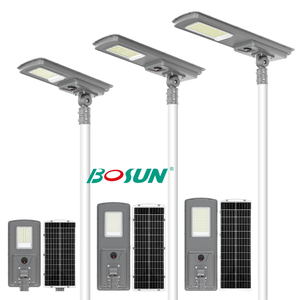
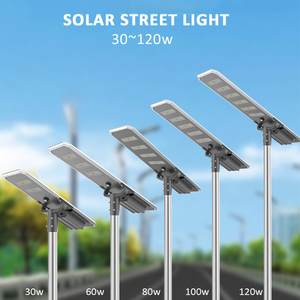
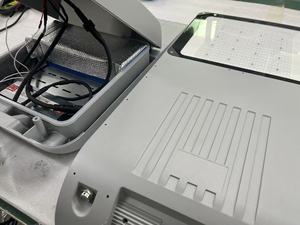
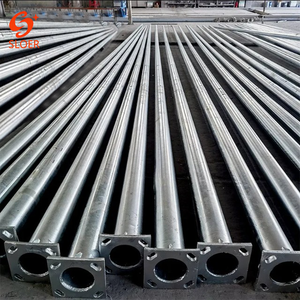
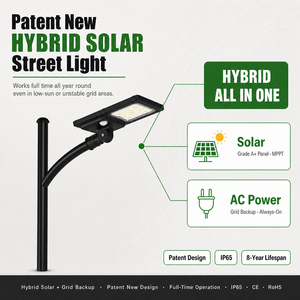
As global municipal infrastructure shifts toward net-zero targets and energy resilience, traditional off-grid solar street lights face significant performance bottlenecks in high-latitude regions, tropical monsoon belts, and urban areas prone to extended cloud coverage. As a leading China Wholesale Grid Tied Hybrid Solar Street Lights Manufacturer & Factory, our engineering division has pioneered AC/DC Dual-Power Complementary Switching Technology. This innovation resolves the fundamental trade-off between 100% renewable utilization and uninterrupted 365-night operational reliability.
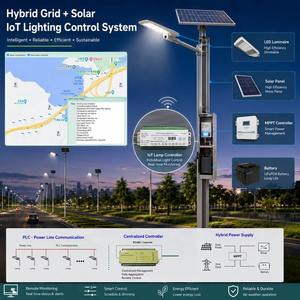
The operational backbone of an advanced grid-tied hybrid solar street light relies on a bi-directional Intelligent Power Management Unit (IPMU). Under standard operating conditions, high-efficiency monocrystalline solar panels capture solar irradiance, converting photons into direct current (DC) power to energize high-intensity LED chips (such as Philips Lumileds 5050/3030 series yielding up to 210 lm/W) while simultaneously charging a LiFePO4 battery pack via a Maximum Power Point Tracking (MPPT) controller operating at >98.5% conversion efficiency.
When continuous rain or heavy overcast conditions deplete the LiFePO4 battery voltage below a critical threshold (typically 11.1V for 12.8V nominal systems), the smart hybrid controller executes an instantaneous microsecond transfer switch to the municipal AC utility grid (85V–265V AC, 50/60Hz). Unlike legacy dual-circuit systems that cause optical flicker or LED driver stress, our solid-state relay architecture maintains seamless luminance continuity, eliminating dark periods completely while consuming grid power only as an auxiliary fallback.
Battery longevity remains the primary determinant of Levelized Cost of Light (LCOL) in commercial solar applications. Our factory integrates automotive-grade prismatic LiFePO4 cells rated for over 6,000 deep discharge cycles at 80% Depth of Discharge (DOD). Encapsulated within IP67-rated aluminum heat-sink enclosures, these battery systems feature an active Battery Management System (BMS) offering balance charging, over-voltage cutoff, under-voltage protection, thermal runaway throttling (-20°C to +65°C operational range), and automated cell balancing.
| Technical Parameters | Standalone Off-Grid Solar | Standard Utility Grid LED | Grid-Tied Hybrid AC/DC Solar |
|---|---|---|---|
| 365-Night Uptime Assurance | 85% - 95% (Climate Dependent) | 98% (Vulnerable to Outages) | 100% Zero-Blackout Guaranteed |
| Battery Sizing Requirement | 5 - 7 Days Autonomy (Bulky/Expensive) | None | 1 - 2 Days Autonomy (Optimized Cost) |
| Grid Electricity Consumption | 0% Grid Usage | 100% Grid Dependent | 85% - 98% Carbon Offset Reduction |
| Cable Trenching & Infrastructure | Zero Trenching Needed | Heavy Underground Wiring Required | Minimal Grid Wiring / Retrofit Compatible |
| System Lifespan (Poles & Fixture) | 10 - 12 Years | 15 Years | 20+ Years Design Service Life |
| Levelized Cost of Light (LCOL) | Moderate (High Battery Replacement) | High (Ongoing Electricity Bills) | Lowest Total Cost of Ownership (TCO) |
As EPC contractors, municipal engineers, and commercial project developers evaluate long-term lighting installations, procurement requirements have transitioned from basic price-per-watt metrics to holistic lifecycle performance, carbon accounting compliance, and IoT smart grid readiness. Understanding these macro trends is vital for distributors and government procurement officers sourcing from China.
Modern hybrid street lights are no longer isolated luminaires. Sourcing specs now require LoRaWAN, Zigbee, or 4G/5G NB-IoT communication nodes enabling real-time remote monitoring, adaptive dynamic dimming, automated fault detection, energy metering, and cloud-based asset management via centralized software platforms.
Unstable power grid zones in Latin America, Southeast Asia, Africa, and the Middle East increasingly demand hybrid solar luminaires that operate as distributed solar micro-nodes. These units relieve peak demand stress on overloaded municipal transformers while guaranteeing public safety lighting.
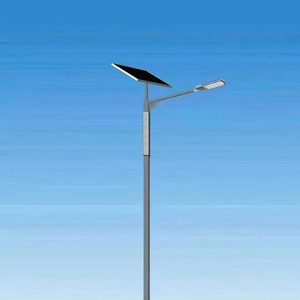
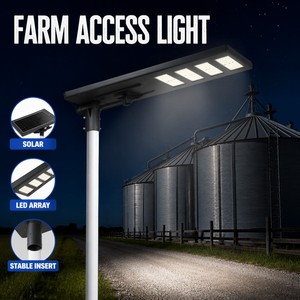
While compact "All-in-One" solar lights suit pathways and residential roads, high-speed arterial highways and 12-meter commercial lighting poles require All-in-Two or split configurations. Separating high-wattage monocrystalline panels from the LED fixture allows optimized solar tilt angles and maximum thermal isolation for high-capacity LiFePO4 batteries.
With volatile global climate conditions, B2B procurement standards mandate wind load resistance up to 180 mph (Category 5 hurricane rated), IP66/IP67 ingress protection, IK10 impact resistance, and specialized anti-corrosion anodized powder coatings for high-salinity coastal environments.
International environmental regulations mandate zero-upward light pollution (U0 rating) and warm color temperatures (2700K–3000K or amber LEDs) in coastal regions to protect wildlife ecosystems, such as sea turtle nesting grounds, while satisfying strict IDA Dark Sky guidelines.
Multinational commercial developers and public-private partnerships (PPP) leverage hybrid solar lighting installations to accumulate certified carbon offset credits, requiring manufacturers to provide verifiable energy savings data and ISO-certified manufacturing documentation.
With over 18 years of specialized engineering experience and a combined technical team possessing over 45 years of solar illumination expertise, our ISO 9001:2015 certified manufacturing facility delivers world-class OEM and ODM OEM production capabilities. We bridge cutting-edge Chinese manufacturing agility with international compliance standards (including Buy American compliance specification design options for global projects).
Every commercial tender is backed by custom photometric simulations (Dialux / AGi32) prepared by our optical engineers. We ensure exact lux level distribution, pole spacing optimization, and uniformity ratios (U0 > 0.4) before product fabrication begins.
Our factory operates automated SMT lines, high-precision integrating spheres, goniophotometer light distribution analyzers, high/low-temperature environmental test chambers, salt spray corrosion test tanks, and IPX6 water spray simulation rigs.
We support end-to-end customization across pole heights (5m to 12m), arm configurations (single/double arm galvanized steel or cast iron), LED chip lumen packages (30W up to 300W / 22,200 lumens), hybrid AC/DC controller firmware, and branded owner platform interfaces.
Our complete lighting systems strictly adhere to CE, RoHS, ISO 9001:2015, IP66, IK10, and California Prop 65 safety regulations, providing frictionless customs clearance and turnkey tender compliance for municipal engineering contractors globally.
Below are detailed technical answers designed to assist procurement directors, EPC engineers, and wholesale lighting distributors in evaluating grid-tied hybrid solar street lighting systems.