
Engineered with MPPT Intelligent Controllers, Grade-A LiFePO4 Battery Storage, Monocrystalline Solar Array Tech, and Ultra-Lumen Output for Highways, Commercial Parks, and Urban Infrastructure.
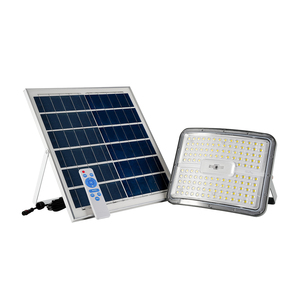
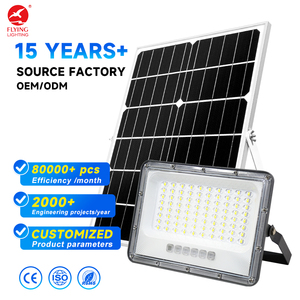
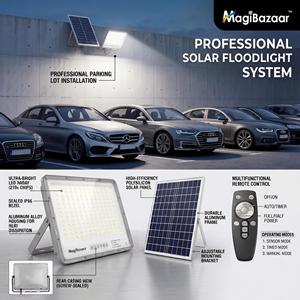
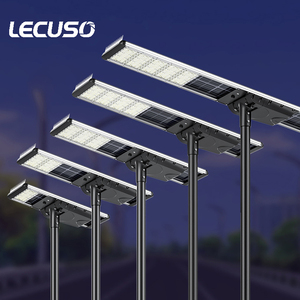
A comprehensive evaluation of smart grid integration, optical management, thermal dissipation, and long-term TCO reductions for B2B distributors, EPC contractors, and municipal authorities.
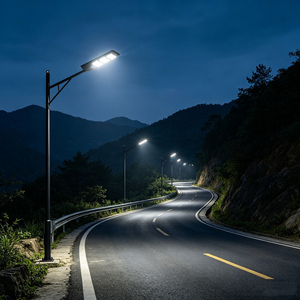
The global outdoor lighting landscape is undergoing a structural transition. Legacy off-grid solar luminaires operating on isolated, unmonitored cycles are rapidly being replaced by Smart Grid Integrated Solar Lighting Architectures. As a leading China OEM/ODM manufacturer, our engineering framework merges high-efficiency photovoltaic harvest with bidirectional telemetry and intelligent microgrid synchronization.
By leveraging advanced communications protocols—including Zigbee 3.0, LoRaWAN, and NB-IoT (Narrowband IoT)—every smart solar street light transforms from an isolated fixture into an intelligent data node. These systems communicate directly with centralized Management and Control Software (CMS), permitting dynamic dimming profiles, automated fault diagnostics, power degradation tracking, and real-time energy redistribution across municipal grids.
Product reliability in harsh environmental conditions—ranging from high-salinity coastal areas to extreme desert heat (-40°C to +70°C)—depends strictly on sub-component engineering excellence. As verified wholesale exporters, our production facility mandates certified Tier-1 bill of materials (BOM):
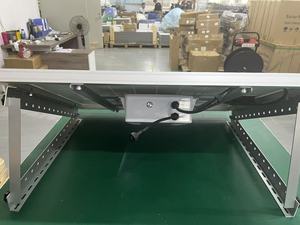
N-Type Monocrystalline Photovoltaic Modules: Utilizing PERC/TOPCon solar cells boasting conversion efficiencies exceeding 23.5%. Encapsulated in anti-reflective tempered glass with high light transmittance, our solar panels minimize degradation to less than 0.55% annually over a 25-year service period.
Maximum Power Point Tracking (MPPT) Controllers: Unlike rudimentary PWM charge controllers, our proprietary digital MPPT technology tracks the optimal V-I curve continuously at a 99.5% efficiency rate. This accelerates battery replenishment by 30% even during overcast or monsoon weather conditions.
Lithium Iron Phosphate (LiFePO4) Battery Matrix: Integrated with intelligent Battery Management Systems (BMS), our automotive-grade LiFePO4 cells deliver up to 6,000 deep-discharge cycles at 80% Depth of Discharge (DoD), drastically outperforming conventional lead-acid or ternary lithium alternatives.
Information Gain Insight for Project Engineers: Integrating Smart Grid IoT gateways directly into solar luminaire heads reduces municipal deployment costs by up to 42% by eliminating physical control cabling, deep underground trenching, and high-voltage transformer installations, while simultaneously qualifying projects for international carbon credit monetization.
| Specification Feature | Smart Grid Solar Luminaires (Municipal Grade) | Standard Commercial Solar Lights | Legacy AC Grid High-Pressure Sodium |
|---|---|---|---|
| Luminous Efficacy | 190 – 220 lm/W (Philips Lumileds / Bridgelux 5050) | 130 – 160 lm/W (Standard 2835 SMD) | 60 – 90 lm/W (High Thermal Loss) |
| Control Protocols | NB-IoT / LoRaWAN / Zigbee / DALI-2 / Zhaga Book 18 | Standalone IR Remote / PIR Motion Sensor | Manual Timer Switch / Basic Photocell |
| Battery Chemistry & Life | Grade-A LiFePO4 / BMS Controlled (6,000+ Cycles) | Ternary Li-ion / Standard Gel (1,500 Cycles) | N/A (External Utility Grid Dependent) |
| MPPT Controller Efficiency | > 99.5% Tracking Efficiency with Thermal Compensation | 85% - 90% (Basic PWM or Low-Tier MPPT) | N/A |
| Wind Resistance Rating | 180 mph (Typhoon/Hurricane Class 16 Equivalent) | 110 – 130 mph Standard Structure | Varies by Pole Specification |
| Ingress & Impact Rating | IP67 / IP68 Dual Chamber Waterproof + IK10 Vandalism | IP65 Standard Waterproofing | IP54 - IP65 |
| System Lifespan & ROI | 20+ Years Designed Life | ROI achieved in 1.8 Years | 3 - 5 Years Designed Life | ROI in 3.5 Years | High Maintenance Costs | Ongoing Electric Bills |
Strategic analysis for international sourcing directors, municipal procurement officers, and renewable energy wholesalers.
Governments across North America, Europe, and the GCC region are shifting procurement guidelines from simple illumination to smart city compliance. Bids now routinely demand ANSI C136.41 7-pin NEMA sockets or Zhaga Book 18 interfaces. This standardized plug-and-play architecture allows municipal authorities to retrofit third-party smart nodes, air quality sensors, traffic surveillance cameras, and 5G micro-repeaters directly onto existing solar light poles without voiding manufacturer warranties.
In accordance with global ESG directives and carbon neutrality targets, procurement criteria now place a 30% weighting on material circularity and embodied carbon metrics. Leading Chinese exporters are replacing structural plastics with die-cast ADC12 aluminum alloys, anodized anti-corrosion finishes, and modular, field-replaceable battery compartments. Modular designs allow maintenance crews to swap individual battery bricks or LED modules on-site in under 5 minutes, eliminating total fixture disposal.
Light pollution mitigation and wildlife protection are paramount in modern municipal lighting codes. Next-generation optics utilize primary and secondary anti-glare polycarbonate lens arrays engineered for specific road layouts (Type I, Type II, Type III, and Type IV distributions). Dark-sky compliant cut-off angles ensure zero upward light waste (U0 rating), directing 100% of emitted photons onto the target pavement, reducing light trespass into adjacent residential or natural habitats.
Delivering world-class quality management, complete custom design simulations, and rigorous international regulatory compliance.
Our state-of-the-art manufacturing plant spans over 45,000 square meters, equipped with automated SMT production lines, high-precision CNC die-casting machinery, and automated optical test spheres. We enforce strict 100% Quality Assurance protocols at every stage of assembly:
Navigating global B2B procurement demands seamless logistics management, tariff compliance, and customized OEM white-label packaging. We offer turnkey solutions designed to maximize profit margins for international distributors and engineering firms:
Expert answers regarding smart grid solar lighting procurement, technical integration, and system longevity.
Traditional off-grid solar street lights operate autonomously using basic photocells or pre-programmed timers without external communication capabilities. A Smart Grid Solar Street Light incorporates advanced wireless communication modules (NB-IoT, LoRaWAN, Zigbee) and smart MPPT controllers. This allows central operators to monitor real-time system performance, remotely adjust dimming profiles, receive automated fault notifications, execute firmware updates over-the-air (OTA), and in hybrid models, feed excess solar energy back into the main electrical grid or draw backup grid power during prolonged inclement weather.
We exclusively utilize industrial Grade-A Lithium Iron Phosphate (LiFePO4) battery chemistry. LiFePO4 offers exceptional thermal stability, non-combustibility, and superior cycle life (6,000+ cycles at 80% DoD) compared to standard ternary lithium or lead-acid batteries. For extreme cold environments (down to -40°C), our battery systems feature active heating thermal management mats powered by the solar array during charging cycles. For scorching desert environments (up to +70°C), dual-chamber heat dissipation housings isolate the battery from thermal LED radiation, preserving battery chemistry integrity and preventing thermal runaway.
Yes, absolutely. Our team of optical and sales engineers delivers comprehensive, tender-ready Dialux or AGi32 photometric light planning reports. By providing your project's road width, pole height, pole spacing, overhang, and required lux/uniformity standards (e.g., EN13201 or IESNA RP-8 standards), we determine the exact LED wattage, lens optical distribution (Type I, II, III, IV), and optimal pole array configuration required to achieve compliance, guaranteeing zero guesswork prior to procurement.
For standard commercial solar street light configurations, sample orders are completed in 5 to 7 working days. Bulk wholesale orders (up to 5,000 units) typically feature a manufacturing lead time of 15 to 22 business days. Customized OEM orders requiring specialized pole bracket fabrications, specific paint finishes (RAL color matching), or bespoke smart IoT software integration operate on a 25 to 30-day production timeline. We maintain strategic buffer inventories of Tier-1 solar cells, LiFePO4 packs, and LED chips to expedite urgent project deadlines.
Our smart grid solar luminaires are engineered with an autonomous operating reserve of 5 to 7 consecutive rainy/overcast days without needing grid recharge. This is achieved through three core technical mechanisms: 1) Oversized high-efficiency monocrystalline solar arrays rated for low-irradiance conditions; 2) Intelligent MPPT controllers that harvest energy even under diffuse daylight spectrums; and 3) Smart BMS adaptive energy algorithms that automatically scale back non-essential lumen output during low-battery charge states, guaranteeing continuous night safety illumination.
We back our complete smart grid solar lighting systems with an industry-leading 5-year comprehensive commercial warranty covering the luminaire head, solar panel, LiFePO4 battery matrix, and MPPT controller. Structural light poles carry up to a 20-year structural warranty. In the rare event of a hardware fault, replacement modules are dispatched immediately via express air freight under our fast-track RMA process. Furthermore, we guarantee supply chain availability for identical replacement components for a minimum of 10 years to support ongoing municipal maintenance protocols.