
Explore our factory-direct wholesale products engineered for perimeter defense, emergency traffic hazard flashing, crosswalk signaling, and heavy-duty industrial site safety.

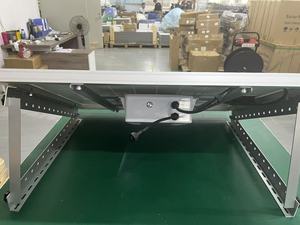
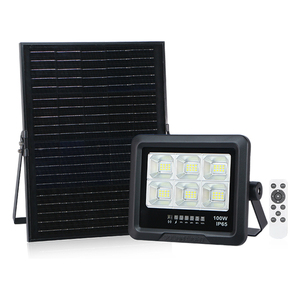
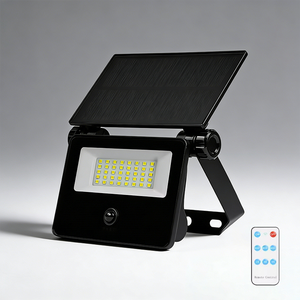
In modern municipal traffic management, industrial perimeter protection, emergency roadwork safety, and hazardous sector signaling, solar powered hazard flashing beacons have evolved from simple warning visual devices into autonomous, micro-grid smart visual alert nodes. Procurement directors, civil engineering contractors, and government tenders globally are increasingly prioritizing Chinese OEM/ODM manufacturing hubs due to unmatched vertical integration, advanced photovoltaic efficiency, and strict adherence to international optical and environmental standards.
As a premier Chinese manufacturer established with over 18 years of specialized engineering authority, our facility integrates high-efficiency monocrystalline PV wafers, state-of-the-art Maximum Power Point Tracking (MPPT) micro-controllers, advanced Lithium Iron Phosphate (LiFePO4) energy storage cells, and precision-engineered Fresnel optical lenses. This comprehensive whitepaper outlines the structural parameters, optical physics, battery thermodynamics, and procurement protocols essential for high-reliability sourcing.
Utilizing ITE and MUTCD compliant LED array configurations paired with UV-stabilized polycarbonate Fresnel lenses to achieve 360-degree horizontal output and over 800 peak candela intensity for multi-kilometer visual range.
Integrated smart BMS (Battery Management System) prevents thermal runaway, deep discharges, and cold-weather capacity drops. Dynamic MPPT logic maintains >98% solar conversion efficiency even under overcast skies.
Engineered to withstand hurricane-force wind loads up to 180 mph (ASCE 7-16 structural compliance) with IP67/IP68 submersible sealings, marine-grade anti-corrosion anodized aluminum, and IP65 PC housings.
When specifying commercial hazard flashing beacons for highway warning zones, school crossing flashers, construction barriers, or industrial perimeter security, procurement engineers must evaluate four critical mechanical and electrical subsystems:
Traditional solar beacons utilized basic PWM (Pulse Width Modulation) controllers coupled with polycrystalline solar panels, leading to severe energy starvation during prolonged cloud coverage. Modern industrial-grade beacons engineered in our Chinese facility feature grade-A monocrystalline solar panels achieving 21.5% to 23.5% solar conversion efficiency. Coupled with proprietary MPPT firmware, the charge controller continuously tracks the peak voltage-current curve of the solar array, adjusting dynamically to changing solar irradiance levels. This yields a 30% increase in winter charging efficiency compared to legacy PWM setups.
Safety and service lifespan depend heavily on battery chemistry choice. Standard lead-acid (SLA/AGM) batteries suffer from deep discharge degradation, low energy density, and high failure rates in hot ambient temperatures. Our manufacturing processes strictly employ grade-A LiFePO4 cells, offering over 3,500 charge-discharge cycles at 80% Depth of Discharge (DoD). Integrated smart Battery Management Systems (BMS) enforce automated temperature compensation, cut-off protection during low-temperature charging (-20°C), and balancing logic that guarantees a 7-to-10 year battery operational life with zero maintenance.
Flashing beacons must penetrate extreme weather conditions, including dense fog, heavy rainstorms, and intense daytime glare. Using precision injection-molded optical lenses made from Sabic Bayer UV-resistant polycarbonate, our beacon optical systems amplify light output while minimizing battery draw. Visual light output profiles meet strict SAE J595, ITE (Institute of Transportation Engineers), and EN12352 Class L8H specifications, providing distinct amber, red, blue, green, or white flashing signatures visible at distances exceeding 1.5 kilometers.
Below is a comparative engineering baseline showing performance differences between standard commercial beacons and our heavy-duty, factory-direct OEM solar hazard flashing beacon systems:
| Engineering Parameter | Standard Commercial Beacon | Industrial OEM Solar Flashing System (Our Supply) |
|---|---|---|
| Solar Module Type | Polycrystalline (15-17% Efficiency) | High-Efficiency Monocrystalline Silicon (21.5%+ Efficiency) |
| Charge Controller Type | Basic PWM Controller (70% Max Yield) | Smart Dynamic MPPT Controller (>98% Tracking Efficiency) |
| Energy Storage System | Sealed Lead Acid (SLA) / Standard Li-ion | Long-Life LiFePO4 Battery with Integrated Smart BMS |
| Autonomy Days (Zero Sunlight) | 2 to 4 Days Continuous Operation | 7 to 15 Days Continuous Operation (Weather Adaptive) |
| Ingress Protection & Rating | IP54 to IP65 Weatherproof | IP67 / IP68 Fully Sealed Marine Grade Corrosion Barrier |
| Optical Lifespan (LED) | 30,000 Hours (Standard Epoxy) | >100,000 Hours (Philips Lumileds / Cree Chips) |
| Structural Wind Rating | Up to 90 mph (38 m/s) | Up to 180 mph (80 m/s) ASCE 7-16 Structural Rating |
| Operating Temperature | -10°C to +50°C | -30°C to +70°C Cold/Heat Weather Envelope |
As smart city initiatives and automated highway management systems expand globally, B2B procurement of solar hazard flashing beacons is experiencing a rapid technological paradigm shift. International buyers, state transit authorities, and industrial site managers are moving away from isolated flashers toward interconnected, intelligent visual safety networks.
Modern hazard corridors require simultaneous or sequential flashing patterns. Integrated 2.4GHz/900MHz RF transceivers synchronize hundreds of beacons across kilometers without physical cabling.
Transitioning from static flashing to event-activated flashing. Integrated K-band Doppler radar units detect oncoming speeding vehicles, instantly triggering high-intensity flash sequences.
NB-IoT and LTE-M gateways transmit real-time battery health, solar voltage, ambient light levels, and lamp fault alerts directly to municipal centralized control platforms.
Advanced cut-off optics ensure zero upward light waste, satisfying International Dark-Sky Association guidelines while directing 100% of lumen output into targeted hazard zones.
Sourcing direct from our accredited ISO 9001:2015 manufacturing facility in China eliminates intermediary markups while delivering custom engineering capability tailored to your region's exact solar radiation profile and regulatory environment.
Our engineering team provides comprehensive DIALux photometric renderings and structural CAD drawings prior to production, ensuring total lighting coverage compliance before ordering.
Every batch undergoes rigorous quality testing: 48-hour thermal chamber burn-in, IP68 water submersion testing, salt spray corrosion exposure (1,000 hrs), and automated optical integrating sphere analysis.
From custom housing color coatings (powder-coated yellow, orange, black, or custom RAL colors) to private label laser branding, custom packaging, and pre-programmed flash patterns.
Address key operational, technical, and commercial questions regarding bulk purchasing of solar powered hazard flashing beacons from China:
Partner directly with China's leading manufacturer of solar-powered hazard flashing beacons, street lighting systems, and traffic safety solutions. Get custom photometric reports, factory-direct pricing, and technical support within 24 hours.