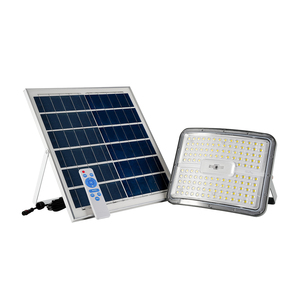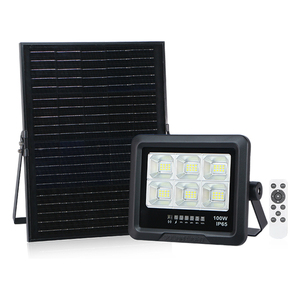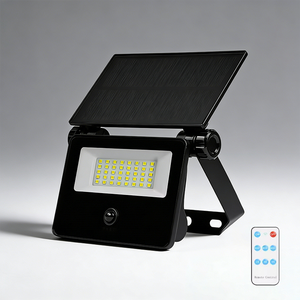
Explore our industrial-grade, heavy-duty solar floodlights, integrated street lamps, and emergency lighting solutions tailored for global EPC procurement.
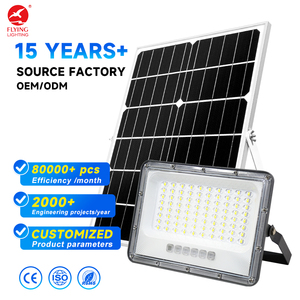
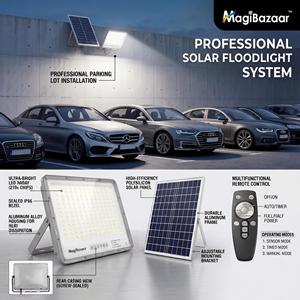
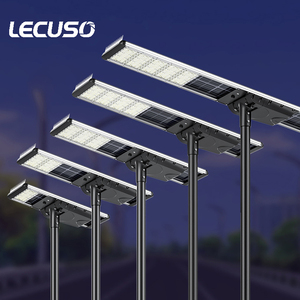
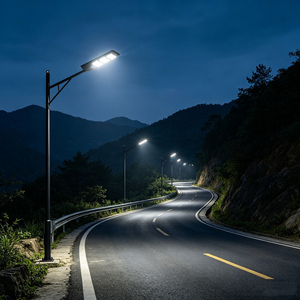
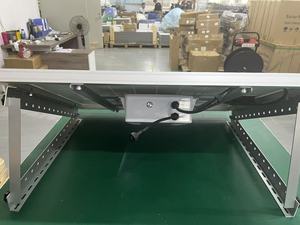
A comprehensive white paper for municipal engineers, EPC contractors, and global solar procurement directors.
As municipal infrastructure transitions aggressively toward decarbonization and off-grid resilience, selecting a professional Custom OEM MPPT Smart Solar Street Lights Factory & Supplier has become a critical strategic decision. Modern commercial solar lighting has evolved far beyond basic photovoltaic panels wired to standard LED fixtures. Today’s deployment demands sophisticated energy management, high-density energy storage, robust structural engineering, and intelligent central monitoring systems.
Traditional Pulse Width Modulation (PWM) solar controllers clamp PV module operating voltages directly to battery voltage, discarding up to 30% of available solar power. Advanced Maximum Power Point Tracking (MPPT) charge controllers continuously track the voltage-current ($V-I$) curve of high-efficiency monocrystalline panels, utilizing dynamic Perturb & Observe (P&O) algorithms to extract peak potential energy regardless of cloud cover, ambient temperature, or low-irradiance conditions.
The core intelligence of commercial off-grid solar luminaires resides within the MPPT control circuit. Modern OEM factories incorporate digital signal processing (DSP) based controllers operating at tracking efficiencies exceeding 98.5%. Key technical benefits include:
Custom OEM manufacturing allows for tailored PV sizing based on project location insolation data (measured in Peak Sun Hours per day). Tier-1 monocrystalline silicon solar cells featuring PERC (Passivated Emitter and Rear Cell) or TOPCon technology achieve conversion efficiencies up to 23.5%. Structural housings utilize heavy-duty extruded aluminum alloy (6063-T6) or marine-grade stainless steel with anti-UV powder coatings to resist environmental degradation, salt spray corrosion (IEC 60068-2-52 compliance), and typhoon-force wind loads up to 180 mph (60 m/s).
Legacy solar lighting relied heavily on Lead-Acid or Gel batteries, which suffered from short lifespans (2–3 years), heavy environmental footprint, and severe thermal degradation. Modern OEM suppliers standardise on Grade-A $\text{LiFePO}_4$ battery packs managed by intelligent Battery Management Systems (BMS). The integrated BMS provides cell balancing, thermal protection (charging cutoff below 0°C and above 60°C), and overcharge/overdischarge prevention.
Compare standard market offerings against our custom-engineered commercial OEM solar street lighting systems:
| System Architecture Parameter | Standard Commercial PWM Solar Light | Custom OEM MPPT Smart Solar Light (Our Standard) | Grid-TConnected AC Street Lighting |
|---|---|---|---|
| Charge Controller Efficiency | 70% – 75% (PWM) | 98.5% (Digital DSP MPPT) | N/A (AC Grid Powered) |
| Battery Chemistry & Life Cycle | Ternary Lithium / Gel (500–1,200 Cycles) | LiFePO4 (4,000+ Cycles @ 80% DoD) | N/A |
| IoT & Smart City Control | Fixed Infrared Remote / None | LoRaWAN / NB-IoT / Zigbee / NEMA Socket | PLC / Hardwired Control |
| Luminaire Efficacy | 110 – 130 lm/W | 180 – 220 lm/W (Philips Lumileds 5050) | 120 – 150 lm/W |
| Trenching & Cabling Requirement | Zero Trenching | Zero Trenching (100% Off-Grid) | Extensive Trenching & Copper Cabling |
| Wind Resistance Rating | Class 10 (Up to 100 mph) | Class 17 / Hurricane Proof (Up to 180 mph) | Varies by Pole Specification |
Key market shifts driving global B2B procurement, municipal tenders, and EPC project requirements over the next decade.
Modern tenders demand IoT connectivity via Zhaga or 7-pin NEMA sockets. Remote monitoring software allows central operators to adjust light levels, check real-time battery status, track carbon offsets, and execute automated maintenance alerts.
By pairing high-efficiency LED chips (such as Lumileds or Bridgelux 5050) with precision optical lenses (BATWING Type II/Type III distribution), modern solar streetlights deliver maximum ground illuminance using smaller solar panels and lower battery capacities.
Municipalities increasingly mandate International Dark-Sky Association (IDA) compliance. OEM custom light distributions reduce upward spill light to zero while offering warm CCT (2200K–3000K) or amber wavelengths for environmentally sensitive coastal turtle nesting zones.
For high-latitude regions experiencing extended rainy seasons, hybrid OEM solar street lights feature dual AC/DC inputs. The system runs 100% on off-grid solar energy until battery reserves fall below 10%, seamlessly switching to grid power as a secondary fail-safe.
Procurement agencies prioritize sustainable design. Tool-free opening latches, plug-and-play internal component modules, and recyclable aluminum housings significantly reduce long-term maintenance costs and simplify field servicing.
Global demand is surging for specialized OEM designs that survive sub-zero Arctic conditions (using self-heating battery technology) and extreme desert heat up to 70°C with passive thermal convection channels.
Providing end-to-end engineering customization, rigorous quality management, and dedicated support for global distributors and contractors.
We tailor system specifications to your local climate. From custom solar panel tilt angles, branded housing colors, dual-arm pole brackets, to pre-configured dimming algorithms—our engineering team builds to your exact technical tender submittals.
Visualize your project's illuminance compliance before placing an order. We provide complete IES files and customized DIALux photometric reports confirming isolux contours, average lux levels, and pole spacing ratios for roads and highways.
Our manufacturing facilities operate under strict ISO 9001 quality management protocols. Products carry complete international testing certifications including CE, RoHS, IP66/IP67 waterproof ratings, IK10 impact resistance, and IEC test standards.
Addressing key technical, logistical, and commercial inquiries for procurement officers and engineering buyers.
MPPT controllers offer 15% to 30% higher charge efficiency compared to PWM controllers. In commercial applications, this efficiency allows engineers to use smaller photovoltaic panels and lower battery capacities while maintaining the exact same lighting runtime, lowering total system weight and shipping costs.
Standard OEM sample orders are manufactured and dispatched within 7–10 working days. Full container orders (20ft/40ft HQ) for large-scale road lighting tenders typically require 20–25 days, depending on custom bracket fabrication and specialized paint finishes.
Our OEM MPPT systems are engineered with dynamic autonomy (typically 3 to 5 continuous rainy days). The controller dynamically adjusts LED output based on remaining battery state-of-charge (SoC), ensuring the light stays operational throughout prolonged bad weather without total blackout.
Yes. Our complete pole systems are custom engineered using high-tensile Q235/Q345 structural steel or 6063-T6 aluminum. Structural calculations are verified against AASHTO wind standards to withstand gusting wind velocities up to 180 mph (60 m/s).
We offer comprehensive OEM/ODM options including custom laser-etched logos, housing powder coating colors (RAL codes), specific CCT selection (2700K to 6500K), optical light distribution (Type I, II, III, IV, V), motion sensor calibration, and integrated IoT smart city nodes.
We back our systems with robust commercial warranties: 5 to 10 years on solar PV panels, 5 years on MPPT controllers and LED luminaires, 5 years on Grade-A LiFePO4 battery packs, and up to 20 years structural lifetime warranty on galvanized steel light poles.