
Explore our engineering-grade solar flood lights, integrated highway streetlights, and perimeter illumination luminaires designed for harsh climate endurance, extreme autonomy, and continuous high-lumen output.
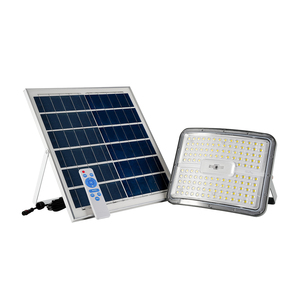
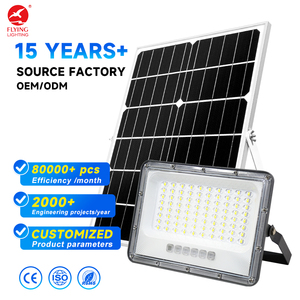
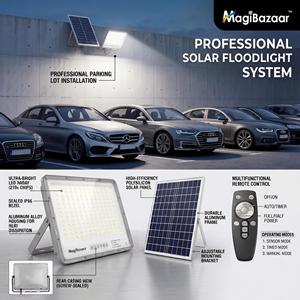
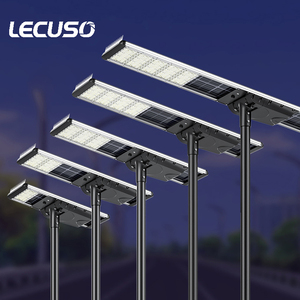


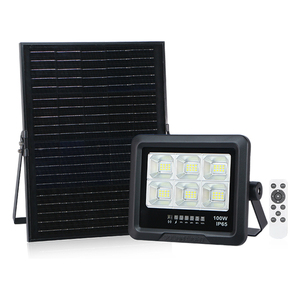

As a tier-one OEM solar lighting exporter, we integrate advanced optic physics, structural integrity, and robust energy storage to manufacture high-yield infrastructure built to withstand severe coastal and desert environments.
Our operations comply strictly with ISO 9001:2015 international quality benchmarks. Complete solar street pole and fixture assemblies can be engineered to be Buy American Compliant and California Prop 65 safety standard certified.
Heavy-duty stainless steel and hot-dip galvanized structural aluminum bodies engineered to survive 180 mph hurricane winds. Marine-grade C5-M anti-corrosion coatings ensure total salt-spray resistance for coastal expressways.
Utilizing high-efficiency MPPT charge controllers delivering up to 98% tracking efficiency paired with premium-grade Lithium Iron Phosphate (LiFePO4) battery cells designed for 4,000+ deep cycles (-20°C to +65°C operating windows).
We supply complete photometric analyses and light distribution reports using Type II, Type III, and Type IV optics. Municipal engineers receive complete DIALux simulations to guarantee compliance with IESNA highway lighting codes before order placement.
Eliminate $50,000+ per kilometer cabling costs. Our standalone solar highway luminaires eliminate electrical grid dependencies, high-voltage transformers, and costly trenching operations while reducing carbon footprints to absolute zero.
Integrated cut-off optics ensure IDA Dark-Sky compliance to reduce light pollution. Optional NB-IoT and Zigbee smart nodes enable centralized cloud monitoring, real-time diagnostic reporting, and automated dimming profiles.
Highway electrification projects across North America, Latin America, Europe, the Middle East, and Southeast Asia are undergoing a fundamental transformation. Municipalities, civil contractors, and transport authorities are rapidly phasing out traditional High-Pressure Sodium (HPS) and grid-connected AC LED lighting in favor of continuous-duty standalone solar powered highway luminaires. Implementing autonomous solar illumination along high-speed corridors, interchanges, remote arterial bypasses, and toll plazas requires rigid engineering compliance to maintain uniform luminance and operational reliability under severe meteorological stress.
Unlike standard urban park or pathway solar lights, highway lighting must achieve strict uniformity ratios (Emax/Emin < 3.0) and prevent disabling glare (Ti < 10%) for high-speed motorists. OEM solar highway lights manufactured by our team leverage customized batwing optical lenses using high-transmittance PMMA silicone arrays. Luminaires utilize asymmetric Type II-M and Type III-M light distributions tailored specifically for multi-lane expressways:
The operational lifecycle of a solar highway fixture is dictated primarily by its energy storage core. Legacy valve-regulated lead-acid (VRLA) and nickel-manganese-cobalt (NMC) chemistries suffer from rapid thermal degradation and limited cycle depths. Our custom OEM solar highway systems exclusively implement automotive-grade LiFePO4 (Lithium Iron Phosphate) cells managed by intelligent multi-tier Battery Management Systems (BMS):
Converting solar irradiance into stored electrochemical energy requires high-speed dynamic tracking. Legacy PWM controllers lose up to 30% of potential solar energy harvest during overcast conditions. Our OEM control electronics feature ultra-fast MPPT algorithms:
As global transportation departments target net-zero carbon infrastructure, procurement standards for solar highway lights are undergoing structural shifts. Buyers must consider these emerging technological benchmarks when drafting tender specifications.
The market is shifting rapidly from standard P-type PERC panels to high-efficiency N-Type TOPCon and heterojunction (HJT) bifacial solar modules. Vertical pole-wrapped and double-sided solar panels collect direct sunlight alongside ground-reflected albedo light, increasing daily energy harvesting efficiency by 15% to 25% in high-latitude environments.
Future highway solar lighting poles are no longer passive illumination fixtures; they serve as critical IoT telecommunication towers. Municipal procurement tenders increasingly specify integrated NEMA / ZHAGA sockets for 5G micro-base stations, traffic monitoring cameras, environmental air quality sensors, and automated vehicle-to-infrastructure (V2X) communication nodes.
Leading international transport authorities are instituting strict cradle-to-cradle sustainability mandates. Modern OEM solar lighting contracts require tool-less modular component swapping, enabling field technicians to replace LED optical engines, MPPT controller modules, or lithium battery packs in minutes without discarding structural housings.
Key technical, regulatory, and logistics answers for municipal buyers, EPC contractors, and OEM lighting brand importers.
Contact our senior solar lighting design engineers today. Receive custom DIALux photometric simulations, detailed engineering spec sheets, and competitive direct factory pricing for your highway or commercial project.
Contact Us