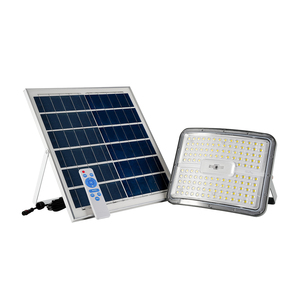

Heavy-duty, weather-proof photovoltaic luminaires designed for perimeter security, industrial yards, public infrastructure, and heavy-duty highway installations.
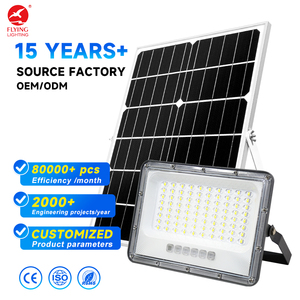
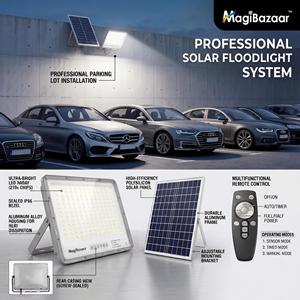
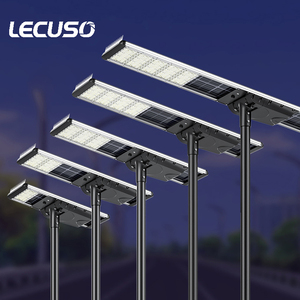
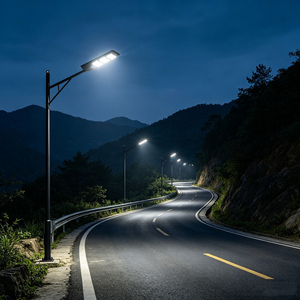
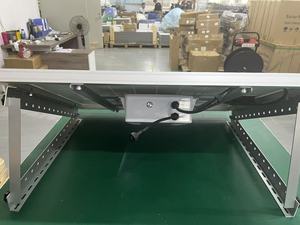
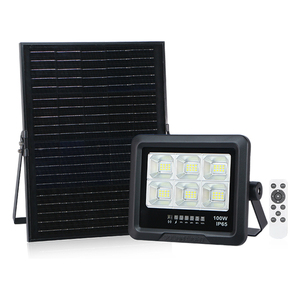
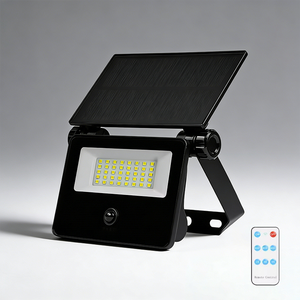
In modern industrial and municipal off-grid lighting projects, the demand for Custom OEM Ultra High Lumen Solar Flood Lights has shifted dramatically from basic consumer-grade luminaires to enterprise-grade, high-reliability illumination systems. Commercial facilities, logistics hubs, mining sites, and arterial roadways require continuous, uncompromised photometrics across diverse micro-climates. Achieving real luminaire outputs exceeding 20,000 to 50,000 raw lumens strictly on solar energy demands a holistic system design approach integrating optical engineering, high-efficiency photovoltaic (PV) modules, advanced maximum power point tracking (MPPT), and thermal dissipation management.
Ultra high lumen output requires premium solid-state emitter selection. OEM manufacturing standards leverage high-bin Philips Lumileds 5050 or Bridgelux high-power LED chips operating at structural drive currents optimized for maximum lm/W ratio. Rather than overdriving smaller 2835 LEDs—which causes catastrophic thermal runaway and rapid lumen loss—industrial solar floodlights deploy multi-die high-efficiency packages yielding up to 220 lm/W at chip level and over 170–190 lm/W at luminaire level after accounting for optical lens absorption.
Optical distribution is tailored through optical-grade PMMA (Polymethyl Methacrylate) asymmetric and symmetric lenses. Standard floodlights emit light in an uncontrolled 120° Lambertian pattern, resulting in massive light spill and wasted energy. Custom OEM lens options include asymmetric 150°×70° for roadway lighting, 60°/90° narrow beam angles for high-mast perimeter security, and Forward-Throw Type III optics for parking area coverage without Dark-Sky light pollution.
In high-power solar applications, charge controller topology determines system uptime during inclement weather. Conventional Pulse Width Modulation (PWM) controllers force the solar panel operating voltage down to match the battery bank voltage, dissipating up to 30–35% of potential solar harvesting energy as heat. OEM ultra-high lumen floodlights strictly utilize high-speed Maximum Power Point Tracking (MPPT) microcontrollers.
MPPT algorithms scan the IV (current-voltage) curve of the solar module multiple times per second, dynamically adjusting the duty cycle to extract maximum electrical power regardless of solar irradiance levels, partial shading, or cell temperature rise. This capability yields a 98.5% tracking efficiency, ensuring that high-capacity battery packs reach full State of Charge (SoC) even during short winter peak-sun hours.
Utilizes ultra-stable Lithium Iron Phosphate (LiFePO4) prismatic cells delivering 4,000–6,000 deep discharge cycles at 80% DoD, outperforming traditional Lead-Acid and NMC chemistries in thermal safety.
Integrated N-type TOPCon solar panels offering module efficiencies exceeding 22.5–24%, maintaining superior low-light power generation during heavy cloud cover and winter months.
Rugged die-cast aluminum housing coated with marine-grade C5 anti-corrosion powder coat. Certified IP67 waterproof and IK10 vandal-resistant for extreme weather endurance.
B2B procurement officers, EPC contractors, and municipal lighting engineers require precise performance metrics when customizing floodlight platforms. Below is the standardized engineering specification breakdown for enterprise-grade ultra-high-lumen OEM solar floodlight architectures:
| System Power Rating | Target Lumens (lm) | Battery Capacity (LiFePO4) | Solar Panel Wattage (Monocrystalline) | Recommended Mounting Height | Autonomy Days |
|---|---|---|---|---|---|
| 100W Standard OEM | 16,000 - 18,000 lm | 12.8V 40Ah (512Wh) | 18V 80W (High-Efficiency) | 6 - 8 Meters | 3 - 5 Days |
| 200W Commercial OEM | 30,000 - 34,000 lm | 12.8V 80Ah (1024Wh) | 18V 150W (TOPCon) | 8 - 10 Meters | 4 - 5 Days |
| 300W Heavy-Duty OEM | 45,000 - 50,000 lm | 25.6V 60Ah (1536Wh) | 36V 240W (Bifacial Option) | 10 - 12 Meters | 5+ Days |
| 500W High-Mast OEM | 70,000 - 80,000 lm | 25.6V 100Ah (2560Wh) | 36V 360W (Split Panel Setup) | 12 - 16 Meters | 5+ Days |
Each OEM specification matrix can be modified at our factory level to incorporate IoT wireless control modules (Zigbee, LoRaWAN, NBIoT), dual microwave radar sensors for adaptive dimming profiles, and specialized color temperature configurations (from 2700K Warm Amber for Dark-Sky compliance to 6500K High-Visibility Daylight).
As global decarbonization mandates accelerate and energy grids face reliability pressures, commercial procurement of outdoor solar lighting is undergoing a technical evolution. Buying decisions are no longer driven solely by initial unit cost, but by Total Cost of Ownership (TCO), smart grid interoperability, and long-term supply chain compliance.
Conventional P-type PERC solar cells are reaching their theoretical efficiency ceiling (~23%). Next-generation commercial solar floodlights manufactured in 2026 and beyond are integrating N-type TOPCon (Tunnel Oxide Passivated Contact) cells, raising module efficiency past 24.5%. Higher efficiency allows smaller footprint PV panels to produce the exact energy required to charge high-lumen battery banks, reducing wind load resistance on light poles and lowering freight costs.
Modern municipal tenders increasingly mandate smart city compatibility. Integrated wireless communication modules allow maintenance teams to remotely monitor battery health, ambient operating temperatures, real-time energy harvesting efficiency, and diagnostic fault codes via a centralized cloud dashboard. Artificial Intelligence (AI) predictive dimming algorithms continuously analyze localized historical weather forecasts, automatically dialing back luminaire wattage during extended storm cycles to guarantee 100% uninterrupted perimeter security lighting.
Regulatory frameworks such as California Prop 65, Buy American Compliance, and European CE/RoHS requirements dictate strict material traceability. Future-ready OEM factories are transitioning toward modular design architectures where battery modules, LED engines, and controllers can be swapped out in under 5 minutes using toolless access hatches. Furthermore, sodium-ion (Na-Ion) battery chemistries are emerging as a cold-weather solution, performing seamlessly down to -40°C where standard lithium cells suffer severe capacity derating.
Answers to common engineering, OEM customization, and project tender inquiries from international buyers.
Reliable autonomy during cloudy weather is achieved through precise sizing of the battery storage capacity (expressed in Watt-hours) and the integration of intelligent MPPT controllers with automatic adaptive power management. Rather than operating at 100% full lumen output continuously, the system utilizes smart time-profile dimming or microwave motion sensors. When combined with a oversized Grade-A LiFePO4 battery bank (designed for 3–5 days of autonomy at 80% Depth of Discharge), the luminaire maintains safe, continuous perimeter illumination even during extended rain cycles.
Partnering directly with a certified OEM/ODM manufacturer allows engineering clients to customize every hardware component according to project requirements. This includes choosing specific LED chip brands (e.g., Lumileds, Cree, Bridgelux), optical beam distribution lenses (Type II, III, V), custom CCT, specialized die-cast housing branding, laser engraving, anti-corrosion coating thickness, custom bracket mounting geometries, and custom firmware programming for battery management systems (BMS).
Lithium Iron Phosphate (LiFePO4) chemistry offers significantly superior thermal stability, safety, and longevity compared to Ternary Lithium (NMC). A high-grade LiFePO4 cell maintains 80% of its original capacity after 4,000 to 6,000 charge/discharge cycles—equivalent to 10–12+ years of daily cycling. NMC batteries typically degrade after 1,000–1,500 cycles and carry higher risk of thermal runaway in extreme outdoor temperatures exceeding 50°C.
Yes. Heavy-duty commercial solar floodlights manufactured for high-wind or coastal regions feature die-cast ADC12 aluminum housings treated with a multi-stage C5-rated anti-corrosion powder coating. Stainless steel hardware (SUS316) is deployed throughout. Mechanical structural calculations and pole mount brackets are tested to withstand wind loading pressures up to 180 mph (80 m/s), ensuring structural integrity in coastal hurricane corridors.
Full OEM tender packages include IES LM-79 test reports (photometric spatial light distribution), LM-80 test data (LED lumen maintenance and long-term degradation curves), DIALux photometric simulation reports, IP65/IP67 ingress protection certificates, IK10 impact resistance reports, ISO 9001:2015 factory quality certificates, CE, RoHS, and complete system wiring diagrams.
DIALux is an industry-standard lighting design software that simulates real-world illuminance levels (measured in Lux or Foot-Candles) across a specified site layout. Before placing a bulk OEM order, our engineering team generates a DIALux report based on your site dimensions, pole height, spacing, and target uniform light coverage. This eliminates guessing, ensuring you procure the exact lumen output and lens optics required to meet safety compliance.
Backed by over 18 years of specialized manufacturing experience and 45+ years of combined engineering expertise, our factory delivers industry-leading off-grid solar illumination solutions. As an ISO 9001:2015 certified manufacturer, we maintain rigorous quality control protocols across raw material sourcing, automated SMT LED assembly, 100% high-temperature aging tests, and waterproof pressure chamber testing.
Whether you require Buy-American compliant solar street light assemblies, heavy-duty industrial floodlights for mining operations, or smart IoT-connected municipal luminaires, our engineering team provides turnkey OEM/ODM services tailored to your exact project parameters.
Contact our technical sales team for DIALux photometric simulations, custom product specifications, and direct factory pricing for your upcoming tender.
Get a Quote