
Select from our precision-engineered split-type and integrated heavy-duty solar floodlights and street luminaires designed for maximum battery autonomy and rigorous outdoor reliability.
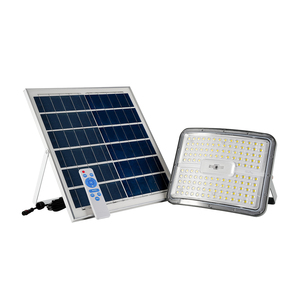
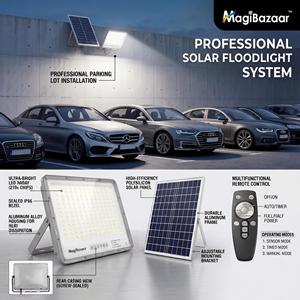
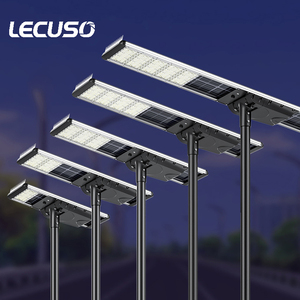

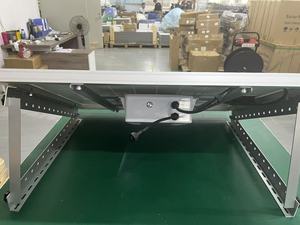
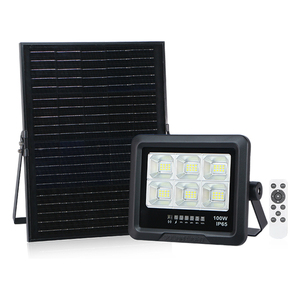
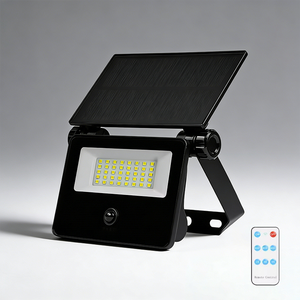
In high-volume municipal tenders and utility-grade highway projects, selecting the appropriate solar lighting architecture directly determines the total cost of ownership (TCO) and system reliability over a 20-year design horizon. While "All-in-One" integrated solar lights offer installation simplicity for minor residential pathways, Split-Type Solar Street Lighting Systems remain the gold standard for high-lumen, mission-critical infrastructure applications.
The primary failure mechanism in outdoor solar luminaires is thermal degradation of the energy storage chemical cell. In integrated fixtures, the lithium battery enclosure sits directly beneath the photovoltaic panel and behind the high-density LED engine heat sink. Under intense ambient sunlight (above 40°C), internal temperatures inside integrated housings frequently exceed 65°C, triggering accelerated electrolyte degradation and capacity loss in LiFePO4 chemistry.
Split-type architecture physically decouples the energy storage unit—housing the battery within an underground IP68 vault or a pole-mounted shaded battery cabinet. This structural isolation maintains the cell temperature closer to subterranean ground thermal equilibrium (typically 20°C - 25°C), doubling the operational lifespan of Lithium Iron Phosphate (LiFePO4) cells from 4-5 years up to 10-12 years.
Integrated solar lights force the photovoltaic module into a fixed horizontal or low-degree inclination angle matching the luminaire arm bracket. This restriction severely reduces solar energy yield in latitudes higher than 15° north or south of the equator.
Split-type configurations feature fully independent 360-degree rotation and 0-60 degree tilt azimuth adjustments. B2B procurement projects can optimize panel angles precisely according to site-specific peak sun hours (PSH), maximizing winter solstices energy collection and preventing catastrophic system blackouts during multi-day overcast rain events.
| Parameter | Split-Type Solar Street Lights | All-in-One Integrated Lights | Grid-Connected LED Lights |
|---|---|---|---|
| Max Lumens Output | 12,000 lm - 44,400 lm+ | 3,000 lm - 15,000 lm max | Unlimited (Grid Constrained) |
| Battery Thermal Safety | Subterranean / Pole-shaded (Optimal) | High Heat Trapping (Sub-optimal) | N/A (Grid Dependent) |
| Solar Panel Tilt Tuning | 0° to 60° Custom Latitude Angle | Fixed Angle (Loss of PSH yield) | N/A |
| Hurricane Wind Rating | Engineered up to 180 MPH (AASHTO) | Limited by sail area of housing | Varies by pole spec |
| Trenching & Cabling Cost | $0 (Fully Autonomous) | $0 (Fully Autonomous) | $25 - $80 per linear foot |
| Design Horizon / Lifespan | 20+ Years System Life | 5 - 8 Years Max | 15+ Years (Driver replacing) |
We provide comprehensive turnkey OEM and ODM manufacturing capabilities for international engineering contractors, distributors, and municipal utilities.
Every commercial quote includes custom IES file generation and DIALux illumination mapping to ensure compliance with EN13201 and AASHTO road lighting standards before assembly.
Corrosion-resistant anodized aluminum, 316 stainless steel hardware, and IP67/IP68 ingress sealing. Certified to withstand 180 MPH wind loads and severe salt spray environments.
Operating under strict ISO 9001:2015 standards with Buy American Compliance options. Every batch undergoes full flash testing, spectral analysis, and environmental chamber aging.
As global smart city initiatives accelerate and decarbonization mandates tighten across international infrastructure projects, the procurement framework for commercial solar street lighting is undergoing a paradigm shift. Buyers are moving away from simple initial hardware cost (CAPEX) evaluation toward intelligent, lifecycle-managed systems.
Modern split-type solar street lights are transitioning from isolated illumination points to connected edge node networks. By integrating **Zigbee, LoRaWAN, or NB-IoT** controllers into MPPT drivers, municipal operators can remotely track energy harvest, battery state-of-charge (SoC), LED junction temperatures, and localized fault alerts in real-time. Adaptive dynamic dimming algorithms automatically adjust light output based on real-time traffic volume and ambient weather forecasts, extending winter battery autonomy by over 40%.
Standard P-type PERC panels are rapidly being replaced in commercial OEM specifications by **N-Type TOPCon (Tunnel Oxide Passivated Contact)** and **bifacial solar modules**. Bifacial split solar systems capture both direct solar radiation from above and albedo reflection from road surfaces, sand, or snow underneath—generating up to 25% additional daily power without increasing physical pole surface footprint.
While LiFePO4 remains the present industry standard due to its high thermal stability and 3,000+ cycle life, **Sodium-Ion (Na-Ion) batteries** are entering the split-system market. Na-Ion cells offer exceptional performance in freezing sub-zero climates (retaining >85% capacity at -30°C) and eliminate reliance on critical raw materials like lithium and cobalt, presenting a lower-cost, highly sustainable alternative for global tenders.
Light pollution regulations (such as International Dark-Sky Association compliance) require precise light cutoff angles and zero uplight emissions (U0 rating). Furthermore, coastal and ecologically sensitive developments require custom spectral outputs—such as **590nm Amber LED arrays** for sea turtle protection zones—preventing wildlife disorientation while fulfilling municipal safety lux levels.
Answers to essential technical and commercial questions encountered by engineering procurement managers and B2B importers.
Partner with an established OEM/ODM leader in commercial split-type solar street lighting. Contact our senior sales engineering team today for project-specific photometric reports, bill of materials (BOM) customization, and wholesale factory pricing.