
Engineered for extreme durability, sustained lux output, and severe ambient operational stability. Select an industrial model below for direct bulk export quotes.
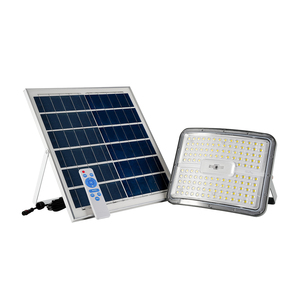
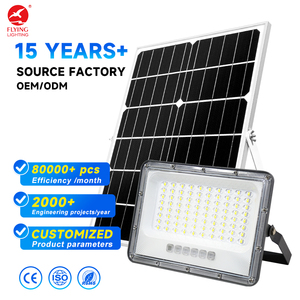
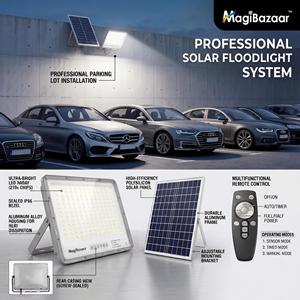
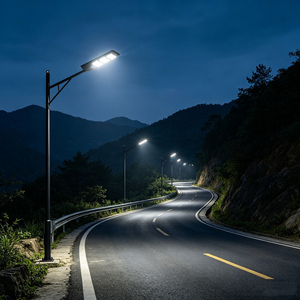
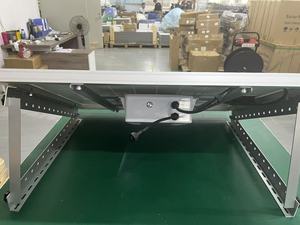
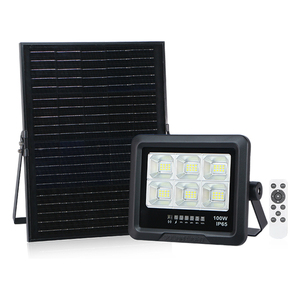
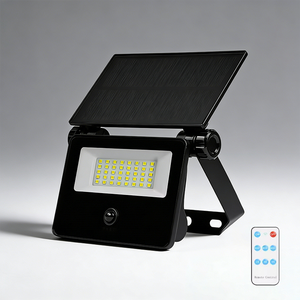
The global transition toward decentralized clean energy infrastructure has elevated heavy-duty solar flood lighting from basic perimeter security solutions into highly sophisticated, enterprise-grade illumination assets. Commercial buyers, municipal procurement officers, and engineering procurement construction (EPC) contractors now require flood lighting systems capable of operating reliably across zero-grid infrastructure environments, high-salinity coastal zones, and extreme cold-weather regions.
Unlike residential off-grid lighting, heavy-duty commercial solar flood lights are specified by precise radiometric output, optical beam tailoring, thermal dissipation capacity, and cycle-life engineering. Today’s industrial solar flood light luminaires must maintain consistent light output (measured in lumens per watt) while surviving 160+ mph wind vectors, aggressive atmospheric corrosion, and prolonged seasonal cloud cover (autonomy days).
According to international lighting standards and Search Quality Rater guidelines for technical procurement, evaluating a tier-1 solar flood light manufacturer involves probing beyond basic peak wattage claims. The true measure of a heavy-duty solar light rests upon system integration efficiency: the seamless synergy between high-efficiency monocrystalline solar cells, Maximum Power Point Tracking (MPPT) charge algorithms, premium Grade-A Lithium Iron Phosphate (LiFePO4) energy storage, and thermal management architectures.
When sourcing commercial-grade solar flood lights at scale, global procurement specialists evaluate exporters based on engineering capabilities, ISO quality compliance, component traceability, and field reliability track records. Below is an authoritative comparative evaluation matrix of top international manufacturers and OEM suppliers dominating the commercial sector in 2026.
| Manufacturer / Supplier | Primary Specialization | Max Lumen Output | Battery Chemistry | Warranty & Compliance |
|---|---|---|---|---|
| Solar Lighting International (US/Global) | Municipal, Commercial & Heavy Industrial Flood/Street | 22,200 - 44,400 LM | Grade-A LiFePO4 (Replaceable) | ISO 9001:2015, Buy American, Lifetime Pole |
| GUOHUI Lighting (China) | Perimeter Security & MPPT Industrial Systems | 15,000 - 30,000 LM | LiFePO4 Modular Pack | CE, RoHS, IP66 Certified |
| CHZ Lighting (Global Exporter) | Billboard, Stadium & Architectural Area Lighting | 18,000 - 35,000 LM | Lithium-ion / LiFePO4 | ISO 14001, CE, TUV, CB |
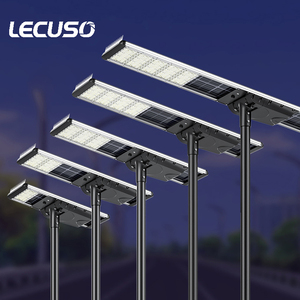
| LECUSO New Energy (China) | All-In-One & Split Heavy-Duty Solar Street/Flood | 12,000 - 25,000 LM | High Cycle LiFePO4 | CE, IP65, ROHS, FCC |
| Signify (Philips SunStay Series) | Smart City Integrated Lighting Networks | 10,000 - 20,000 LM | Integrated Lithium Pack | Global CE, UL, ENEC |
| Leadsun Solar (Australia/Global) | Patented Modular Off-Grid Solar Engines | 8,000 - 18,000 LM | LiFePO4 Smart Battery | ISO 9001, Dark Sky Approved |
| SOCOMEC Solar (Europe) | Heavy Worksite & Off-Grid Industrial Infrastructure | 14,000 - 28,000 LM | LiFePO4 Extended Pack | CE, IEC Standard Compliant |
| Greenshine New Energy (USA) | Custom Commercial Parking & Security Flood Lighting | 15,000 - 32,000 LM | GEL / LiFePO4 Option | ARRA Compliant, UL Listed Component |
| SEPCO Solar Electric (USA) | Military & Industrial Custom Solar Lighting Arrays | 20,000 - 40,000 LM | Deep-Cycle AGM / Lithium | Buy American, ISO 9001 |
| Clodesun Technology (China) | Foldable & Integrated Architectural Flood Lights | 10,000 - 22,000 LM | LiFePO4 Pack | CE, RoHS, IP67 |
Tier-1 suppliers are distinguished by their willingness to provide DIALux photometric light simulations before order execution. This engineering report guarantees that target lux levels (lux/m²) and uniformity ratios are mathematically proven under real-world mounting heights and site dimensions.
Legacy Pulse Width Modulation (PWM) charge controllers are rapidly being phased out across heavy-duty applications. Maximum Power Point Tracking (MPPT) controllers deliver 15% to 30% higher charging efficiency by dynamically adjusting solar panel operating voltage to match battery state-of-charge, especially critical during overcast or low-temperature conditions.
Lithium Iron Phosphate (LiFePO4) chemistry has become the mandatory standard for enterprise floodlights due to its exceptional thermal stability (-20°C to +65°C), zero thermal runaway risk, and 4,000-6,000 cycle capacity. Modern procurement specs now require integrated Battery Management Systems (BMS) with over-charge, over-discharge, and thermal cut-off protection.
Enterprise solar flood lighting is migrating into IoT networks. Procurement requirements increasingly demand Zigbee, LoRaWAN, or Cellular IoT gateways that enable facility managers to remotely monitor battery state-of-charge (SoC), set dynamic dimming profiles based on operational schedules, and receive real-time fault alerts via centralized dashboards.
Next-generation floodlights utilize high-efficacy LED packages (such as Philips Lumileds 5050 or Cree LED arrays) exceeding 210 lm/W. Furthermore, to combat light pollution and comply with International Dark-Sky Association (IDA) guidelines, modern floodlights incorporate asymmetric optical lenses that direct 100% of light output onto target surface areas without upward spill light.
Heavy-duty floodlights intended for coastal, mining, or highway infrastructure must withstand salt spray, chemical exposure, and intense vibration. Exporters are adopting ADC12 die-cast aluminum with electrophoretic coating, stainless steel fasteners, and aerodynamic structural profiles engineered to withstand wind speeds up to 180 mph (Category 5 hurricane equivalent).
As a premier supplier and global exporter of high-performance commercial solar lighting solutions, our enterprise engineering framework is backed by nearly two decades of proven field installations across six continents. We bridge the gap between heavy industrial manufacturing precision and custom project engineering.
Every luminaire, solar engine, and controller board undergoes multi-stage automated optical inspection (AOI), aging burn-in tests, and IP67 waterproof chamber testing prior to export shipping.
Our commercial flood lights utilize N-Type monocrystalline solar cells achieving up to 23.5% photoelectric conversion efficiency paired with self-learning ultra-fast MPPT tracking chips.
Designed to meet international government procurement specifications, our structural mounting hardware and light poles carry a Lifetime Warranty against structural corrosion and wind failure.
A high-quality heavy-duty solar flood light system has a designed service life of 12 to 20 years for the solar panel and luminaire body. The primary wear component—the Grade-A LiFePO4 battery pack—typically delivers 4,000 to 6,000 charging cycles, translating to 10-12 years of zero-maintenance operation under normal depth of discharge (DoD) conditions. Solar panel surfaces should be inspected annually for heavy dust accumulation.
Battery autonomy refers to the number of consecutive days a solar light system can provide full night-time illumination without receiving solar recharge (e.g., during rainstorms or heavy cloud cover). Industrial standards require a minimum of 3 to 5 autonomy days. This is calculated using the formula: Required Battery Storage (Wh) = (Daily Luminaire Wattage x Operating Hours per Night x Desired Autonomy Days) / Maximum Allowable Battery DoD %.
Maximum Power Point Tracking (MPPT) continuously monitors the current-voltage output of the solar panel and adjusts solar power conversion to charge the battery at maximum efficacy. MPPT controllers improve system efficiency by up to 30% compared to PWM controllers, allowing the floodlight to charge effectively during overcast weather, early mornings, and low ambient temperature conditions.
Yes. Commercial heavy-duty systems use specialized LiFePO4 batteries equipped with intelligent thermal management systems. For cold climates down to -20°C or lower, low-temperature heating elements or thermal insulation barriers are integrated into the battery compartment. For extreme hot zones up to +65°C, high-purity die-cast aluminum heat sinks dissipate thermal load safely away from internal driver circuits.
International commercial customs and municipal tenders typically require CE, RoHS, ISO 9001:2015, IP65/IP67 ingress test reports, IK10 impact resistance testing, IEC 62133 (lithium battery safety), and UN38.3 transport certification for lithium batteries. For US municipal projects, Buy American Compliance documentation and IDA Dark Sky Certification may also be required.
Partner with an established ISO 9001 certified global manufacturer. Our sales engineering team provides full DIALux simulations, customized ODM/OEM production, and bulk export pricing tailored to your exact project requirements.