
Explore industrial-grade, heavy-duty solar floodlights, all-in-one street luminaires, and portable emergency work lights engineered for high-lumen reliability, harsh environment resilience, and zero carbon operational footprint.
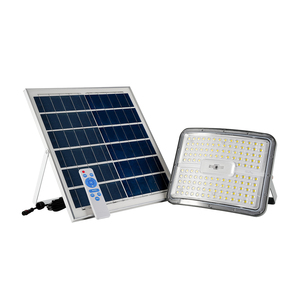
Heavy-duty 200W outdoor solar luminaire engineered with intelligent remote timing, high-capacity LiFePO4 battery storage, and ultra-wide beam optics.
Get Catalog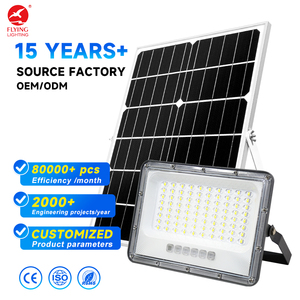
Exterior emergency floodlight integrating Microwave Radar motion detection, dual-wattage operational modes, and IP65 weatherproof armor.
Get Catalog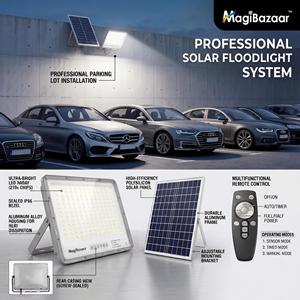
Ultra-high lumen 500W flood luminaire featuring die-cast aluminum heat-dissipation housing, IP65 waterproofing, and remote control system.
Get Catalog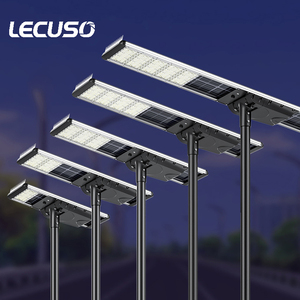
Versatile 30W to 150W integrated solar street light incorporating high-efficiency monocrystalline panels and smart MPPT controller modules.
Get Catalog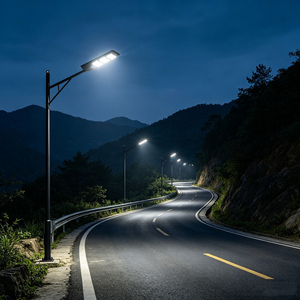
Highway-grade 300W solar street light constructed with anti-corrosion stainless steel casing, IP65 sealing, and multi-night autonomy battery management.
Get Catalog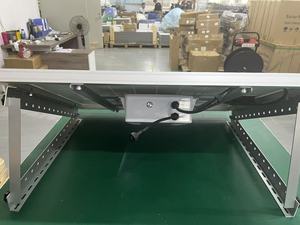
Commercial-spec 50W perimeter security light utilizing advanced MPPT regulation, long-lifecycle battery cells, and precise directional optics.
Get Catalog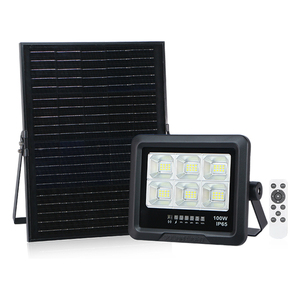
Industrial 100W outdoor floodlight tailored for commercial billboard illumination, perimeter safety, and rapid municipal field deployment.
Get Catalog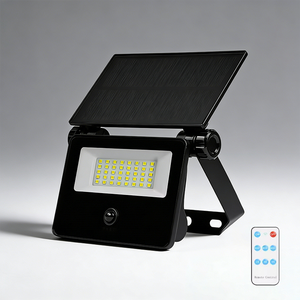
Rugged polycarbonate wireless solar work light designed for temporary job sites, disaster response teams, remote maintenance, and outdoor operations.
Get CatalogGlobal infrastructure, mining, construction, and disaster management sectors are rapidly phasing out fossil-fuel-powered diesel light towers in favor of zero-emission mobile solar light towers. Driven by stringent ESG mandates, surging fuel costs, and carbon neutrality goals, procurement strategies are pivoting toward advanced solar-storage-LED systems.
Evaluating global manufacturers requires looking beyond nominal wattage. Tier-1 enterprise suppliers are assessed based on photovoltaic efficiency, battery management systems (BMS), structural mast engineering, and international compliance certifications.
| Manufacturer Archetype / Tier | Primary Technology Focus | Battery Chemistry | Mast Mechanism | Wind Rating | Target Applications |
|---|---|---|---|---|---|
| 1. North American OEM Leaders (e.g., Solar Lighting International) | Custom Photometric, IoT Smart Telemetry, Buy American Compliant | LiFePO4 (Lithium Iron Phosphate) | Heavy-Duty Hydraulic / Electric Winch | Up to 180 MPH | DOT Roadworks, Military Base, Municipal & Utilities |
| 2. Western European Industrial Exporters | Hybrid Solar-Hydrogen Fuel Cell Integration | Advanced Lithium NCM / LiFePO4 | Vertical Telescopic Pneumatic | 140–160 MPH | Urban Construction, Zero-Emission Events, Mining |
| 3. High-Capacity East Asian OEM Manufacturers | Mass-Production All-In-One & Modular Flood Systems | LiFePO4 / Premium Gel Lead-Acid | Manual Mechanical Winch Mast | 120–140 MPH | Commercial Infrastructure, Agriculture, General Work Sites |
| 4. Defense & Tactical Spec Exporters | Emp-Shielded, Rapid Deployable Trailer Modules | Solid-State & Military-Spec LiFePO4 | Self-Erecting Automated Mast | 160+ MPH | Emergency Disaster Response, Tactical Operations |
| 5. Mining-Grade Heavy Equipment Specialists | High-Lumen (100,000+ lm) Skid & Trailer Arrays | Industrial LiFePO4 Banks | Hydraulic Rotating Mast | 150–180 MPH | Open-Pit Mining, Heavy Quarries, Oil & Gas Fields |
A common mistake in B2B procurement is comparing system capabilities strictly by fixture wattage. High-performance portable solar light towers engineered by leaders like Solar Lighting International utilize premium Philips Lumileds or Cree LED chips yielding up to 180–210 lumens per watt (lm/W). Consequently, a fully optimized 200W solar luminaire setup often delivers superior ground-level lux coverage compared to uncalibrated 500W generic systems, consuming far less battery capacity and allowing smaller, more resilient PV arrays.
Get CatalogTo withstand remote field conditions, extreme weather, and continuous 14-hour nightly duty cycles, portable solar lighting systems rely on four critical engineering pillars.
Tier-1 towers incorporate N-Type TOPCon or Monocrystalline PERC solar panels with conversion efficiencies exceeding 22.5%. Paired with Maximum Power Point Tracking (MPPT) charge controllers featuring >99.5% tracking efficiency, the system maximizes current yield even under heavy overcast skies or low solar incidence angles.
Modern mobile towers have transitioned from heavy lead-acid to LiFePO4 battery chemistry. Offering over 4,000 deep-discharge cycles at 80% Depth of Discharge (DoD), superior thermal stability up to 60°C, and integrated smart Battery Management Systems (BMS), LiFePO4 units ensure 3 to 5 days of continuous autonomy without solar input.
Engineered masts utilize galvanized steel or marine-grade anodized aluminum. Fitted with hydraulic or heavy-duty electric winch mechanisms, these towers elevate up to 9 meters while adhering to TIA-222-H wind load structural standards—rated to withstand extreme gusts up to 180 mph when outriggers are fully deployed.
Equipped with 4G/Satellite IoT modems, modern light towers allow fleet operators to remotely track GPS locations, monitor state-of-charge (SoC), adjust brightness profiles via cloud dashboards, and execute automated radar-based dimming to extend battery runtime during low-activity night hours.
As global infrastructure projects accelerate toward zero-carbon site mandates, key technical trajectories are reshaping procurement specifications for project managers and government buyers.
Future mobile light towers are evolving into portable microgrids. Next-generation designs combine solar PV arrays with secondary hydrogen fuel cells or ultra-quiet, automated micro-diesel backup generators. This hybrid core guarantees 100% operational uptime in polar or tropical storm conditions where solar irradiance drops for extended periods.
Autonomous dual-axis solar tracking masts driven by edge-AI algorithms are replacing static tilt systems. By automatically orienting PV panels toward optimal solar vectors throughout the day and stowing panels horizontally under storm conditions, energy harvest increases by 28% to 35% annually.
To reduce lifecycle e-waste and support project flexibility, international buyers now mandate modular, hot-swappable battery drawers. Standardized power packs allow operators to detach battery packs for powering auxiliary field tools or rapidly swap depleted batteries during high-priority emergency rescue operations.
Procurement departments for tier-1 construction firms are requiring mobile lighting fleets to log verified carbon offsets. Native integration of cloud telemetry allows contractors to automatically export audited fuel-saved metrics directly into corporate ESG accounting software.
With over 18 years of manufacturing excellence and 45+ years of combined solar engineering leadership, Solar Lighting International delivers institutional-grade commercial lighting systems designed to excel in the world's most unforgiving environments.
Every component—from raw structural aluminum and stainless steel frames to optical lenses and MPPT circuit boards—undergoes rigorous quality assurance checks within our ISO 9001:2015 certified facilities, guaranteeing zero-defect delivery.
We eliminate guesswork in infrastructure bidding. Our engineering team prepares comprehensive Dialux 3D photometric renderings prior to production, providing exact ground-level lux calculations, foot-candle uniformity distributions, and precise pole-spacing layouts.
Designed and engineered in the United States, our complete commercial systems satisfy federal Buy American compliance requirements, making them the preferred choice for US DOT roadworks, military installations, municipal projects, and federally funded developments.
With strategic offices, distribution hubs, and support centers spanning South Carolina, El Salvador, Ecuador, Oman, Puerto Rico, and Suriname, we deliver rapid global support, spare parts availability, and field commissioning worldwide.
Expert answers to essential technical, operational, and commercial questions faced by procurement managers, fleet directors, and project engineers.
While initial capital expenditure (CAPEX) for solar light towers is typically higher than diesel equivalents, operating expenditure (OPEX) is virtually zero. Diesel units consume 2 to 3 liters of fuel per hour, requiring weekly refueling, oil changes, engine overhauls, and continuous labor. A portable solar light tower eliminates fuel costs, engine maintenance, and carbon fees, delivering full ROI within 12 to 18 months of continuous field deployment.
For commercial and industrial installations, a minimum of 3 to 5 days (36 to 60 hours) of continuous autonomy is recommended. Autonomy refers to the system's ability to run at full scheduled light output during consecutive days of zero solar charge (e.g., heavy rain, dense fog, or winter storms). Premium LiFePO4 battery banks paired with smart MPPT controllers ensure uninterrupted operation through extended inclement weather.
Mobile solar towers present significant wind resistance due to the surface area of elevated solar panels and light fixtures. Industrial-grade towers certified to TIA-222-H standards utilize heavy-duty extendable outriggers, ballast weight bays, and high-tensile steel telescoping masts rated to withstand wind speeds up to 180 mph (290 km/h) without tipping or structural deformation.
Unlike legacy lead-acid or standard lithium-ion chemistries that degrade rapidly under extreme heat, Lithium Iron Phosphate (LiFePO4) features exceptional thermal tolerance up to 60°C (140°F). When managed by a smart multi-stage BMS, quality LiFePO4 battery banks maintain over 80% original capacity after 4,000 full charge-discharge cycles, corresponding to a service life of 10 to 12 years under normal daily operation.
Yes. Modern commercial solar light towers function as modular power platforms. Auxiliary hardware such as PTZ IP security cameras, environmental sensors, Wi-Fi hot spots, public address speakers, and radar traffic counters can be easily integrated and powered directly from the main battery system via 12V/24V DC or PoE ports.
Dialux photometric simulations utilize exact optical IES files to generate a precise 3D map of lux levels, foot-candle spread, and glare ratings across a site. Requesting a Dialux report before procurement guarantees that the selected solar towers fulfill local illumination standards (such as AASHTO for roadways or OSHA for construction safety) with the minimum required unit count, preventing under-illumination or unnecessary over-budget purchases.
Procurement officers should verify ISO 9001:2015 Quality Management certification, IP65 or IP67 ingress protection ratings for luminaires and electrical enclosures, CE, RoHS, UL listings for battery modules, and Buy American Act compliance where federal funding is involved. Furthermore, verifying wind load certifications and manufacturer-backed warranties (such as lifetime pole warranties) ensures long-term asset protection.
Connect directly with Solar Lighting International's sales engineers to receive comprehensive product catalogs, custom Dialux photometric proposals, and direct factory-direct B2B quotation pricing.