
Engineered for commercial parking lots, public roadways, municipal plazas, and heavy-duty industrial sites. Each system features custom RF/PIR remote interface options, high-efficiency monocrystalline PV modules, and long-life energy storage.
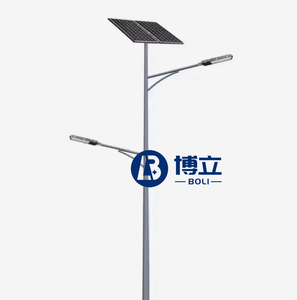
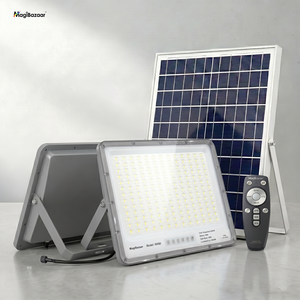
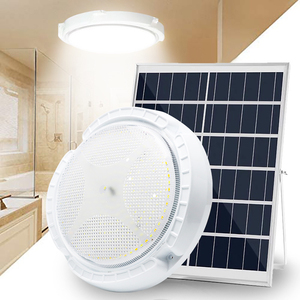
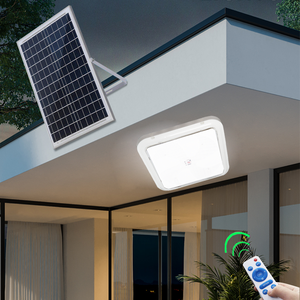
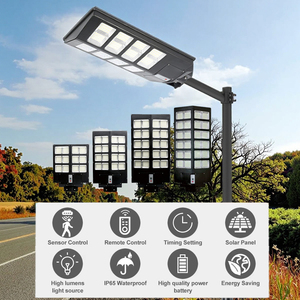
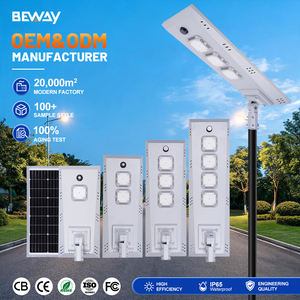
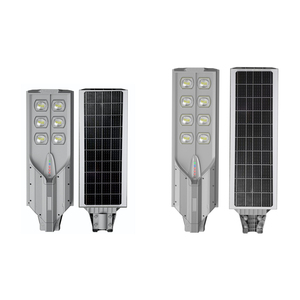
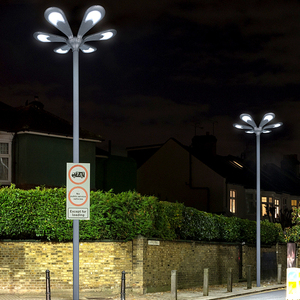
Commercial procurement of off-grid solar area lights requires rigorous evaluation of thermal management, optical distribution (IESNA Type II/III/V), Maximum Power Point Tracking (MPPT) conversion efficiency, and remote control telemetry protocols.
The global transition toward decentralized clean energy infrastructure has elevated remote-controlled commercial solar area lighting from localized off-grid accessories to critical urban infrastructure assets. Municipalities, commercial real estate developers, DOT agencies, and industrial facilities no longer seek simple illumination; they mandate robust IoT mesh telemetry, multi-stage adaptive dimming protocols, long-cycle lithium iron phosphate (LiFePO4) storage, and extreme environmental survivability.
Selecting a top-tier manufacturer necessitates examining structural engineering certifications (e.g., AASHTO wind-load ratings), charge controller algorithm performance under low-irradiance conditions, optical lumen degradation (L70/L90 ratings), and the bandwidth reliability of remote control interfaces—ranging from handheld 2.4GHz RF controllers to cloud-native LoRaWAN/NB-IoT smart city management platforms.
| Manufacturer / Brand Tier | Core System Architecture | Remote Control Telemetry | Battery Tech & Life | Max Efficacy | Compliance & Quality |
|---|---|---|---|---|---|
| Solar Lighting International | Split-System & High-Output All-in-One | Long-Range RF / Smart City IoT / LoRa | Grade-A LiFePO4 (4,000+ Cycles) | >210 lm/W | ISO 9001:2015, Buy American, IP67 |
| Tier-1 Utility Spec Brands | Custom Commercial Split Poles | Cellular NB-IoT / Modbus RS485 | Modular LiFePO4 Pack | 190-200 lm/W | UL Listed, Dark-Sky Compliant |
| Industrial Smart City Suppliers | Integrated Smart City Engine | Zigbee Mesh / Direct Cellular | LiFePO4 with BMS Heater | 180-195 lm/W | CE, RoHS, IP66 |
| Commercial Municipal OEM | Hybrid Solar-Grid / Off-Grid | Infrared (IR) / 2.4GHz RF Handheld | Lithium NMC / LiFePO4 | 175-190 lm/W | ISO 9001, IP65 |
| Standard Commercial Suppliers | All-In-One Integrated ABS/Alloy | Standard IR Remote Control | Recycled / Standard LiFePO4 | 150-170 lm/W | Basic CE, IP65 |
Modern remote controls range from line-of-sight Infrared (IR) for basic multi-mode scheduling to radio-frequency (RF) handhelds reaching up to 50 meters, and integrated IoT gateways capable of controlling citywide networks via central management software (CMS).
Leading manufacturers leverage high-bin Philips Lumileds or Creo LED chips combined with precision batch optical lenses, delivering luminous efficacy up to 210+ lumens per watt while adhering to Dark-Sky shielding criteria.
Heavy-gauge die-cast aluminum enclosures with IP65/IP67 ingress ratings ensure survival under extreme weather, marine saltwater spray, and hurricane-force winds up to 180 mph with specialized EPA-certified pole engineering.
Key technological shifts shaping enterprise RFQs, municipal bids, and international commercial solar installations over the next decade.
Traditional passive motion sensors are giving way to high-frequency microwave Doppler radar sensors coupled with intelligent remote microcontrollers. Future procurement specs demand multi-zone grouping capabilities where a single remote control trigger illuminates an entire perimeter network simultaneously upon security breach detection.
Key Benefit: 40% Increase in Autonomy DaysEnergy storage reliability in sub-zero alpine climates or extreme desert heat (+65°C) is a major procurement factor. Enterprise specifications now explicitly mandate integrated Battery Management Systems (BMS) with self-heating thermal jackets and LiFePO4 chemistries yielding over 4,000 deep-discharge cycles.
Key Benefit: Zero Zero-Degree Charging FailurePhotovoltaic module conversion rates have breached the 23-25% threshold with TOPCon and heterojunction (HJT) N-type silicon cells. Smaller solar panel surface areas can now power higher lumen outputs (up to 22,200 lumens), drastically lowering total effective projected area (EPA) and wind load resistance demands on light poles.
Key Benefit: Reduced Pole Mass & Shipping Freight CostsEnvironmental protection guidelines mandate strict light pollution control. Procurement documents now require wireless remote adjustments of correlated color temperature (CCT) from 5000K daylight down to 2200K turtle-friendly amber, coupled with zero-uplight full cut-off optics.
Key Benefit: IDA Compliance & Wildlife PreservationA detailed comparison of remote controlling mechanisms in commercial solar area lighting—from basic IR handpieces to advanced bidirectional IoT telemetry systems.
Detailed answers addressing engineering, RFQ specification, battery autonomy, and remote control telemetry for commercial buyers.
Remote control range depends on the underlying transmission frequency. Standard line-of-sight Infrared (IR) remotes operate effectively within 8 to 12 meters, making them suitable for low-mounting height applications or manual maintenance overrides. High-frequency 2.4GHz Radio Frequency (RF) remotes extend operational range up to 50 meters without requiring direct line-of-sight, easily penetrating obstacles. For municipal or large commercial facilities, IoT-enabled solar lighting systems utilize LoRaWAN or NB-IoT telemetry, enabling unlimited remote control distance via a cloud-based central management platform.
Split-type solar lighting systems separate the photovoltaic panel, luminaire head, and battery enclosure. This architecture allows optimal solar panel angling for maximum solar harvest (especially in higher latitudes) and accommodates larger capacity LiFePO4 battery packs for 5 to 7 days of continuous system autonomy during overcast weather. All-In-One integrated units integrate the panel, LiFePO4 battery, MPPT controller, and LED array into a single compact housing. All-In-One systems drastically minimize installation labor and wind load profile, making them ideal for urban pathways, parking lots, and low-maintenance commercial zones.
Lithium Iron Phosphate (LiFePO4) chemistry represents the industry gold standard for commercial solar area lighting. Unlike traditional Lead-Acid, AGM, or standard Lithium-Ion (NMC) batteries, Grade-A LiFePO4 cells provide up to 4,000+ charge-discharge cycles at 80% Depth of Discharge (DoD), corresponding to a service lifespan of 10 to 12+ years. Furthermore, LiFePO4 exhibits superior thermal stability, operating safely across high ambient temperatures (+65°C) without thermal runaway risk, and can be optioned with internal heating jackets for cold-climate applications.
MPPT charge controllers continuously monitor the V-I output curve of the monocrystalline solar panel, calculating the optimal electrical operating point to extract maximum instantaneous power. Compared to legacy Pulse Width Modulation (PWM) controllers, MPPT technology increases solar energy harvesting efficiency by 15% to 30%, especially during overcast, hazy, or winter conditions. When paired with remote telemetry, MPPT controllers transmit real-time voltage, current, and temperature metrics directly to the operator's interface.
Yes. Professional commercial solar area luminaires are designed to meet International Dark-Sky Association (IDA) standards by utilizing zero-uplight (U0 rating) optical shielding, precise IESNA Type II, III, or V optical lenses, and dynamic color temperature tuning. Using the system's remote control interface or automated internal scheduling, operators can dim total output during off-peak midnight hours or drop color temperatures down to warm warm-amber hues to minimize light pollution and safeguard regional nocturnal wildlife.
Commercial buyers should mandate ISO 9001:2015 quality management compliance for the manufacturing plant, IP65 or IP67 ingress protection certificates for dust and moisture sealing, and IK08 to IK10 mechanical impact protection ratings. For government or US municipality projects, verifying Buy American Compliance and structural wind-load engineering certificates (supporting up to 180 mph AASHTO criteria) ensures long-term regulatory compliance and asset protection.
Speak directly with our senior solar sales engineers. We offer turnkey technical design, customized remote control telemetry, and factory-direct pricing for commercial projects worldwide.