
Engineered to satisfy stringent municipal safety directives and international traffic control standards (FHWA MUTCD), our solar pedestrian crossing fixtures integrate monocrystalline PV modules, LiFePO4 energy storage, and ultra-bright LED optics for 24/7/365 uninterrupted autonomous operation.
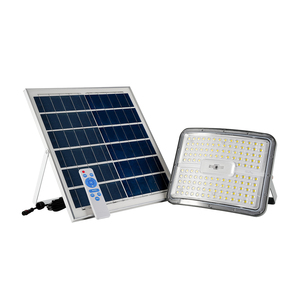
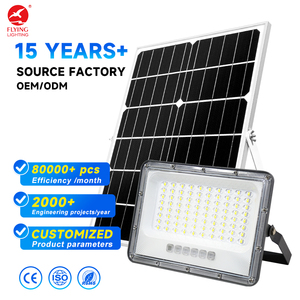
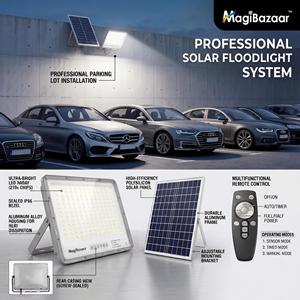
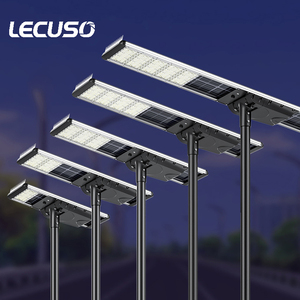
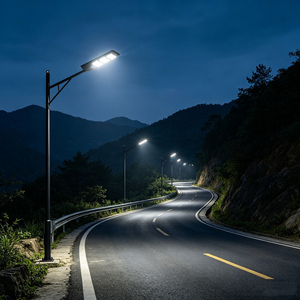
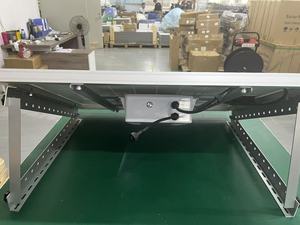
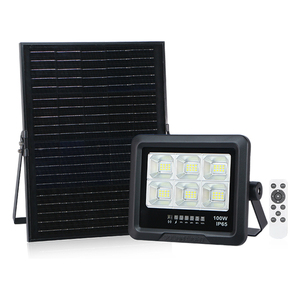
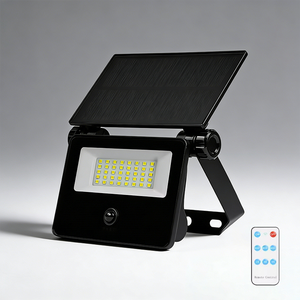
Mid-block crosswalk safety, urban school zones, and industrial facility pathways represent critical safety touchpoints. As municipal traffic agencies shift toward zero-emission infrastructure, solar-powered pedestrian crossing solutions—including Rectangular Rapid Flashing Beacons (RRFBs) and radar-activated hazard warnings—have become indispensable for mitigating pedestrian collision risks by up to 47% to 90%.
Commercial solar crosswalk flashers must strictly adhere to the Federal Highway Administration’s (FHWA) Manual on Uniform Traffic Control Devices (MUTCD). Our systems incorporate WW+S (Wig-Wag) flashing patterns, precise 0.5-second flash cadence, and Dark-Sky friendly directional optical shields.
Operating across non-ideal solar latitudes requires robust power conversion. Our Maximum Power Point Tracking (MPPT) charge controllers continuously calculate solar array IV curves, extracting up to 30% more energy during winter overcast days than conventional PWM controllers.
Eliminating physical button contact, our integrated 24GHz Doppler radar sensors and thermal AI camera triggers detect approaching pedestrians automatically. This immediately fires active LED warning flashers, maximizing driver reaction window distances.
| System Parameter | Traditional Grid AC Powered System | Solar Lighting Int. Off-Grid Solar System |
|---|---|---|
| Civil Works & Trenching | Requires extensive asphalt cutting, conduit laying, & grid hookups ($15,000 - $45,000/site). | Zero trenching required. Direct anchor bolt flange installation in hours. |
| Utility Electricity Bills | Ongoing monthly energy expenditures & grid meter maintenance fees. | $0.00 Lifetime Electricity Costs. Fully self-sustained photovoltaic harvesting. |
| Grid Outage Vulnerability | Fails entirely during storm-induced utility blackouts. | Continuous Operation. 5 to 7 Days Autonomy (LiFePO4 power storage reserve). |
| Deployable Speed | 3 to 6 months (permitting, utility coordination, road closures). | 1 to 2 Days Installation per intersection with zero road disturbance. |
| Carbon Footprint | Consumes grid power (typically coal/gas mix). | 100% Clean Energy. Eligible for regional green municipal carbon offset credits. |
As municipal procurement committees, civil engineering contractors, and corporate campus safety leads evaluate crosswalk warning infrastructure, the market is undergoing a seismic technological shift toward connected, intelligent, and extreme-weather-resilient hardware.
Future pedestrian crossings will no longer operate as isolated hardware islands. Modern procurement specifications demand Cellular IoT (LTE-M/NB-IoT) mesh gateways and Cellular Vehicle-to-Everything (C-V2X) readiness. Crosswalk warning flashers communicate directly with approaching autonomous and connected vehicles, beaming real-time pedestrian presence data directly to in-dashboard driver notification alerts.
Legacy Lead-Acid (AGM/Gel) energy storage has been completely phased out of high-end municipal bids. Procurement mandates specify Lithium Iron Phosphate (LiFePO4) and emerging Sodium-ion batteries due to their 4,000+ deep discharge cycle life, non-toxic chemistry, thermal stability up to 65°C, and exceptional sub-zero performance without freezing degradation.
Transitioning from manual push-buttons to touchless passive actuation. Procurement guidelines favor dual-technology sensors merging 24GHz Doppler radar (detecting speed and trajectory) with thermal AI optical sensors. This multi-sensing array prevents false activations from blowing debris while ensuring wheelchair users, children, and slow-moving pedestrians trigger light flashes instantly.
Accelerating climate volatility requires upgraded mechanical survival ratings. Modern bids mandate structural poles capable of withstanding 180 MPH sustained hurricane winds, marine-grade anodized aluminum finishes resistant to salt-spray corrosion (ASTM B117), and IP67 sealed electrical component chambers.
Modern urban planning stresses glare reduction. High-end crosswalk floodlights utilize precision asymmetric optics (Type II/Type III distribution), casting focused 100+ lux light pools directly on the pedestrian walking plane while eliminating spill light into surrounding residential windows (IDA Dark-Sky compliance).
Established in 2006, Solar Lighting International, Inc. represents the benchmark of industrial outdoor solar engineering. Our turnkey manufacturing processes, rigorous quality assurance standards, and deep technical expertise ensure seamless project execution worldwide.
Every solar power system, LED light engine, and charge control module undergoes stringent multi-stage automated testing. Our ISO certified facility enforces zero-defect production tolerances, thermal chamber stress tests, and ingress protection validation.
Designed and engineered in the United States, our solar light poles and complete pedestrian crossing assemblies fully satisfy Buy American Act provisions—making them the primary choice for federal transportation grants, DOT projects, and municipal infrastructure awards.
We do not sell off-the-shelf guesswork. Our team of optical engineers provides complimentary DIALux 3D photometric studies prior to purchase. Visualize exact vertical and horizontal lux distributions across your crosswalk site to ensure total regulatory compliance.
Our senior engineering group brings over four decades of direct photovoltaic and illumination experience. From calculating sun-hours during peak winter solstice to specifying structural wind-shear resistance, we eliminate technical risk.
With active regional presence in South Carolina, El Salvador, Ecuador, Oman, Puerto Rico, and Suriname, we back our systems with international technical support, rapid spare parts fulfillment, and certified installation networks worldwide.
Answers to standard technical, compliance, and installation queries raised by municipal engineers, DOT authorities, and procurement officers.
Our engineering team sizes every system with a minimum of 5 to 7 "Days of Autonomy" (DOA). Utilizing high-capacity LiFePO4 batteries and oversized monocrystalline solar arrays, the system harvests diffuse ambient sunlight even on heavily overcast days, storing ample power to keep warning lights fully operational 24/7.
Yes. Our Rectangular Rapid Flashing Beacons (RRFBs) and yellow hazard warning flashers comply fully with FHWA MUTCD Interim Approval (IA-21) and standard traffic safety requirements. They offer standard WW+S flash patterns, solar power sizing safety margins, and compliant optic dimensions.
Our industrial LiFePO4 (Lithium Iron Phosphate) battery banks are rated for 3,500 to 5,000 deep discharge cycles at 80% Depth of Discharge (DOD). Under standard field operation, this equates to an operational lifespan of 8 to 12 years before battery replacement is required.
Push-buttons require active pedestrian participation, which studies show over 50% of pedestrians fail to use. 24GHz Doppler radar sensors automatically detect approaching pedestrians within a 15-to-30 meter zone, triggering crosswalk flashers without physical contact and guaranteeing high compliance and safety.
All complete light pole systems manufactured by Solar Lighting International are engineered to AASHTO structural standards. Our heavy-duty aluminum and stainless steel poles are certified to withstand sustained wind speeds up to 180 MPH (290 km/h), making them hurricane resistant.
Because solar crosswalk systems require no AC grid connection, civil trenching, or utility meters, installation takes typically 2 to 4 hours per pole. Municipalities save between $15,000 and $40,000 per intersection in civil engineering and utility interconnect fees.
Maximum Power Point Tracking (MPPT) dynamically adjusts the voltage match between solar panels and batteries. In cold winter conditions or high-heat environments, MPPT controllers deliver up to 30% higher charging efficiency than standard PWM controllers, maintaining high reserve power in critical safety hardware.
Yes. Options include cellular gateways with wireless RF mesh networking. Transportation managers can monitor real-time battery voltage, lamp health, pedestrian count statistics, and receive automated email/SMS fault alerts via cloud management software.
Solar Lighting International provides comprehensive warranty coverage: 25-Year performance warranty on solar PV modules, Lifetime structural warranty on aluminum light poles, 5-Year warranty on LiFePO4 batteries and LED fixtures, and 3-Year warranty on charge controllers.
Click our instant inquiry button below to speak directly with a sales engineer. Provide your project site location, roadway width, and required operational modes. We will generate a complete 3D DIALux lighting layout and itemized proposal within 24–48 hours.
Consult directly with Solar Lighting International’s senior engineering team. Receive complimentary DIALux 3D photometric studies, customized solar sizing calculations, and direct factory pricing.
Request Project Consultation & Quote