
Engineered for harbors, offshore platforms, coastal perimeters, and demanding industrial applications.
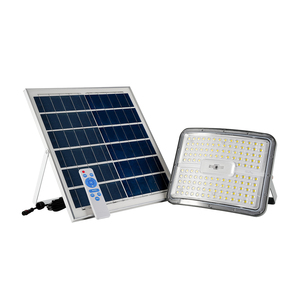
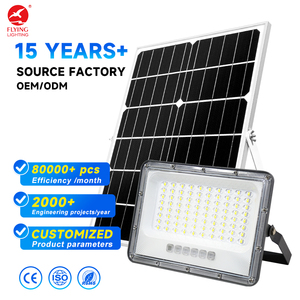
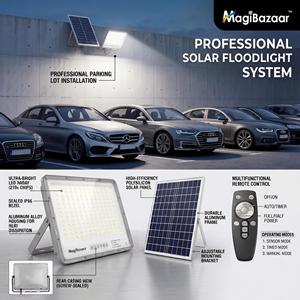
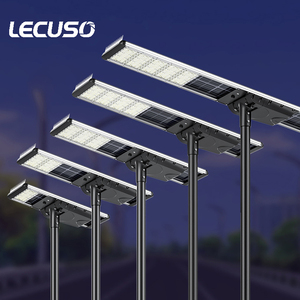
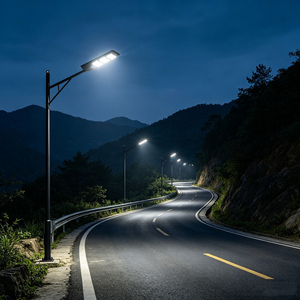
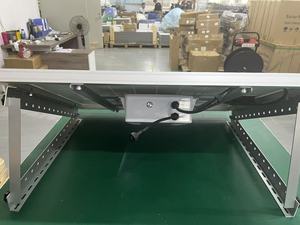
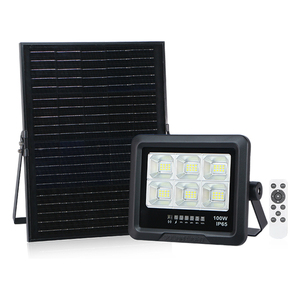
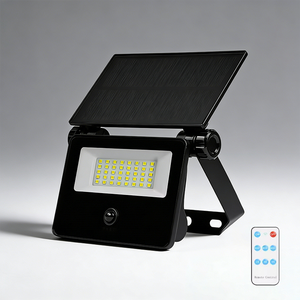
In marine navigation, port management, offshore oil platforms, and high-security coastal perimeters, reliable signal lighting is not just a commercial requirement—it is a critical safety imperative. Solar-powered navigation lights have evolved from basic supplementary beacons into sophisticated, zero-grid, autonomous safety systems capable of operating under extreme weather conditions without human intervention.
According to the International Association of Marine Aids to Navigation and Lighthouse Authorities (IALA Standards), marine signaling devices must satisfy rigorous optical intensity, chromaticity, and operational autonomy benchmarks. Modern solar navigation lights integrate Lithium Iron Phosphate (LiFePO4) energy storage, Maximum Power Point Tracking (MPPT) solar charge controllers, and ultra-high-efficiency LED arrays to guarantee 100% operational uptime—even through extended overcast periods exceeding 14 to 21 autonomy days (Days of Autonomy, DAR).
This white paper serves as an authoritative procurement guide for municipal port authorities, marine contractors, harbor masters, EPC engineering firms, and industrial buyers seeking to evaluate top manufacturers and suppliers of commercial solar navigation lighting systems.
Direct integration of US-engineered innovation, ISO quality control, and ruggedized materials.
Every commercial system is manufactured under strict ISO 9001:2015 quality management procedures. Rigorous thermal testing, salt-mist environmental chamber exposure, and optical photometric testing ensure zero defect delivery.
Our complete solar lighting fixtures and pole systems are engineered in the USA. Designed to comply with federal purchasing standards including Buy American Compliant frameworks for governmental infrastructure installations.
Marine environments face severe wind load pressures. Our structural aluminum and stainless steel light poles are rated to withstand extreme sustained winds up to 180 mph, backed by an industry-leading Lifetime Pole Warranty.
Utilizing high-efficiency MPPT charge controllers and monocrystalline panels (>22.5% solar conversion efficiency). Every procurement project receives custom photometric simulation reports to verify light distribution before purchasing.
Our veteran sales engineers and optical designers bring over four decades of combined solar lighting engineering experience. From dock navigation lights to perimeter security solar floodlights, we offer end-to-end consulting.
Equipped with optional LoRaWAN / Cellular IoT module control for real-time diagnostic telemetry, automated dimming schedules, and IDA Dark Sky compliance to protect wildlife and coastal ecosystems.
Evaluating core metrics across leading commercial solar light categories for marine and perimeter applications.
| Light Model Series | Solar Panel Type | Battery Chemistry | Lumen / Intensity Range | Waterproof / IP Rating | Autonomy Days | Compliance Standards |
|---|---|---|---|---|---|---|
| Solar Marine Beacon 200W | Monocrystalline 18V | LiFePO4 (4,000 Cycles) | 18,000 - 22,200 Lumens | IP68 Submersible | 14 - 21 Days | IALA E-200-1, CE, RoHS |
| 300W Stainless Steel Navigation | High-Efficiency Mono | LiFePO4 Grade-A Cells | 28,000 Lumens | IP66 / Marine Grade | 10 - 15 Days | ISO 9001, Buy American |
| 500W Heavy Duty Solar Flood | Dual-Glass Bifacial Mono | Deep-Cycle LiFePO4 | 44,400 Lumens (Max) | IP65 Waterproof | 7 - 12 Days | UL Listed components, Prop 65 |
| Integrated All-In-One (30W-150W) | Top-Mounted Mono | Internal Thermal LiFePO4 | 4,500 - 22,500 Lumens | IP65 Waterproof | 5 - 8 Days | IDA Dark Sky, FCC, CE |
| Portable Wireless Work/Signal Light | Impact Polycarbonate Mono | Lithium Polymer / LiFePO4 | 2,000 - 4,000 Lumens | IP65 Shockproof | 3 - 5 Days | UN38.3, MSDS Certified |
Selecting a qualified manufacturer for solar navigation lights requires evaluating structural, electrical, optical, and logistical criteria. The market features numerous suppliers, ranging from low-cost consumer grade vendors to heavy-industrial ISO 9001 certified manufacturers like Solar Lighting International, GUOHUI, CHZ, and LECUSO.
When specifying products for critical navigation channels, breakwaters, bridge markers, or hazard perimeter security, procurement officers should demand the following tier-one engineering benchmarks:
The commercial solar navigation lighting industry is undergoing rapid technological transformation driven by smart grid migration, carbon offset targets, and advanced material science. B2B procurement managers should prepare for five dominant industry trends:
1. Wireless Satellite & LoRaWAN IoT Telemetry: Offshore navigation beacons are increasingly deployed in remote locations where manual inspection is cost-prohibitive. Next-generation navigation lights feature built-in satellite-IoT or LoRaWAN transceivers that transmit real-time telemetry (battery state-of-charge, solar current output, LED fault status, tilt tamper alerts) directly to cloud management dashboards.
2. Smart Adaptive Dimming & AI Irradiance Forecasting: Machine learning algorithms embedded within the MPPT controller analyze historical solar harvest data and localized 7-day weather forecasts. If an extended storm system is predicted, the light automatically adjusts ambient lumen levels during non-critical hours to conserve energy reserve while maintaining mandatory signal visibility.
3. Dual-Modality Solar + Kinetic Wave Energy Harvesting: For buoy and floating offshore applications, hybrid navigation lights combining top-mounted bifacial monocrystalline panels with internal micro-kinetic energy generators (capturing wave motion) are entering commercial deployment, extending operational autonomy indefinitely.
4. Sea Turtle Friendly Spectral Tuning: Coastal installations near wildlife preserves face strict light pollution regulations. Manufacturers are producing customized narrow-spectrum amber LEDs (590nm wavelength) that maintain visibility for mariners while remaining invisible or non-disruptive to nesting sea turtles and migratory shorebirds.
Direct technical answers for engineers, port authority directors, and purchasing agents.
Visual range depends on atmospheric transmissivity and the luminous intensity (measured in candelas) of the LED array. IALA guidelines calculate range using Allard's Law. Our engineering team provides custom photometric reports that map required candela output to achieve 1NM, 3NM, or 5NM visibility based on your geographic location.
Commercial grade LiFePO4 batteries last between 7 to 10 years (or 3,500 to 4,500 full charge-discharge cycles at 80% DOD). The fixture casing and solar panels are rated for a 20-year operational life, and battery packs are designed to be easily replaced on-site without removing the light fixture.
Yes. Our structural solar light poles and perimeter floodlight mounts are constructed from high-tensile structural aluminum and heavy-gauge steel, engineered to withstand sustained hurricane winds up to 180 mph. All mounting hardware utilizes 316 stainless steel fasteners to prevent shear stress under high load.
Commercial solar navigation systems feature built-in Days of Autonomy (DAR). By sizing the LiFePO4 battery capacity and solar panel wattage correctly, our lights operate continuously for 14 to 21 days of total darkness without losing signal integrity.
Yes. Solar Lighting International is an ISO 9001:2015 certified manufacturer. Our solar light poles and complete commercial systems satisfy federal Buy American Compliant requirements, making them eligible for municipal, state, and US government infrastructure projects.
Solar navigation lights require minimal maintenance. We recommend inspecting the optical lens and clearing bird droppings or debris from the solar panel glass annually. Rain naturally cleans the angled glass, and the solid-state electronics require zero lubrication or routine adjustments.
An All-In-One (AIO) light integrates the solar panel, LiFePO4 battery, MPPT controller, and LED luminaire into a single compact casing for simple installation. Split systems feature separate solar panels and battery enclosures mounted on the pole, allowing larger solar arrays and higher lumen output (up to 44,400 lumens) for heavy-duty applications.
Our sales engineering team typically turns around custom project quotes, light pole placement designs, and photometric lighting simulations within 24 to 48 hours. Simply click "Get a Quote" to connect directly with our technical team.
Consult with our senior solar engineers today. Get custom photometric reports, system sizing, and factory-direct B2B wholesale pricing.
Get a Quote