
Engineered for continuous zero-carbon warehouse perimeter security, heavy industrial yards, and municipal perimeter zones.
Why Tier-1 logistics facilities, fulfillment hubs, and commercial warehouses are transitioning from traditional grid-powered luminaires to off-grid solar infrastructure.
Securing modern warehouse perimeters presents a complex engineering challenge. Logistics complexes often span dozens of acres, featuring miles of perimeter fencing, high-activity loading docks, and remote equipment staging areas. Traditionally, illuminating these perimeter boundaries demanded massive capital expenditure (CapEx) dedicated to sub-surface cable trenching, concrete conduit pouring, high-voltage transformers, and complex electrical permits. Moreover, ongoing utility rates and potential power grid vulnerabilities create operational risks for facilities requiring 24/7 continuous CCTV coverage and Crime Prevention Through Environmental Design (CPTED) compliance.
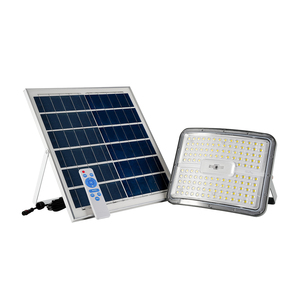
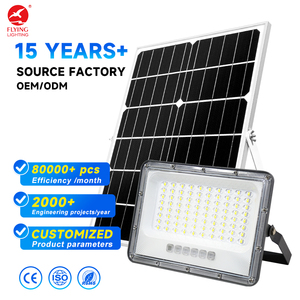
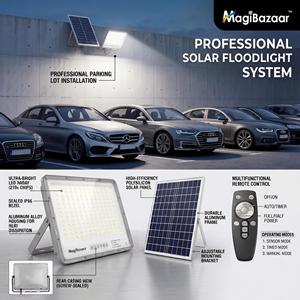
Commercial-grade solar powered warehouse perimeter lights have evolved from supplementary landscape illumination into mission-critical security assets. Integrating ultra-efficient N-type monocrystalline solar photovoltaic (PV) modules, Maximum Power Point Tracking (MPPT) charge controllers, high-density Lithium Iron Phosphate (LiFePO4) energy storage, and solid-state LED light engines (yielding up to 210+ lumens per watt), modern solar security floodlights deliver uncompromised illuminance across facility boundary lines without grid connection.
Navigating technology transitions, sustainability mandates, and technical specs when sourcing enterprise solar floodlights.
Legacy Lead-Acid and Gel batteries have been completely rendered obsolete. Enterprise procurement mandates now strictly require Grade-A Lithium Iron Phosphate (LiFePO4) chemistry due to its 4,000+ deep discharge cycles at 80% Depth of Discharge (DoD), superior thermal stability (operating from -20°C to +65°C), and zero thermal runaway risk.
Perimeter lights are no longer isolated luminaires. Procurement specifications increasingly require LoRaWAN or Zigbee wireless mesh nodes. This allows facility security directors to centrally monitor real-time battery state of charge (SoC), adjust brightness levels remotely, receive automated fault alerts, and integrate lighting controls into facility security management systems (VMS).
Traditional Pulse Width Modulation (PWM) controllers waste up to 30% of harvested solar energy. Modern high-output warehouse perimeter systems utilize digital MPPT controllers operating at 99.5% tracking efficiency, continuously dynamically converting excess solar voltage into optimal charging current even under partial shading or overcast atmospheric conditions.
Understanding the critical physical and electrical engineering breakthroughs that ensure 365-day uninterrupted security coverage.
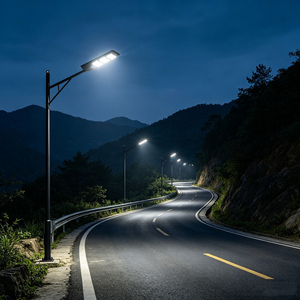
Custom optical lenses (such as Type III and Type V rectangular distribution) direct output specifically along fence boundaries, eliminating spillover light onto neighboring properties while providing zero dark spots between poles spaced up to 40 meters apart.
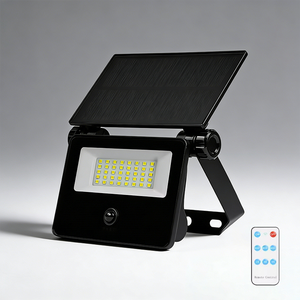
Integrating 24GHz Doppler microwave radar rather than thermal PIR sensors enables long-distance motion detection up to 15-20 meters. Fixtures maintain a 30% ambient baseline glow for security cameras and burst to 100% full lumen power immediately upon perimeter intrusion detection.
Next-generation monocrystalline solar panels utilize N-type TOPCon cell architecture achieving over 24.5% module conversion efficiency. This ensures maximum surface area power generation within compact luminaire frames, critical for high-wattage requirements.
Smart firmware dynamically throttles LED drive current based on historical microclimate weather data and real-time battery state of charge. This guarantees that perimeter lights remain operational even during 5-7 consecutive cloudy or rainy winter days.
Industrial facility perimeters demand extreme physical protection. Modern heavy-duty floodlights feature pressure die-cast aluminum alloys treated with outdoor electrophoretic coating, tempered high-transmittance glass, and silicone sealing to resist salt-fog, dust storms, and extreme winds up to 180 mph.
| Evaluation Criteria | Off-Grid Solar Perimeter Lights | Traditional Grid-Powered Luminaires |
|---|---|---|
| Trenching & Cabling Requirement | Zero (100% Wireless Installation) | Extensive Underground Conduit & Cabling Required |
| Installation Speed (1000m Fence) | 1-2 Days (Pole Mounting Only) | 3-4 Weeks (Civil Works, Permits, Wiring) |
| Monthly Energy Consumption Bill | $0.00 (Zero Carbon Footprint) | Ongoing High Utility Tariff Charges |
| Blackout & Grid Failure Vulnerability | 100% Immunity (Continuous Security) | Blacks Out Unless Supported by High-Cap Generators |
| Maintenance Cycle | Every 5-8 Years (Battery Check) | Frequent Driver & Lamp Replacements |
| Dark-Sky & Light Pollution Control | High (Precision Optical Cut-off Lens) | Low to Moderate (Widespread Light Spill) |
Combining 18+ years of dedicated solar lighting production, US-engineered quality standards, and full compliance certifications.
Every single floodlight, solar engine, and mounting arm is produced under rigorous Quality Management Systems (QMS), adhering to strict international engineering protocols.
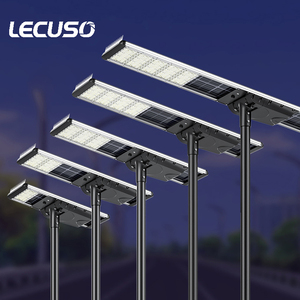
Our engineered solar street and parking/perimeter light pole systems comply fully with Buy American requirements, utilizing US engineering expertise and premium components.
We provide full DIALux lighting calculations and custom photometric pole layout designs before purchasing, ensuring precise target lux levels along perimeter fences.
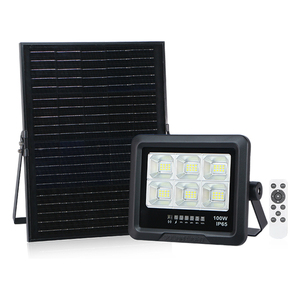
Heavy-duty solar luminaires engineered for large-scale logistics centers, delivering up to 22,200 lumens per fixture with high efficacy Lumileds LED technology.
With operational support hubs in the US, South America, and the Middle East, our network provides full technical guidance and installation consulting globally.
Our heavy-duty aluminum and stainless steel light poles are rated for hurricane wind resistance up to 180 mph and carry structural backing for long-term peace of mind.
Expert technical answers to common questions asked by industrial facility managers, EPC contractors, and security consultants.
Our commercial-grade perimeter lights are engineered with a minimum of 3 to 5 days of autonomous battery power storage (Autonomy Days). Combined with intelligent MPPT micro-dimming and Autonomous Weather Adaptation (AWA) firmware, the fixtures preserve energy during prolonged overcast periods without completely shutting down security illumination.
Optimal pole spacing depends on luminaire lumen output and mounting height. For standard 6-meter (20ft) mounting heights using our 100W-200W asymmetric optic floodlights, pole spacing typically ranges between 25 to 35 meters (80 to 115 feet) to achieve continuous 15-20 Lux coverage along fence lines without dark gaps.
Yes. Our fixtures provide high Color Rendering Index (CRI > 80) and 5000K daylight white color temperature, which maximizes video clarity for security cameras. Additionally, our smart radar sensors maintain a baseline illumination level (e.g., 30%) for camera clarity, ramping to 100% output when perimeter motion is detected.
Our Grade-A LiFePO4 battery packs are outfitted with smart Battery Management Systems (BMS). For freezing environments (below 0°C), thermal heating pads can be added to allow charging down to -20°C. For hot climates up to +65°C, high-grade thermal isolation housings prevent heat degradation, delivering a 10+ year lifespan.
Absolutely. Modern commercial solar luminaires are engineered with full cut-off optical distribution lenses (0% Upward Light Ratio / ULR = 0). This directs 100% of light emissions downward onto the target ground area, preventing sky glow and satisfying IDA Dark-Sky compliant mandates near residential or wildlife zones.
Solar lighting systems require virtually zero routine maintenance due to their brushless solid-state design. We recommend a visual inspection of the solar panel surface once every 12 to 24 months to clean severe dust accumulation or industrial debris in order to maintain maximum solar conversion efficiency.
Contact our engineering sales team today to receive custom photometric calculations, bill-of-materials (BOM) sizing, and direct factory pricing for your upcoming commercial solar project.
Get a Quote