
As the global energy landscape transitions decisively toward decentralized renewable infrastructure, municipal buyers, commercial contractors, civil engineering firms, and industrial project developers demand solar outdoor lighting solutions that transcend basic illumination. Modern municipal infrastructure mandates absolute operational stability: zero-downtime, continuous-run capability regardless of extended monsoon cycles, winter solar deficits, or severe ambient temperature fluctuations.
As a premier China commercial solar lights manufacturer and global exporter, our manufacturing infrastructure combines proprietary Maximum Power Point Tracking (MPPT) power management algorithms, ultra-high-density Lithium Iron Phosphate (LiFePO4) energy storage matrices, high-efficiency monocrystalline solar arrays, and high-lumen optical engines. This engineering whitepaper offers an exhaustive analysis of continuous-run solar lighting technology, future procurement trends, technical evaluation parameters, and our specialized OEM/ODM capabilities.
Explore our heavy-duty industrial solar floodlights, integrated all-in-one streetlights, and continuous-run security lights manufactured for heavy-duty commercial deployment.
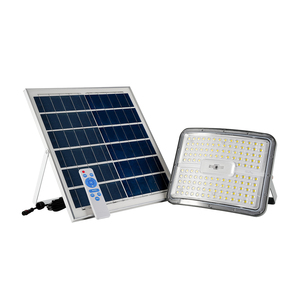
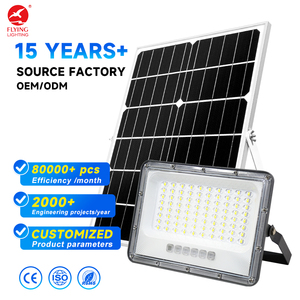
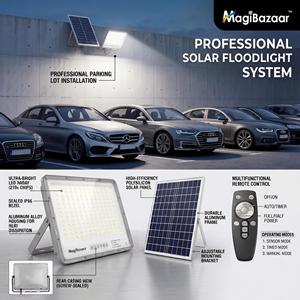
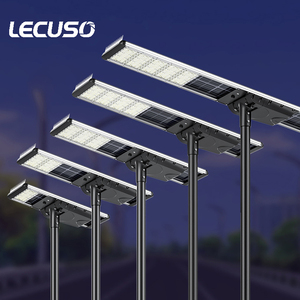
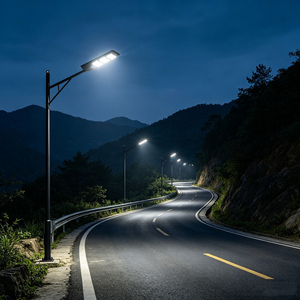
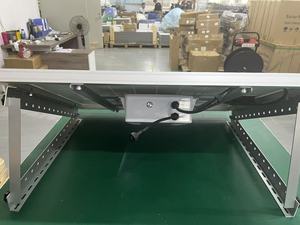
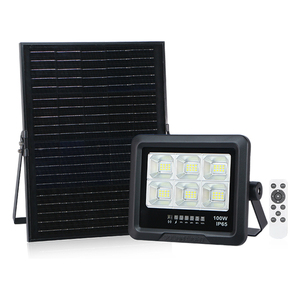
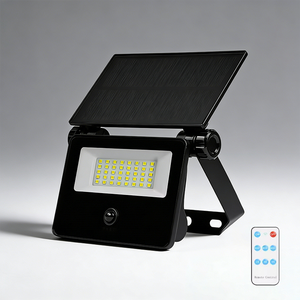
Achieving certified continuous 365-night operation in commercial solar luminaires demands radical engineering discipline. Far too many off-the-shelf commercial solar lights suffer from system degradation within 12 to 18 months, caused primarily by substandard PWM charge controllers, recycled lithium-ion cells, low-grade polycrystalline panels, and inadequate thermal mitigation structures.
Our manufacturing facility operates under strict ISO 9001:2015 Quality Management Protocols. Every luminaire assembly, power controller board, and battery pack undergoes rigorous stress-testing before shipment. By controlling every layer of the value chain—from architectural aluminum casting and optical lens molding to Surface Mount Technology (SMT) LED placement and automated software calibration—we guarantee performance specs tailored for international project procurement.
Our proprietary Maximum Power Point Tracking algorithms continuously monitor panel IV curves, adjusting voltage and current dynamically. This delivers a system tracking efficiency of >98.6%, harvesting up to 30% more energy during overcast and low-irradiance conditions compared to traditional PWM systems.
We exclusively utilize EV-grade Lithium Iron Phosphate chemistry (LiFePO4). Featuring high thermal stability, zero fire risk, and an operating temperature range of -20°C to +70°C, these cells maintain 80% capacity retention even after 6,000 deep discharge cycles (80% DoD).
We provide Dialux visual simulations and detailed IES light distribution profiles (Type I, II, III, and V optical patterns). Municipal clients can review exact ground illuminance levels (Lux/Fc), uniformity ratios, and pole-spacing requirements before committing capital.
Understanding the core technical differences between true commercial-grade continuous run infrastructure and standard consumer-grade outdoor lighting is essential for calculating Total Cost of Ownership (TCO) and long-term ROI.
| Engineering Parameter | Our Commercial Continuous-Run Luminaire | Standard Market Commercial Solar Light |
|---|---|---|
| Operating Autonomy Reserve | 5 to 7 Continuous Days (Full Power Dynamic Run) | 1 to 2 Days Maximum (Complete Failure in Storms) |
| Solar Charge Controller | Dual-Core MPPT with Auto Adaptive Power Curves (>98%) | Basic PWM Controller (70-75% Efficiency) |
| Battery Chemistry & Lifecycle | New Tier-1 LiFePO4 (6,000+ Cycles @ 80% DoD) | Ternary NCM / Recycled Li-ion (500-1,000 Cycles) |
| Solar Panel Conversion Efficiency | Monocrystalline Silicon (>23.5% Efficiency) | Polycrystalline / Low-Grade Mono (16-18% Efficiency) |
| LED Chip Efficiency & Brand | Philips Lumileds / Bridgelux (200-220 lm/W Output) | Generic Unbranded SMD Chips (100-120 lm/W Output) |
| Housing & Environmental Protection | Die-Cast Anodized ADC12 Aluminum + Stainless Steel (IP67/IK10) | ABS Plastic Body or Non-Treated Sheet Metal (IP65) |
| Smart IoT & Dimming Capability | Supported (Zigbee, LoRaWAN, NB-IoT, Microwave Radar) | Fixed Light-On Timer / Basic Infrared Only |
The international commercial lighting market is experiencing a profound architectural shift. B2B procurement leaders, utility directors, and municipal purchasing committees are transitioning from legacy grid-connected LED retrofits to fully autonomous energy-harvesting light nodes. As a high-volume China exporter, we track four critical procurement macro-trends reshaping project specifications worldwide:
Modern road lighting tenders increasingly require centralized network visibility. Enterprise buyers no longer want static lights; they require smart nodes equipped with wireless communication protocol sockets (such as NEMA 7-pin or Zhaga Book 18 interfaces). These smart solar lights stream real-time operational data—including battery state-of-charge (SoC), power output, PV harvesting curves, ambient temperatures, and automated failure alerts—directly to municipal dashboards.
Environmental regulations across North America, Europe, and Australia mandate strict light pollution controls. Procurement trends favor luminaires with 0% Upward Light Output Ratio (ULOR), precise optical cutoff masks, and dynamic correlated color temperature (CCT) tuning (e.g., shifting automatically from 4000K down to a wildlife-friendly 2200K amber after midnight to protect nocturnal ecosystems).
Under aggressive corporate ESG target timelines and Scope 1/3 emissions rules, commercial contractors favor solar lighting to bypass electrical trenching, conduit laying, wire pulling, and utility grid interconnections. Eliminating civics cuts labor costs by 60–80% and slashes project execution schedules from months to days, delivering instant, verifiable carbon offset credentials for green building certifications (LEED, BREEAM).
The era of single-use, sealed solar streetlights is over. Global buyers demand modular architecture where PV panels, battery enclosures, driver kits, and LED modules can be serviced or replaced independently in under 5 minutes without unmounting the pole arm. This modularity extends product operational life beyond 15–20 years.
To maintain industry leadership as a premier China solar lights manufacturer, continuous R&D is non-negotiable. Continuous-run commercial solar lights are benefiting from breakthroughs in material science, semiconductor manufacturing, and machine-learning firmware optimization:
Moving beyond conventional PERC monocrystalline panels, next-generation commercial luminaires incorporate Tunnel Oxide Passivated Contact (TOPCon) and bifacial solar glass modules. These deliver conversion efficiencies exceeding 24.5 to 26%, generating superior power yields under diffuse daylight, high temperatures, and early morning micro-angles.
Modern continuous-run lighting engines feature embedded machine-learning algorithms that analyze historical solar harvesting data against localized 7-day weather forecasts. The controller dynamically throttles lumen output curves throughout overcast spans to guarantee that zero system shutdowns occur even after 10 consecutive rain days.
While LiFePO4 remains the industrial benchmark, emerging Sodium-Ion (Na-Ion) battery chemistries are being deployed for arctic and cold-climate projects. Na-Ion cells offer exceptional sub-zero performance, maintaining over 85% capacity at -40°C, opening up vast polar infrastructure opportunities previously unsuited for standard solar solutions.
With nearly two decades of dedicated engineering and international export excellence, our manufacturing plant stands as a reliable B2B OEM/ODM partner for worldwide distributors, EPC contractors, and government authorities.
Our production lines maintain full ISO 9001:2015, ISO 14001, and ISO 45001 accreditations. All exported product series carry complete international testing certifications, including CE, RoHS, IP65/IP67 waterproof ratings, IK10 impact resistance, IEC 62133 battery safety, UN38.3 transport clearance, and MSDS documentation.
Whether your project requires marine-grade 316 stainless steel housings for coastal saline environments, hurricane-resistant wind load designs rated up to 180 mph (80 m/s), customized mounting bracketry, or custom brand labeling/packaging, our in-house engineering design studio delivers rapid prototype turnarounds.
Strategically located near major shipping ports, our integrated component supply network allows us to negotiate bulk pricing on raw aluminum, high-purity silicon, and microchip components. We pass these cost efficiencies directly to our international procurement partners, offering unmatched price-to-performance ratios.
From container consolidation and customs documentation clearance to door-to-port DDP shipping arrangements, our logistics division ensures safe delivery across North America, South America, Europe, the Middle East, Africa, and Southeast Asia. We back our commercial lines with comprehensive 3 to 10-year factory warranties.
Direct engineering answers to common procurement questions from municipal directors, civil engineers, and wholesalers.
Our continuous-run luminaires combine three critical engineering factors: (1) Oversized monocrystalline solar arrays rated to harvest diffuse light; (2) Intelligent MPPT controllers that dynamically scale power consumption according to battery state-of-charge (SoC); and (3) Industrial-grade LiFePO4 battery banks sized to hold a minimum 5-to-7 day operational energy reserve without receiving a full charge cycle.
We utilize brand-new, Tier-1 LiFePO4 cells engineered for 6,000+ charge/discharge cycles at 80% Depth of Discharge (DoD). Under standard daily operation, this translates to an expected battery operational life of 12 to 15 years before capacity drops below 70%. Batteries are modularly designed for quick field replacement.
Yes. Our heavy-duty series (such as our 300W stainless steel streetlights and anodized aluminum floodlights) feature electrostatically applied anti-UV powder coatings rated for multi-thousand-hour salt spray endurance (ASTM B117). Structural bracketry is engineered and FEA-validated to resist wind speeds up to 180 mph (80 m/s).
Absolutely. We assist project planners and engineering firms by calculating complete photometric light layouts using Dialux software. We evaluate pole height, spacing distance, road surface reflectivity, and optical distribution profiles to generate comprehensive IES compliance documentation prior to purchase.
We provide specialized optical lenses molded from optical-grade polycarbonate or PMMA. Configurations include Type I (pathways), Type II (narrow roadways), Type III (highways and wide avenues with batwing distribution), Type IV (perimeter security), and Type V (symmetric parking lot and plaza floodlighting).
Partnering directly with our China manufacturing infrastructure provides direct engineering control over component selection, radical unit-cost reductions, faster lead times on custom orders, direct access to spare parts pipelines, and direct factory-backed technical warranty support without middleman markups.
Standard product samples ship within 3 to 7 business days. For bulk municipal or commercial orders, typical production timelines range from 15 to 25 days depending on specification customizability. Minimum order quantities (MOQs) are flexible based on project scope and configuration requirements.
Connect directly with our engineering team for technical datasheets, customized IES photometric reports, bulk pricing schedules, and OEM project consultations.
Inquire Now