
Engineered for highways, municipal roadways, perimeter security, and industrial parks. Manufactured under ISO 9001:2015 standards with premium LiFePO4 storage and high-lumen optical arrays.
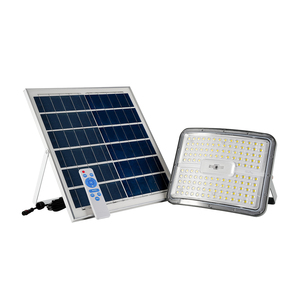
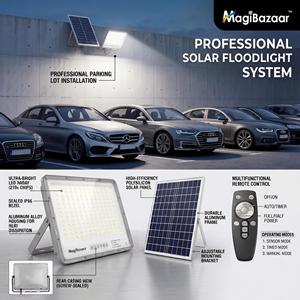
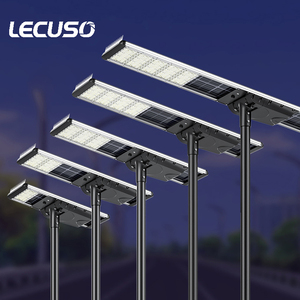
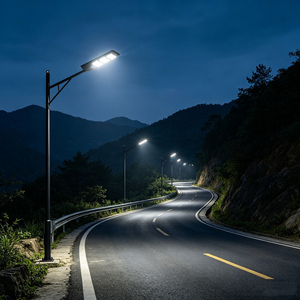
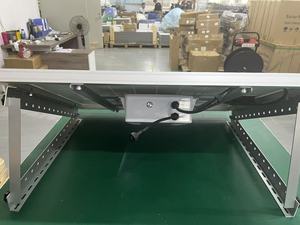
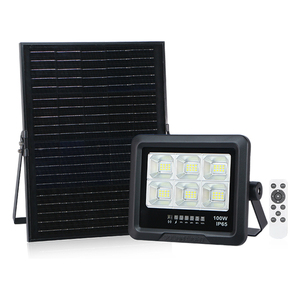
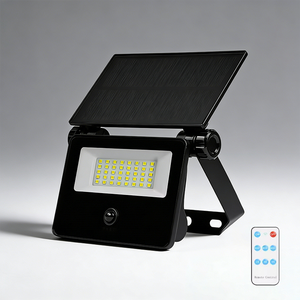
Why municipal buyers and civil contractors are shifting from single-source PV lights to dual-harvesting hybrid systems to overcome seasonal energy deficits and guarantee zero-downtime performance.
Standalone solar street lights perform exceptionally during high-irradiance summer months. However, in mid-to-high latitude regions (above 30° latitude), solar radiation drops by up to 65% during winter due to shorter daylight hours and lower sun angles. Concurrently, atmospheric pressure differentials drive average winter wind speeds up by 40% to 80%—frequently during nighttime hours.
Hybrid Solar-Wind Street Lights synthesize two renewable thermodynamic flows into a single microgrid architecture. By coupling vertical-axis wind turbines (VAWT) or horizontal-axis wind turbines (HAWT) with monocrystalline photovoltaic (PV) modules, the total annual energy generation profile is flattened across all four seasons, eliminating deep battery discharge events.
P_total = ( A_pv • G_rad • η_pv • η_mppt ) + ( ½ • ρ • A_turbine • v³ • C_p • η_gen )
Rooted in nearly two decades of engineering development, our China-based manufacturing hubs integrate US design standards, rigorous quality control, and direct factory-level customization.
Every component undergoes stringent quality assurance. From automated SMT optical chip placing to high-voltage battery insulation stress testing, our ISO 9001:2015 certified facilities guarantee total product uniformity and zero-defect delivery.
We do not provide generic lighting. Our engineering division provides complete Dialux photometric reporting and pole placement layouts prior to ordering, ensuring accurate Lux compliance on roadways, highways, and commercial perimeters.
Utilizing EV-grade Lithium Iron Phosphate (LiFePO4) cell packs equipped with intelligent Battery Management Systems (BMS). Delivering over 4,000 deep discharge cycles at 80% DOD with stable operational thermal thresholds ranging from -20°C to +65°C.
Light poles and structural brackets are dynamic load-tested to withstand coastal typhoon conditions up to 180 mph (80 m/s). Constructed with Q235/Q345 hot-dip galvanized steel coated with marine-grade fluorocarbon anti-corrosion powder.
Our proprietary dual-input hybrid controllers feature dual Maximum Power Point Tracking (MPPT) logic. The system simultaneously optimizes energy harvest from fluctuating wind AC voltage and PV DC voltage with conversion efficiency exceeding 98.5%.
Backed by 45+ years of combined engineering expertise and international service hubs spanning the Americas, Middle East, and Asia-Pacific. We provide comprehensive logistics, customs clearing compliance, and remote installation guidance.
Detailed technical analysis comparing capital expenditures, battery sizing requirements, wind load dynamics, and continuous operation metrics.
| Performance Vector | Standalone Solar Street Light | Traditional Grid-Tied Street Light | Hybrid Solar-Wind Commercial System |
|---|---|---|---|
| Continuous Winter Autonomy | 2 - 4 Days Maximum | Grid Dependent (0 Days Backup) | 7 - 14 Days (Continuous Generation) |
| Trenching & Cabling CAPEX | Zero ($0 / Meter) | High ($45 - $110 / Meter) | Zero ($0 / Meter) |
| Luminous Output (Lm/W) | 160 - 190 lm/W | 130 - 150 lm/W | 190 - 220 lm/W (Lumileds Chips) |
| Nighttime Energy Harvest | 0 Watt-Hours (0%) | 0 Watt-Hours (Consumes Grid Power) | Active (100W - 400W Wind Output) |
| Battery Capacity Needed | Over-sized (100 Ah +) | None | Optimized (30-40% Smaller Footprint) |
| Structural EPA Rating | 0.35 - 0.60 m² | 0.15 - 0.25 m² | 0.75 - 1.20 m² (Reinforced HDG Steel) |
| Carbon Offset per Pole/Yr | ~380 kg CO² | Negative (Grid Emissions) | ~620 kg CO² |
Key technological trajectories shaping OEM/ODM factory specifications and global municipal tenders over the next decade.
Hybrid street light poles are evolving into multi-functional smart city infrastructure hubs. Modern OEM specifications now mandate LoRaWAN, Zigbee, or NB-IoT remote management platforms (CMS). Cities can remotely monitor voltage degradation, dynamically dim luminaire heads based on traffic density sensors, and utilize wind-solar power reserves to operate micro-5G base stations and environmental air-quality sensors.
Next-generation hybrid lights are replacing legacy horizontal turbines with magnetic levitation (Maglev) vertical-axis turbines (Helix/Savonius hybrids). Maglev technology reduces mechanical friction to zero, dropping wind turbine cut-in speeds from 2.5 m/s down to 1.2 m/s. This allows ambient urban drafts and passing vehicle wind turbulence to generate usable charge current.
While LiFePO4 remains the standard, procurement mandates in high-latitude regions (Nordic countries, Canada, North China) are accelerating the adoption of Sodium-Ion energy storage. Na-Ion cells maintain up to 88% capacity retention at freezing temperatures of -40°C—where traditional lithium batteries experience severe thermal shutdown—ensuring hybrid system reliability in polar conditions.
Global EPC contractors now require verified Environmental Product Declarations (EPD) and full Scope 3 carbon footprint tracking from China manufacturing facilities. Top manufacturers are designing fully modular light assemblies where PV panels, turbines, driver cards, and battery modules can be individually hot-swapped in the field without decommissioning the structural pole.
A structured technical audit protocol for B2B procurement managers, EPC firms, and municipal project engineers sourcing offshore systems.
Detailed answers to complex technical queries encountered during system design, tender preparation, and factory sourcing.
During heavy cloud cover or rain monsoons, solar PV yield drops significantly. However, stormy meteorological conditions are almost always accompanied by low-pressure wind systems. The micro wind turbine captures this kinetic atmospheric energy during the day and night, supplying continuous DC voltage to the MPPT controller. This complementary generation cycle keeps the battery charged, maintaining 100% illumination uninterrupted across 365 nights per year.
Our commercial vertical and horizontal turbines feature an ultra-low cut-in speed of 1.5 m/s to 2.0 m/s, reaching rated output power around 10 m/s to 12 m/s. To protect against destructive typhoon winds (above 25 m/s), our smart MPPT hybrid controllers deploy automated electromagnetic braking (dump-load resistance). This electronically slows down turbine rotation, locking the rotor in place until wind velocities drop back to safe operational parameters.
Hybrid street light poles require rigorous structural calculations because both the PV panel frame and the wind turbine blade sweep add to the Effective Projected Area (EPA). Our engineering department computes wind load forces using AASHTO (American Association of State Highway and Transportation Officials) structural standards. We specify high-tensile Q345 steel poles with tailored shaft wall thicknesses (4mm to 8mm), anchor bolt pattern dimensions, and deep concrete foundation depths based on localized wind zone maps up to 180 mph.
Our hybrid systems are designed for minimal field maintenance. The micro wind turbines utilize permanently sealed, dual NSK or SKF stainless steel bearings lubricated with synthetic wide-temperature grease, requiring no routine lubrication for 8 to 10 years. LiFePO4 battery packs are rated for 4,000+ deep cycles (approx. 10 to 12 years of operational life). Annual inspections are limited to visual checks of pole anchor bolts, glass faceplate cleaning, and battery BMS telemetry reviews via IoT diagnostic tools.
Yes. Our luminaires and hybrid controllers can be outfitted with standardized NEMA 7-pin or Zhaga Book 18 sockets. This allows plug-and-play installation of smart wireless nodes (LoRaWAN, NB-IoT, or Cellular CAT-M1). Once connected, city managers can access a centralized Graphical User Interface (GUI) to view real-time wind generation metrics, solar harvesting data, battery state of charge (SOC), thermal warnings, and execute automated adaptive dimming schedules.
To ensure frictionless customs clearance and municipal regulatory approval, top factories provide a comprehensive compliance packet. This includes ISO 9001:2015 quality certificates, CE marking, RoHS compliance for LED arrays, IP67 ingress test reports, IK10 mechanical impact certificates, IEC 61400-2 (Small Wind Turbine Safety Standards), UN38.3 certification for lithium battery transport safety, and MSDS/Air-Sea Freight Dangerous Goods documentation.