
Explore our enterprise-grade perimeter defense floodlights and street lighting arrays engineered specifically for zero-grid agricultural boundaries, livestock protection, and high-impact physical security.
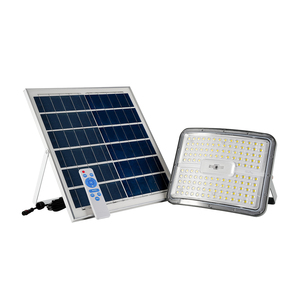
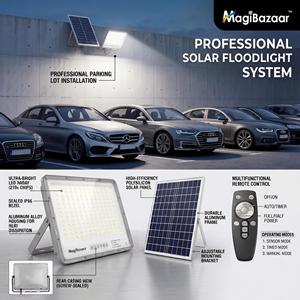
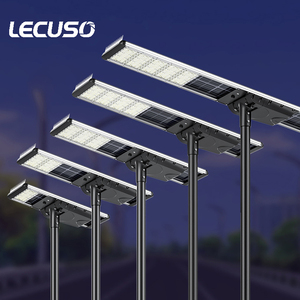
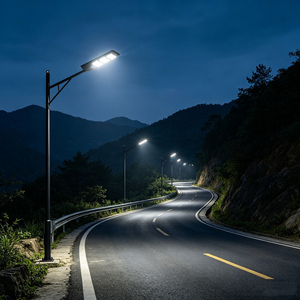
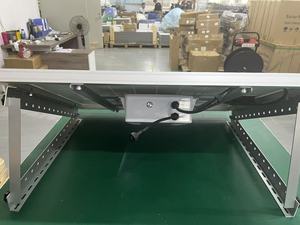
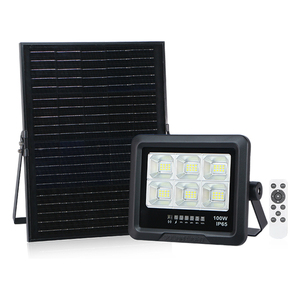
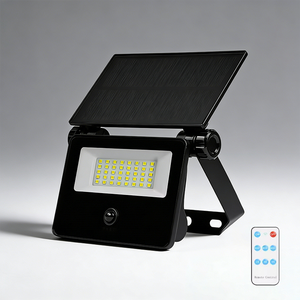
Modern agricultural operations, commercial livestock ranches, crop plantations, and agrivoltaic solar installations face unprecedented security and operational challenges. Expanding geographical boundaries—often encompassing hundreds of hectares of remote land—render traditional wired grid-tied security lighting economically unfeasible. Trenching power lines across vast agricultural properties can cost between $15 to $45 per linear foot, excluding transformer installation and continuous utility tariff burdens. As a leading China Solar Agriculture Perimeter Security Lights Manufacturer & Supplier, our engineering framework integrates high-efficiency photovoltaic power conversion, advanced energy storage chemistry, intelligent Doppler motion telemetry, and commercial-grade optical distribution into robust standalone systems designed to operate maintenance-free for decades.
Perimeter security lighting in agricultural contexts requires far more than basic illumination; it functions as a critical active deterrent against agricultural theft, trespass, wildlife encroachment, and livestock predation. By combining high-lumen LED chips with intelligent dynamic lighting profiles, modern off-grid solar security luminaires maintain continuous low-level ambient boundary markers while instantaneously triggering blinding, high-frequency strobe or full-lumen flood output upon detecting localized kinetic or thermal movement along fence lines.
Our solar security lighting architectures are developed in full alignment with international engineering specifications and Buy American compliant technical frameworks. Utilizing high-binning Philips Lumileds LED arrays, our luminaires deliver up to 22,200 lumens of ultra-pure photopic illumination.
Every perimeter floodlight incorporates Grade-A Lithium Iron Phosphate (LiFePO4) cell chemistry offering >4,000 deep discharge cycles (DOD 80%). Managed by proprietary Maximum Power Point Tracking (MPPT) micro-controllers, energy harvesting efficiency is boosted by 30% compared to traditional PWM systems.
Engineered to withstand harsh agricultural environments, coastal saltwater spray, and extreme storm systems. Enclosures carry IP65 to IP67 ingress protection, die-cast ADC12 aluminum thermal heat sinks, and structural wind resistance up to 180 mph with optional lifetime structural pole guarantees.
Evaluating high-performance solar floodlights for farm perimeter security requires analyzing core electrical, optical, and mechanical parameters. The table below outlines key technical specifications of our primary commercial product lines:
| System Architecture | Solar Panel Type | Battery Chemistry | Detection Range | Ingress Rating | Primary Agricultural Application |
|---|---|---|---|---|---|
| Heavy-Duty Solar Floodlight (200W-500W) | Monocrystalline 23.5% Efficiency | LiFePO4 (Lithium Iron Phosphate) | 12 – 18 Meters (24GHz Radar) | IP65 / IP67 Weatherproof | Farm Perimeter Gates, Crop Storage Depots, Equipment Yards |
| Integrated All-In-One Street Light | High-Efficiency Monocrystalline | High-Density LiFePO4 Pack | 8 – 12 Meters (Dual PIR + Microwave) | IP65 Marine Grade Aluminum | Internal Agricultural Access Roads, Cattle Corrals, Boundary Fences |
| Radar-Controlled Security Light | Integrated Tempered Glass Mono-PV | Deep-Cycle Lithium Pack | 10 – 15 Meters (Doppler Radar) | IP65 High Impact ABS/PC | Livestock Pen Perimeter, Remote Boundary Patrol Routes |
| Stainless Steel Heavy-Duty Solar Post | External High-Wattage Mono Array | Underground/Pole-Mount LiFePO4 | Programmable Smart Timer / Dusk-to-Dawn | IP67 Stainless Steel Body | High-Corrosion Agrivoltaic Sites, Coastal Aquaculture Farms |
As enterprise farm managers, commercial agricultural conglomerates, and government rural development agencies scale their operations, solar security procurement strategies are undergoing a structural shift. Buying decisions are no longer dictated solely by initial unit costs; rather, procurement directors evaluate products based on total cost of ownership (TCO), multi-protocol smart connectivity, and modular resilience. Key industry procurement trends shaping the market include:
Modern agricultural security lighting systems are transitioning from isolated standalone units to interconnected IoT mesh networks. Utilizing low-power wireless protocols (LoRaWAN, Zigbee, cellular 4G/5G CAT-M1), farm security operators can monitor battery state-of-charge (SoC), solar panel power generation, and motion detection logs across miles of perimeter fencing directly from a centralized cloud dashboard.
The rise of agrivoltaics—combining agricultural production with photovoltaic solar infrastructure—demands perimeter lighting systems that can interface with auxiliary microgrids. Procurements increasingly specify luminaires equipped with dual-input charge controllers capable of running autonomously off localized PV panels while maintaining secondary grid or microgrid interconnectivity for uninterrupted security coverage during extreme weather anomalies.
Traditional PIR (Passive Infrared) motion sensors suffer high false-positive rates in outdoor agricultural settings due to wind-blown foliage, crop movement, or small wild animals. Procurement leads now demand 24GHz Doppler radar sensors integrated with micro-DSP algorithms capable of distinguishing human intruders and large vehicles from false environmental triggers, reducing battery strain and preventing light pollution fatigue.
To keep pace with demanding agricultural environments, manufacturers in China are pioneering critical engineering breakthroughs across photovoltaic conversion, thermal management, optical control, and energy storage.
Next-generation agricultural solar floodlights are ditching legacy P-type PERC solar cells in favor of N-Type TOPCon (Tunnel Oxide Passivated Contact) and Heterojunction (HJT) monocrystalline silicon technologies. These advanced solar cells offer conversion efficiencies exceeding 24.5%, dramatically lower temperature coefficients (-0.30%/°C), and vastly superior low-light performance during heavy cloud cover or early dawn/dusk hours. This guarantees higher daily Ah replenishment for boundary batteries even in sub-optimal latitudes.
Lithium Iron Phosphate remains the gold standard for commercial solar security due to its inherent thermal safety and non-combustible chemical structure. However, standard LiFePO4 cells suffer reduced charging acceptance at sub-zero temperatures. Modern high-spec agricultural security luminaires feature self-heating battery management systems (BMS) that utilize excess daytime solar energy to maintain internal battery temperatures within optimal charging windows (-20°C to +60°C), preventing lithium plating and ensuring year-round reliability in northern climates.
Light pollution can negatively impact crop growth cycles, alter livestock circadian rhythms, and disrupt local wildlife ecosystems. Advanced agricultural floodlights utilize optical-grade polycarbonate or glass lenses designed with Type II, III, and IV asymmetric light distribution profiles. These optics project intense, uniform illumination along boundary fences and access roads without spilling unwanted light upward into the night sky or laterally into neighboring fields, satisfying International Dark-Sky Association (IDA) guidelines.
Navigating the global supply chain for commercial solar lighting requires strict compliance evaluation to avoid substandard products, inflated lumen ratings, and premature battery degradation. When sourcing solar agricultural security lights directly from China manufacturers, enterprise buyers must audit vendors against four critical operational pillars:
Ensure the manufacturer operates certified quality management systems (ISO 9001:2015). Audit factory production lines for automated EL (Electroluminescence) testing of solar panels, thermal chamber cycling for battery packs, and IPX6/IPX7 waterproof testing tanks.
Demand independent third-party goniophotometer test reports and standard .IES files. Professional manufacturers provide custom Dialux photometric rendering simulations to provelux levels (Emax, Emin, Uniformity Ratio U0) along your specific agricultural boundary layout before order placement.
Distinguish between genuine commercial-grade LiFePO4 batteries and recycled or low-grade lithium ternary cells. A credible manufacturer provides comprehensive 3-to-5 year full-replacement system warranties alongside 10-to-25 year performance guarantees on solar panels and light poles.
Solar perimeter security lights eliminate high electrical trenching and cabling costs, which typically range from $15 to $45 per linear foot across vast agricultural acreage. Standalone solar units are zero-utility-cost solutions, immune to local power grid outages, load shedding, or wire theft. Furthermore, installation is exceptionally fast—requiring only ground anchor installation or pole mounting without digging electrical trenches through active pastures or crops.
Microwave Doppler radar sensors detect movement by emitting continuous 24GHz electromagnetic waves and sensing phase shifts reflected back to the unit. Unlike Passive Infrared (PIR) sensors—which rely purely on surface thermal contrast and struggle during high ambient summer heat or through heavy rain/dust—microwave radar penetrates dust, fog, blowing leaves, and heavy rainfall. This ensures reliable 360-degree security detection up to 18 meters while virtually eliminating false triggers caused by temperature shifts or wind-blown vegetation.
For critical security applications along agricultural perimeters, systems should be engineered for a minimum of 3 to 5 continuous rainy/cloudy days of autonomy (reserve battery capability). Our intelligent MPPT charge controllers dynamically scale LED brightness profiles during extended overcast periods (e.g., maintaining 30% ambient dim mode, ramping up to 100% full lumen output upon motion trigger) to guarantee the light never turns off even during prolonged seasonal storms.
Yes. Commercial solar floodlights manufactured for agricultural deployment feature ADC12 die-cast aluminum enclosures coated with fluorocarbon or electrophoretic powder coatings. This protective layer resists corrosion from ammonia emissions, livestock manure gases, agricultural chemical sprays, and high-salinity coastal environments. Units are rated IP65 to IP67 for dust-tight, wash-down water jet protection.
Depth of Discharge (DOD) indicates how much battery capacity is utilized during each night cycle. Premium Lithium Iron Phosphate (LiFePO4) batteries managed by smart BMS microcontrollers limit DOD to 80% or lower, enabling the battery pack to achieve 4,000 to 6,000 charge-discharge cycles. In real-world field conditions, this translates to a 10-to-12 year operational battery lifespan before replacement is required, vastly outperforming lead-acid or gel batteries that degrade after 300-500 cycles.
As a direct China manufacturer, we offer complete OEM/ODM customization services including tailored optical lens angles (60°, 90°, 120°, Type II/III/IV distributions), custom solar panel sizing, specialized CCT color temperatures (ranging from 3000K wildlife-friendly warm light to 6500K daylight security spectrum), custom branding logos, laser-etched serial numbers, integrated CCTV camera power ports, and IoT wireless module integration (LoRa/4G LTE).
Optimal mounting height typically ranges from 4 to 8 meters (13 to 26 feet) above ground level depending on wattage (50W to 500W). For continuous perimeter illumination along fence lines, pole spacing of 20 to 35 meters is recommended using Type II or Type III asymmetric optical distribution lenses. For motion-triggered focal security points (such as farm entrance gates or machinery barns), high-lumen floodlights mounted at 6 meters provide coverage across a 25x25 meter square zone.
We provide comprehensive international trade logistics services, supporting FOB, CIF, DDP, and DAP terms. All shipments include complete UN38.3 battery transport safety certification, MSDS reports, CE, RoHS, ISO 9001 documentation, and customized harmonized tariff code (HS Code) classifications to streamline customs clearance in North America, Europe, South America, Australia, and Africa.
Partner directly with China's leading commercial solar lighting manufacturer. Access factory-direct pricing, custom Dialux photometric reports, and comprehensive project technical specifications today.
Get Catalog