
High-lumen outdoor LED luminaires, heavy-duty solar flood lights, and integrated MPPT perimeter fixtures engineered for logistics centers, manufacturing zones, and maritime terminals.
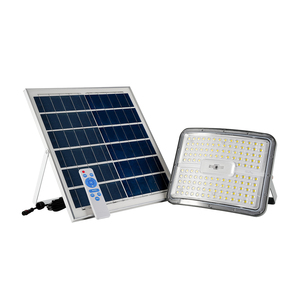
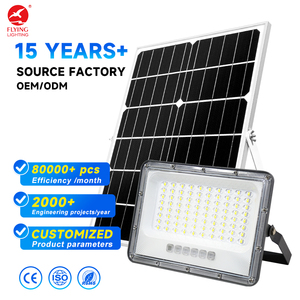
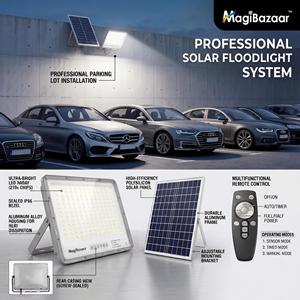
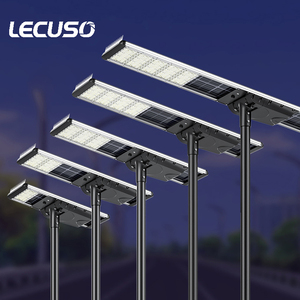
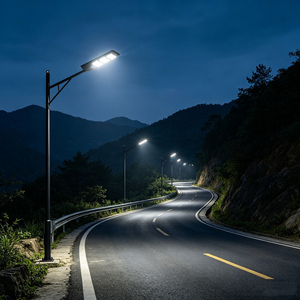
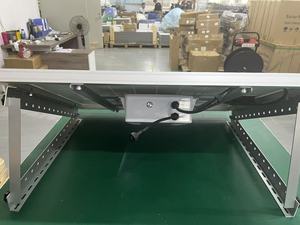
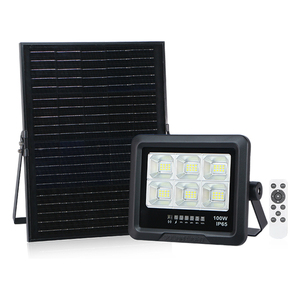
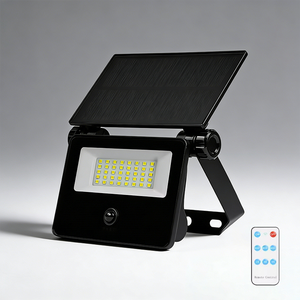
Modern industrial parks, free-trade zones, chemical manufacturing complexes, and intermodal logistics centers require specialized exterior lighting architectures that go far beyond standard residential or commercial grade solar lights. Sourcing industrial-grade solar luminaires from China's premier manufacturing clusters—primarily across Guangdong (Shenzhen, Zhongshan, Dongguan) and Jiangsu (Yangzhou, Changzhou)—demands an in-depth understanding of total cost of ownership (TCO), thermal regulation, photonic efficiency, and power electronics reliability under adverse atmospheric conditions.
Historically, commercial solar floodlights and street lights suffered from early lumen degradation, premature battery failure, and inadequate autonomy during extended rain cycles. However, the convergence of high-density Lithium Iron Phosphate (LiFePO4) chemistry, Maximum Power Point Tracking (MPPT) charge controllers, and ultra-high-efficacy LED chips (exceeding 210–220 lumens per watt) has transformed China's export landscape. Leading Chinese original equipment manufacturers (OEMs) and original design manufacturers (ODMs) now supply tier-1 EPC contractors and industrial developers globally with robust, grid-independent lighting ecosystems engineered for 15- to 20-year service life cycles.
Industrial park solar procurement should prioritize system integration quality over raw wattage numbers. A 100W luminaire with optimized MPPT tracking, Grade-A BYD/CATL LiFePO4 cells, and Type III optical lenses will outperform a non-optimized 300W generic fixture in uniform lux distribution, thermal stability, and multi-day battery autonomy.
When engineering lighting setups for industrial facilities, photometric precision prevents dangerous dark zones, glare for heavy machinery operators, and light pollution into adjacent municipal areas. The following matrix illustrates the standard baseline specs established by top Chinese manufacturing exporters for heavy industrial applications:
| Application Sub-Zone | Recommended Lux Level (Eavg) | Uniformity Ratio (U0) | Optimal Optical Beam Angle | Minimum Autonomy Days |
|---|---|---|---|---|
| Perimeter Security & Fencelines | 15 - 30 Lux | ≥ 0.40 | Type II-M (120° x 60°) | 5 - 7 Days |
| Internal Logistics & Haul Roads | 20 - 40 Lux | ≥ 0.45 | Type III-M (140° x 70°) | 3 - 5 Days |
| Container Freight Yards / Staging | 50 - 100 Lux | ≥ 0.50 | Symmetric 60° / 90° Flood | 3 - 4 Days |
| Hazardous Material / Chemical Bays | 75 - 150 Lux | ≥ 0.60 | Anti-Glare Asymmetric 45° | 4 - 5 Days |
Navigating China's industrial lighting supply chain requires robust vendor qualification protocols. Top-tier exporters distinguish themselves through standardized quality control, traceable raw material sourcing, and certified testing facilities. Enterprise buyers must evaluate potential factory partners against four critical engineering metrics:
Insist on new, Grade-A prismatic LiFePO4 cells (CATL, EVE, or BYD) equipped with hardware-level Battery Management Systems (BMS) featuring over-charge, over-discharge, short-circuit, and thermal cut-off protections.
Top factories utilize High-Efficiency Monocrystalline TOPCon or PERC solar panels with conversion efficiencies exceeding 22.5%. Module glass must feature anti-reflective coated tempered glass to resist industrial dust accumulation.
Aluminum die-cast housings (ADC12 grade) featuring heavy vertical convective cooling fins ensure junction temperatures for LED chips remain below 75°C, suppressing long-term chromaticity shift and flux degradation.
A legitimate industrial supplier will never rely on vague lumen specs on paper. Prior to contract execution, reliable Chinese manufacturers run Dialux photometric simulations based on your site plan. This generates exact point-by-point lux curves, polar intensity distributions, and verified pole spacing parameters, ensuring the physical installation meets strict occupational safety guidelines.
As global industrial parks transition toward Net-Zero carbon standards and ISO 50001 energy management compliance, the technical requirements for outdoor off-grid lighting are undergoing rapid technological shifts:
The standard standalone solar light is rapidly giving way to connected IoT ecosystems. Modern industrial parks rely on LoRaWAN, Zigbee, or cellular NB-IoT micro-controllers embedded directly within the MPPT driver unit. Sourcing teams should look for fixtures supporting standardized ANSI C136.41 7-pin NEMA or Zhaga Book 18 sockets. This architecture enables centralized real-time telemetry, automated fault reporting, dynamic adaptive dimming based on shift changes, and energy consumption forecasting across massive industrial estates.
A major limitation for traditional lithium battery deployment in cold-climate industrial zones (e.g., Northern Europe, Central Asia, North America) has been charging prohibition below 0°C. Advanced Chinese factories now integrate internal PTC electric heating film wrapped around prismatic cells. Powered by early-morning solar PV current, the self-heating system warms the core cell temperature to +5°C prior to initiating the charge cycle, ensuring seamless year-round operation down to -40°C.
Global compliance standards (such as EU Ecodesign directives and US Buy American provisions) require enterprise buyers to audit product lifecycle impacts. Top exporters are redesigning All-In-One and split-type luminaires with quick-latch toolless access bays, modular driver cartridges, and recyclable aluminum components to facilitate easy field replacement of battery packs and LED PCB boards after decade-long operational cycles.
Bridging U.S. engineering standards with elite Chinese precision manufacturing to deliver uncompromised off-grid commercial lighting systems worldwide.
Strict end-to-end manufacturing oversight—from raw ingots and optical lens moulding to 100% full-load aging tests in elevated ambient temperature chambers.
Our veteran sales engineers provide comprehensive turnkey support, custom photometric layouts, pole structural load calculations, and global site commissioning assistance.
Maintaining technical support hubs across North America, Latin America, Europe, and the Middle East for rapid project delivery and lifecycle warranty coverage.
 ISO 9001:2015 Quality Certified
 Enterprise Partner Audited
 Prop 65 / Environmental Safe
Addressing key engineering, regulatory, and logistics inquiries for commercial solar park installations.
Autonomy calculation involves evaluating local NASA / PVGIS peak sun hour (PSH) data during the winter solstice. For critical industrial zones, we engineer a minimum ratio of 3 to 5 continuous rainy/overcast days. This is achieved by combining oversized high-efficiency monocrystalline TOPCon modules with deep-cycle LiFePO4 batteries configured to operate down to 80% Depth of Discharge (DoD) without voltage collapse.
Maximum Power Point Tracking (MPPT) controllers continuously adjust the electrical operating point of the solar array to extract maximum power, delivering 15% to 30% higher charging efficiency compared to Pulse Width Modulation (PWM). In industrial lighting where fast energy harvest during short daylight hours is essential, MPPT is mandatory for long-term system stability.
Yes. Standard commercial solar poles engineered for heavy export are computer-analyzed for structural wind resistance up to 150–180 MPH (67 m/s) in compliance with AASHTO standards. High-tensile Q235B or Q345B steel hot-dip galvanized inside and out (minimum 86 microns thickness) prevents internal oxidation in high-salinity coastal logistics environments.
Industrial luminaires utilize precision-moulded polycarbonate or glass optical lenses with strict cut-off distributions (Dark Sky compliant). Integrated microwave radar motion sensors allow lights to operate at 30% ambient output during zero-traffic periods, instantly ramping to 100% full lumen output upon vehicle or personnel detection, preserving battery power while maintaining security vigilance.
Buyers should request ISO 9001:2015 quality certificates, ISO 14001 environmental management records, CE/RoHS test reports from accredited third parties (SGS, TUV, Intertek), UN38.3 lithium battery transport certification, and complete IES LM-79-08 and LM-80 photometric test reports for the LED chips.
High-end industrial solar luminaires come with 5-year to 10-year comprehensive system warranties. Monocrystalline solar panels carry a 25-year linear performance warranty (≥80% output at year 25). LiFePO4 battery packs are rated for 4,000–6,000 charge cycles at 80% DoD, translating to over 10-12 years of uninterrupted daily operational lifespans under normal temperature profiles.
Request comprehensive product specifications, factory pricing, Dialux photometric reports, and OEM/ODM engineering catalogs tailored for global industrial project tenders.
Get Catalog