
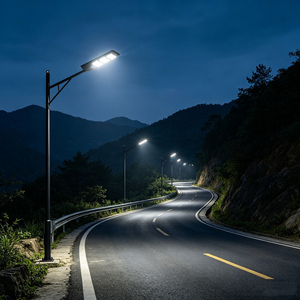
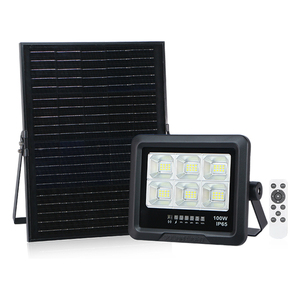
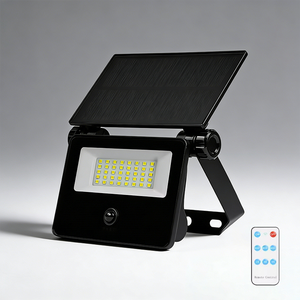
Direct-from-factory export grade outdoor solar luminaires, heavy-duty floodlights, and vertical-integrated street lighting solutions certified for highway, perimeter, and municipal deployment.
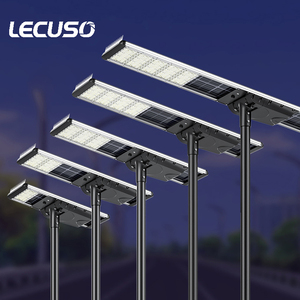
Why vertical cylindrical photovoltaics represent a structural paradigm shift over legacy horizontal overhead panels in municipal and commercial infrastructure.
Unlike flat-plate PV modules fixed at rigid tilt angles, vertical solar pole systems utilize vertically wrapped flexible CIGS or curved monocrystalline solar modules mounted flush around the pole's circumference. This geometry absorbs direct irradiance, diffuse atmospheric radiation, and surface albedo reflection from 360 degrees throughout the entire daylight arc.
Traditional solar street lights act as sails, producing high drag coefficients ($C_d \approx 1.2$) that demand massive concrete footings and heavy steel poles. Vertical solar poles maintain a cylindrical profile with a low drag coefficient ($C_d \approx 0.45$), drastically minimizing overturning moments during severe coastal typhoons and high-velocity wind events.
Horizontal solar panels suffer up to 25% annual power loss due to dust buildup, bird droppings, and snow accumulation. Vertical PV pole systems leverage gravity and natural rainfall; debris cannot adhere to vertical glass or polymer surfaces, virtually eliminating manual cleaning cycles and long-term maintenance overhead.
| Engineering Factor | Vertical Wrapped Solar Pole | Traditional Overhead Solar Light |
|---|---|---|
| Wind Drag Coefficient ($C_d$) | Ultra-Low (~0.40 - 0.45) | High Sail Area (~1.15 - 1.30) |
| Vandalism & Theft Resistance | Extreme (Integrated inside pole armor) | Vulnerable (Exposed external wiring & panels) |
| Dust & Snow Accumulation | Negligible (Vertical shed dynamics) | Severe (Requires routine tilt washing) |
| Urban Aesthetics | Sleek, modern architectural profile | Bulky, top-heavy visual footprint |
| Operating Thermal State | Natural stack-effect vertical cooling | Heat entrapment under flat module backsheets |
Global infrastructure tenders are rapidly shifting from basic lighting fixtures toward multi-functional smart city nodes. Discover the core trends driving international procurement decisions.
Modern vertical solar light poles are serving as infrastructure backbones. Future B2B procurements mandate standardized sockets (such as Zhaga Book 18 or NEMA 7-pin) enabling seamless integration of cellular NB-IoT, LoRaWAN wireless mesh controllers, environmental sensors, and smart traffic monitoring cameras powered directly by the vertical PV array.
Procurement specifications are completely phasing out legacy Gel/Lead-Acid batteries in favor of high-density LiFePO4 cells integrated inside the vertical pole base. With thermal operating ranges spanning -20°C to +65°C and intelligent Battery Management Systems (BMS), these systems deliver 10+ years of maintenance-free operation under extreme climatic stress.
Next-generation LED chips engineered by market leaders (such as Philips Lumileds or Bridgelux) now achieve luminous efficacies exceeding 210 lm/W. Coupled with custom batwing asymmetric lens optics (Type II/Type III distribution), modern vertical solar poles deliver uniform ground illumination while eliminating light pollution and meeting strict International Dark-Sky Association rules.
State-of-the-art Maximum Power Point Tracking (MPPT) charge controllers now incorporate predictive AI algorithms. By calculating continuous historical solar harvest data and real-time battery status, the controller dynamically modifies brightness curves during prolonged rainy seasons, guaranteeing 365-day continuous autonomy without dynamic blackouts.
Detailed technical answers for municipal engineers, EPC contractors, and global distributors sourcing vertical solar pole systems from China.
Vertical solar modules are exceptionally efficient at mid-to-high latitudes (above 30° N/S). During winter months when the sun stays lower on the horizon, vertical cylinder panels receive optimal incident light angles. Furthermore, they capture reflected ground radiation (albedo from snow, sand, or light concrete), compensating for vertical alignment and delivering consistent year-round power yield.
Our vertical solar pole systems are standardly engineered with 3 to 5 days of rainy autonomy. By pairing over-sized LiFePO4 battery banks with intelligent MPPT dimming logic (e.g., operating at 100% brightness during peak traffic hours, switching to 30% microwave radar sensing mode after midnight), the system preserves battery reserve and guarantees uncompromised lighting performance.
All steel lighting poles undergo hot-dip galvanization conforming to ISO 1461 standards, with an average zinc coating thickness exceeding 85 μm. The exterior is finished with electrostatic outdoor fluorocarbon or polyester powder coating, passing 1,000+ hours of continuous salt spray testing (ASTM B117 standard) for harsh coastal marine environments.
Batteries are housed inside the lower section of the vertical pole or in underground IP68 battery enclosures. Vertical metal pole columns create a natural stack-effect convection currents, continuously channeling cool air upward around the battery chamber. Integrated smart BMS boards provide automatic thermal cut-off if temperatures exceed 65°C.
Yes, OEM/ODM customization is standard for B2B export orders. We provide DIALux photometric light simulations for specific roadway geometries (LANES, pole-to-pole spacing, mounting heights from 4m to 12m). RAL color matching, decorative pole bases, and custom luminaire arms are fully supported.
Compared to conventional AC grid lighting, solar poles eliminate high trenching, cable laying, transformer, and monthly utility expenses. Total project ROI is typically achieved within 18 to 24 months. The structural steel pole carries a 20+ year design life, solar panels 25 years (linear performance guarantee), and LiFePO4 battery modules 8 to 10 years.
ISO 9001:2015 Certified Manufacturing • Global Project Delivery Engine
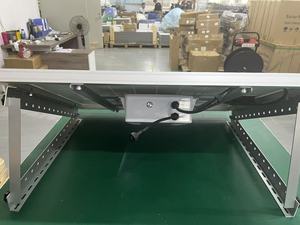
Equipped with automated laser cutting, robotic welding lines, and automatic vertical solar module wrapping stations. Every batch undergoes strict electroluminescence (EL) testing, flash testing, and full-load burn-in inspection.
Our team of Senior Lighting Engineers provides complete DIALux simulations, wind load calculations, ground anchor foundation drawings, and technical bidding documentation support for government tenders.
Exporting to over 80 countries with full compliance certifications including CE, RoHS, IP66, IK10, UN38.3 (Lithium Battery Transport Safety), and ISO 9001:2015 quality management compliance.
Ready to initiate your commercial or municipal vertical solar lighting tender?