
Explore our heavy-duty industrial solar floodlights, integrated street lights, and emergency area illumination equipment certified for extreme wind resistance and severe weather autonomy.
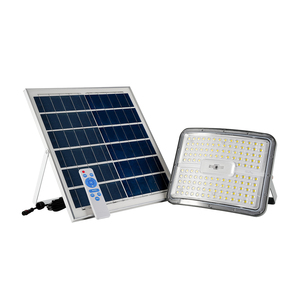
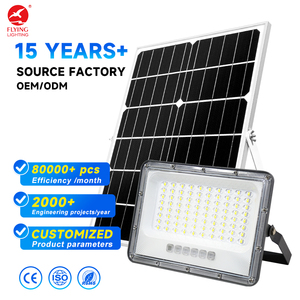
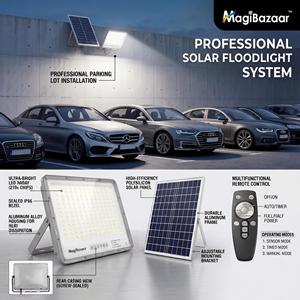
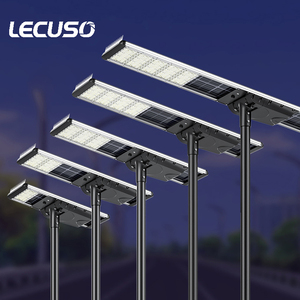
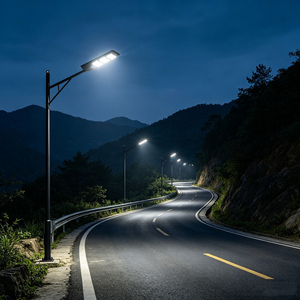
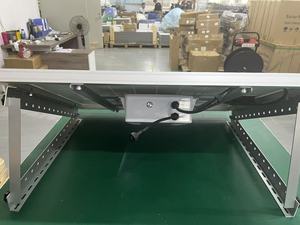
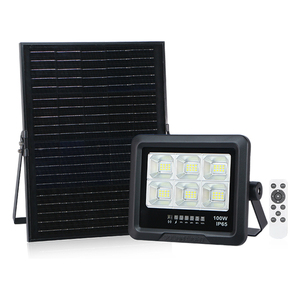
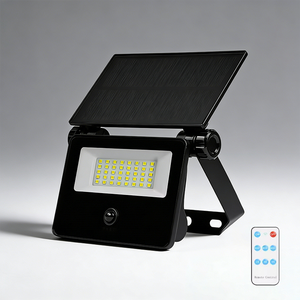
Why conventional off-grid solar street lights fail during extreme weather events, and how top Chinese OEM/ODM manufacturers engineer wind-resistant structural integrity.
Standard flat solar panels act as sail structures under high winds. Advanced wind-resistant fixtures utilize low-profile aerodynamic tilt angles (15° to 25°), dual-cavity pressure-relief vents, and ultra-slim curved ADC12 aluminum housings that reduce wind shear force by up to 42% compared to generic solar floodlights.
Extreme winds produce severe overturning moments at the pole base. High-spec Chinese exporters utilize Q235B/Q355B hot-dip galvanized steel poles with reinforced anchor flange plates, high-tensile Grade 8.8 J-bolts, and finite element stress analysis (FEA) to withstand continuous gusts up to 80 m/s (180 mph).
Vortex shedding caused by hurricane-force winds leads to structural fatigue. Wind-resistant designs integrate mechanical lock washers, anti-loosening stainless steel 316 fasteners, internal dampening brackets, and IP67/IK10 toughened glass optics that prevent structural displacement during prolonged typhoons.
Wind force ($F$) exerted on a solar street light pole is calculated via $F = 0.613 \times V^2 \times A \times C_d$, where $V$ is wind velocity (m/s), $A$ is the projected surface area ($m^2$), and $C_d$ is the drag coefficient. High-tier Chinese manufacturers reduce $A$ and $C_d$ by integrating solar panels flush with the luminaire casing or utilizing streamlined All-In-One (AIO) profiles, preventing catastrophic pole buckling in hurricane zones like the Caribbean, Southeast Asia, and Gulf Coast regions.
Evaluating physical components, structural testing standards, and electrical safety profiles before issuing municipal or corporate project tenders.
| Evaluation Parameter | Tier-1 China Wind-Resistant Exporters | Standard Low-Cost OEM Products | Project Impact / Benefit |
|---|---|---|---|
| Wind Speed Rating | Up to 80 m/s (180 mph / Beaufort Scale 17) | 25–35 m/s (55–78 mph / Beaufort Scale 10) | Zero structural failure in Category 5 storms |
| Housing Material | Die-Cast ADC12 Aluminum + Stainless 316 Bolts | Extruded Scrap Aluminum / Plastic ABS | Prevents casing rupture and salt spray rust |
| Battery Chemistry | Grade-A LiFePO4 (3,500+ cycles @ 80% DoD) | Recycled Ternary Lithium / Lead-Acid | 10+ years operational battery life span |
| Solar Charge Technology | Smart MPPT with Dynamic Tracking (>98% Eff.) | Standard PWM Controller (65–75% Eff.) | 30% faster charging during cloudy storm weather |
| Optical Lens & Protection | Batwing Type II/III Optical PC + IK10 Tempered Glass | Generic PMMA Plastic Lens (Yellows over time) | Uniform light dispersion; zero debris shattering |
| Ingress Protection | Dual IP66 / IP67 Sealed Gaskets | Basic IP65 Foam Strip Seal | Protects electronics against driving rain & flooding |
The global commercial outdoor lighting market is undergoing rapid evolution. Key technological innovations engineered by leading Chinese exporters are setting new industry benchmarks.
Traditional P-type PERC solar panels (19-21% efficiency) are rapidly being replaced by N-Type TOPCon monocrystalline cells offering conversion efficiencies exceeding 24.5%. For wind-resistant fixtures, higher cell efficiency directly reduces the required solar panel surface area ($A$), dramatically diminishing aerodynamic wind load while harvesting maximum solar irradiance in restricted compact footprints.
Modern municipal tenders require remote monitoring and telemetry. China’s leading solar street light exporters now integrate smart wireless nodes that transmit real-time telemetry—including battery state-of-charge (SoC), solar panel voltage, internal temperature, and wind-induced vibration anomalies—enabling predictive maintenance via cloud dashboards before catastrophic failure occurs.
Next-generation MPPT controllers incorporate machine learning algorithm modules that automatically adjust lumen output according to historical weather forecasts. By utilizing radar motion sensing (100% full brightness upon movement detection, 30% ambient dimming when idle), wind-resistant systems can guarantee 5 to 7 days of continuous illumination during persistent overcast monsoon weather.
To eliminate high labor costs in remote highway installations, top exporters have engineered modular drawer-style battery compartments and quick-connect IP68 cabling harness systems. Technicians can replace battery packs or driver modules in under 5 minutes without dismounting the entire heavy-duty wind-resistant pole structure.
A rigorous 4-step evaluation checklist for B2B procurement managers, EPC contractors, and municipal buyers sourcing solar lights from China.
Do not rely solely on digital renders or self-declared specifications. Require third-party wind tunnel simulation test reports (e.g., CNAS or SGS certified) verifying structural stability at wind velocities exceeding 60 m/s. Confirm that pole welding complies with AWS D1.1 structural welding standards.
For coastal highways, ports, and island installations, standard spray paint fails within 12 months. Ensure the manufacturer performs hot-dip galvanization with a minimum zinc coating thickness of 86µm (complying with ISO 1461), followed by architectural-grade outdoor fluorocarbon or polyester powder coating tested for 1,500+ hours under ASTM B117 salt spray exposure.
Tier-1 OEM/ODM factories partner directly with reputable component suppliers. Verify the use of genuine Philips Lumileds or Cree LED chips (delivering high efficacy >200 lm/W), authentic EV-grade LiFePO4 battery cells (BYD, CATL, or EVE), and premium MPPT charge controllers with over 98% tracking efficiency.
Conduct a thorough factory audit assessing ISO 9001:2015 quality control compliance. Inspect full-spectrum testing machinery on-site, including integrating spheres for lumen output, IPX6/IPX7 waterproof testing chambers, drop testers, and high-temperature burn-in aging rooms for 100% of finished production units.
Direct answers to critical technical, structural, commercial, and logistical questions regarding wind-resistant solar lighting imports from China.
For hurricane-prone regions (such as Category 3 to 5 storm paths in the Caribbean, Pacific Islands, or US East Coast), fixtures and poles must be engineered to withstand minimum wind speeds of 150 mph to 180 mph (67 m/s to 80 m/s). This requires heavy-duty anchor flanges, thick-walled pole profiles (4mm–6mm), and low-EPA luminaire head geometry.
EPA is the calculated surface area exposed to wind multiplied by its drag coefficient ($C_d$). A lower EPA value minimizes the bending moment exerted on the light pole. All-In-One (AIO) solar street lights feature significantly lower EPA than traditional split solar lights with separate large tilt panels, making them superior for high-wind locations.
Lithium Iron Phosphate (LiFePO4) offers superior thermal stability, operating safely across extreme temperatures (-20°C to +70°C) without thermal runaway risks. Furthermore, with 3,500+ deep discharge cycles, LiFePO4 batteries outlast traditional lead-acid units by 4x, drastically cutting maintenance costs on high-wind coastal installations.
Yes. Top-tier Chinese OEM/ODM exporters maintain fully equipped optical laboratories with goniophotometers. They provide customized IES format photometry data enabling project engineers to run accurate DIALux or Relux lighting simulations for highway, parking lot, or perimeter security compliance prior to ordering.
Standard production lead time for commercial solar street light orders ranges from 15 to 25 days depending on specification complexity. MOQs for standard catalog items start as low as 10 units, while full OEM/ODM projects (custom bracketry, branding, and color temperatures) typically start at 50 to 100 units.
To prevent shipping damage during maritime export, luminaires are packaged in heavy-duty 7-ply corrugated cartons with customized EPE foam inserts. Solar panels utilize edge-protectors and palletized crating, while galvanized poles are bundled with protective bubble wrap and wooden skids to prevent transit abrasion.
Need custom photometric engineering, wind-load calculations, or factory-direct wholesale pricing for your upcoming commercial lighting tender? Our senior engineering team is ready to assist you.
Send an Inquiry