
Engineered specifically for high-aspect ratio billboards, perimeter security, structural signage, and industrial sites requiring zero grid dependency, maximum lumen output, and zero maintenance operating life.
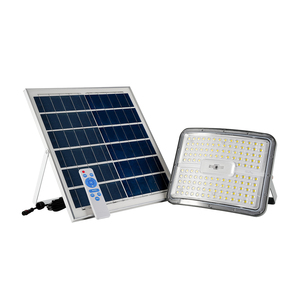
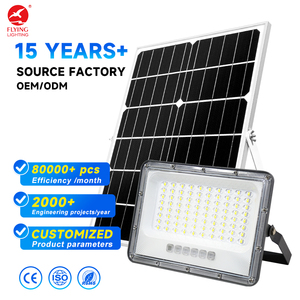
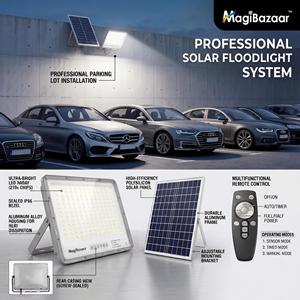
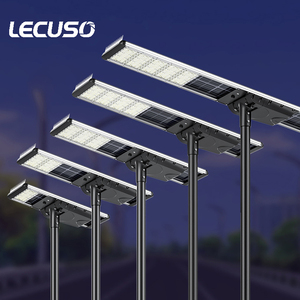
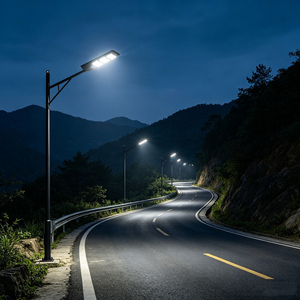
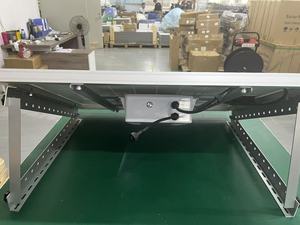
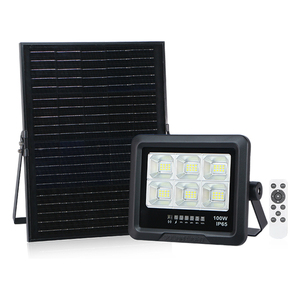
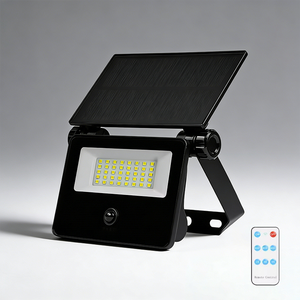
An authoritative whitepaper breakdown on photometrics, micro-lens optical delivery, thermal dissipation, and autonomous off-grid energy storage optimization for outdoor advertising infrastructure.
“Billboard illumination is not merely about mounting high-wattage lights; it requires precision photometric optics that yield uniform lux distribution across elevated canvasses while maintaining continuous zero-downtime operation through extended adverse weather events.”
Standard floodlights waste up to 40% of their luminous flux into ambient air gap spaces. Our commercial solar billboard luminaires incorporate custom asymmetrical (Type II/Type III) optical PMMA lenses. These direct light strictly onto the billboard face with zero unwanted spill light, conforming strictly to IDA Dark Sky compliance standards.
Utilizing high-frequency Maximum Power Point Tracking (MPPT) charge controllers with algorithm conversion efficiencies exceeding 98.5%, our solar engine continuously tracks the solar panel V-I curve. This delivers up to 30% faster battery recharge rates under overcast or low ambient solar irradiance conditions.
Integrated Lithium Iron Phosphate (LiFePO4) energy storage modules offer over 4,000 deep discharge cycles at 80% DoD. Built with integrated intelligent Battery Management Systems (BMS), these thermal-stable batteries operate reliably between -20°C to +65°C without risk of thermal runaway.
| Evaluation Criterion | Conventional Grid-Connected AC Lighting | SLI Commercial Solar Billboard Lighting |
|---|---|---|
| Trenching & Utility Hookup Cost | $15,000 - $45,000 per remote installation mile | $0 (Zero trenching, zero cabling required) |
| Monthly Electricity Cost | Recurring monthly utility bills + Demand fees | $0 (100% Free Solar Energy Generation) |
| Installation Timeline | 3 - 8 Weeks (Permits, grid connection, transformer access) | 1 - 2 Days (Rapid top-mount assembly) |
| Grid Interruption Reliability | Vulnerable to blackout, weather outage & rolling blackouts | 100% Autonomous (3 to 5 Days Battery Backup) |
| Maintenance Lifecycle | Frequent bulb replacement, contactor wear & wire decay | 20-Year Design Life (Zero routine maintenance) |
| Carbon Footprint / ESG Alignment | High carbon footprint via grid thermal power generation | 100% Carbon-Neutral Green Infrastructure |
As Out-Of-Home (OOH) media companies and corporate billboard operators pivot toward sustainable asset management, several macro procurement shifts are defining global bids and infrastructure tenders.
Modern B2B commercial purchasers no longer accept non-communicative solar fixtures. Contemporary procurement mandates include cellular or LoRaWAN-enabled IoT smart controllers. Media operators can remotely audit battery State of Charge (SoC), monitor LED thermal output, adjust dynamic dimming schedules according to peak highway traffic hours, and receive real-time failure alerts directly via centralized software dashboards.
Global outdoor advertising networks are rapidly integrating environmental, social, and governance (ESG) targets into vendor qualification metrics. Installing grid-independent solar billboard lighting allows media owners to issue verified carbon offset certifications to corporate advertisers, transforming lighting hardware from an operational expenditure into a premium marketing differentiator.
Procurement managers are aggressively phasing out fully sealed, disposable low-quality solar units. The market trend demands modular industrial designs where MPPT controllers, LED engines, and LiFePO4 battery packs can be independently serviced or upgraded in the field without dismantling structural mounting hardware or replacing the entire luminaire body.
With extreme coastal weather events accelerating worldwide, contract specifications now mandate extreme structural wind resistance. High-grade commercial solar billboard systems must feature heavy-gauge extruded aluminum alloys, stainless steel fasteners, and aerodynamic solar mounting frames capable of withstanding wind loads up to 180 MPH (Cat 5 Hurricane standard).
How cutting-edge photovoltaic physics, advanced LED chip packaging, and algorithmic battery management are redefining outdoor commercial lighting capabilities.
Transitioning from conventional PERC technology to N-Type TOPCon monocrystalline cells has elevated solar conversion efficiency past 23.5%. This enables smaller panel physical footprints while harvesting significantly higher power wattage per square foot, particularly in low-light and diffuse radiation climates.
By integrating latest-generation Philips Lumileds LED chips delivering upwards of 210 to 230 lumens per watt (lm/W), our engineering team achieves brighter target illumination on billboard faces while drastically reducing total daily amp-hour energy draw from battery reserves.
Next-gen systems utilize self-learning algorithm processors that analyze historic daily solar harvest vs. seasonal sun angle curves. The controller dynamically scales luminous flux during late-night off-peak traffic hours, guaranteeing uninterrupted illumination even during 7 consecutive overcast winter days.
Backing commercial solar projects with nearly two decades of proven manufacturing mastery, proprietary engineering tools, and comprehensive global technical field support.
Since 2006, Solar Lighting International, Inc. has spearheaded the commercial off-grid lighting revolution. With over 45 years of combined solar engineering expertise on staff, we have delivered tailored lighting solutions for Fortune 500 enterprises, government DOT contracts, municipal highways, and leading outdoor advertising operators worldwide.
Our manufacturing facilities operate under strict ISO 9001:2015 quality management procedures. Every raw material batch, LED driver assembly, solar panel layer, and LiFePO4 cell undergoes rigorous multi-stage testing including thermal shock chamber validation, salt-spray corrosion exposure, and full-load burn-in testing prior to shipment.
We remove all guesswork from your procurement workflow. Our in-house lighting application team generates custom 3D Dialux photometric simulations and lux contour renderings specifically tuned to your billboard dimensions, mounting height, setback distance, and target light uniformity metrics.
All structural mounting poles, structural brackets, and specialized solar arms are engineered in the United States and meet Buy American compliance standards. We back our aluminum and heavy-duty steel light poles with an industry-leading Lifetime Warranty, ensuring your assets remain structurally sound for decades.
Answers to common engineering, financial, installation, and procurement questions from commercial buyers and media billboard owners.
The quantity depends on the overall billboard dimensions and targeted lux levels. For a standard 14' x 48' highway bulletin billboard, typically 3 to 4 commercial solar floodlights delivering between 7,400 to 14,800 lumens each with asymmetrical optics are deployed to achieve smooth, uniform edge-to-edge coverage of 150–250 lux. For smaller 12' x 24' poster faces, 2 high-efficacy fixtures are generally sufficient. Our engineering team provides custom Dialux photometric reports to determine exact fixture positioning and lumen output requirements prior to order placement.
Our commercial solar lighting systems are engineered with a minimum of 3 to 5 days of autonomy (battery reserve capacity). By combining oversized monocrystalline PV panels, high-efficiency MPPT tracking, and intelligent adaptive dimming algorithms, the battery bank continues charging even under cloud cover while automatically scaling power draw during low-traffic overnight hours to preserve operational continuous runtime through prolonged storm periods.
The monocrystalline solar panel carries an engineered design lifespan of 25 years with less than 0.5% annual degradation. Our Grade-A Lithium Iron Phosphate (LiFePO4) battery packs yield over 4,000 deep discharge cycles (equivalent to roughly 10–12 years of daily operational service life) before reaching 80% original capacity. Furthermore, battery compartments are designed for rapid module swapping without requiring system replacement.
Yes. Every luminaire housing is constructed from heavy-duty die-cast ADC12 aluminum or 304/316 stainless steel with an electrostatically applied polyester powder-coat finish rated for 2,000-hour salt spray exposure. Structural mounting arms, solar panel brackets, and hardware are structurally calculated to endure extreme wind velocity ratings up to 180 MPH (equivalent to Category 5 hurricane conditions).
For remote or roadside billboards requiring new utility transformer drops or long trenching runs, the upfront capital expenditure of installing off-grid solar is often 30% to 60% lower immediately due to avoiding utility interconnection fees and earthwork costs. When factoring in zero monthly electric utility charges and zero maintenance calls, most commercial operators realize complete investment payback (ROI payback period) within 12 to 24 months of deployment.
Contact our specialized solar engineering team today. Get a customized Photometric Dialux simulation, system specification proposal, and bulk direct factory pricing within 24 hours.