
Technical Whitepaper & Industrial Procurement Benchmark for High-Lumen Municipal, Highway, and Commercial Infrastructure Solar Illumination
Engineered for extreme environmental endurance, featuring Grade-A LiFePO4 battery storage, high-conversion monocrystalline solar panels, and intelligent MPPT control systems.
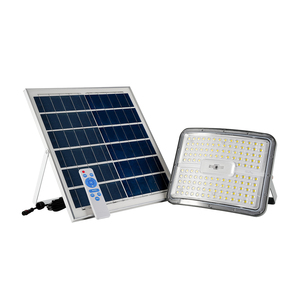
Heavy-duty commercial floodlight with multi-gear intelligence, long runtime autonomy, and optical light distribution.
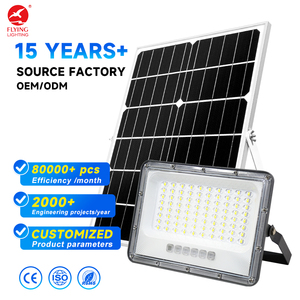
Integrated radar microwave motion sensor with dynamic dimming profile for extended backup battery efficiency.
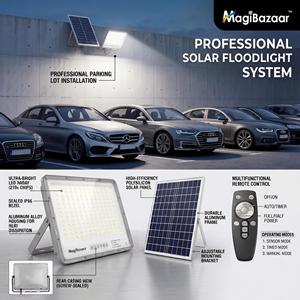
Ultra-high output flood fixture for stadium, perimeter defense, and industrial yard illuminations.
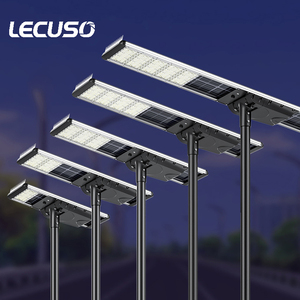
Streamlined mono-body enclosure merging panel, battery, and controller for rapid modular installation.
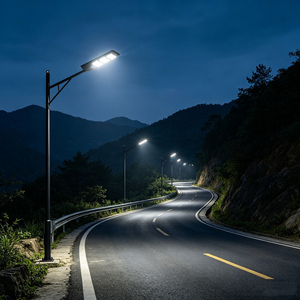
Corrosion-resistant chassis specifically engineered for expressways, trunk roads, and harsh coastal regions.
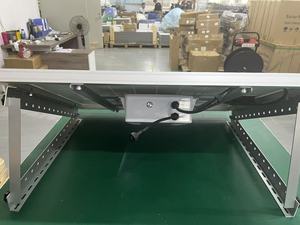
Equipped with ultra-fast MPPT charge logic for continuous perimeter vigilance even during winter overcast.
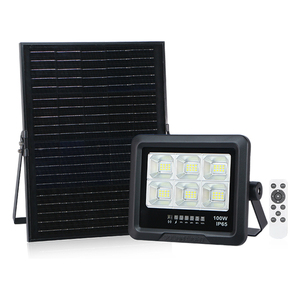
Uniform asymmetric optical lens design optimized for zero-shadow commercial advertising signage.
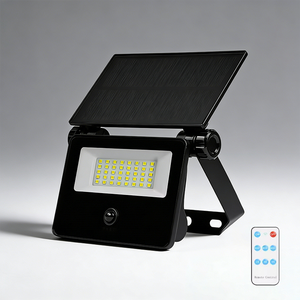
Impact-resistant polycarbonate shell constructed for field construction sites, emergency utility, and mobile application.
Standardizing quality metrics for municipal buyers, EPC contractors, and global distribution partners.
A rigorous examination of ingress protection dynamics, structural metallurgy, and solid-state heat management in extreme exterior climates.
While standard consumer solar lamps carry IP65 ratings (protection against low-pressure water jets), commercial infrastructure requires IP67 immersion-level tightness. Our enclosures incorporate continuous molded liquid silicone gas-injection gaskets, ensuring zero water ingress under temporary submersion or severe hurricane-driven torrential downpours. Crucially, we integrate an ePTFE breathable membrane vent to equalize internal/external pressure differentials caused by rapid ambient temperature shifts, completely eliminating internal lens condensation.
Structural integrity begins with material selection. We utilize high-density ADC12 die-cast aluminum alloy for housing components, featuring exceptional structural rigidity and thermal conductivities ($\sim 96 \text{ W/m}\cdot\text{K}$). The exterior undergoes a multi-stage pre-treatment chemical bath followed by electrostatically applied fluorocarbon powder coating (AkzoNobel grade), certified to pass the 1,000-hour Salt Spray Test per ASTM B117 standards without blistering, chalking, or corrosion.
Thermal degradation is the primary root cause of LED lumen depreciation. By decoupling the driver chassis from the LED heat sink and optimizing the surface area of passive cooling fins, we maintain junction temperatures ($T_j$) below $65^\circ\text{C}$ even in tropical ambient heat of $45^\circ\text{C}$. Coupled with high-transmittance optical PC lenses offering Type II, Type III, or Batwing beam distributions, our fixtures maximize pole spacing while meeting dark-sky light pollution standards.
| Specification Feature | Top Commercial Grade (Our Standard) | Standard Commercial (IP65) | Low-Cost Market Entry |
|---|---|---|---|
| Ingress Protection (IP Rating) | IP67 Waterproof + ePTFE Valve | IP65 Gasketed Seal | IP54 / IP65 Foam Tape |
| Battery Chemistry & Life | Grade-A LiFePO4 (3000-6000 cycles) | Ternary Lithium NMC (1000 cycles) | Recycled Lead-Acid / Second-life Li-ion |
| Charge Controller Architecture | Smart MPPT (98.5% Efficiency) | Basic MPPT / PWM Hybrid | Legacy PWM Controller (<75% Efficiency) |
| Solar Module Chemistry | N-Type TOPCon Mono (22.5%+ Eff) | Standard Mono-PERC (20% Eff) | Polycrystalline PV (<17% Eff) |
| Lumen Efficacy (L70 Lifetime) | 190 - 220 lm/W (>100,000 hrs) | 140 - 160 lm/W (50,000 hrs) | 90 - 110 lm/W (20,000 hrs) |
| Operating Temp Envelope | -30°C to +70°C (Internal Heating/BMS) | -10°C to +50°C | 0°C to +40°C |
Strategic foresights for procurement managers, project engineers, and municipal master planners navigating the global green energy transition.
The era of standalone lighting is giving way to networked urban infrastructure. Future procurement dictates that commercial solar streetlights act as IoT micro-nodes. Equipped with Zigbee, LoRaWAN, or NB-IoT gateways, these fixtures allow central municipal management centers to remotely monitor battery state-of-charge (SoC), adjust lighting schedules via cloud algorithms, receive automated fault diagnostics, and execute dynamic adaptive dimming based on traffic density metrics.
Spatial efficiency and wind-load reduction drive next-generation PV engineering. Transitioning from traditional P-type PERC to N-type TOPCon solar cells elevates panel efficiency beyond 24.5%, maximizing power yield per square meter. Concurrently, high-wind and heavy-snow environments are accelerating adoption of vertical cylindrical solar poles, which eliminate snow accumulation, dramatically reduce aerodynamic drag, and provide 360-degree ambient light absorption.
Global sustainability frameworks (such as EU Ecodesign directives and US Buy American compliance) demand zero-waste, modular designs. Modern B2B buyers reject glued-shut, disposable fixtures. The industry standard has shifted toward toolless modular maintenance, where battery packs, LED engine boards, and MPPT control units can be independently swapped out on-site in under 5 minutes, stretching system pole lifespans beyond 20 years.
When evaluating commercial lighting proposals, leading EPCs analyze Total Cost of Ownership (TCO) over a 10-year horizon rather than initial CapEx alone. High-quality IP67 solar luminaires eliminate copper wire trenching, transformer installation, electrical permitting, and monthly utility bills—frequently yielding an absolute payback period of 14 to 22 months compared to conventional grid infrastructure.
Combining 18+ years of engineering heritage with rigorous quality management standards to deliver uncompromised reliability.
Every luminaire is assembled under strict ISO quality control protocols, undergoing 100% aging tests, high-voltage insulation tests, and automated integrating sphere optical verification.
We provide full DIALux lighting simulations and IES file reports for major tenders, guaranteeing compliance with foot-candle and uniformity specifications before procurement.
We source premium grade-A silicon cells with low temperature coefficient performance, ensuring robust charge retention even under severe high-ambient heat conditions.
Utilizing extended cycle life Lithium Iron Phosphate packs equipped with hardware BMS protection against over-voltage, thermal runaway, and deep discharge degradation.
From custom housing colors and branded silk-screening to bespoke hardware beam-shaping lenses and IoT protocols, we tailor fixtures to match project specifications.
Fully compliant with CE, RoHS, IP67, IK10, and Buy American frameworks, supported by expedited sea and air logistics networks serving over 80 countries worldwide.
Clear, technical answers to common questions regarding IP ratings, battery life, design calculations, and factory customization.
IP65 certifies protection against dust ingress and low-pressure water jets from any angle. IP67 provides total dust tightness and guarantees complete protection against water immersion up to 1 meter depth for 30 minutes. For coastal highways, high-humidity regions, or flood-prone industrial zones, IP67 prevents moisture ingress during extreme storm surges and pressure fluctuations.
Maximum Power Point Tracking (MPPT) electronically calculates and adjusts the current-voltage relationship of the solar array in real-time, delivering 95-98.5% efficiency compared to Pulse Width Modulation (PWM) which operates at 70-75%. In practical terms, MPPT charges batteries up to 30% faster during cloudy or winter days, guaranteeing continuous nightly illumination.
Our engineering team designs commercial systems with a baseline autonomy of 3 to 5 continuous days. This is calculated by matching total daily watt-hour consumption ($W \times h$) against the LiFePO4 battery capacity at an 80% maximum Depth of Discharge (DOD), factoring in seasonal solar insolation (kWh/m²/day) for the target GPS installation coordinates.
Lithium Iron Phosphate ($\text{LiFePO}_4$) is superior for commercial exterior applications. Unlike ternary lithium (NMC) or lead-acid chemistries, $\text{LiFePO}_4$ exhibits high thermal stability (operating safely up to +70°C), zero thermal runaway fire risk, and offers over 3,000 to 6,000 charge cycles, providing a service lifespan of 8 to 12 years.
Yes. As a direct manufacturer, we offer complete OEM/ODM customization. This includes custom laser etching, color-matched powder coatings (RAL palette), bespoke mounting bracket geometry, customized CCT (3000K–6500K), and tailored optical light distribution lenses for specific tender requirements.
We provide full IES file downloads, DIALux photometric rendering reports, ground luminance heatmaps, pole-spacing layout simulations, and structural wind-load engineering certificates (tested to withstand typhoon force winds up to 180 mph / 60 m/s).
The integrated microwave radar sensor detects movement up to 12-15 meters in a 360-degree radius. Operating on an adaptive power profile, the luminaire runs at 30% baseline output during inactive night hours and instantly ramps up to 100% full brightness upon detecting vehicular or pedestrian movement, conserving up to 60% of stored battery energy.
We provide a comprehensive 3 to 5-year full replacement factory warranty on the entire luminaire system (including battery, MPPT controller, and LED array), and up to 25 years performance warranty on monocrystalline solar panels. All claims are managed directly by our technical support team.
Contact our engineering sales team today to receive complete technical data sheets, IES files, photometrics, and factory direct bulk pricing for your upcoming project tenders.