
Discover our industrial-grade, solar-powered LED floodlights, runway edge flashers, and airfield perimeter security lights. Engineered with MPPT technology, heavy-duty aluminum housing, and high-capacity LiFePO4 batteries.
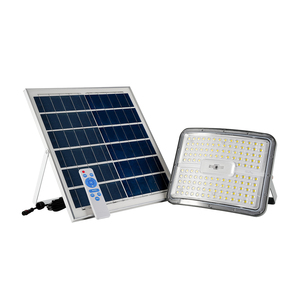
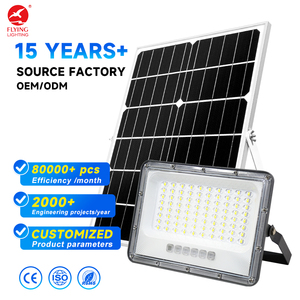
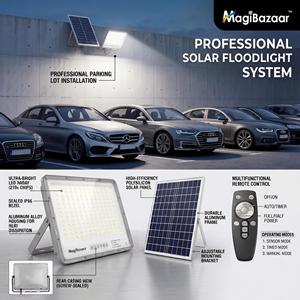
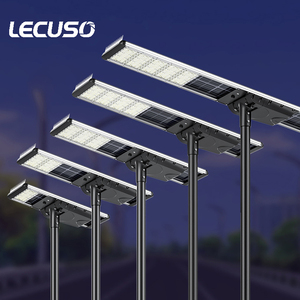


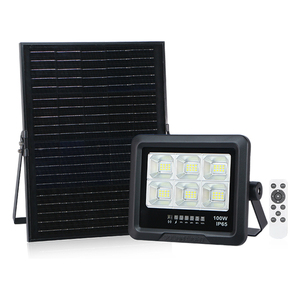
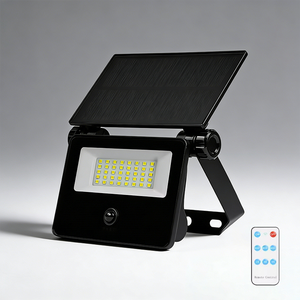
Airfield visual navigation aids (Aids to Navigation — AtoN) demand uncompromised reliability. As a premier solar flashing runway lights factory and supplier, our engineering framework integrates state-of-the-art photovoltaic power systems with high-intensity LED optical engines. Modern runway visual requirements demand compliance with strict international benchmarks, such as ICAO Annex 14 Volume I (Aerodrome Design and Operations) and FAA AC 150/5345-46E for runway and taxiway light fixtures.
Unlike standard commercial outdoor lighting, solar-powered runway flashing beacons, threshold identification lights (REIL), and obstruction markers operate under severe environmental stress. Key engineering parameters require precise chromaticity, controlled vertical beam divergence, flash synchronization, and autonomous power reserves capable of surviving prolonged periods of zero solar irradiance (solar autonomy).
| Subsystem | Technical Specification | Operational Impact & Benefit |
|---|---|---|
| Optical Engine | Custom Fresnel Polycarbonate Lenses + OSRAM/Lumileds LED Chips | Delivers 360° horizontal coverage with controlled vertical divergence, meeting ICAO Low/Medium Intensity standards without light pollution. |
| Energy Storage | Military-Grade LiFePO4 (Lithium Iron Phosphate) Cell Packs | Provides 3,000+ deep discharge cycles (up to 10-12 years service life) with operational performance spanning -20°C to +70°C. |
| Solar Energy Harvest | Monocrystalline Silicon PV Modules (Efficiency >22.5%) | High energy conversion efficiency in compact form factors; optimized for low-angle winter sun exposure. |
| System Intelligence | Microprocessor-Driven MPPT (Maximum Power Point Tracking) | Extracts up to 30% more energy during cloudy or overcast conditions compared to conventional PWM controllers. |
| Wireless Mesh RF | 2.4GHz / 900MHz Wireless Encrypted Mesh Network | Enables simultaneous microsecond-accurate flash synchronization across entire airstrip perimeter without ground cabling. |
Advanced algorithms constantly track the PV voltage point, ensuring maximum battery charge current even during heavy cloud cover, haze, or high-latitude seasonal sun angles.
Heavy-duty extruded anodized aluminum housing and marine-grade stainless steel hardware resist violent jet engine backwash, salt spray, and extreme hurricane wind loads.
Integrated wireless transceivers coordinate synchronized flashing sequences across threshold beacons, approach paths, and runway edge markers over distances up to 5 kilometers.
The global aviation infrastructure sector is undergoing a fundamental transformation. Airport operators, military engineers, civil aviation authorities (CAAs), and industrial airstrip developers are rapidly transitioning from legacy grid-tied infrastructure to self-contained solar flashing runway lighting arrays. Key macro procurement drivers include:
Traditional runway electrical installations require miles of heavy copper cabling, deep trenching, concrete duct banks, and expensive isolation transformers. Solar flashing runway lights eliminate civil works entirely, reducing total installed project costs by up to 70% and enabling installation in hours rather than months.
Severe weather events, power grid collapses, and cyber-attacks pose catastrophic risks to airport operations. Autonomous solar-powered runway flashers operate independently of main grid power, serving as mission-critical primary visual aids for emergency medical evacuation (MEDEVAC) and relief airstrips.
International aviation governing bodies (such as ICAO's State Action Plan strategy) mandate substantial carbon footprint reductions across airport ground operations. Procuring solar-powered runway and perimeter lights yields immediate scope-1 and scope-2 emissions credits.
Defense forces, offshore oil & gas platforms, and remote mining sites require portable, rugged visual aids. Modern solar flashing lights feature wireless remote activation, allowing air traffic control or approaching pilots to turn on lighting sequences via VHF air-band radio telemetry (PALC).
Leading solar lighting factories are incorporating advanced semiconductor electronics, IoT connectivity, and intelligent optical design. When evaluating solar flashing runway lights suppliers, procurement directors should align with manufacturers who invest in the following emerging technical trends:
Established in 2006, Solar Lighting International, Inc. stands as a premier U.S.-engineered manufacturer and global supplier of heavy-duty commercial solar street lights, parking lot lighting, solar traffic safety systems, and solar airfield illumination. Our track record spans nearly two decades of supplying high-reliability equipment to government entities, Fortune 500 corporations, and international civil aviation projects.
Strict quality management system protocols govern every assembly stage, from automated optical testing to high-vibration stress testing and thermal chamber validation.
Designed and engineered in South Carolina, USA, meeting stringent federal procurement guidelines for municipal infrastructure and military airfield expansion.
Our optical engineering team provides comprehensive IES light placement layouts, lux contour mapping, and FAA compliance verification prior to order placement.
With regional engineering offices in South Carolina, El Salvador, Ecuador, Oman, Puerto Rico, and Suriname, we deliver turnkey technical support worldwide.
Common questions answered by our Senior Solar Aviation Lighting Engineers.
Yes. Our commercial-grade solar runway lights and obstruction beacons are engineered to meet or exceed ICAO Annex 14 Volume I intensity, chromaticity, and beam divergence requirements (Low Intensity Type A/B/C and Medium Intensity Type A/B). FAA equivalent specifications under AC 150/5345-46E are verified via independent photometric lab testing.
Our standard commercial systems are engineered for a minimum of 7 to 14 consecutive days of autonomy (operating without solar replenishment) depending on the geographic location and flash pattern intensity. This resilience is achieved by sizing long-life LiFePO4 battery banks with high-efficiency monocrystalline solar panels.
Units are equipped with internal RF wireless mesh transceivers (operating on 2.4GHz or 900MHz ISM bands). When configured, a master beacon (or distributed peer-to-peer network) transmits microsecond radio synchronization pulses, ensuring all threshold identification lights (REIL) or runway edge flashers pulse simultaneously or in sequential patterns without ground cabling.
Yes. We supply optional Pilot Activated Lighting Control (PALC) integration. Approaching aircraft can trigger the airfield's solar runway lights and flashing threshold beacons via standard VHF air-band radio transmissions (keying the microphone 3, 5, or 7 times on a designated CTAF frequency).
Our military-grade Lithium Iron Phosphate (LiFePO4) energy storage packs have a designed cycle life exceeding 3,000+ complete charge/discharge cycles, translating to an operational service life of 8 to 12 years. The LED optical engine is rated for >100,000 continuous operating hours. Routine maintenance involves simple visual inspections and periodic cleaning of the solar glass surface.
As a direct factory and supplier, we provide extensive OEM/ODM customization including custom light colors (Red, Green, Amber, Blue, White, or Dual IR), specialized mounting frangibility couplings (FAA frangibility compliant), custom solar bracket tilts, and integrated IoT telemetry modules.
Contact our senior solar lighting engineering team today for custom photometric layouts, detailed product spec sheets, and competitive B2B factory-direct pricing.