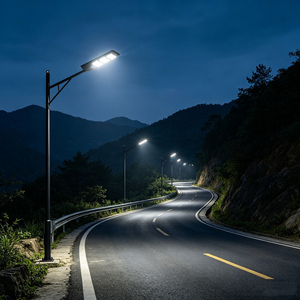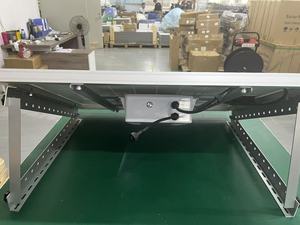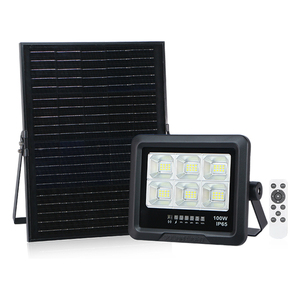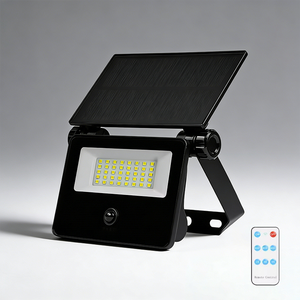
Manufactured to rigorous ISO 9001:2015 standards with solid-state LiFePO4 battery chemistry, high-efficiency MPPT controllers, and impact-resistant IP65/IP68 luminaire housings.
Mining operations represent one of the most hostile operating environments for outdoor electrical infrastructure. From severe airborne particulate loads and heavy machinery vibration to extreme thermal fluctuations and zero grid availability, standard commercial solar lights fail rapidly when deployed in open-pit mines, mineral processing plants, and extraction haul roads.
Information Gain Insight: Extending traditional utility grid lines into remote mining concessions costs between $50,000 and $150,000 per mile in transmission infrastructure alone. Heavy-duty commercial solar street and flood lighting systems eliminate grid dependency entirely while fulfilling carbon neutrality mandates under Scope 1 and Scope 2 ESG compliance frameworks.
Continuous heavy haulage (100+ ton trucks) and blasting activities emit low-frequency structural vibrations that crack traditional solder joints and optical lenses. Our mining-grade luminaires feature IK10 mechanical impact ratings, reinforced die-cast aluminum or 304/316 stainless steel enclosures, and shock-absorbing silicone dampening mounts designed to withstand ISO 16750-3 vibration standards.
Dust suppression is an ongoing challenge in iron ore, copper, gold, and coal mining. Fine airborne dust settles on solar PV glass and infiltrates electrical junction boxes, creating thermal hot spots. Our factory integrates high-transmittance hydrophobic tempered glass coatings on PV arrays and hermetically sealed NEMA 4X / IP68 driver compartments to prevent dust ingress and optical degradation.
Mining operations often span high-altitude Andes regions (-30°C) to scorching Australian or Middle Eastern deserts (+60°C). Utilizing advanced LiFePO4 (Lithium Iron Phosphate) battery chemistry paired with intelligent MPPT charge management, our systems guarantee 5 to 7 days of continuous illumination autonomy even under total solar occlusion or extreme ambient temperatures.
The global mining equipment market is undergoing a rapid paradigm shift toward smart, autonomous, zero-maintenance site infrastructure. The following four technological pillars define the future roadmap of industrial solar lighting systems.
Legacy PWM solar charge controllers lose up to 30% of captured solar energy due to impedance mismatching. Modern industrial mining solar luminaires utilize high-voltage MPPT (Maximum Power Point Tracking) algorithms achieving up to 99.2% tracking efficiency.
Future systems integrate edge-AI algorithms that dynamically monitor historic weather patterns, seasonal solar irradiance, and real-time battery state of charge (SoC). The controller automatically adjusts LED output curves during prolonged dust storms or cloudy seasons to maintain zero blackout risk along critical haulage corridors.
Traditional lead-acid and standard NMC lithium batteries present severe fire safety risks and degraded cycle life when subjected to harsh ambient temperatures. High-capacity LiFePO4 energy storage systems provide over 4,000 deep discharge cycles at 80% DoD (Depth of Discharge), delivering a design lifespan of 10 to 12 years.
Integrated thermal barrier jackets, heat-dissipating extruded aluminum housings, and battery management systems (BMS) with cell-level thermal runaway monitoring ensure safe operation across extreme operational profiles.
Deploying maintenance personnel across vast, geographically isolated mining concessions is expensive and hazardous. Future-ready solar mining lights incorporate LoRaWAN, Zigbee, or cellular NB-IoT transceivers.
Facilities managers can remotely monitor system metrics—including panel voltage, battery health, LED operational hours, and ambient temperature—via a cloud-based dashboard. Automated alert triggers dispatch technicians only when maintenance is required, minimizing operational risk in dangerous extraction zones.
Unnecessary full-power illumination consumes battery reserves during low-traffic shift changes. Integrated microwave radar motion sensors detect approaching heavy machinery up to 25 meters away, seamlessly ramping output from a 30% power-saving standby mode to 100% full lumen output (up to 22,200+ lm).
Precision-engineered asymmetric optical lenses (Type II, Type III, and Type IV distributions) project uniform illumination onto wide haul roads and perimeter fencing without hazardous glare or light trespass into drivers' eyes.
A detailed technical matrix illustrating why standard outdoor commercial lights fail in mining concessions and how specialized manufacturing engineering delivers multi-year operational reliability.
| Performance Spec | Standard Commercial Solar Lights | Mining-Grade Solar Systems (SLI Standard) | Operational Impact |
|---|---|---|---|
| Battery Chemistry & Life | Standard Li-ion (NMC) / Lead-Acid (500–1,500 Cycles) | Industrial LiFePO4 (4,000+ Deep Cycles @ 80% DoD) | 10+ Years zero maintenance vs. frequent battery replacement downtime. |
| Vibration & Impact Rating | IK07 / Plastic Lens Housing | IK10 Shockproof Die-Cast Aluminum & Toughened Glass | Resists severe blast shocks, heavy equipment vibration, and rock impacts. |
| Charge Controller Efficiency | Basic PWM Controller (70%–75% Efficiency) | High-Efficiency MPPT Controller (99.2% Efficiency) | 30% faster charging under cloudy or heavy dust-covered conditions. |
| Structural Wind Load | Rated for 80–100 MPH winds | Engineered for 180 MPH Wind Loads (Category 5 Resistant) | Withstands severe tropical cyclones and coastal mining wind shears. |
| Lumen Output Range | 2,000 – 6,000 Lumens max | 7,400 up to 22,200+ Lumens Per Fixture (Scalable) | Fulfills strict MSHA/OSHA lux level requirements for heavy haul roads. |
| Ingress Protection | IP65 Dust/Water resistant | IP65 / IP68 Hermetically Sealed Driver & Battery Chambers | Prevents fine particulate infiltration from slurry, dust, and coastal spray. |
Global mining enterprises are re-evaluating capital expenditure (CapEx) and operational expenditure (OpEx) strategies. Sourcing directors look beyond initial purchase costs to evaluate long-term Total Cost of Ownership (TCO) and supply chain compliance.
Traditional diesel light towers incur massive recurring costs: continuous refueling, oil filter replacements, engine overhauls, and dedicated labor. A heavy-duty 300W–500W solar street/flood light system pays for itself within 12 to 18 months of continuous operation by completely eliminating fuel and engine maintenance expenses.
Mining operations cannot afford extended downtime due to electrical faults. Modern procurement specifications demand quick-disconnect IP68 wiring harnesses and modular component trays. In the event of damaged hardware, site maintenance crews can swap out solar panels, battery packs, or driver modules in under 15 minutes without specialized tooling.
Major institutional mining investors mandate transparent Scope 1 zero-emission metrics. Procurement departments prioritize manufacturers with certified ISO 9001:2015 quality management compliance, Buy American framework compatibility, and strict material auditing (Prop 65, RoHS) to guarantee sustainable global supply chains.
For nearly two decades, Solar Lighting International has engineered and delivered commercial-grade solar lighting solutions trusted by top-tier industrial corporations, government agencies, and global mining contractors.
Every mining site possesses unique topography, road widths, and mounting constraints. Our experienced sales engineers and lighting designers utilize Dialux software to deliver custom photometric reports. We provide precise pole spacing, light level renderings (lux/foot-candles), and uniformity calculations prior to purchase—ensuring total compliance with international industrial safety standards.
Our heavy-duty steel and high-grade aluminum light poles carry an optional Lifetime Warranty. Treated with hot-dip galvanization and outdoor polyester powder coatings exceeding 1,000 hours of ASTM B117 salt spray testing, our poles resist severe rust and structural wind fatigue up to 180 mph—ideal for coastal copper, salt, and bauxite extraction plants.
Expert insights addressing key technical, operational, and commercial questions raised by mining engineers, safety officers, and procurement managers.
Our industrial solar panels utilize hydrophobic optical glass treatments that shed loose dust during natural rainfall. Furthermore, we oversize PV array wattage ratios (typically 1.3x to 1.5x of nominal battery charge requirements) so the system maintains full battery charge even when partial dust accumulation reduces panel efficiency by 15-20% between maintenance washdowns.
Haul roads typically require average light levels ranging from 10 to 25 lux (1 to 2.5 foot-candles) with high uniformity ratios (Emin/Eavg ≥ 0.4) to eliminate hazardous shadows for high-capacity dump truck operators. Our 14,800 to 22,200 lumen fixtures mounted at heights of 8 to 12 meters provide ideal coverage at pole spacings of 30 to 45 meters.
Yes. Luminaires designed for mining sites incorporate solid-state LED chips surface-mounted on aluminum core PCBs with mechanical silicone dampers, heavy-gauge wire connections, and IK10 impact-rated housings. Unlike fragile metal-halide or sodium lamps with glass filaments, solid-state LED components are impervious to blast vibrations.
Our standard mining site systems are engineered for 5 to 7 continuous nights of autonomy without any solar recharge input. This is achieved by combining high-capacity LiFePO4 battery storage with intelligent MPPT dimming profiles and microwave radar motion detection during off-peak hours.
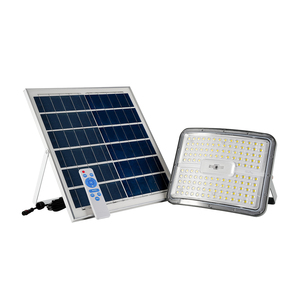
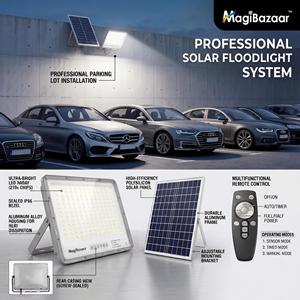
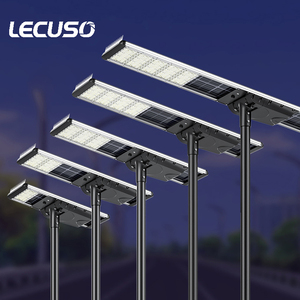
Both serve specific roles. Integrated All-In-One solar lights (combining panel, battery, and LED fixture into a single housing) offer rapid deployment and easy relocation for shifting mining perimeters. Split-type systems (separate solar panel tilted at optimal orientation with heavy battery box mounted at ground level) are preferred for permanent fixed infrastructure, high-wattage floodlighting towers (300W–500W), and extreme wind zone applications.
Our battery compartments utilize dual-layer aluminum heat shielding, passive convection thermal channels, and smart BMS low/high temperature cut-off controls. During ambient temperatures reaching +50°C to +60°C, thermal insulation keeps internal battery temperatures well within safe operational thresholds (below +55°C), preventing thermal degradation.
Yes. Our full-cutoff optical fixtures direct 100% of emitted light downward toward the target surface, achieving an U0 (zero uplight) rating. This minimizes light pollution, reduces glare into machinery cabins, and complies with International Dark-Sky Association (IDA) guidelines for environmentally sensitive locations.
Our complete solar lighting systems carry a designed operational life of 20+ years for structural steel/aluminum poles, 25 years for monocrystalline solar panels (80% power output retention guaranteed), 10 to 12 years for LiFePO4 battery packs, and 100,000 hours (L80B10) for Philips Lumileds LED chips.
Optional IoT smart controllers can be integrated via RS485 or wireless LoRaWAN modules. This allows site engineers to track real-time telemetry (panel output, battery charge cycles, load power draw, temperature alerts) and control light scheduling or emergency override modes from the mine management software suite.
Because diesel mobile light towers require fuel ($30–$80 per day depending on location) and routine engine oil/filter service every 250–500 hours, converting to permanent or skid-mounted solar flood lighting yields a complete capital expenditure payback in 12 to 18 months, generating tens of thousands of dollars in cumulative savings per tower over a 5-year period.
Partner with an established manufacturer trusted by industrial leaders, mine operators, and infrastructure contractors worldwide. Contact our engineering sales specialists today for technical consultations, customized Dialux photometric reports, and wholesale factory pricing.
Contact Us