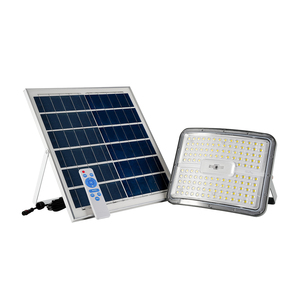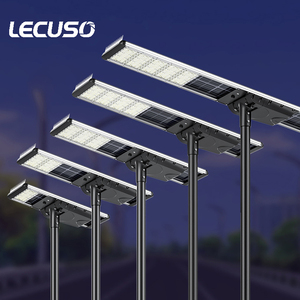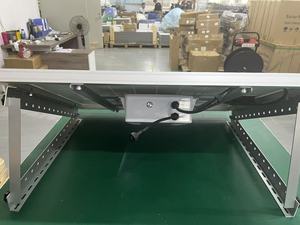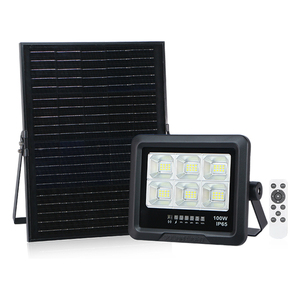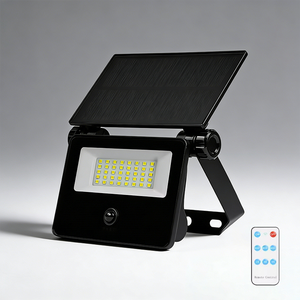
Engineered with N-Type TOPCon bifacial cell technology, heavy-duty marine-grade aluminum, and advanced LiFePO4 battery management systems designed to withstand Northern European climates.
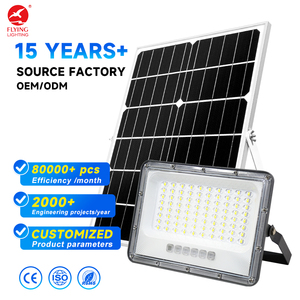
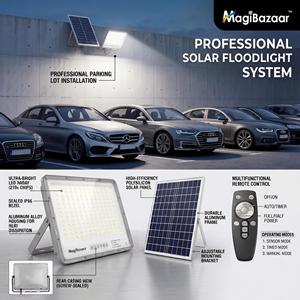
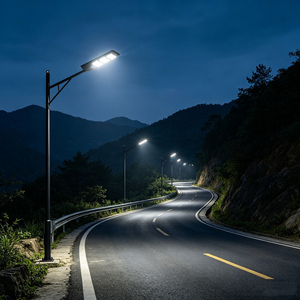
Deploying solar street lighting systems in Ireland presents a unique set of meteorological and geographical challenges. Operating between latitudes 51.5° N (Cork) and 55.4° N (Donegal), Ireland experiences severe seasonal variations in solar irradiation. During the winter solstice period from November through February, the solar zenith angle drops below 15 degrees, yielding as little as 1.2 to 1.8 peak sun hours per day under prevalent cloud cover. Traditional monofacial solar panels—which rely strictly on direct, top-down beam irradiance—suffer dramatic power harvest deficits during these extended overcast spells, often triggering battery exhaustion and premature blackout across municipal road networks.
To overcome these atmospheric constraints, our engineering team has developed high-efficiency Bifacial Solar Panel Street Light Systems specifically tuned for Irish environmental conditions. By leveraging N-Type TOPCon (Tunnel Oxide Passivated Contact) dual-glass solar cells, our bifacial modules harvest light simultaneously from both the front surface and the rear side. In environments dominated by Rayleigh diffuse atmospheric scattering—such as Ireland’s frequent overcast and rainy weather—diffuse sky radiation accounts for up to 65% of total annual solar radiation. Bifacial modules effectively capture this omnidirectional diffuse light, while harvesting significant ground albedo reflections from wet asphalt, concrete pavements, light gravel, and surrounding flora.
The total power generated by a bifacial solar street light fixture is governed by the surface Albedo coefficient ($A_f$). In typical Irish urban and suburban roadway installations:
• Wet Asphalt Roadways: Albedo $A_f = 0.18 - 0.22$ (yielding 15%–20% rear gain)
• Concrete & Light Pavements: Albedo $A_f = 0.28 - 0.35$ (yielding 22%–28% rear gain)
• Grassed Roadside Verges: Albedo $A_f = 0.20 - 0.25$ (yielding 18%–22% rear gain)
Combined with our 85% ± 5% bifaciality ratio, our dual-sided vertical and tilted light assemblies generate up to 35% higher total daily energy yield compared to standard single-sided solar luminaires.
Below is a technical comparison matrix demonstrating operational metrics between traditional monofacial solar street lights and our advanced bifacial systems engineered for Irish infrastructure projects:
| Technical Parameter | Standard Monofacial Solar Light | Bifacial N-Type TOPCon System (Our Standard) | Irish Infrastructure Benefit |
|---|---|---|---|
| Cell Architecture & Efficiency | P-Type PERC (20.5% Front Only) | N-Type TOPCon Dual-Glass (22.8% Front / 85% Bifaciality) | +35% Total Yield Higher efficiency in ambient light |
| Low-Irradiance Response | Significant drop below 200 W/m² | Active generation at 50 W/m² (Diffuse Capture) | Continuous Charge Charges during grey Irish winter days |
| Winter Autonomy Reserve | 2 – 3 Days Max Reserve | 5 – 7 Days Continuous Autonomy (Smart MPPT) | Zero Blackout Prevents outages during 5-day storm cycles |
| Snow / Dust / Dirt Accumulation | Top surface blockage stops 100% power | Rear panel harvests energy even if front is covered | Self-Clearing Thermal shedding from dual-sided absorption |
| Wind Load Rating (BS EN 40) | Standard 120 km/h (Flat Sail Area) | Aerodynamic Vertical/Slanted Mount (Up to 180 km/h) | Storm Barra Proof Certified for Atlantic Coast wind speeds |
| Battery Management & Lifespan | Standard LiFePO4 (2,000 cycles) | Grade-A Prismatic LiFePO4 with Low-Temp BMS (6,000+ cycles) | 12+ Years Battery Life Withstands cold damp Irish winter nights |
Our state-of-the-art manufacturing facilities incorporate military-grade component selection and rigorous testing protocols to ensure 20-year operational life cycles.
Features ultra-clear anti-reflective dual 2.0mm tempered glass encapsulation. Eliminates micro-cracking, prevents water vapor ingress in humid coastal air, and delivers IP67 structural integrity.
Custom ultra-fast Maximum Power Point Tracking (MPPT) algorithm with 99.5% tracking efficiency. Adjusts dynamic charge parameters every 100ms to maximize current under shifting cloud cover.
Poles and bracket hardware are treated with hot-dip galvanization (ISO 1461) and fluorocarbon powder coating, passing 2,000-hour salt spray testing for severe Irish Atlantic maritime zones.
Completely off-grid operation eliminates costly trenching, cabling, and ESB grid connection fees—enabling rapid deployment for local authorities and commercial land developers.
Precision asymmetric optical lenses (Type II / Type III distributions) deliver uniform illumination across roadways while maintaining 0% upward light spill (ULOR=0) to meet Irish dark-sky rules.
Integrated Zigbee/NBIoT remote management software allows council engineers to adjust lighting schedules dynamically, monitor battery health, and receive real-time fault alerts.
Our bifacial solar lighting solutions are engineered to support national sustainability initiatives under Ireland's Climate Action Plan 2023 and Project Ireland 2040.
Ideal for rural roundabouts, national routes (N6, N18, N25), and coastal sections along the Wild Atlantic Way where grid extensions are prohibitively expensive and wind speeds require certified EN 40 structural resistance.
Providing zero-carbon street lighting for residential expansions, public parks, and commuter car parks in Dublin, Cork, Galway, and Limerick, directly assisting County Councils in meeting 51% emissions reduction targets.
Tailored for heavy industrial logistics zones, freight terminals (Port of Cork, Shannon Free Zone), and commercial warehousing estates requiring 24/7 security illumination, high lumen throughput, and zero downtime.
Delivering dark-sky compliant pathway lighting along pedestrian greenways (Waterford Greenway, Royal Canal Greenway) and National Parks without trenching disturbance to sensitive natural soils or flora.
As a global solar lighting manufacturer with over 18 years of continuous product development and an engineering team combining more than 45 years of specialized photovoltaic experience, we bridge the gap between heavy-duty structural engineering and advanced electronic control systems. Our ISO 9001:2015 certified manufacturing facilities operate automated assembly lines, climate-controlled testing chambers, and full optical goniophotometer labs to guarantee every luminaire leaving our factory exceeds international quality benchmarks.
For Irish engineering contractors, local authorities, and M&E consultants, partnering directly with our factory provides key strategic advantages:
We provide complimentary DIALux Evo lighting layout designs and photometric reports based on your exact Irish road geometry, guaranteeing compliance with EN 13201 lighting classes.
Our complete street light systems carry full CE, RoHS, IP67, IK10, and ISO 9001:2015 certifications. Structural steel and aluminum light poles comply with BS EN 40 standards.
Direct access to our engineering team allows tailored component selection—from specific Philips Lumileds LED chip Binning to custom bracket angles and powder-coat RAL matching.
Key engineering and commercial questions addressed for Irish Local Authorities, Procurement Officers, and MEP Engineering Contractors.
Planning a municipal road upgrade, commercial park, or rural greenway lighting project in Ireland? Contact our technical engineering team today to receive complete product specifications, factory-direct pricing, and complimentary DIALux photometric designs.