
Engineered by leading Chinese original equipment manufacturers (OEMs) for extreme Saharan ambient temperatures, salt fog resistance, and continuous 365-night operational autonomy.
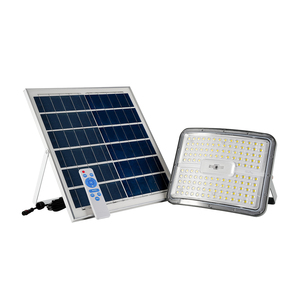
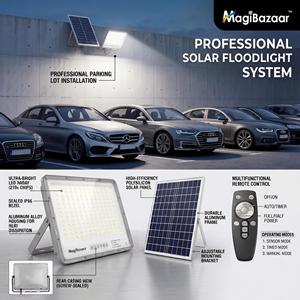
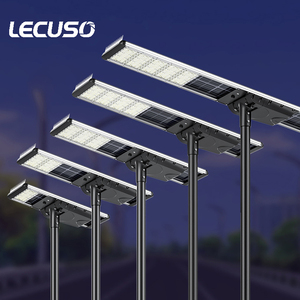
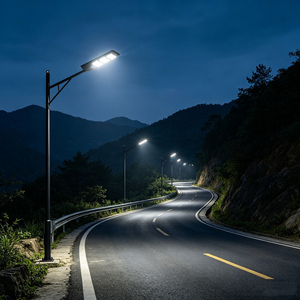
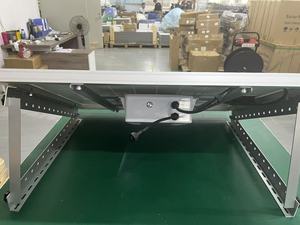
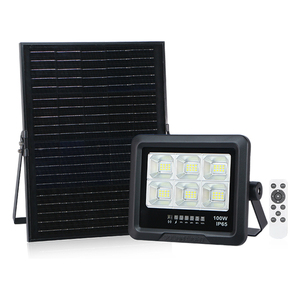

The Kingdom of Morocco is currently undergoing an ambitious infrastructure transformation, guided by the National Airport Masterplan and the national decarbonization mandate ahead of global events such as the FIFA World Cup 2030. Supervised by the ONDA (Office National Des Aéroports), airport authorities across regional aerodromes—ranging from international hubs like Casablanca Mohammed V (CMN) and Marrakech Menara (RAK) to remote Saharan regional airstrips in Zagora (OZG), Errachidia (ERH), Tan-Tan (TTA), and Dakhla (VIL)—are actively replacing traditional wired airfield ground lighting (AGL) with autonomous solar-powered airfield lighting systems.
Morocco boasts one of the most advantageous solar irradiance profiles globally, averaging over 3,000 to 3,600 hours of sunshine per year with a Global Horizontal Irradiation (GHI) exceeding 5.5 to 6.5 kWh/m²/day. Leveraging this abundant natural resource, solar runway lighting systems eliminate the immense capital expenditure (CAPEX) associated with trenching miles of heavy copper cabling across vast desert terrains, while insulating airfields from grid instability, voltage drops, and blackouts.
“Transitioning to solar-powered runway edge, threshold, and taxiway lighting allows Moroccan aerodromes to achieve 100% operational autonomy, reduce carbon emissions, and deploy emergency visual landing aids in fraction of the time required for traditional grid-tied AC airfield systems.”
Airfield runway lighting is a safety-critical infrastructure domain governed strictly by the International Civil Aviation Organization (ICAO) Annex 14 Volume I & II and FAA AC 150/5345-46 standards. When procurement teams in Morocco source solar airport lights from leading OEM factories in China, ensuring compliance with precise chromaticity, light intensity distributions, and mechanical frangibility is non-negotiable.
| Airfield Light Function | ICAO / FAA Standard Color | Required Beam Intensity (Cd) | Optics & Solar Engineering Specification |
|---|---|---|---|
| Runway Edge Light | Omnidirectional White / Yellow | 50 Cd – 250 Cd (Non-Precision) | Custom Fresnel Borosilicate Lens, 360° Horizontal Spread, 0-15° Vertical Beam |
| Threshold / Runway End | Bidirectional Red / Green | 100 Cd – 400 Cd Dual Mode | Split Optic Filter, NVG (Night Vision Goggle) Compatible Infrared (Optional) |
| Taxiway Edge & Apron | Omnidirectional Aviation Blue | 5 Cd – 15 Cd Standard Intensity | High-Impact UV-Stabilized Polycarbonate Casing, Dusk-to-Dawn Automation |
| Solar PAPI (Precision Approach) | Split Red / White Transition | Up to 15,000 Cd Peak Intensity | Multi-Module Solar PV Array with External LiFePO4 Bank & Precision Tilting Mount |
| REIL / RTIL Beacons | Unidirectional Flashing White | >5,000 Cd Flashing Output | Synchronized Encrypted Wireless RF Transceiver Mesh (433MHz / 915MHz) |
In high-temperature desert environments such as Southern Morocco, battery chemical stability is paramount. Premium Chinese manufacturers incorporate customized Lithium Iron Phosphate (LiFePO4) energy storage packs integrated with intelligent BMS (Battery Management Systems) featuring active thermal throttling up to +65°C, ensuring a cycle life of 3,000 to 5,000 cycles (8 to 12 years of operational lifespan).
Morocco’s unique geography presents contrasting climate challenges—from high salinity coastal zones along the Atlantic and Mediterranean coasts to abrasive, high-heat sandstorm conditions in the Sahara and cold, snow-prone altitudes in the High Atlas mountains. Chinese solar airfield lighting factories customize fixtures specifically for these localized deployment scenarios:
Deployments in locations such as Zagora, Errachidia, Guelmim, and Smara encounter intense thermal radiation (+50°C summer ambients) and airborne dust storms (Scirocco winds). Fixtures feature IP68 hermetic glass-to-metal seals and electrostatic hydrophobic lens coatings to prevent sand adhesion.
Facilities near coastal marine airbases in Tanger, Casablanca, Essaouira, and Agadir require 316-marine-grade stainless steel hardware and anodized aluminum casings tested against ASTM B117 salt spray exposure for over 1,000 hours.
Tactical helipads for the Royal Moroccan Armed Forces and emergency medical services require rapid-deployment solar lights with encrypted RF wireless remote controllers, enabling instant tower activation or pilot-controlled lighting (PAL via VHF radio link).
Chinese OEM/ODM manufacturers are dominating the international market for solar airfield systems due to continuous technological innovation and unmatched B2B production scalability. Key engineering advancements transforming the Morocco market include:
From custom optical engineering to streamlined logistics into Tanger Med port, top-tier Chinese factories offer end-to-end B2B solutions tailored for airport engineering firms.
Factories provide IES and ICAO Annex 14 chromaticity grid test reports generated in accredited darkroom goniophotometer laboratories prior to batch dispatch.
Direct shipping experience with complete UN38.3 lithium battery transport certification, CE, RoHS, and MSDS documentation for rapid customs clearance in Morocco.
Custom housing colors (Aviation Yellow RAL 1023), specialized optical lenses, logo branding, and customized mounting brackets tailored to ONDA tender specs.
Addressing key technical, regulatory, and logistical inquiries regarding Chinese solar airfield lighting imports.
Get direct access to comprehensive technical specifications, ICAO photometric files (.IES), pricing matrices, and engineering consultation for your airport projects in Morocco.
Get Catalog