
Our industrial-grade solar luminaires and school zone flashing safety beacons are engineered to withstand Sri Lanka’s high relative humidity (85%+), coastal tropical salinity, and seasonal monsoons.
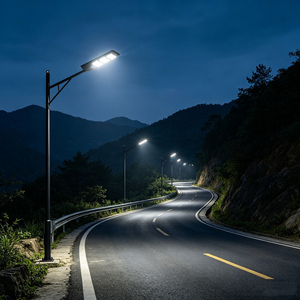
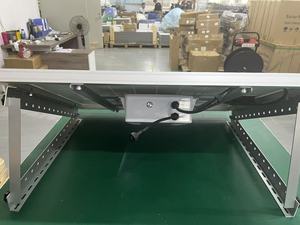
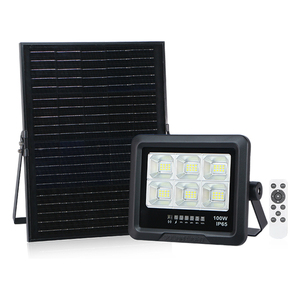
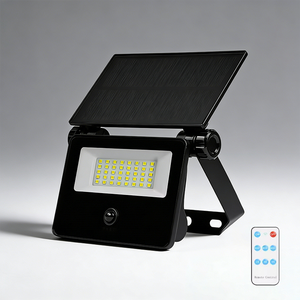
As Sri Lanka expands its national road safety master plan under the Road Development Authority (RDA) and Ministry of Transport guidelines, deploying solar-powered school zone warning flashers has emerged as the most resilient, cost-effective infrastructure solution. This whitepaper analyzes the engineering metrics necessary for long-term viability in South Asia’s tropical climate.
In regions like Colombo, Gampaha, and Kandy, cloud cover during the South-West Monsoon (May to September) and North-East Monsoon (October to January) severely reduces irradiance levels. Standard PWM solar controllers lose up to 30% of harvested solar energy under overcast skies.
Our solar school zone flashing beacons integrate industrial-grade Maximum Power Point Tracking (MPPT) microcontrollers operating at >98.5% tracking efficiency. Combined with Grade-A monocrystalline silicon solar cells boasting a 22.5% module efficiency, the system charges reliably even under diffuse light conditions, guaranteeing uninterrupted 24/7 or scheduled operational readiness during critical school commuting hours.
Sri Lanka’s coastal and low-country regions experience ambient daytime temperatures exceeding 35°C, with sealed battery enclosures reaching temperatures inside up to 55°C. Traditional VRLA/Lead-Acid batteries degrade rapidly in hot climates, losing over 50% of their operational cycle life within 18 months.
Our solar beacon assemblies utilize premium-grade Lithium Iron Phosphate (LiFePO4) cell packs equipped with active Battery Management Systems (BMS). LiFePO4 technology retains thermal stability up to 65°C and delivers over 3,000 deep discharge cycles at 80% DoD (Depth of Discharge), ensuring a design lifespan of 8–10 years without maintenance intervention.
Dense urban traffic along the A1 (Colombo - Kandy) and A3 (Peliyagoda - Puttalam) highways presents severe safety challenges near primary and secondary schools. High vehicle speeds combined with congested roadside parking obscure traditional static signage.
Solution: Dual-panel 300mm LED amber flashing beacons equipped with programmable radar motion sensing. The beacons activate ultra-bright flash sequences only when approaching speeds exceed 30 km/h during morning peak drop-off and afternoon dismissal periods, reducing driver reaction latency by up to 45%.
Coastal road stretches along the A2 highway face extreme airborne salt spray, atmospheric humidity, and high-velocity wind loads from sea breezes. Standard steel fixtures suffer from rapid oxidation and structural failure.
Solution: Marine-grade 6063-T6 anodized aluminum alloy housings combined with 304/316 stainless steel hardware and IP67 sealed optical chambers. The assemblies undergo 1,000-hour ASTM B117 salt spray testing to prevent pitting corrosion and lens yellowing.
High-altitude mountainous routes along the A5 highway experience frequent dense fog, persistent cloud cover, and heavy rainfall, severely obscuring visibility for drivers approaching mountain school intersections.
Solution: High-candela Fresnel lens optics utilizing OSRAM LED chips engineered specifically for penetration through dense water vapor. Sized with extended 7-day battery autonomy to maintain continuous flashing performance during prolonged monsoon cloud covers.
When sourcing solar school zone flashing beacons for procurement tenders in Sri Lanka, evaluating engineering parameters ensures compliance with local standards while avoiding premature hardware failure.
| Engineering Specification | China Top Manufacturer Spec (Our Platform) | Standard Low-Cost Alternatives | Impact on Sri Lanka Deployment |
|---|---|---|---|
| Solar Photovoltaic Type | Monocrystalline Silicon (22.5% Efficiency) | Polycrystalline (15-17% Efficiency) | 40% Higher Charging in Cloud Cover |
| Solar Controller Technology | Industrial MPPT (98.5% Tracking Eff.) | Basic PWM (70-75% Efficiency) | Prevents Deep Battery Drain |
| Battery Storage System | Grade-A LiFePO4 with Smart BMS (3000+ Cycles) | Recycled Lead-Acid / AGM (300-500 Cycles) | 8-10 Year Lifespan in Tropical Heat |
| Enclosure Protection | IP67 Sealed Aluminium / Stainless Steel | IP65 Thin ABS Plastic Housing | Full Monsoon & Salt Spray Resistance |
| Optical Flash Visibility | Optically Focused Fresnel Lens (>800 Meters) | Flat Diffuser LED Array (<300 Meters) | Maximized Driver Safety Warning |
| Autonomy Guarantee | 5 to 7 Continuous Rainy Days | 1 to 2 Rainy Days Maximum | Uninterrupted Operations in Monsoons |
Recent grid instability and power management initiatives across Sri Lanka have accelerated municipal demand for completely self-sustained infrastructure. Off-grid solar school zone beacons operate independent of the Ceylon Electricity Board (CEB) grid, maintaining continuous pedestrian protection during localized rolling blackouts or storm damage.
Modern urban planning tenders in Colombo and Western Province municipalities increasingly require smart connectivity. Next-generation flashing beacons incorporate 4G LTE-M and LoRaWAN gateways, enabling remote scheduling, automatic fault alert transmission, and solar yield data analytics via a centralized municipal monitoring platform.
The Road Safety Council of Sri Lanka and local urban councils are instituting strict speed reduction compliance around primary educational facilities. Standardized 300mm flashing amber warning beacons are being integrated with radar speed feedback displays to dynamically warn speeding motorists as they enter vulnerable student zones.
As a top-tier Chinese manufacturing facility certified to ISO 9001:2015 standards, we provide Sri Lankan contractors, government agencies, and B2B distributors direct access to OEM/ODM custom engineering, rigorous quality control, and factory-direct pricing.
Our state-of-the-art manufacturing campus features automated SMT assembly lines, goniophotometer optical testing labs, and environmental simulation chambers. We provide complimentary DIALux photometric simulations for Sri Lankan road development tenders, ensuring precise lux levels, uniform light distribution, and MUTCD/RDA compliance prior to order placement.
Every batch of solar school zone flashing beacons undergoes stringent multi-stage testing: high-temperature aging chambers at 60°C, 72-hour continuous rain ingress testing (IP67 certification), vibration resistance testing for high-traffic highway poles, and salt-spray chamber testing. We guarantee zero-defect shipments to Colombo Port.
Our systems are engineered with oversize monocrystalline PV panels and ultra-efficient MPPT charge controllers that harvest energy even under heavy diffuse light during the South-West and North-East monsoons. The integrated LiFePO4 battery pack provides 5 to 7 days of continuous operational autonomy without direct sun, ensuring non-stop warning operations year-round.
We offer flexible shipping terms including FOB, CIF Colombo, and DDP for project tenders. Production lead times for custom OEM beacon orders typically range from 12 to 18 days. Ocean transit from Ningbo/Shenzhen ports to Colombo Port takes approximately 10 to 14 days, enabling rapid deployment for urgent municipal timelines.
Yes. Our flashing beacons comply with international traffic safety protocols (MUTCD and EN12352) which align with RDA technical criteria. We supply 200mm and 300mm optical amber LED modules with adjustable flash rates (50 to 60 flashes per minute) and automatic night-time dimming to prevent driver glare.
For coastal areas such as Galle, Colombo, and Negombo, we supply housings made of 6063-T6 marine-grade extruded aluminum alloy treated with anodized anti-corrosion coatings and 304 stainless steel hardware. These housings pass 1,000-hour salt spray testing and will not rust or degrade in tropical coastal air.
Absolute OEM/ODM flexibility is available. As a direct manufacturer, we offer custom silk-screen logo application, customized housing paint colors, and pre-programmed microcontroller software for custom flashing schedules (e.g., active flashing only during school arrival and dismissal hours).
We provide a comprehensive 3-year to 5-year full factory replacement warranty on solar panels, LED modules, controllers, and LiFePO4 batteries. Our engineering team provides complete technical documentation, wiring schematics, mounting manuals, and real-time video consultation support for local installation crews across Sri Lanka.
Request custom DIALux photometric design, competitive B2B factory pricing, or request a complete tender specification document for your Sri Lankan road safety project today.