
Deploying advanced MPPT smart controllers, high-efficiency monocrystalline solar arrays, and deep-cycle LiFePO4 energy storage engineered specifically for North American climate zones.
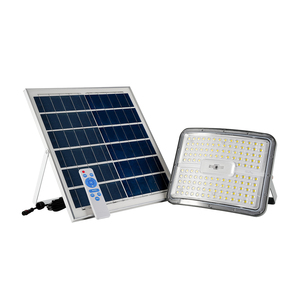
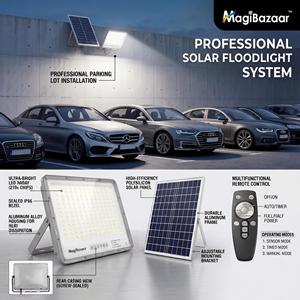
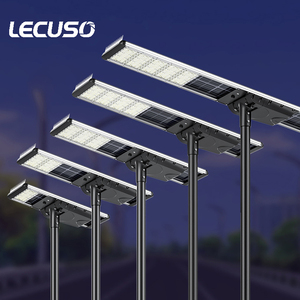
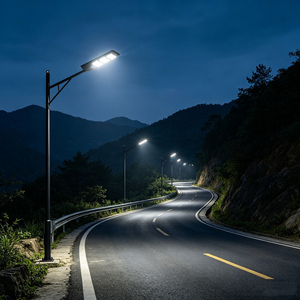
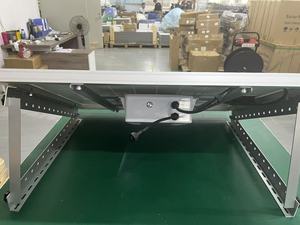
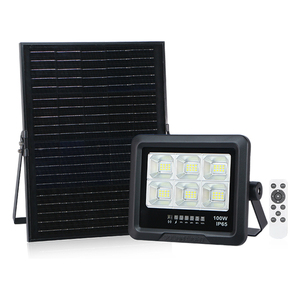
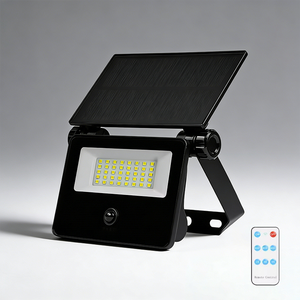
Understanding the critical electrical, optical, and mechanical specifications required for standalone solar street lighting systems serving US federal, municipal, and private commercial buyers.
Commercial-grade solar street luminaires serving North American latitudes require high-conversion monocrystalline N-type solar cells. Paired with Maximum Power Point Tracking (MPPT) microcontrollers operating at >98.5% conversion efficiency, these systems optimize current output even during ambient low-light, winter solstices, and cloud-covered conditions.
Legacy lead-acid and GEL chemistries have been superseded by Lithium Iron Phosphate ($\text{LiFePO}_4$). Delivering over 3,000 to 4,000 deep discharge cycles at 80% Depth of Discharge (DoD), $\text{LiFePO}_4$ batteries offer unparalleled thermal stability ($65^\circ\text{C}$ tolerance), zero memory effect, and integrated Battery Management Systems (BMS) with thermal cut-off controls.
Uniformity without light pollution is achieved using Philips Lumileds LED emitters paired with custom optical lenses. Systems adhere strictly to IESNA Type II, Type III, and Type IV lateral beam patterns, directing zero upward light emission (IDA Dark-Sky Compliant) while maintaining optimal foot-candle levels across lanes and walkways.
For US commercial project managers, civil contractors, and DOT engineers, installing conventional AC grid-powered street lights incurs astronomical infrastructure expenses—trenching, conduit routing, transformer installation, asphalt cutting, and utility permitting often cost between $35 to $75 per linear foot. Commercial solar street lighting eliminates 100% of civil utility trenching costs, delivering an immediate capital expenditure reduction of up to 40% while insulating project owners from escalating utility electric tariffs.
Deploying autonomous solar lighting across the diverse climatic micro-zones of the US requires targeted environmental engineering—from coastal hurricane zones to freezing northern latitudes.
Engineering Requirements: AASHTO Structural Wind Load Ratings up to 180 MPH. Heavy-gauge hot-dip galvanized steel or T6 aluminum poles, marine-grade powder coating resistant to salt spray oxidation (ASTM B117), and 316 stainless steel external hardware. Integrated vibration dampers prevent structural harmonic fatigue during high sustained winds.
Engineering Requirements: Passive heat dissipation sinks and thermal BMS protection. Batteries engineered for extended operation at temperatures exceeding $50^\circ\text{C}$ ($122^\circ\text{F}$) without thermal runaway. N-type solar modules engineered with low temperature coefficients prevent voltage drop-off during peak afternoon sun.
Engineering Requirements: System autonomy sizing scaled for 5 to 7 continuous days of zero solar radiation cover. Solar panel inclination angles calibrated (up to $60^\circ$ tilt) to maximize winter solstice solar capture while encouraging automatic snow shedding. Low-temperature charging protection safeguards $\text{LiFePO}_4$ cells from sub-zero degradation.
Engineering Requirements: Strict adherence to FHWA and AASHTO roadway illumination guidelines. High-lumen output options delivering up to 22,200 lumens per fixture (or 44,400 lumens on twin-arm configurations). Continuous duty cycles combined with microwave radar occupancy dimming balance safety with power conservation.
Navigating federal mandates, tax incentive structures, and smart city connectivity protocols for North American installations.
Federal highway and public transportation projects funded via the Infrastructure Investment and Jobs Act (IIJA) mandate strict compliance with domestic procurement laws. Manufacturers supplying the US market provide custom project builds featuring Buy American Compliant light poles, domestic assembly, and certified structural components meeting federal DOT grant requirements.
Under the IRA, commercial entities, municipal governments, tax-exempt non-profits, and educational institutions installing solar lighting infrastructure are eligible for Investment Tax Credits (ITC) or direct pay options covering 30% or more of the total project hardware and installation cost, significantly accelerating project payback schedules.
Modern US urban street lighting is shifting rapidly toward intelligent network integration. Luminaires are equipped with standardized 7-pin ANSI C136.41 NEMA or Zhaga Book 18 sockets. This allows seamless plug-and-play installation of wireless nodes (LoRaWAN, NB-IoT, Cellular) for remote dimming schedules, fault detection, and energy analytics.
Grounded in over 18 years of specialized outdoor lighting production and supported by an international engineering framework.
Every commercial fixture undergoes rigorous multi-stage quality assurance—including optical integrating sphere testing, IP67 moisture chamber testing, thermal imaging assessment, and electronic load simulation—ensuring complete reliability before field deployment.
We eliminate installation guesswork by delivering complete DIALux photometric renderings and point-by-point foot-candle layouts. Project engineers receive detailed simulations verifying illuminance uniformity, glare reduction, and pole spacing prior to purchasing.
With operational hubs, technical engineering teams, and certified contractor networks spanning the United States, Latin America, and globally, we provide seamless project consultation, warranty processing, and ongoing field maintenance support.
Addressing key procurement, technical, and installation inquiries from US civil engineers, electrical contractors, and municipal planning boards.
Partner with an industry-leading manufacturer serving the United States. Connect with our senior engineering team to receive DIALux photometric reports, specification sheets, and competitive direct pricing for your upcoming commercial lighting project.